
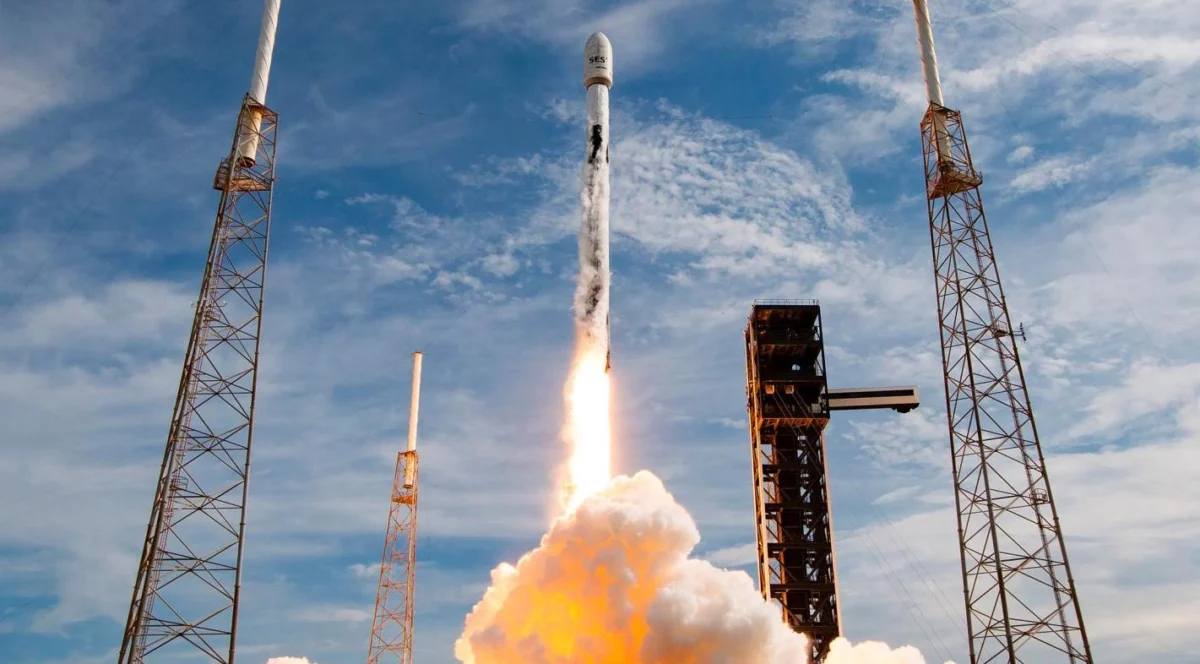

The global space industry reached an unprecedented level of activity in 2025, characterized by a rapid acceleration in launch frequency and a fundamental shift in the composition of orbital payloads. According to the 2025 Year in Review published by BryceTech, a premier space research and strategic advisory firm, the orbital economy has entered a phase of sustained scaling, driven primarily by the proliferation of communications-focused small satellites and the operational maturity of private American launch providers. The report, which serves as a definitive audit of global space traffic, reveals that 2025 saw 325 successful orbital launches and the deployment of 4,544 spacecraft. These figures represent a 25% increase in launch cadence and a staggering 54% increase in the number of satellites placed into orbit compared to the previous year, signaling a transformative era for low Earth orbit (LEO) utilization.
The Rapid Acceleration of the Orbital Economy
The data provided by BryceTech underscores a year defined by record-setting flight rates. The leap from approximately 260 launches in 2024 to 325 in 2025 illustrates an industry that is no longer constrained by the traditional bottlenecks of launch availability. This surge is largely attributed to the "megaconstellation" model of satellite deployment, where hundreds of small satellites are launched annually to maintain and expand global broadband networks.
The report notes that the United States has solidified its position as the world’s primary spaceport, with nearly 60% of all global launches conducted by U.S.-based providers. This dominance is not merely a matter of quantity but of infrastructure and reliability. U.S. commercial entities have transitioned from being secondary players to the primary drivers of orbital logistics, fundamentally altering the competitive landscape for international space agencies.
SpaceX: A Statistical Monolith in Global Launch
Central to the narrative of 2025 is the overwhelming dominance of SpaceX. The Hawthorne-based company completed 165 orbital launches during the calendar year, accounting for approximately 51% of the global total. To put this in perspective, SpaceX alone launched more frequently than the combined efforts of all other nations and commercial providers worldwide.
The disparity becomes even more pronounced when examining the volume of spacecraft deployed. BryceTech reports that SpaceX was responsible for launching 85% of all satellites in 2025. This indicates that SpaceX’s Falcon 9 and Falcon Heavy platforms have become the default "bus" for the global satellite industry, offering a combination of cost-efficiency and flight cadence that competitors have yet to match. While other providers struggle with multi-month turnaround times, SpaceX has demonstrated the ability to launch multiple missions per week, often utilizing a fleet of rapidly reusable first-stage boosters.
The Starlink Factor and the Internalization of Launch Demand
A significant portion of SpaceX’s 2025 activity was dedicated to its own internal requirements. Analysis of launch trackers and the BryceTech data reveals that 122 of the company’s 165 missions—roughly 74%—were dedicated to the Starlink and Starshield constellations. This vertical integration allows SpaceX to serve as its own primary customer, ensuring a high floor for launch demand regardless of external market fluctuations.
However, the remaining 43 launches for third-party customers still represent a substantial portion of the commercial market. These missions included national security payloads for the U.S. Space Force, international scientific missions, and large-scale rideshare deployments. The Starlink-heavy manifest has not hindered SpaceX’s ability to capture the lion’s share of the global commercial launch market; rather, it has provided the operational volume necessary to refine its refurbishment processes and lower costs for all users.
International Competition: China’s Strategic Persistence
While the United States leads in overall volume, the People’s Republic of China continues to represent the second-largest share of the global launch market. The China Aerospace Science and Technology Corporation (CASC) conducted 68 orbital launches in 2025. China’s strategy remains focused on a mix of government-directed infrastructure, such as the Tiangong space station and the BeiDou navigation system, alongside a burgeoning domestic commercial sector.
The BryceTech report highlights that while China’s launch numbers are impressive, they are more traditional in their payload distribution compared to the U.S. model. However, 2025 saw the initial stages of China’s own megaconstellation efforts, often referred to as the "G60 Starlink" or "Thousand Sails" project. As these domestic Chinese constellations move from pilot phases to full-scale deployment, the launch cadence from CASC and associated commercial spin-offs is expected to rise, potentially challenging the U.S. lead in the late 2020s.
The Rise of Dedicated Small-Launch Providers
Beyond the heavy hitters, 2025 was a breakout year for smaller, more agile launch providers. Rocket Lab, headquartered in the United States with its primary launch site in New Zealand, secured the third spot globally with 18 launches. This performance underscores the growing demand for "dedicated" launch services. Unlike "rideshare" missions, where small satellites are secondary payloads on a large rocket, dedicated launches allow satellite operators to choose their precise orbital insertion parameters and launch schedules.
Rocket Lab’s success with its Electron vehicle demonstrates that there is a viable, high-frequency market for payloads that do not require the massive lift capacity of a Falcon 9. Conversely, Roscosmos, the Russian state space corporation, maintained a steady but stagnant presence with 17 launches. Once a leader in the global launch market, Russia’s share has dwindled due to geopolitical tensions and the rapid technological advancements of its Western commercial counterparts.
Technical Evolution: The Dominance of the Small Satellite Form Factor
Perhaps the most significant technical trend identified by BryceTech is the total dominance of the small satellite. In 2025, 98% of all spacecraft launched weighed less than 1,200 kilograms. This statistic highlights a profound shift in satellite architecture, moving away from "exquisite," bus-sized satellites that cost billions of dollars and take a decade to build, toward compact, mass-produced units.
These small satellites are increasingly capable, utilizing advanced microelectronics and propulsion systems that allow them to perform tasks once reserved for much larger platforms. This "miniaturization revolution" is the primary driver behind the 54% increase in spacecraft deployment. Because these satellites are smaller, they can be launched in large batches, maximizing the payload fairing volume of modern rockets. The report suggests that this trend is not a temporary phase but a permanent shift in the industry’s move toward "compact, efficient designs" that prioritize constellation resiliency over the longevity of individual units.
Understanding the Payload Mass Metric
Despite the trend toward smaller satellites, the sheer volume of activity resulted in a massive amount of material being sent into orbit. BryceTech estimates that service providers worldwide launched approximately 2.7 million kilograms (nearly 6 million pounds) of spacecraft mass in 2025. This metric is a critical indicator of the physical scale of the orbital economy.
The distribution of this mass is heavily skewed toward LEO. The majority of the 2.7 million kilograms consists of the hardware necessary for global connectivity, including solar panels, phased-array antennas, and Hall-effect thrusters. The ability of the global launch industry to move nearly 3,000 metric tons of material into space in a single year reflects a level of industrialization that was considered science fiction only two decades ago.
Geopolitical and Environmental Implications of 2025 Activity
The findings of the 2025 Year in Review have significant implications for space policy and sustainability. The concentration of launch capability in the hands of a single company (SpaceX) and a single nation (the U.S.) has raised questions regarding market competition and strategic dependency. International regulators are increasingly looking at how to ensure fair access to space as orbital slots and frequency spectrums become more crowded.
Furthermore, the deployment of over 4,500 spacecraft in a single year has intensified the conversation around space situational awareness and debris mitigation. With 98% of these satellites being small units, often with shorter operational lifespans, the industry is under pressure to ensure that "end-of-life" disposal protocols are strictly followed to prevent the accumulation of orbital junk. The BryceTech report suggests that the scaling of the orbital economy must be matched by a scaling of orbital management infrastructure.
Forward Outlook: The Trajectory of 2026 and Beyond
As the space industry digests the data from 2025, the trajectory for the coming years appears even more ambitious. The "sustained increase in global launch cadence" noted by BryceTech shows no signs of plateauing. With several new heavy-lift vehicles expected to reach full operational capacity in 2026, including the continued scaling of SpaceX’s Starship and the debut of more competitive heavy launchers from Europe and Blue Origin, the 325-launch record of 2025 may soon be eclipsed.
The 2025 Year in Review serves as a benchmark for an industry in the midst of a radical transformation. From the dominance of SpaceX to the rise of the small satellite, the data confirms that space has become a high-volume, commercially-led frontier. As BryceTech concludes, the continued scaling of the orbital economy is no longer a projection—it is a present-day reality, fundamentally reshaping how humanity interacts with the space environment.