
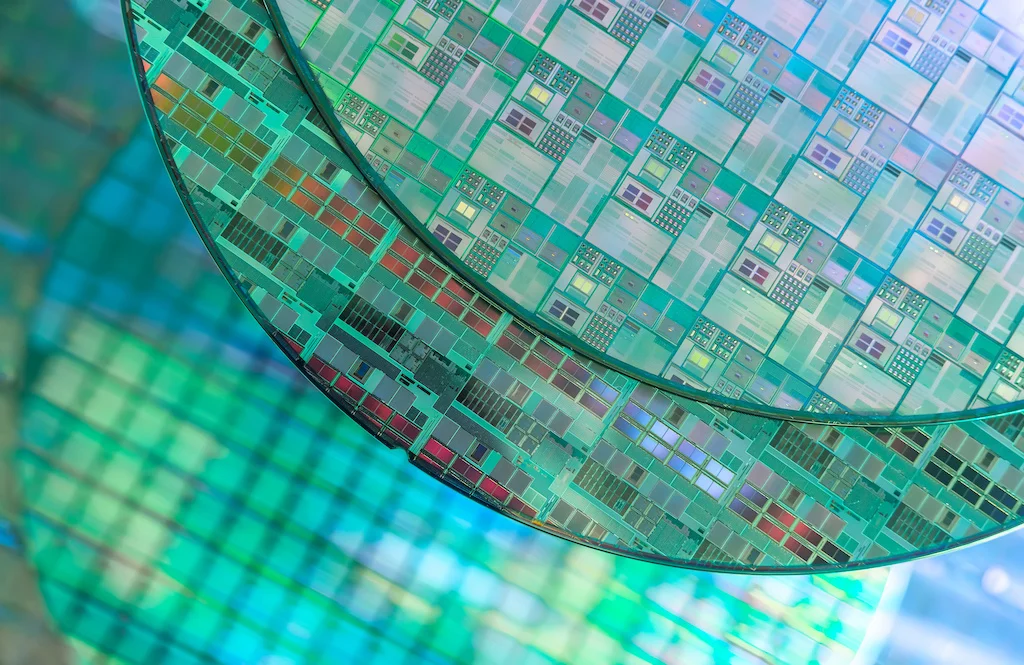

The global semiconductor industry has reached a historic inflection point, with total market valuation exceeding $830 billion in 2025 and projections suggesting a surge toward the $1 trillion mark by 2026. According to recent data from market research firm Omdia, this rapid acceleration is being fueled primarily by the insatiable demand for artificial intelligence (AI) infrastructure, alongside broad-segment growth in automotive and industrial electronics. However, this economic expansion is occurring against a backdrop of significant geopolitical instability, including the ripple effects of conflict in the Middle East and evolving trade regulations concerning high-performance computing exports to China.
The AI Hardware Surge and the Evolution of Memory
At the forefront of the industry’s growth is the critical development of High-Bandwidth Memory (HBM). Industry leaders such as SK hynix and Micron are racing to secure the supply chain for the next generation of AI accelerators. SK hynix has recently signaled a pivot toward HBM4, the next iteration of memory technology designed to provide the massive data throughput required by upcoming AI models. This move comes as Nvidia, the dominant force in the GPU market, continues to refine its product roadmap.
During the most recent GPU Technology Conference (GTC), Nvidia and its partners highlighted the increasing integration of H200 processors. Of particular note is the reported restart of H200-series shipments to the Chinese market. These versions have been recalibrated to comply with U.S. export controls while still offering substantial performance for Chinese enterprises. The strategic importance of these chips cannot be overstated, as they represent the primary engine for generative AI development globally.
Complementing this hardware momentum, Micron Technology recently released its second-quarter fiscal 2026 financial results, beating analyst expectations. The company’s performance is widely viewed as a bellwether for the broader memory market, indicating a sustained recovery in average selling prices and a tightening of supply for advanced DRAM and NAND products.
Geopolitical Impacts and Supply Chain Volatility
The semiconductor industry remains highly sensitive to global conflicts, particularly the ongoing tensions involving Iran. Analysts are closely monitoring how the regional instability impacts energy prices and logistics corridors, which are vital for the transport of raw materials and finished wafers. While direct manufacturing is largely concentrated in East Asia and North America, the global nature of the "just-in-time" supply chain means that any disruption in the Middle East can lead to increased freight costs and lead-time delays for European and American equipment manufacturers.
Simultaneously, trade policies continue to shift. The U.S. government’s ongoing probe into automotive technology—specifically regarding Tesla’s integrated systems—highlights the increasing intersection of national security and consumer electronics. These investigations often focus on data privacy and the origin of critical components, adding a layer of regulatory complexity for manufacturers operating across international borders.
Breakthroughs in Photonics and Quantum Science
Technological innovation is moving beyond traditional silicon architectures. A significant deal in the field of Thin-Film Lithium Niobate (TFLN) photonics has signaled a shift toward more efficient data center interconnects. TFLN technology allows for faster optical modulation and lower power consumption, which is essential as AI workloads push the limits of traditional electrical signaling.
In the realm of fundamental science, the 2025 ACM A.M. Turing Award has been bestowed upon Charles H. Bennett and Gilles Brassard. Their pioneering work in quantum information science and quantum cryptography laid the groundwork for modern secure communications. This recognition coincides with a surge in quantum hardware development, including a world-first quantum battery prototype developed by researchers at CSIRO. Unlike traditional chemical batteries, quantum batteries leverage the principles of entanglement and superposition to potentially achieve near-instantaneous charging—a breakthrough that could eventually revolutionize portable electronics and electric vehicles.
Furthermore, a research team at UCLA has addressed a significant nanoscale bottleneck in semiconductor performance. By developing a "contact-induced charge-transfer doping method" using silver oxide nanoclusters, the team has successfully improved electrical current flow in perovskite semiconductors. This development could pave the way for a new generation of high-efficiency solar cells and flexible electronics.
Corporate Product Expansions and Manufacturing Milestones
Major players in the semiconductor ecosystem are expanding their portfolios to meet the specific needs of the AI era. Infineon has introduced several high-voltage Intermediate Bus Converter (HV IBC) reference designs and the XENSIV TLE4978 hybrid Hall and coil current sensor. These components are critical for the power management systems of massive AI data centers, which require ultra-low noise and high-precision current sensing to maintain stability under heavy computational loads.

Intel has also made significant strides with the launch of its Core Ultra 200HX-plus series mobile processors. Designed for high-performance laptops, these chips integrate advanced AI processing capabilities directly into the consumer and professional mobile markets, further decentralizing AI away from the cloud and toward the "edge."
In the manufacturing and Electronic Design Automation (EDA) sectors, the focus has shifted toward yield improvement and verification. Siemens EDA is championing the use of shared data to improve manufacturing yields, emphasizing the need for secure data exchange between foundries and designers. Additionally, new platforms for Network-on-Chip (NoC) verification automation are reducing the time-to-market for complex System-on-Chip (SoC) designs, which often contain billions of transistors.
Addressing the Global Talent Shortage
As the industry expands toward a trillion-dollar valuation, the shortage of skilled labor has become a primary concern for both governments and private corporations. In the United States, Syracuse University, in partnership with Micron and the National Science Foundation (NSF), has launched a unique program that pays students $2,400 to engage with semiconductor and quantum technology curriculum. This initiative aims to build a pipeline of technicians and engineers to staff the massive "megafabs" currently under construction in New York and Idaho.
The Semiconductor Industry Association (SIA) has also identified military veterans as a vital, untapped resource for the workforce. By providing transitional training, the industry hopes to fill roles in manufacturing and facility management that are critical to domestic production.
The challenge is equally acute in Europe. A report by Frontier Economics suggests that the United Kingdom will require an additional 79,000 workers in the AI, cybersecurity, and semiconductor sectors by 2035. To address this, Arm has teamed up with Anglia Ruskin University to open the ARU Arm AI Lab in Cambridge, providing students with direct access to the hardware and software tools used in the global chip design industry.
Cybersecurity Threats in the Age of AI
As AI becomes the dominant workload for semiconductors, the security of these models has come under intense scrutiny. The think tank IAPS has highlighted the growing threat of "AI distillation attacks." In these scenarios, malicious actors query a proprietary AI model to observe its outputs and then use that data to train a "clone" model. This effectively steals the intellectual property and the billions of dollars in R&D investment behind the original AI.
Security researchers are also focusing on the vulnerabilities of the hardware itself. With the rise of chiplets and complex 2.5D/3D packaging, ensuring that no malicious "hardware trojans" are inserted during the manufacturing or assembly process has become a top priority for defense and aerospace contractors.
A Look Ahead: Industry Events and Future Outlook
The remainder of 2026 is set to be a busy period for the industry, with several major conferences scheduled to address these evolving challenges. SEMICON China in Shanghai remains a critical venue for monitoring the progress of the Chinese domestic equipment market, while the RSA Conference in San Francisco will likely dominate the conversation regarding AI security and encryption.
Other notable events include the International Reliability Physics Symposium (IRPS) in Tucson, which will focus on the long-term durability of chips used in harsh environments, and the Design, Automation and Test in Europe (DATE) conference in Italy.
The trajectory of the semiconductor industry suggests that while the path to $1 trillion is clear, it is fraught with technical and political hurdles. The integration of photonics, the realization of quantum computing components, and the stabilization of the global talent pipeline will be the deciding factors in which companies—and nations—emerge as the leaders of this new silicon age. As AI continues to permeate every aspect of the global economy, the underlying semiconductors have moved from being mere components to the very foundation of modern geopolitical power and economic stability.