
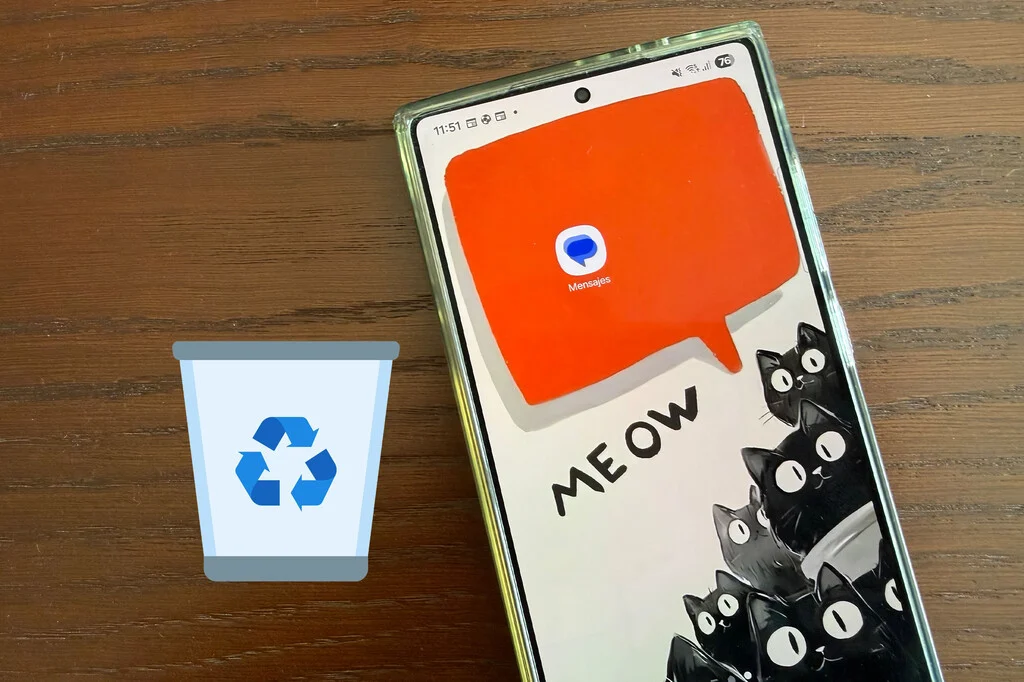

The digital landscape has long accustomed users to a safety net for deleted content, a feature prominently established by email clients and mobile photo galleries through "trash" or "recycle bin" functionalities. This ubiquitous mechanism provides a crucial grace period, allowing individuals to retrieve inadvertently deleted emails or cherished photographs, thereby mitigating the frustration and potential loss associated with accidental data erasure. However, a significant gap in this digital safety net has persisted within the realm of text messaging, particularly concerning traditional SMS and the increasingly prevalent Google Messages chats. Historically, deleting a message in these platforms often meant its permanent disappearance, an irreversible action that could lead to significant inconvenience, especially when vital information such as verification codes, appointment details, or crucial contact information was involved. Recognizing this longstanding user pain point, Google has now announced a pivotal update: the integration of a dedicated "Trash" folder within its Google Messages application, fundamentally altering how users manage and recover their conversational data.
This new feature, officially confirmed by Google through updates to its support documentation, signifies a strategic move to align Google Messages with contemporary data management standards found across other digital services. The implementation of a "Trash" folder, referred to as "Papelera" in its Spanish localization, introduces a 30-day retention period for deleted messages. This window allows users ample time to reconsider their deletion choices and recover any message or chat that was removed in error. The change represents more than just a functional addition; it reflects Google’s ongoing commitment to enhancing the user experience on its Android messaging platform, addressing a critical need for data recovery and mitigating the stress associated with irreversible digital actions.
The Pervasive Challenge of Accidental Deletion in Digital Communication
The experience of accidentally deleting a digital item is universally understood. From mis-swiping an email to inadvertently clearing a photo from a crowded gallery, the human error factor is an inherent part of digital interaction. For decades, software developers have responded to this reality by integrating recovery mechanisms. Early desktop operating systems introduced the "Recycle Bin" or "Trash Can," providing a physical metaphor for a temporary holding area for discarded files. This concept quickly permeated other applications, with email services like Gmail, Outlook, and Yahoo Mail adopting "Trash" or "Deleted Items" folders that automatically retain messages for a set period before permanent erasure. Similarly, modern smartphone operating systems, both Android and iOS, have implemented "Recently Deleted" albums for photos and videos, offering users a grace period, typically 30 days, to retrieve media.
However, text messaging, particularly SMS, remained an anomaly in this regard. The simplicity and immediacy of SMS, a technology that predates many modern data management paradigms, meant that deletion was often instantaneous and absolute. While modern chat applications like WhatsApp and Telegram introduced features like "delete for everyone" or "delete for me," these often focused on removing messages from the recipient’s view or offered limited, if any, personal recovery options once a message was deleted by the user from their own device. Google Messages, as the default messaging application for Android devices and a primary vehicle for SMS and the newer RCS (Rich Communication Services) standard, largely followed this convention. A deleted SMS or chat often vanished without a trace, a critical vulnerability for users relying on messages for temporary yet vital information.
Consider the common scenarios: a two-factor authentication (2FA) code received via SMS, essential for logging into banking or email accounts; an address or time for an important appointment sent by a friend; a crucial detail from a work conversation; or even a sentimental message from a loved one. The accidental deletion of such messages could range from a minor inconvenience requiring a re-request to a significant security risk or missed opportunity. The absence of a recovery mechanism not only created frustration but also fostered a sense of insecurity, pushing users to adopt workarounds or simply be extra cautious, often at the expense of efficient message management. Google’s introduction of the "Trash" folder directly addresses this long-standing deficiency, bringing Google Messages up to par with the expected standards of modern digital data retention.
Google’s Strategic Move: Introducing the ‘Trash’ Folder
The official announcement, disseminated through Google’s support center, confirms that the traditional "Delete" option within the Google Messages app is being superseded by a more nuanced "Move to Trash" functionality. This change is not merely a linguistic alteration but a fundamental shift in the underlying data management process. Once a user opts to delete a message, it will no longer be immediately purged from the system. Instead, it will be relocated to the newly established "Trash" folder.
The operational mechanics of this "Trash" folder are designed to be intuitive, mirroring the functionality of similar features in other applications. Messages sent to the "Trash" will reside there for a period of 30 days. During this window, users have complete autonomy to browse the contents of the folder, select individual messages or entire conversations, and restore them to their original location within the main message threads. This restoration process is intended to be seamless, instantly re-integrating the message as if it had never been deleted. Furthermore, for users who are absolutely certain that the deleted content holds no further value, the "Trash" folder can be manually emptied at any time, providing an option for immediate and permanent deletion before the 30-day retention period expires. This dual approach offers both a safety net and continued user control over data privacy.
Accessibility to this new feature is designed for convenience. Google has confirmed that the "Trash" folder will be readily available through the application’s profile menu, typically accessed by tapping on the user’s profile picture within the Google Messages interface. This prominent placement ensures that users can easily navigate to and manage their deleted messages without having to delve into complex settings menus. The integration into the profile menu aligns with common UI/UX practices for managing account-specific or personal data features within applications.
A Historical Perspective: The Evolution of Digital Data Recovery
The concept of a "trash" or "recycle bin" has a rich history in computing, evolving alongside user needs and technological capabilities. Initially, deleting a file on early computer systems was often an immediate and irreversible action, reflecting the limited storage capacities and simpler operating paradigms of the era. The introduction of graphical user interfaces (GUIs) in the 1980s, particularly with systems like Apple Macintosh and later Microsoft Windows, brought forth the iconic "Trash Can" and "Recycle Bin" metaphors. These visual representations served not only as a place for discarded items but also as a symbolic buffer against accidental data loss.
As the digital age progressed, the importance of data recovery grew exponentially. The proliferation of email in the 1990s and early 2000s highlighted the need for message retention, leading to the standardization of "Deleted Items" or "Trash" folders in virtually all email clients and webmail services. This became a non-negotiable feature, driven by the critical role email played in personal and professional communication. Similarly, with the advent of digital photography and later smartphone cameras, the volume of personal media skyrocketed. Users quickly realized the emotional and practical value of their photos, prompting operating systems to introduce "Recently Deleted" folders, offering a last chance to recover precious memories.
However, text messaging, particularly the SMS standard, remained somewhat of an outlier. Born in an era of constrained mobile network capabilities and simple feature phones, SMS was designed for immediate, ephemeral communication. The concept of a "trash" folder for SMS was not a priority. Even as smartphones became ubiquitous and messaging apps evolved, the fundamental "delete and gone" paradigm for SMS often persisted. Modern messaging apps like WhatsApp and Telegram did introduce features for message deletion, but these often focused on revoking messages from recipients or simply deleting the message from the sender’s device without a recovery option, highlighting a different use case than a personal recovery bin. Google’s decision to introduce a "Trash" folder for Google Messages, encompassing both SMS and RCS chats, therefore represents a significant step in bringing this core messaging platform into full alignment with contemporary digital data management expectations.
The Messaging Ecosystem: Catching Up to User Demands
The messaging landscape is intensely competitive, with a multitude of platforms vying for user attention. WhatsApp, with over 2 billion users globally, offers a "Delete for everyone" option, allowing senders to recall messages within a limited timeframe, and a "Delete for me" option, which removes the message only from the user’s own chat history without a recovery bin. Telegram similarly provides options for deleting messages for all participants, even without a time limit, and for deleting messages locally. Apple’s iMessage, deeply integrated into the iOS ecosystem, allows users to "undo send" messages shortly after sending, and while messages can be deleted from a conversation, a dedicated "Trash" folder for recovery is not a default feature.
Against this backdrop, Google Messages has been on a journey to transform itself from a basic SMS application into a robust, feature-rich messaging platform powered by RCS. RCS, or Rich Communication Services, is positioned as the successor to SMS, offering features akin to modern chat apps: read receipts, typing indicators, higher-quality media sharing, and group chat enhancements. Google has been a primary driver behind the adoption of RCS, making it a cornerstone of its Android messaging strategy. By introducing the "Trash" folder, Google is not only addressing a critical user need but also strengthening the competitive position of Google Messages. It signals Google’s intent to provide a comprehensive and user-friendly messaging experience that can stand alongside, and even surpass, features offered by competing platforms.
This move is also indicative of a broader industry trend towards greater user control over their data. As digital lives become increasingly intertwined with online communication, the ability to manage, recover, and ultimately control personal data becomes paramount. A "Trash" folder provides an essential layer of data governance, empowering users to rectify mistakes and safeguard important information. This contributes to building trust and reliability in the Google Messages platform, encouraging wider adoption and deeper engagement among Android users.
Technical Considerations and Rollout Strategy
The implementation of a "Trash" folder for messages involves several technical considerations. For SMS, which are primarily stored locally on the device, the "Trash" functionality would likely involve a simple database flag change, moving the message to a designated "deleted" section within the local message database rather than immediate purging. When a message is restored, its flag is changed back, and it reappears in the main inbox. For RCS messages, which can leverage cloud infrastructure for certain features, the implementation might involve a combination of local and potentially cloud-based flags, though Google’s primary emphasis is usually on client-side control for privacy reasons. The 30-day retention period would be managed by the application, automatically purging messages after this duration unless manually restored or permanently deleted.
It is important to note that this "Trash" folder pertains to messages deleted by the user from their own device. It does not provide a mechanism to recover messages that were never received, or messages that were deleted by another party in a conversation using a "delete for everyone" type of feature (if such a feature were to be implemented in Google Messages, which currently is not the primary focus of this "Trash" update). The feature is specifically designed as a personal safety net for the user’s own message management.
The rollout of such a significant feature typically follows a phased approach. As observed by early reports, the feature might not be immediately available on all Android devices. Google often prioritizes its own Pixel devices for initial feature deployments, allowing for testing and refinement before a wider rollout. Following Pixel devices, the update is expected to progressively reach other Android smartphones, including those from manufacturers like Samsung, Xiaomi, and OnePlus. This staggered deployment ensures system stability and allows Google to address any unforeseen bugs or compatibility issues.
Users can anticipate receiving this feature through standard application updates distributed via the Google Play Store or through broader Google Play system updates. In some cases, depending on the specific device and manufacturer, the feature might also be tied to updates to the device’s custom Android skin or system software. Users eager to access the "Trash" folder should ensure their Google Messages app is up to date and regularly check for system updates on their devices. The progressive nature of the rollout means that while some users may have immediate access, others might need to wait several weeks or even months for the feature to become available on their specific hardware and software configuration.

Broader Implications for User Experience and the Android Ecosystem
The introduction of the "Trash" folder in Google Messages carries significant implications across several dimensions:
-
Enhanced User Experience and Reduced Anxiety: Perhaps the most immediate and tangible benefit is the marked improvement in user experience. The constant fear of accidentally deleting a crucial message is alleviated, fostering a more relaxed and confident approach to message management. Users no longer need to hesitate before clearing old conversations, knowing that a safety net exists. This reduces user anxiety and streamlines the process of decluttering message inboxes.
-
Improved Data Security and Recovery: For many, messages contain sensitive or critical information, from verification codes to personal appointments. The "Trash" folder acts as a vital layer of data security, safeguarding against inadvertent loss. It transforms a potentially destructive action into a reversible one, providing a critical recovery pathway for valuable information that might otherwise be permanently lost. This is particularly relevant in an age where multi-factor authentication often relies on SMS codes, making message retention a security imperative.
-
Strengthened Competitive Positioning of Google Messages: By integrating a feature that has long been standard in other forms of digital communication, Google Messages becomes a more complete and competitive platform. It closes a significant functionality gap compared to email and photo applications and aligns more closely with user expectations derived from the broader digital ecosystem. This could encourage more Android users to rely on Google Messages as their primary communication tool, potentially bolstering the adoption of RCS.
-
Building Trust and Reliability: The provision of robust data management features like a "Trash" folder contributes significantly to user trust in a platform. It demonstrates that Google is responsive to user needs and committed to providing a reliable and forgiving digital experience. This trust is crucial for the long-term success and growth of Google Messages as a central component of the Android ecosystem.
-
Alignment with Modern Data Governance Principles: The feature aligns Google Messages with modern data governance principles that prioritize user control, data retention, and recovery options. In an era of increasing awareness around data privacy and management, providing users with tools to manage their data effectively is not just a convenience but an expectation.
The Future Trajectory of Messaging on Android
The "Trash" folder is another step in Google’s ongoing commitment to evolving Google Messages and the broader Android messaging experience. The company’s push for universal RCS adoption continues, aiming to provide a rich, secure, and modern messaging standard that transcends the limitations of traditional SMS. Features like end-to-end encryption for RCS messages, currently available in one-on-one conversations, and continuous improvements to group chat functionalities are indicative of this trajectory.
Future enhancements could potentially include more sophisticated message organization tools, deeper integration with other Google services (e.g., calendar for appointment messages), and even more granular control over message retention policies. The introduction of the "Trash" folder lays foundational groundwork, demonstrating Google’s willingness to invest in core user experience functionalities that enhance the utility and reliability of its messaging platform. As the digital world continues to evolve, the ability to manage and recover one’s digital communications will remain a cornerstone of a positive and secure user experience.
In conclusion, the integration of a "Trash" folder into Google Messages is far more than a minor update; it is a significant enhancement that addresses a long-standing user frustration and brings the platform into line with modern digital data management expectations. By providing a 30-day window for message recovery, Google is empowering users with greater control over their conversations, mitigating the risks of accidental data loss, and ultimately fostering a more secure, reliable, and user-friendly messaging environment on Android devices. This strategic addition underscores Google’s continued efforts to refine and elevate Google Messages as a competitive and indispensable communication tool for millions worldwide.