
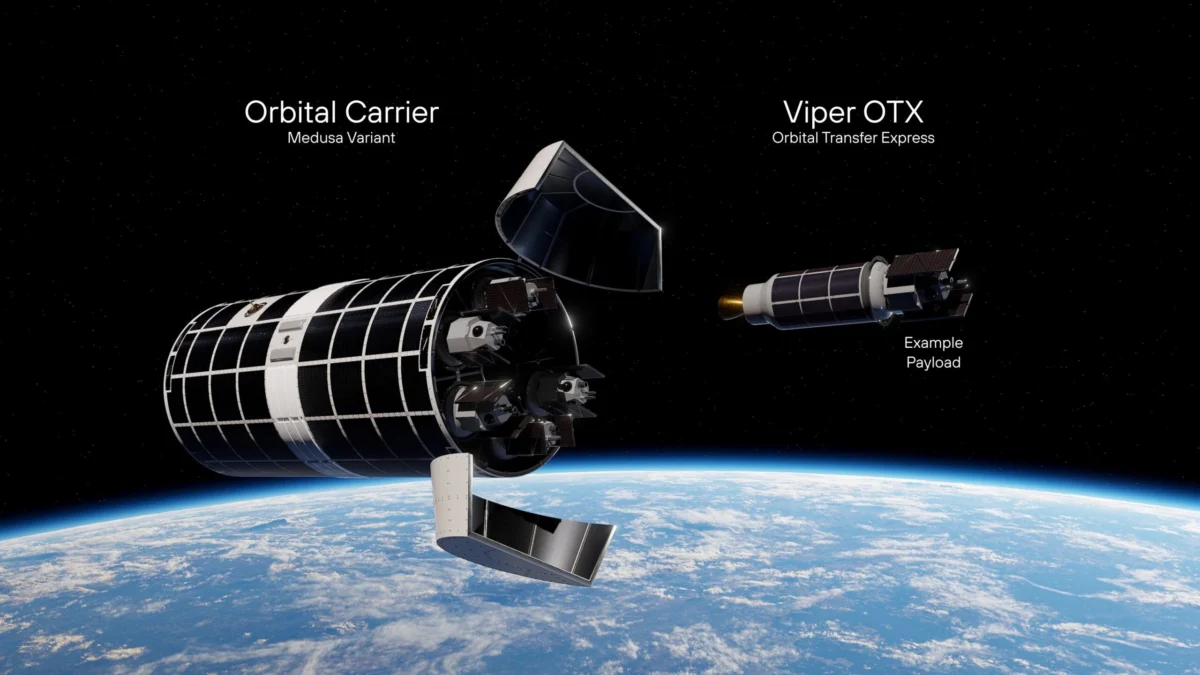

The United States Space Force, through its dedicated innovation arm SpaceWERX, has officially awarded a Strategic Funding Increase (STRATFI) contract to Gravitics, a Washington-based aerospace manufacturer specializing in large-scale orbital infrastructure. This agreement, which represents a total investment of up to $60 million through a combination of government funding and private capital, is designed to accelerate the development and flight demonstration of Gravitics’ "Orbital Carrier" architecture. The initiative marks a significant pivot in military and commercial space logistics, moving away from a reliance on ground-based launches toward a model of persistent, on-orbit readiness. Under the terms of the contract, Gravitics will execute a pathfinder mission involving its proprietary Viper orbital transfer vehicle (OTV) to demonstrate the ability to deploy payloads into high-energy orbits directly from a pre-positioned orbital platform.
The core of the Gravitics proposal centers on the concept of "on-demand launch from orbit," a capability that the company likens to a maritime aircraft carrier. While traditional space operations require months or years of planning to align a satellite with a specific launch window on a ground-based rocket, the Orbital Carrier architecture seeks to sequester fully integrated satellites and transfer vehicles in space. This pre-positioning allows operators to respond to emerging threats, environmental disasters, or commercial opportunities within minutes or hours, effectively bypassing the logistical bottlenecks of terrestrial launch sites and atmospheric weather constraints.
The Evolution of Orbital Logistics and the Viper Demonstrator
The upcoming flight demonstration will serve as a critical validation of the Gravitics technology stack. The mission profile involves launching a pathfinder Orbital Carrier on a Low-Earth Orbit (LEO) rideshare mission. Once established in LEO, the system will deploy the Viper orbital transfer vehicle. The Viper is engineered to act as a high-performance "tug," capable of maneuvering between different orbital planes and altitudes. A primary objective of the demonstration is the successful delivery of a third-party payload to a high-energy orbit, such as Geostationary Transfer Orbit (GTO) or beyond.
This maneuverability is essential for the modern vision of space operations. Historically, once a satellite reached its initial drop-off point from a rocket, its ability to move was limited by its onboard propellant and small thrusters. By utilizing a dedicated transfer vehicle like the Viper, the Space Force and commercial clients can reposition assets more aggressively. This capability is particularly relevant for the "high-energy" requirements of the Space Force, which increasingly looks toward Medium Earth Orbit (MEO) and Geostationary Orbit (GEO) for surveillance, communication, and navigation resilience.
Strategic Context: The Rise of Tactical Responsive Space (TacRS)
The STRATFI award to Gravitics is situated within a broader strategic push by the Department of the Air Force and the U.S. Space Force to achieve "Tactical Responsive Space" (TacRS). As space becomes an increasingly contested domain, the ability to rapidly replace a disabled satellite or deploy a new capability in response to a geopolitical crisis has become a top priority for the Pentagon.
General B. Chance Saltzman, Chief of Space Operations, has frequently emphasized the need for "Dynamic Space Operations," a doctrine that treats the space domain not as a static environment for long-lived, stationary assets, but as a maneuver space similar to the air or sea. The Gravitics Orbital Carrier fits precisely into this doctrine. By maintaining a "magazine" of satellites and transfer vehicles already in orbit, the Space Force can achieve a level of responsiveness that ground-based launches—despite the progress made by rapid-launch providers—simply cannot match.
The STRATFI program itself is a specialized funding mechanism managed by AFWERX and SpaceWERX. It is designed to bridge the "valley of death" that many aerospace startups face when transitioning from a successful prototype to a full-scale production program. By requiring a match of private investment alongside government funds, the STRATFI program ensures that the technologies receiving support have both military utility and commercial viability. For Gravitics, the $60 million injection provides the necessary runway to scale its manufacturing capabilities and finalize the complex software and hardware integrations required for autonomous orbital docking and deployment.
Timeline and Developmental Milestones
Gravitics has established an ambitious timeline for the realization of its Orbital Carrier architecture. While the specific launch date for the LEO pathfinder mission remains subject to manifest availability and technical readiness, the company has been rapidly expanding its physical footprint to meet production demands.
- Foundational Design (2021-2023): Gravitics emerged with a focus on large-diameter space station modules, known as StarMax. These modules, ranging up to 8 meters in diameter, provided the structural and engineering foundation for the larger Orbital Carrier concept.
- Contract Award and Integration (2024): The receipt of the SpaceWERX STRATFI contract initiates the formal integration phase. During this period, Gravitics will finalize the specifications for the Viper OTV and coordinate with third-party payload providers.
- Hardware-in-the-Loop Testing (Expected 2025): Before flight, the Viper and Carrier systems will undergo rigorous ground testing to simulate the vacuum and thermal extremes of space, as well as the precision maneuvering required for payload release.
- Pathfinder Launch (Post-2025): The LEO rideshare mission will serve as the "Go/No-Go" point for the architecture. Success in this mission will likely lead to follow-on contracts for a permanent orbital presence.
Technical Analysis: Overcoming the Constraints of Terrestrial Launch
To understand the impact of the Gravitics architecture, one must consider the inherent limitations of current launch models. Even with the advent of reusable rockets, the process of "getting to space" is fraught with variables. High-velocity winds, lightning, and technical glitches on the pad frequently cause delays. Furthermore, the orbital mechanics of a ground launch often dictate specific "launch windows" that may only open once a day or once every few days for a specific destination.
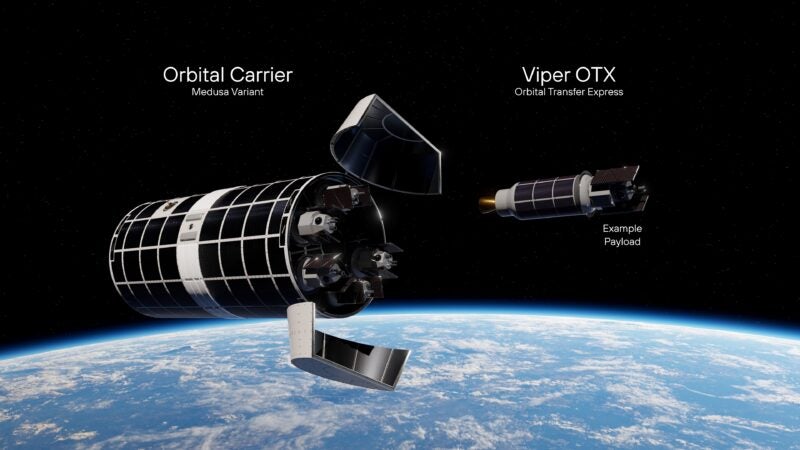
The Orbital Carrier bypasses these issues by separating the "climb to orbit" from the "deployment to mission." A large rocket can carry a dozen satellites and several Viper OTVs to a "parking orbit" in a single, cost-effective launch. These assets then sit in a state of readiness. When a specific need arises—such as the need to inspect a malfunctioning satellite or provide emergency bandwidth over a conflict zone—the Viper OTV can be activated immediately.
The "high-energy" aspect of the Viper mission is particularly significant. Reaching orbits far from Earth requires a great deal of "Delta-V" (a change in velocity). Most small satellites do not have the fuel capacity to move from a standard LEO drop-off to a higher orbit. The Viper acts as a specialized locomotive, providing the necessary thrust to ferry these smaller, specialized payloads to their final destinations, thereby extending the life of the satellite by preserving its onboard fuel for station-keeping.
Official Reactions and Industry Implications
The announcement has drawn positive reactions from both defense officials and industry analysts. Colin Doughan, CEO of Gravitics, underscored the critical nature of the partnership, stating that the collaboration with the U.S. Space Force is a testament to the changing requirements of national security. He noted that in modern scenarios where "every minute counts," the ability to deploy assets from orbit rather than the ground will become an indispensable tool for commanders.
Industry experts view the Gravitics contract as a signal that the Space Force is moving toward a more diversified and resilient orbital architecture. Rather than relying on a few large, expensive "exquisite" satellites, the trend is moving toward "proliferated" constellations and mobile logistics. The Orbital Carrier serves as the backbone for this new ecosystem.
Furthermore, the commercial implications are vast. The burgeoning "Blue Economy"—which includes orbital manufacturing, asteroid mining, and space tourism—will require robust logistical support. A system that can move parts, fuel, and finished goods between different orbits will be the "interstate highway system" of the 21st century. Gravitics is positioning itself not just as a defense contractor, but as a primary infrastructure provider for this future economy.
Challenges and Risk Factors
Despite the significant funding and strategic backing, the path to a fully operational Orbital Carrier is not without hurdles. The technical complexity of long-term "sequestering" of satellites in orbit is substantial. Space is a harsh environment characterized by extreme temperature fluctuations and ionizing radiation, which can degrade electronics and mechanical seals over time. Maintaining the "health" of a satellite while it sits idle in a carrier for months requires advanced thermal management and power systems.
Additionally, the Viper OTV must demonstrate flawless autonomous docking and maneuvering. In the crowded environment of LEO, any malfunction during a high-speed maneuver could result in a collision, creating debris and jeopardizing other orbital assets. Gravitics will need to satisfy stringent safety requirements from both the Space Force and international regulatory bodies to ensure that their "carrier" does not become a liability.
Conclusion: A New Era of Space Mobility
The $60 million STRATFI contract marks a definitive moment for Gravitics and the U.S. Space Force. It represents a shift in thinking from space as a destination to space as an operational theater. By funding the Orbital Carrier and the Viper transfer vehicle, the United States is investing in a future where orbital presence is synonymous with orbital mobility.
As the pathfinder mission approaches, the aerospace industry will be watching closely. A successful demonstration will prove that the constraints of the Earth’s atmosphere and the rigid schedules of the launch pad are no longer the ultimate arbiters of space access. Instead, the "high ground" will be held by those who can maneuver, respond, and deploy from the stars themselves. The partnership between Gravitics and SpaceWERX is a foundational step in building that reality, ensuring that the next generation of space infrastructure is as dynamic and resilient as the missions it is designed to support.