
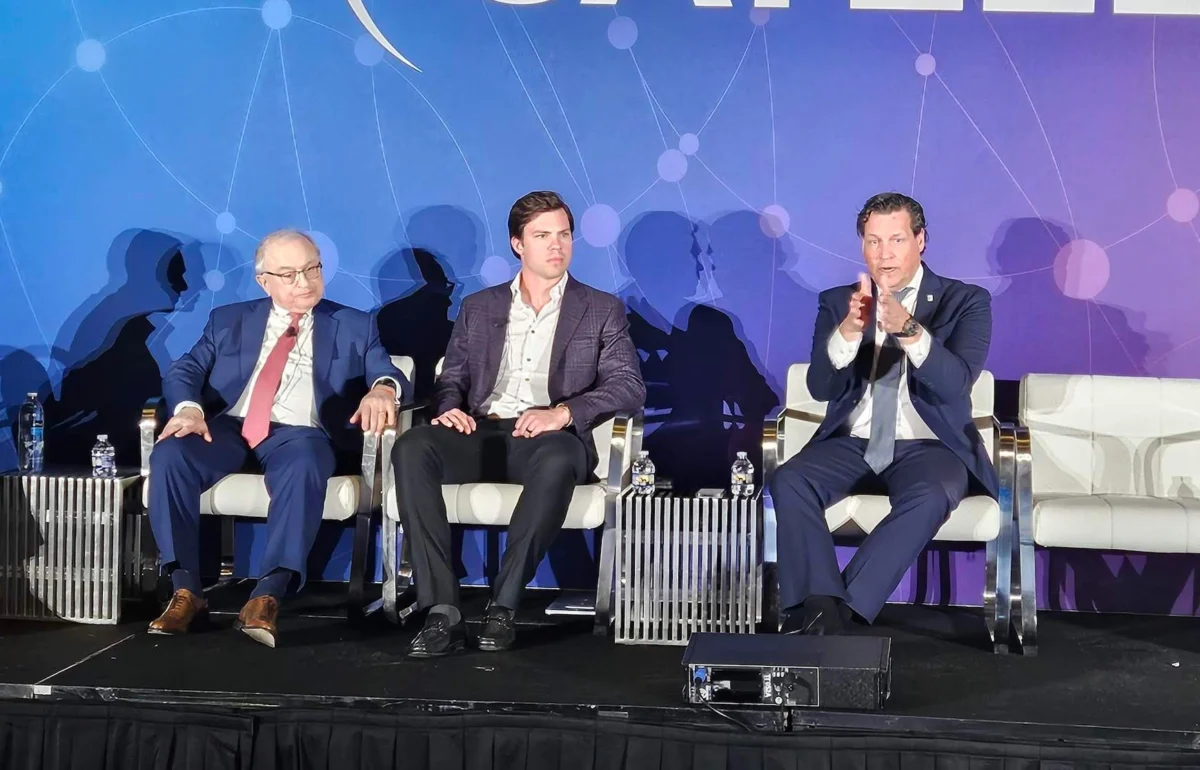

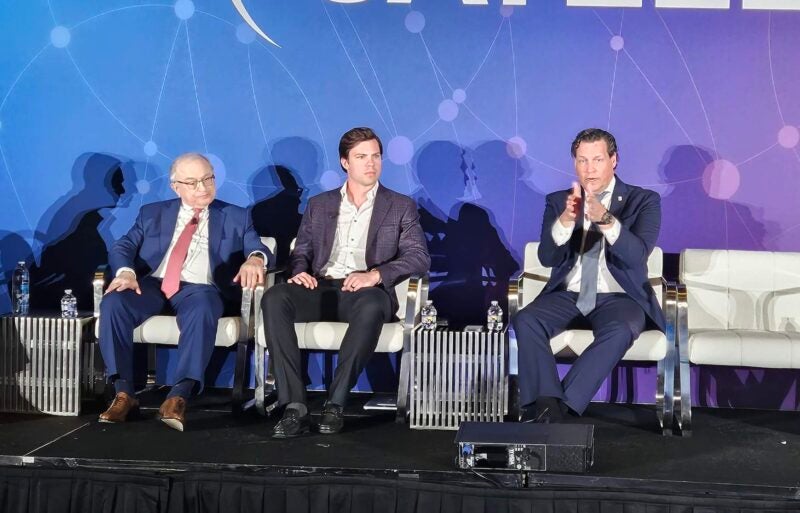
The satellite communications landscape is currently navigating its most profound structural transformation since the dawn of the space age, as the rise of vertically integrated Low-Earth Orbit (LEO) megaconstellations forces a radical re-evaluation of the ground segment business model. At the recent SATShow conference in Washington, D.C., a panel of industry chief executives gathered to discuss the existential challenges and burgeoning opportunities presented by the rapid dominance of players like SpaceX’s Starlink and Amazon’s Project Kuiper. The consensus among leaders from Ovzon, SpaceBridge, and Comtech was clear: the traditional model of selling standardized hardware to a mass consumer market is effectively over, replaced by a high-stakes shift toward specialized niches, multi-orbit orchestration, and national security services.
For decades, the satellite ground segment—the industry responsible for the terminals, modems, and gateways that connect users to spacecraft—relied on a predictable ecosystem of Geostationary Earth Orbit (GEO) satellites. However, the arrival of LEO constellations, which operate at altitudes between 500 and 2,000 kilometers compared to GEO’s 35,786 kilometers, has disrupted the pricing, performance, and procurement norms of the entire sector.
The Vertical Integration Challenge and the Decline of Consumer GEO
The primary driver of this disruption is vertical integration. Companies like Starlink do not merely provide bandwidth; they manufacture their own satellites, launch them on their own rockets, and produce their own proprietary user terminals. This closed-loop system allows them to achieve economies of scale that traditional hardware manufacturers find impossible to match.
David Gelerman, CEO of SpaceBridge, a company renowned for designing and manufacturing advanced satellite ground networking equipment, offered a blunt assessment of the market’s current state. He noted that Starlink’s ability to reduce costs to a bare minimum and pass those savings directly to the consumer has effectively "evicted" traditional ground segment companies from the price-sensitive broadband market.
"Where it leaves us is, it takes us out of the equation," Gelerman stated during the panel. He pointed to the shifting fortunes of industry giants like Intelsat and SES as evidence that the legacy business model is under siege. In the past, consumer broadband was a reliable pillar for GEO operators, but the superior latency and competitive pricing of LEO services have lured those customers away. According to Gelerman, the consumer segment is "all gone," leaving traditional providers to seek refuge in geopolitically driven markets and specialized industrial applications.
The Reliability Gap: Why GEO Remains Essential for Mission-Critical Tasks
Despite the aggressive expansion of LEO constellations, Per Norén, CEO of Ovzon, argued that the reports of GEO’s demise are premature. Ovzon, which has transitioned from a terminal manufacturer to a provider of "SATCOM-as-a-Service," focuses heavily on the high-end requirements of national security and defense customers.
Norén emphasized that for mission-critical operations—such as remote piloting of unmanned aerial vehicles (UAVs) or secure military communications—the "best effort" connectivity offered by mass-market LEO constellations is often insufficient. "Almost is not a good thing for mission critical," Norén remarked, highlighting that GEO satellites offer a level of dedicated, predictable reliability that remains the gold standard for public safety and defense.
While LEO constellations provide impressive speeds, they are subject to different atmospheric and orbital handoff challenges. GEO satellites, being stationary relative to a point on Earth, provide a stable and consistent link that is easier to secure and maintain for long-term strategic operations. Norén’s perspective suggests a bifurcation of the market: LEO for the masses and general enterprise connectivity, and GEO for high-stakes, "always-on" government and defense requirements.
The Rise of Service Orchestration and Multi-Orbit Solutions
As the industry moves away from a "one size fits all" hardware approach, the new frontier of ground segment profitability lies in orchestration. This involves the complex software-driven management of connections across multiple orbits (LEO, MEO, and GEO) and multiple frequency bands (Ku, Ka, and X-band).
The modern satellite user—whether a naval vessel, a remote mining operation, or a mobile command center—does not want to be "obsessed with orbits," as Norén put it. Instead, they require a seamless capability that automatically selects the best available link based on latency, throughput, and security needs.
"Service orchestration will be the core of ground segment business for the future," Norén predicted. He noted that this is a "very hard problem to solve," particularly for government entities trying to manage these integrations in-house. This creates a lucrative opening for specialist systems integrators who can act as "orchestrators," providing a unified service layer that hides the underlying complexity of the shifting satellite links from the end user.
Niche Markets and the Direct-to-Device Revolution
Daniel Gizinski, President of Comtech’s Satellite & Space Communications Segment, observed that the changing face of the SATShow exhibit floor is a testament to the industry’s evolution. He noted that the influx of new players and innovative startups indicates a healthy, albeit turbulent, transition period.
Gizinski argued that the key to survival in the LEO era is "relentless focus" on specific customer problems. Historically, the ground segment chased the high-volume, low-margin consumer-grade market. By ceding that market to vertically integrated giants, traditional companies are now free to "run very fast" toward high-value, specialized segments.
One of the most significant emerging threats and opportunities is the "direct-to-device" (D2D) revolution. With the advent of 5G Non-Terrestrial Network (NTN) standards, standard smartphones are beginning to connect directly to satellites for emergency messaging and basic data. Gizinski pointed out that mobile phone manufacturers are producing 5G handsets with satellite connectivity that cost less than the shipping box of a legacy satellite ground station.
"That’s a reality that we have to face as an industry," Gizinski said. However, he identified a silver lining: while ground segment providers might be shut out of the handset market, they remain essential for the "backend" infrastructure. The connection between the satellite and the ground station (the gateway) requires high-throughput, high-frequency broadband processing—an area where Comtech and its peers continue to excel.
Data and Market Context: The Scale of the Shift
To understand the urgency of these CEO statements, one must look at the sheer scale of the LEO deployment. As of early 2024, SpaceX’s Starlink has launched over 5,000 satellites and amassed more than 2.3 million subscribers. In contrast, a traditional GEO operator might serve its entire customer base with fewer than 50 high-capacity satellites.
The economic pressure is further evidenced by the plummeting cost of data. In the GEO era, satellite bandwidth was a scarce, expensive commodity. LEO megaconstellations have flooded the market with capacity, driving down the price per megabit and forcing hardware providers to find value in software, security, and integration rather than just "moving bits."
According to market research from Northern Sky Research (NSR), the ground segment market is expected to grow to over $14 billion by 2030, but the composition of that revenue is shifting. Growth is no longer driven by simple VSAT (Very Small Aperture Terminal) sales but by Flat Panel Antennas (FPAs) and software-defined ground stations that can track multiple LEO satellites simultaneously.
Chronology of Disruption: From 2019 to the Present
The current crisis and pivot in the ground segment can be traced through a clear timeline of events:
- May 2019: SpaceX launches the first 60 Starlink satellites, signaling the beginning of the megaconstellation era.
- 2020-2021: The COVID-19 pandemic accelerates the demand for remote connectivity, highlighting the limitations of legacy GEO broadband in terms of latency for video conferencing.
- 2022: The conflict in Ukraine demonstrates the strategic utility of LEO constellations (Starlink) in modern warfare, prompting global militaries to rethink their SATCOM procurement.
- 2023: The 3GPP Release 17 standards are finalized, integrating satellite into the 5G ecosystem and paving the way for mass-market direct-to-device services.
- 2024: Amazon begins the deployment of its Project Kuiper prototype satellites, signaling the arrival of a second massive vertically integrated competitor.
Implications for the Future of Satellite Communications
The insights shared at SATShow suggest that the satellite industry is moving toward a "hybrid" future. The "winner-takes-all" mentality of the early LEO days is giving way to a more nuanced reality where different orbits serve different needs.
For ground segment providers, the path forward involves three strategic pillars:
- Software-Defined Everything: Moving away from proprietary hardware "black boxes" toward virtualized ground stations that can be updated via software to support new waveforms and constellations.
- Defense and Sovereignty: Catering to nations that require their own secure, sovereign satellite capabilities, which cannot be outsourced to a single commercial provider like SpaceX.
- Complex Integration: Providing the "glue" that connects LEO, GEO, and terrestrial 5G networks into a single, resilient communication fabric.
While the "economy of scale" provided by Starlink has decimated the traditional consumer satellite market, it has also expanded the total addressable market for satellite services. By making satellite connectivity a mainstream technology, the LEO giants have created a world where more devices, more businesses, and more governments require the specialized, high-end services that only the traditional ground segment—with its decades of engineering expertise—can provide. The "exciting time" described by Per Norén is not one of easy growth, but one of rigorous adaptation and the birth of a more sophisticated, multi-layered global communications network.