
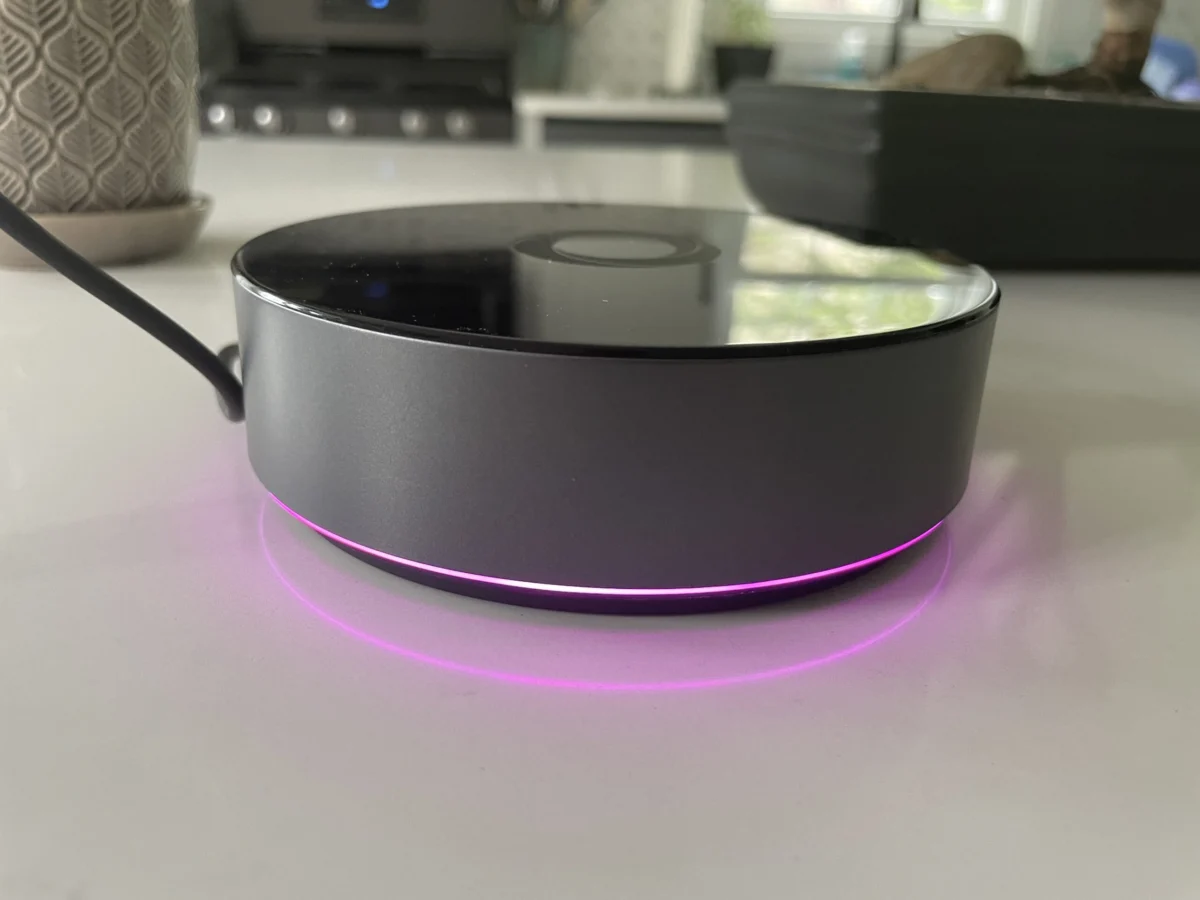

The smart home landscape is experiencing a significant evolution with the arrival of new, powerful hubs designed to offer greater local control and fewer subscription dependencies. Following the earlier launch of the $69 Homey Bridge, Athom has now introduced the $399 Homey Pro to the U.S. market. This premium device aims to address the limitations of its more affordable counterpart by significantly reducing subscription fees and expanding device compatibility, while also promising future support for emerging standards like Matter over Thread.
Background and Evolution of the Homey Ecosystem
The Homey ecosystem, developed by Dutch company Athom, has been steadily building a reputation for its ambitious approach to unifying disparate smart home devices. The original Homey Pro, launched in 2019, established the brand’s commitment to a comprehensive connectivity approach. The subsequent Homey Bridge, introduced as a more accessible entry point, offered a streamlined experience but came with certain limitations, including a cap on the number of connected devices without a monthly subscription.
The Homey Pro represents a significant step up in terms of hardware capabilities and user experience. It boasts a claimed 3.5 times more CPU performance than its predecessor and doubles the storage and memory compared to the Homey Bridge, featuring 8 GB of storage and 2 GB of RAM. This enhanced processing power is crucial for its core philosophy: maximizing local control for smart home devices. Unlike cloud-centric hubs, the Homey Pro prioritizes processing automations and device commands directly on the device, enhancing privacy and ensuring functionality even during internet outages, provided the connected devices themselves do not rely exclusively on cloud services.
Key Features and Connectivity
Both the Homey Bridge and Homey Pro share a similar core functionality, allowing users to add and manage smart home devices and create automated routines. However, the Pro model distinguishes itself with several key upgrades. It includes a Thread radio, operating at 833MHz, which is vital for compatibility with certain older devices and the expanding ecosystem of Thread-enabled products. Crucially, the Pro removes the five-device limit imposed on the Bridge, which requires a $2.99 monthly fee for additional device connections. The Homey Pro does offer an optional $0.99 monthly fee for cloud backups, a feature that enhances data security and recovery.
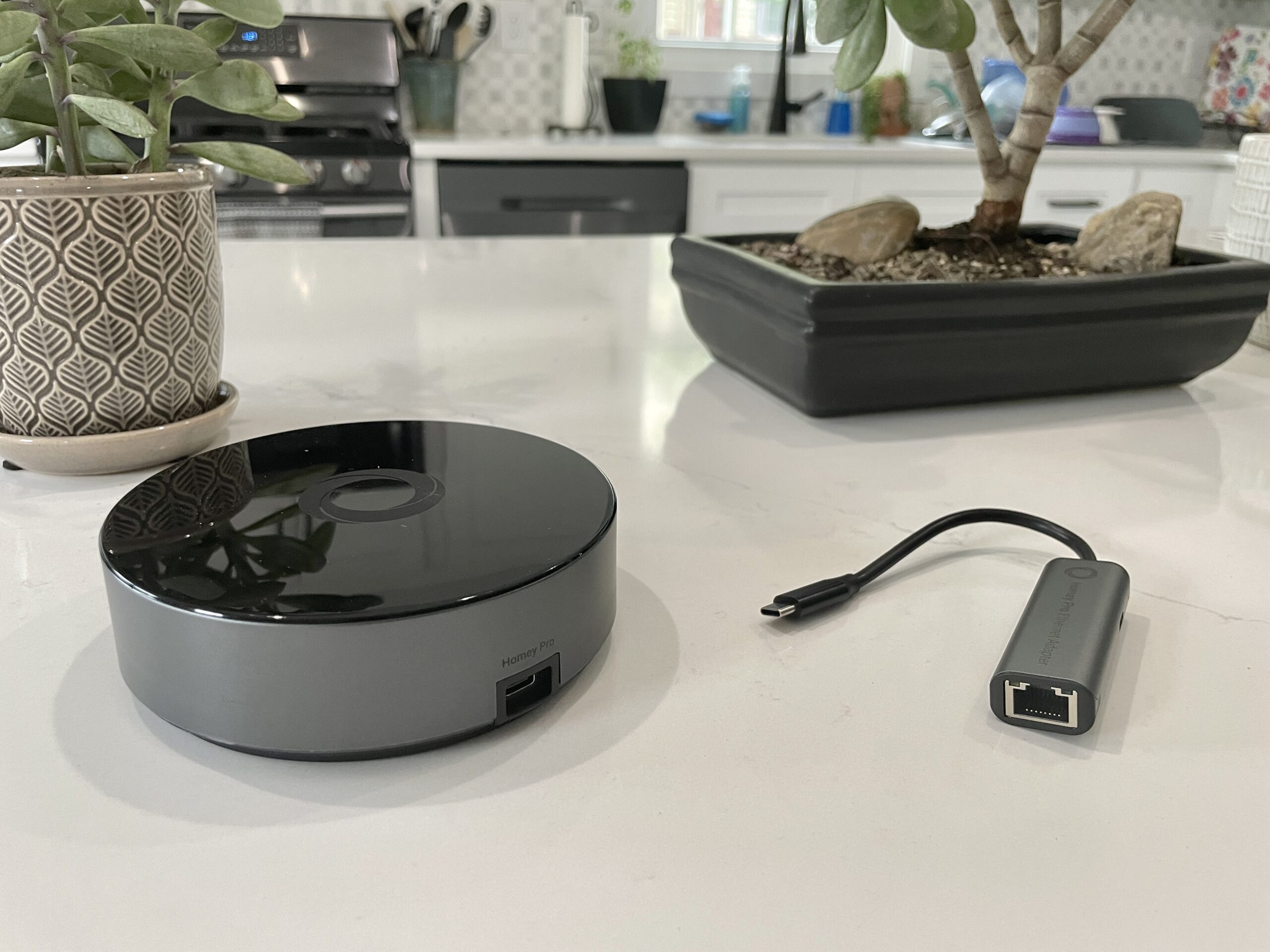
For the U.S. market, the Homey Pro is equipped with a robust suite of wireless technologies, including Wi-Fi (both 2.4GHz and 5GHz bands), Bluetooth, infrared, Zigbee, and Z-Wave. The addition of optional Ethernet connectivity for an extra $29 further enhances its network flexibility and reliability for users who prefer a wired connection. The promise of future Matter support, including Matter over Thread, positions the Homey Pro as a forward-looking smart home controller, aiming to integrate seamlessly with the next generation of smart devices.
Setup and User Experience
The initial setup process for the Homey Pro has been designed for ease of use, mirroring the positive experience reported with the Homey Bridge. Users connect the Pro to power via the included USB-C cable and charger, download the Homey mobile application, and follow a straightforward onboarding sequence. A particularly well-received aspect of the setup is the app’s intelligent questioning about the user’s home layout, such as the number of floors and the arrangement of rooms. This structured approach to defining the home’s architecture is a time-saver and provides a logical framework for device organization, a departure from the more manual room assignments often found in competing smart home applications.

Once connected to the home network, users can begin the process of integrating their smart devices. Homey claims support for over 50,000 devices, a figure that initially suggests broad compatibility. However, real-world testing revealed that the actual integration success can vary significantly based on the specific devices within a user’s smart home.
Device Compatibility: The Critical Bottleneck
While the Homey Pro’s extensive radio capabilities and claimed broad device support are compelling, the practical reality of device integration presents a significant hurdle for some users. In testing, a considerable portion of the smart home devices within the reviewer’s ecosystem were not recognized or fully functional with the Homey Pro.
Supported devices included popular brands like Lutron Caseta switches, Philips Hue bulbs, and Sonos speakers, which performed with near-instantaneous responsiveness when controlled via Homey. However, notable omissions and integration failures were observed with devices such as Schlage door locks, Ecobee thermostats, Nanoleaf lighting, Govee smart appliances, Wyze cameras, Eve Home devices, Logitech video doorbells, and many smart plugs.
Analyzing the Integration Gaps

Several factors contribute to these compatibility issues. The absence of Matter support at launch, though anticipated, explains why many Matter-certified smart plugs, which often rely on Thread, did not connect. A representative from Homey clarified that while Matter support is pending, devices working over Wi-Fi should be discoverable. However, the reviewer’s experience indicated that Matter devices utilizing Thread were the primary concern for these plugs.
The broader challenge lies in the granular nature of device support. While many brands are listed in the Homey app, the specific models owned by the user may not be included. For instance, Nanoleaf lights were partially supported; the more unconventional shapes like triangles, hexagons, and lines were recognized, but the standard Nanoleaf bulbs and light strips were not. This inconsistency extends to other brands. The reviewer’s Schlage Encode Wi-Fi lock, despite appearing in the app, failed to connect after authentication. Similarly, a Govee Wi-Fi kettle integration returned an error message, and a Cync by GE smart plug lacked any integration.
Even brands with extensive smart home presence, like Ecobee, presented limitations. While the Ecobee 3 Lite and its room sensors were supported, the reviewer’s Ecobee Thermostat Premium and a newer sensor were incompatible. The reviewer noted that a personal migration away from most Zigbee and all Z-Wave devices might skew the results, suggesting that users with a greater proportion of these legacy protocols might experience better success.
Navigating Device Support: A Prudent Approach
The lack of a readily accessible, comprehensive list of supported product integrations on the Homey website was a point of concern. However, an update clarified that this information is available under the "Apps" section on their website. The most effective strategy for potential buyers is to download the free Homey app and proactively search for their specific devices before committing to a purchase. This due diligence is critical given the $399 price point of the Homey Pro.

Advanced Features and Developer Potential
Beyond device integration, the Homey Pro offers advanced features that appeal to power users and developers. The ability to create custom integrations is a significant draw for those with niche devices or a desire for deeper control. Through the product’s web interface, users can obtain an API key and access example code using JavaScript and Node.js, suggesting that the Homey Pro operates as a Node.js server. While Athom positions these custom integration capabilities for "hobbyists and developers," it adds a layer of extensibility that is rare in consumer-grade smart home hubs.
The Homey App: A Strong Foundation
The user interface of the Homey app itself is a notable strength. It presents a modern and intuitive design, offering access to both basic and advanced functionalities. The organization of devices into rooms and floors, while requiring a secondary step after initial integration, is a well-executed feature that simplifies navigation and control.
A particularly insightful feature is the estimated smart home energy usage monitoring. This feature, which can be viewed in near real-time and historically, provides valuable insights into consumption patterns. Users are required to manually input the wattage of each device for accurate estimations, an effort that pays dividends in understanding energy expenditure. The system intelligently adjusts energy use calculations based on device output, such as dimming lights, and can display local environmental data like temperature, barometric pressure, and humidity via the web interface. Athom has indicated that if a device can report actual electricity usage, Homey will utilize that data directly.

Flows: Powerful Automation Engine
For automations and routines, Homey utilizes a system called "Flows." These are described as being more akin to the sophisticated automation capabilities found in platforms like Home Assistant than the simpler routines offered by major tech giants. Flows operate on a "When… and… then…" logic, allowing for complex conditional triggers and actions, including "else" conditions and the ability to trigger other Flows. The reviewer found these Flows to be robust and flawless in execution. While Flows can be created within the mobile app, an advanced mode in the web interface unlocks deeper customization and complexity.
Analysis and Implications
The Homey Pro arrives at a time when the smart home market is grappling with the dominance of cloud-based solutions and the promise of interoperability through standards like Matter. Its emphasis on local control and extensive radio support addresses a growing consumer demand for privacy and reliability. The $399 price point positions it as a premium device, targeting users who are willing to invest in a more robust and independent smart home infrastructure.
The primary implication of the Homey Pro’s current device support landscape is that it is not a universal solution. For users with a diverse collection of smart home devices, particularly those relying on newer protocols or specific proprietary integrations, thorough research into compatibility is paramount. The potential for custom development offers a lifeline for enthusiasts, but it is not a viable solution for the average consumer.

The Homey Pro’s success hinges on its ability to expand its device compatibility database and perhaps offer more granular filtering options for users to assess support before purchase. The ongoing development of Matter support is a critical factor that will influence its long-term appeal.
Conclusion
The Homey Pro presents a compelling vision for the future of smart home control: a powerful, locally-driven hub with broad connectivity. Its robust hardware, intuitive app, and sophisticated automation engine are significant strengths. However, the critical factor that determines its suitability for any given consumer is device compatibility. With a price tag of $399, users must meticulously verify that their existing and planned smart home devices are supported. For those who prioritize local control and privacy, and whose device ecosystem aligns with Homey’s current integration list, the Homey Pro offers substantial potential. For others, the wait for expanded compatibility or the consideration of alternative solutions, such as a well-configured Home Assistant setup, may be more prudent.
This review was updated on August 16, 2023, at 11:00 AM ET, with clarifications and corrections following communication with Homey representatives.