
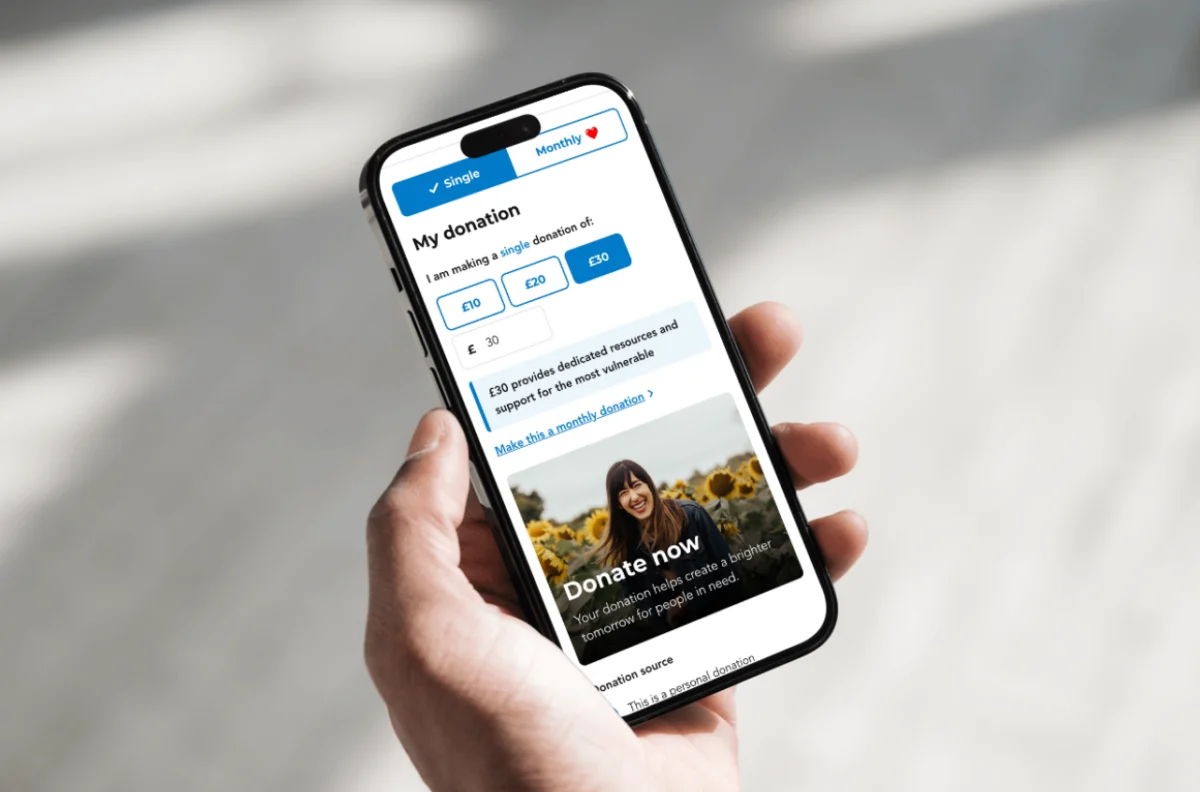

The digital transformation of the charitable sector has reached a critical juncture where the difference between a successful fundraising campaign and a failed one often rests on the seamlessness of the user experience. goDonate, a prominent UK-based Software-as-a-Service (SaaS) platform, has released data indicating that the integration of specialist address verification technology has fundamentally altered the conversion landscape for non-profit organizations. By utilizing precision data tools, the platform has reported conversion rates ranging from 30 to 60 percent, a figure that dwarfs the sector average of approximately 11 percent on mobile devices and 12 percent on desktop interfaces. This discrepancy highlights a growing "friction gap" in digital giving, where cumbersome data entry requirements lead to significant abandonment rates among potential donors.
The platform’s success is largely attributed to its strategic partnership with GBG Loqate, a global leader in location intelligence. By implementing real-time, type-ahead address autocomplete and data cleaning, goDonate has addressed one of the most persistent hurdles in the donation journey: the manual entry of personal details. For charities, this technological shift is not merely a matter of convenience; it is a vital economic lever. In an era where donor attention is fragmented and the "moment of giving" is fleeting, the ability to capture a contribution within seconds can determine the financial health of an organization.
The Evolution of Frictionless Giving: A Chronological Overview
The development of goDonate’s current infrastructure is the result of nearly a decade of observation and iterative design within the cultural and philanthropic sectors. The platform’s founder and CEO, Vicky Reeves, developed the blueprint for the service following an eight-year tenure as a Trustee at the British Museum. During her time there, Reeves identified a recurring problem: legacy systems were ill-equipped to handle the nuances of digital-first fundraising, often leading to high drop-off rates at the final stage of the transaction.
In 2015, a significant shift occurred in the data intelligence market when the UK-based GBGroup acquired Loqate, a San Mateo-based firm specializing in international address verification. This acquisition created a powerhouse in identity data intelligence, providing the robust API-driven infrastructure that goDonate would eventually adopt. By 2019, just prior to the global shift toward digital-only interactions precipitated by the COVID-19 pandemic, goDonate integrated Loqate’s technology to ensure that every address entered into its system was validated against official postal records in real-time.
This integration proved prescient. As the pandemic accelerated the adoption of contactless and online payments, charities that had invested in frictionless UX found themselves at a distinct advantage. Between 2024 and 2025, goDonate reported a 16 percent year-on-year growth, driven by a client roster that includes some of the UK’s most prominent non-profits, such as the NSPCC, Marie Curie, Action Against Hunger, Help for Heroes, and Blood Cancer UK.
The Psychology of the "Moment of Giving"
The massive disparity in conversion rates—where goDonate users convert at up to five times the industry average—is rooted in the behavioral psychology of the donor. According to Reeves, the act of giving is frequently driven by an immediate emotional response to a story, an image, or a specific appeal. When a donor clicks a "Donate" button, they are in a state of high intent. However, this intent is fragile.
In a traditional setup, a donor is often met with a long form requiring a name, email, street address, city, county, and postcode. On a mobile device, this process is prone to errors, leading to validation messages that force the user to correct their input. Each additional second spent on these tasks increases the likelihood of "donor fatigue." By contrast, the use of type-ahead technology allows a donor to find their address in just a few keystrokes, often completing the entire transaction in under a minute when paired with one-click payment methods like Apple Pay, Google Pay, or PayPal.
The data suggests that the sector has long suffered from a misconception that a truly motivated donor will persevere through any technical obstacle. The reality, as evidenced by the 11 percent industry average conversion rate, is that roughly nine out of ten potential donors abandon their contribution if the process becomes "painful."
The Gift Aid Gap: A £560 Million Problem
Beyond user experience, the accuracy of address data has profound implications for the financial efficiency of UK charities through the Gift Aid scheme. Gift Aid allows registered charities to reclaim the basic rate of tax on donations made by UK taxpayers, effectively increasing the value of a donation by 25 percent. Under this system, a £100 donation is worth £125 to the charity, provided the donor provides a valid declaration including their full name and home address.
However, the administrative burden of Gift Aid is substantial. According to the Charities Aid Foundation (CAF), an estimated £560 million in eligible Gift Aid goes unclaimed every year. A primary driver of this loss is "dirty data"—declarations that are incomplete, inaccurate, or associated with addresses that do not match official records. When a charity submits a Gift Aid claim to HM Revenue & Customs (HMRC) that contains errors, the claim is rejected.
For many non-profits, the process of correcting these errors is manual and labor-intensive. It is estimated that processing a single manual Gift Aid claim can take between five and ten minutes of staff time. For an organization processing thousands of donations monthly, this equates to hundreds of hours of administrative work that could be redirected toward frontline services. By validating addresses at the point of entry, goDonate ensures that the data reaching the charity’s back-office is "clean" from the start, significantly reducing the rejection rate of HMRC claims and maximizing the 25 percent "bonus" on every pound donated.
Data Decay and the Long-term Impact on Fundraising
The challenge for charities is not limited to new donations; it extends to the maintenance of legacy databases. Industry statistics indicate that consumer data decays at a rate of approximately 20 percent per year. This decay is caused by several factors, including donors moving house (an estimated 10 percent of the UK population moves annually) or passing away. For business-related donor data, the decay rate is even higher, reaching between 30 and 40 percent.
Inaccurate historical data represents a hidden cost for charities. Direct mail campaigns, which remain a staple of non-profit outreach, become significantly more expensive when a high percentage of mailers are sent to incorrect addresses. Furthermore, inaccurate data hinders a charity’s ability to conduct "wealth screening" or "donor profiling," which are essential for identifying potential major gift donors.
The partnership between goDonate and GBG Loqate is now evolving to address this legacy issue. Reeves has indicated that the next phase of their collaboration will involve helping charities clean and update their historical databases. By cross-referencing legacy data against Loqate’s global location intelligence, charities can "refresh" their records, ensuring that they can maintain a relationship with their donors even after they move.
Strategic Implications for the Non-Profit Sector
The success of the goDonate model offers several key takeaways for the broader non-profit sector:
- UX as a Fundraising Metric: User experience should no longer be viewed as a "nice-to-have" technical feature but as a core fundraising metric. A 40 percent increase in conversion rate is often more cost-effective than a 40 percent increase in marketing spend.
- The Importance of API-First Solutions: The ability for platforms like goDonate to integrate seamlessly with global data providers via APIs allows smaller SaaS firms to offer enterprise-grade technology to charities of all sizes. This levels the playing field, allowing smaller non-profits to achieve the same conversion efficiencies as major international NGOs.
- Global Scalability: While goDonate is predominantly UK-focused, the global reach of GBG Loqate allows the platform to support international non-profits. As charitable giving becomes increasingly borderless—particularly in response to international crises—the ability to verify addresses in multiple languages and formats is becoming a strategic necessity.
- Data Governance as Revenue Protection: Investing in data quality is a form of revenue protection. By preventing the entry of "dirty data," charities protect their ability to claim Gift Aid and reduce the long-term costs associated with data decay and failed marketing outreach.
Conclusion: The Future of Digital Philanthropy
As the charitable sector continues to navigate a landscape of economic uncertainty and shifting donor behaviors, the role of precision technology will only grow in importance. The results reported by goDonate demonstrate that when the "pain points" of giving are removed, the public’s willingness to support causes remains high.
The transition from manual data entry to automated, verified systems represents a fundamental shift in how non-profits interact with their supporters. By prioritizing the "moment of giving" and ensuring that every click has the highest possible chance of resulting in a completed, tax-efficient donation, platforms like goDonate are setting a new standard for the industry. For the hundreds of charities currently losing a share of the £560 million in unclaimed Gift Aid, the message is clear: the path to financial sustainability is paved with accurate, verified data.