
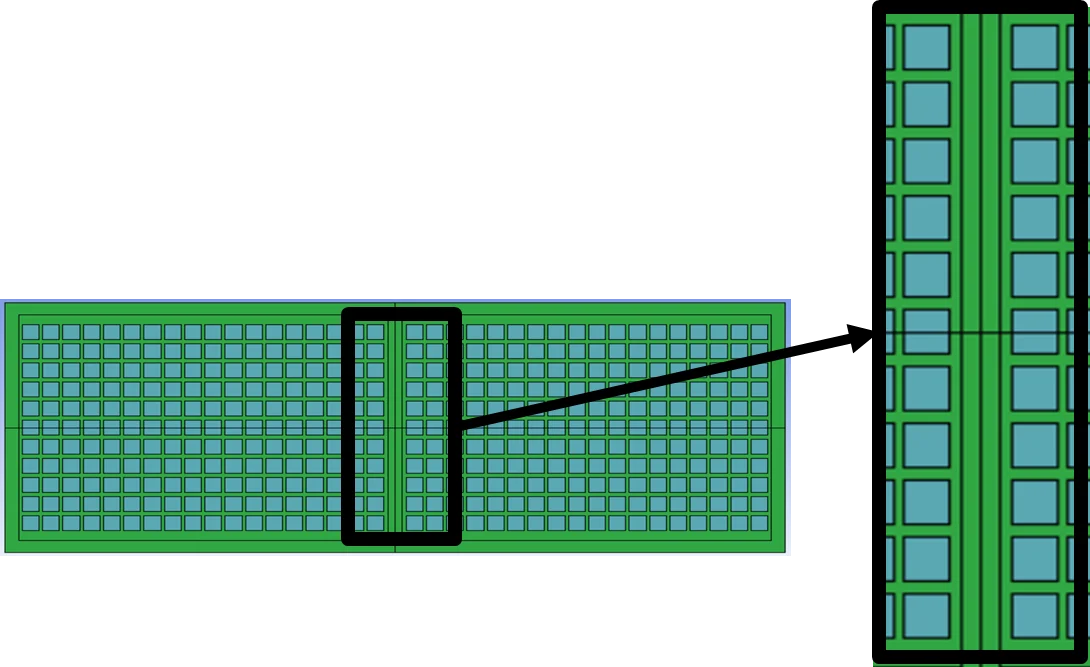

The mechanical behavior of electronic packages has emerged as a cornerstone of modern semiconductor manufacturing, influencing every phase from initial substrate handling to final assembly and testing. As the industry moves toward thinner, more complex form factors, many high-volume packages are assembled in a strip format. This approach, while efficient, introduces the critical challenge of strip warpage, which can severely compromise manufacturability and overall yield. To mitigate these risks, engineers rely heavily on predictive simulations to identify warpage drivers and evaluate potential solutions before physical assembly begins. However, a long-standing discrepancy has existed between simulated warpage predictions and actual physical measurements. Recent research indicates that a primary cause of this gap is the common omission of gravity in simulation models. By integrating gravity and table-support conditions into the simulation workflow, manufacturers can achieve significantly more accurate predictions, particularly for strips at the Flip Chip Attach (FCA) stage.

The Evolution of Warpage Prediction in Semiconductor Assembly
For decades, the standard assumption in electronic packaging simulations was that the weight of a package or strip was negligible relative to the internal stresses generated by Coefficient of Thermal Expansion (CTE) mismatches. This assumption holds true for small, rigid components but fails as the industry shifts toward larger panels and thinner substrates. When a strip rests on a flat table post-assembly for measurement, its own weight causes it to deflect, effectively "flattening" some of the warpage induced by thermal stresses.
If a simulation neglects this gravitational pull, it calculates a "free-state" warpage that may be significantly larger than what is actually observed on the factory floor. This leads to unrealistic data that can cause engineers to over-engineer solutions or reject viable designs. Previous studies focused on panel-level packaging found that including gravity reduced predicted warpage, especially for large-format panels. Those findings also noted that gravity became less of a factor after the molding process because the addition of Epoxy Molding Compound (EMC) increased the thickness and structural stiffness of the panel. Building on this foundation, new research has extended these investigations to strip-level packaging, exploring how gravity interacts with various substrate geometries and assembly stages.

Chronology of the Assembly and Measurement Process
To understand the impact of gravity, it is essential to trace the chronology of the assembly process where warpage is most volatile. The process typically begins with the substrate, which may be coreless or contain a central rigid core.
- Flip Chip Attach (FCA): This is the first critical stage where die are attached to the substrate. At this point, the strip is at its thinnest and most flexible. The CTE mismatch between the silicon die (approximately 2.6 ppm/K) and the organic substrate (often near 20 ppm/K) creates significant internal stress.
- Initial Measurement: Following FCA, strips are measured for warpage. Because the strip is thin, its weight plays a major role in how it sits on the measurement table.
- Post Mold Cure (PMC): In this stage, EMC is applied to encapsulate the die. This adds significant thickness and changes the thermal profile of the strip. The EMC helps bridge the CTE gap between the die and the substrate, generally reducing the internal "bowing" effect.
- Final Measurement: The strip is measured again after PMC. By this point, the added stiffness of the EMC makes the strip more resistant to gravitational deflection.
By simulating both the FCA and PMC stages with and without gravity, researchers have been able to pinpoint exactly when and where gravitational forces must be accounted for to ensure model validity.

Technical Framework: Simulation Setup and Validation
The simulations utilized in this study were performed using Ansys Workbench, employing a quarter-symmetric model to optimize computational resources while maintaining accuracy. The model represented a strip placed on a flat table, treated as a multi-body part to allow for complex contact interactions.
Modeling Contact and Constraints
To replicate real-world measurement conditions, a separate body was created for the measurement table. Frictionless contact conditions were established between the bottom of the strip and the top of the table. This setup avoids over-constraining the model, allowing the strip to slide or lift naturally as it would in a physical environment.

The technical parameters of the simulation included:
- Mesh Density: A 0.3 mm mesh for the strip and a 0.8 mm mesh for the table.
- Contact Formulation: The Augmented Lagrange method was selected for its high accuracy and superior convergence speed.
- Detection Method: Nodal-normal to target detection was used, which is particularly effective at capturing the moment the edges of a strip lift off the table or when the center bows upward.
- Solver: A nonlinear analysis with a direct solver, ramping temperature down to 25°C over four load steps.
Validation Against Empirical Data
The simulation was validated using a "Process of Record" (POR) model based on actual warpage data from a 240 x 95 mm (CA95) strip. The baseline unit was a Flip Chip Chip Scale Package (FCCSP) featuring a 3-layer coreless substrate.

The validation results were stark. After the FCA stage, the actual physical measurement of the strip warpage was 7.5 mm. The simulation without gravity predicted a massive 47.7 mm of warpage—an error of nearly 536%. However, when gravity was included in the model, the predicted warpage dropped to 7.9 mm, representing only a 5% deviation from the actual measurement. This confirms that for thin, coreless strips, gravity is not just a minor variable but the dominant factor in reconciling simulation with reality.
Supporting Data: Analysis of Strip Configurations
To determine the breadth of the gravity effect, researchers tested seven different strip configurations (labeled A through G). These variations accounted for strip size, the presence of a substrate core, the number of blocks (groupings of die), and the inclusion of stress-relief slots.

The Role of Epoxy Molding Compound (EMC)
The data consistently showed that the inclusion of EMC reduces the impact of gravity. In the baseline Strip A, the warpage reduction due to gravity at the FCA stage was nearly 40 mm. After PMC, the reduction was much smaller (from 5.8 mm without gravity to 4.5 mm with gravity). The EMC acts as a structural reinforcement, increasing the moment of inertia of the strip and making it "stiff" enough to resist its own weight. Furthermore, the EMC helps balance the CTE mismatch, inherently lowering the baseline warpage.
Substrate Architecture: Cored vs. Coreless
One of the most significant findings involved the substrate’s internal structure. Coreless substrates are increasingly popular for ultra-thin packages, but they lack the rigidity of cored substrates.

- Coreless (Strip A): High sensitivity to gravity; warpage dropped from 47.7 mm to 7.9 mm.
- Cored (Strip D): Lower sensitivity; warpage only dropped from 5.1 mm to 3.7 mm at the FCA stage.
This suggests that for manufacturers working with traditional cored substrates, gravity-free simulations might still provide "ballpark" accuracy. However, for those moving toward coreless technology, gravity-integrated simulation is an absolute necessity.
Geometry: Strip Size and Slots
The study also compared CA95 (240 x 95 mm) and CA74 (240 x 74 mm) strips. Interestingly, the effect of gravity remained consistent regardless of the strip width, indicating that the weight-to-stiffness ratio scales similarly across these common industry sizes.

A more nuanced discovery was the effect of "slots"—cutouts placed between blocks on the substrate to relieve stress. At the FCA stage, slots had a negligible impact on how gravity affected warpage. However, at the PMC stage, slots made the gravity effect much more significant. In Strip F (coreless with slots), the warpage with gravity was only 1.7 mm, compared to 5.3 mm without gravity. This indicates that slots reduce the overall longitudinal stiffness of the molded strip, allowing gravity to "pull" the strip flatter during measurement.
Industry Implications and Analysis
The implications of these findings for the semiconductor supply chain are profound. As Outsource Semiconductor Assembly and Test (OSAT) providers and Integrated Device Manufacturers (IDMs) push the boundaries of package density, the margin for error in warpage becomes razor-thin.

Design for Manufacturability (DFM)
By using gravity-integrated simulations, design teams can more accurately predict whether a strip will be compatible with automated handling equipment. High warpage can cause "pick-and-place" errors or prevent strips from fitting into magazines and heat sinks. If a simulation incorrectly predicts 47 mm of warpage, a design might be unnecessarily scrapped. Conversely, accurate modeling allows for the optimization of slot placement and substrate thickness to manage warpage without over-designing.
Cost and Time-to-Market
Reducing the gap between simulation and reality directly impacts the bottom line. Physical prototyping (building test strips and measuring them) is expensive and time-consuming. Accurate "virtual prototyping" allows for more iterations in a digital environment, reducing the number of physical trial runs needed to finalize a process of record.

Future Computational Trends
This research signals a shift toward more holistic simulation environments. Engineers can no longer look at thermal stresses in a vacuum; they must consider the environmental and "passive" forces—like gravity and surface contact—that define the physical life of a semiconductor product. As panels grow even larger (e.g., 600 x 600 mm fan-out panel-level packaging), the weight of the material will become even more influential, potentially making gravity the single most important variable in mechanical modeling.
Summary of Key Findings
The study concludes that the inclusion of gravity is vital for achieving high-fidelity warpage predictions in electronic packaging. The impact is most dramatic at the Flip Chip Attach stage, where strips are thin and flexibility is at its peak. While the addition of Epoxy Molding Compound provides a stiffening effect that partially masks gravitational influence, the presence of design features like slots can re-introduce gravitational sensitivity even in molded strips. For coreless substrates, which represent the future of thin-profile mobile and high-performance computing chips, neglecting gravity in simulations is no longer a viable option for modern engineering teams. By adopting these advanced simulation parameters, the industry can bridge the gap between theoretical modeling and the reality of the assembly floor, ensuring higher yields and more robust electronic components.