
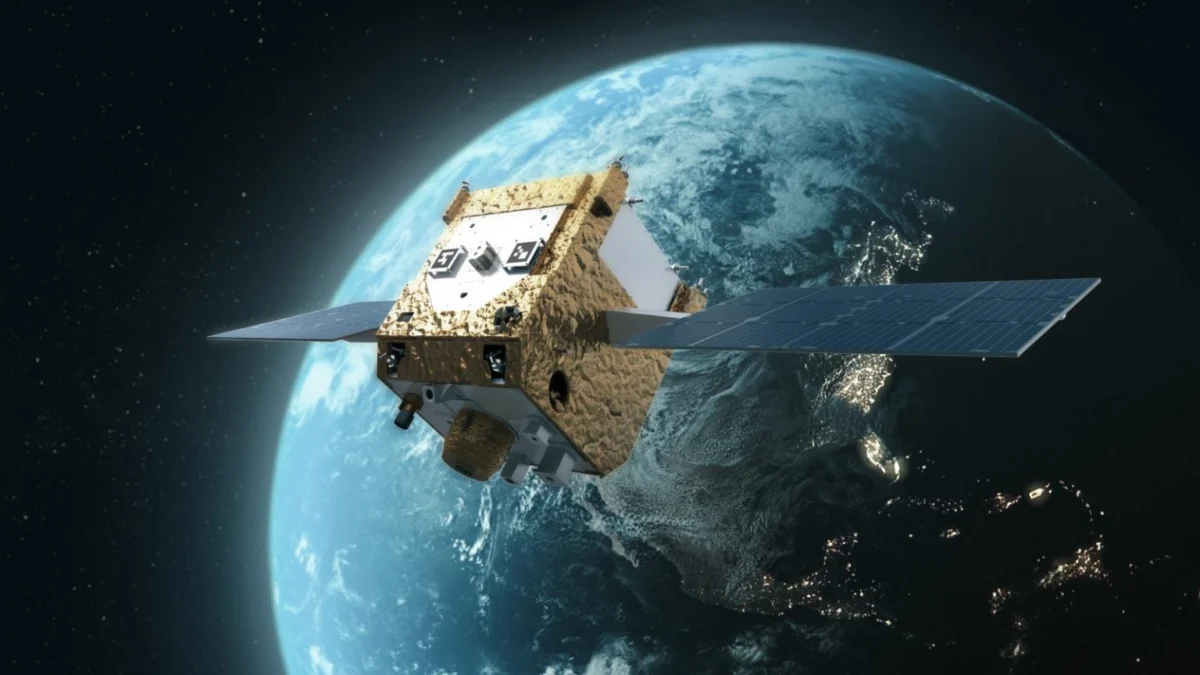

“Space remains hard,” stated Ryan Wolff, a program director for Tranche 0 and vendor growth at the Space Development Agency (SDA), during a high-level panel at SATShow Week. “It is a hard place to operate. It’s a hard place to solve your problems, and the logistics chain is the hardest logistics chain you can come up with.” Speaking on March 26, Wolff was joined by a cohort of industry executives to discuss the evolving landscape of orbital servicing and defense architecture. The consensus among the experts was clear: the next five to ten years will see an explosion in the demand for in-orbit inspection, repair, refueling, and debris removal, but the transition from experimental "one-off" missions to a permanent orbital infrastructure requires a fundamental shift in how the government signals demand and manages its budgets.
The panel highlighted a pivotal moment in the history of space operations. For decades, satellites have been treated as "disposable" assets—launched with a fixed amount of fuel and a predetermined lifespan, only to become orbital debris or graveyard residents once their systems fail or their tanks run dry. However, as the Low-Earth Orbit (LEO) environment becomes increasingly crowded and the military’s need for "dynamic space operations" grows, the "throwaway" mindset is becoming a strategic liability.
The Strategic Vision for a Space Infrastructure Layer
Clare Martin, executive vice president at orbital servicing firm Astroscale, emphasized that the vision for the future of space is no longer just about what we put into orbit, but how we maintain it. She pointed to the strategic framework laid out by U.S. Space Command Commander Gen. Stephen Whiting, which envisions a robust "space infrastructure layer." This layer would act much like terrestrial logistics—providing the fuel, maintenance, and traffic management necessary for a sustainable presence in the final frontier.
“Refueling is coming very, very soon,” Martin told the audience. While refueling is a critical first step, she cautioned that it is only one piece of a much larger puzzle. “Those are key elements, but they’re not sufficient. There will be a need for inspection services, there will be a need for removal, there’ll be a need for repair. And all of those elements together is what will give you a full logistics infrastructure in space.”
This sentiment was echoed by John Moberly of Trident Solutions. Moberly, who previously served as chief growth officer at Ibeos before its acquisition by Trident, argued that the military’s shift toward high-mobility tactics makes refueling an absolute necessity. He drew a parallel to traditional military aviation to illustrate the point. “The way to look at it is that not all missions will require it, just like commercial air flight doesn’t necessarily require aerial refueling,” Moberly explained. “But all of our dynamic military operations almost certainly do.”
In the context of modern warfare, the ability to maneuver a satellite—to avoid an anti-satellite (ASAT) weapon, dodge a piece of debris, or reposition for better intelligence gathering—requires propulsion. Frequent maneuvering rapidly depletes a satellite’s onboard chemical or electric propellant. Without a "gas station" in orbit, these high-value assets become "sitting ducks" or "space junk" long before their electronics fail.
Addressing the LEO Congestion: The Deorbiting Imperative
While refueling extends the life of active satellites, the industry is equally concerned with what happens to them when they finally reach their end-of-life. Robert Hauge, president of SpaceLogistics (a subsidiary of Northrop Grumman), identified deorbiting as the most promising and urgent capability for LEO servicing.
The scale of the problem is staggering. With the rise of "megaconstellations" like SpaceX’s Starlink and Amazon’s Project Kuiper, the number of active and defunct objects in LEO is skyrocketing. Hauge noted that without active intervention, it could take over a century for some of these satellites to naturally re-enter the atmosphere and burn up once they are deactivated. This poses a significant risk of collisions, which could trigger a chain reaction known as the Kessler Syndrome, potentially rendering certain orbits unusable for generations.
“There’s a military reason to get those satellites out of that orbit and at least bring them down low enough so that within, say, one year or six months, they’ll come the rest of the way down,” Hauge said. By actively removing "dead" satellites, the military can ensure that critical orbital pathways remain clear for new deployments and tactical maneuvers.
The SDA is already taking steps to address this. Wolff highlighted a recent contract awarded to Starfish Space to provide end-of-life disposal services for a satellite within the Proliferated Warfighter Space Architecture (PWSA). This "pathfinder" mission is intended to demonstrate to the broader industry that a market for deorbiting services is being established and that government funding is available for those who can provide cost-effective solutions.
The Economic Reality: Balancing Cost and Capability
A recurring theme throughout the discussion was the economic disparity between the cost of the satellites and the cost of the services meant to support them. The SDA’s philosophy is built on "proliferation"—launching large numbers of relatively inexpensive, small satellites rather than a few multi-billion-dollar "exquisite" platforms.
Wolff pointed out that many SDA satellites are priced in the $14 million range. This creates a logistical challenge: the cost of a servicing mission must be proportional to the value of the asset being serviced. “When we talk servicing, we need the system to match our paradigm,” Wolff explained. “A $100 million support mission for a $14 million satellite doesn’t make logistical sense.”
For orbital servicing to become a standard part of space operations, the industry must find ways to lower the price point of "servicer" spacecraft. This might involve multi-client servicing vehicles—craft that can refuel or move several satellites in a single mission—or highly automated, low-cost "space tugs."
Calls for Policy Reform and Budgetary Commitment
Despite the technological advancements showcased by companies like Astroscale and Northrop Grumman, industry leaders argued that the biggest hurdles are currently bureaucratic and financial rather than technical. Martin, Moberly, and Hauge were unanimous in their call for a dedicated "Program of Record" for orbital servicing.
In Department of Defense (DoD) parlance, a Program of Record is a line item in the budget that ensures long-term funding and stability. Without it, companies are forced to rely on "one-off" contracts and experimental grants, which makes it difficult to scale operations or attract long-term private investment. “In order to move from one-offs, where we are now, into a truly operational infrastructure, that’s the piece that is missing,” Martin said.
Hauge added that the industry is ready to deliver if the government is ready to buy. “We have the technology to be able to do it. We just need that program of record to say ‘We actually want to fund that going forward.’”
Moberly also advocated for greater "funding flexibility" across the space portfolio. He suggested that if the military were allowed to shift money more easily between Research, Development, Testing, and Evaluation (RDT&E) accounts and Operations and Maintenance (O&M) accounts, it would significantly speed up the adoption of new technologies. Currently, shifting funds often requires lengthy Congressional approval, which can delay the acquisition of urgent servicing capabilities by years.
Standardization and the "Dongle" Problem
Another technical hurdle discussed was the lack of standardization in satellite design. For a servicer to refuel or repair a satellite, it must be able to physically interface with it. Robert Hauge used a relatable analogy to describe the current state of the industry: the struggle to find the right cable in a modern conference room.
“The analogy I use is: if you’ve ever gone into a briefing room… you end up finding out that they either have an HDMI, or they have a USB-C, or they have an older USB,” Hauge said. “And you end up asking, ‘Where’s the dongle?’”
While Northrop Grumman is not pushing for a single, mandatory port design, they are advocating for the use of "passive refueling modules" that can be integrated into satellites during the manufacturing phase. In 2024, the U.S. Space Force’s Space Systems Command (SSC) approved Northrop’s passive refueling module as a viable interface for its programs. Hauge revealed that this module will be flying on a new servicing vehicle scheduled for launch this summer, marking a major step toward practical, standardized in-space refueling.
Chronology of In-Space Servicing Milestones
The current momentum in orbital logistics is the result of several years of incremental progress. To understand where the industry is going, it is helpful to look at the timeline of key events:
- 2020: Northrop Grumman’s Mission Extension Vehicle-1 (MEV-1) successfully docked with a retired Intelsat satellite, providing it with the propulsion needed to stay in service. This was the first commercial docking of two spacecraft in geosynchronous orbit (GEO).
- 2021: MEV-2 repeated the feat, docking with an active Intelsat satellite, proving that servicing could be done without interrupting the client’s operations.
- 2023: General Stephen Whiting and other U.S. Space Force leaders began publicly emphasizing the need for "sustained space maneuver" and "dynamic space operations," signaling a policy shift toward in-orbit servicing.
- 2024: Space Systems Command approved refueling interfaces, and the SDA began awarding contracts for deorbiting pathfinders (Starfish Space).
- 2025 (Projected): Launch of new servicing vehicles equipped with standardized refueling modules; expansion of the PWSA with built-in end-of-life disposal requirements.
- 2030 (Goal): Establishment of a "Circular Space Economy" where refueling, repair, and recycling of satellite components are routine aspects of orbital operations.
Analysis: The Broader Impact on National Security and Commerce
The shift toward orbital servicing has profound implications for both national security and the global economy. From a defense perspective, "space logistics" transforms satellites from static targets into resilient, maneuverable assets. It allows the military to respond to threats in real-time, extending the life of multi-billion dollar constellations and ensuring that "dead" assets don’t become hazards for future missions.
Commercially, the development of an "orbital pit stop" infrastructure could lower the barriers to entry for new space companies. If a company knows it can refuel or repair its satellites, it can lower the initial launch mass (and thus the cost) and rely on a longer operational lifespan to recoup its investment.
However, the "space is hard" mantra remains relevant. The technical precision required to dock two objects moving at 17,500 miles per hour is immense. Furthermore, the legal and regulatory framework for orbital servicing—such as who is liable if a repair mission accidentally creates more debris—is still being written.
As Ryan Wolff concluded, the lessons learned today will define the next decade of space exploration. “As high dynamic space ops mature, as services mature, it opens up new paradigms for new mission cases, new enclaves for investment, and new capabilities that weren’t available ten years ago,” he said. “We don’t know what will be available 10 years from now.”
The industry’s message to policymakers is clear: the technology is here, the need is urgent, and the only thing missing is the sustained financial commitment to turn the "hardest logistics chain" into a reliable backbone for the modern world. For Clare Martin and her colleagues, the goal is simple but transformative: “We just need to actually fold it into the way that we think about space, and stop doing the one-off missions.”