
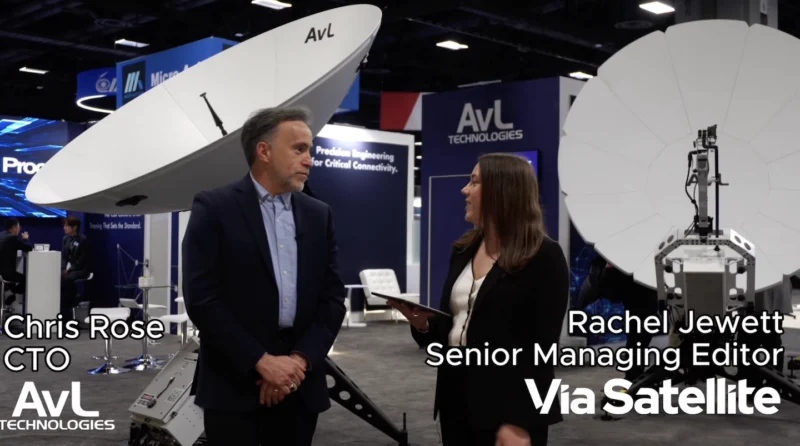

The landscape of satellite communications is undergoing a profound transformation, driven by the dual pressures of military necessity and rapid technological advancement in orbital infrastructure. At the center of this evolution is AvL Technologies, a prominent developer of satellite ground station solutions. During the recent SATELLITE 2024 conference in Washington, D.C., AvL Technologies Chief Technology Officer Chris Rose outlined the strategic shifts defining the next generation of tactical communications. In a detailed discussion, Rose highlighted a significant trend: the convergence of high-performance capabilities within increasingly smaller, more agile hardware footprints. This shift is not merely a preference for convenience but a fundamental requirement for modern multi-orbit operations, particularly within the defense sector.
The Convergence of Power and Portability in Tactical Systems
For decades, the standard for high-bandwidth satellite communications was defined by large, permanent, or semi-permanent ground stations. These systems, often featuring dish diameters exceeding 2.4 meters, were necessary to provide the gain required for reliable links, especially in lower-frequency bands like C-band or Ku-band. However, as Rose noted during the event, the paradigm is shifting. The emergence of High-Throughput Satellites (HTS) and the proliferation of Non-Geostationary Orbit (NGSO) constellations—including Low Earth Orbit (LEO) and Medium Earth Orbit (MEO)—have enabled smaller apertures to achieve throughput levels previously reserved for massive installations.
"A lot of the missions that have classically been done by large antenna systems are now able to be accomplished with small antenna systems," Rose explained. This miniaturization is a critical enabler for "fly-away" systems—portable antenna kits designed to be transported in ruggedized cases and deployed within minutes. The military user community, which constitutes a significant portion of AvL’s clientele, is driving this demand. In modern theater operations, mobility is synonymous with survivability. Large, static installations are vulnerable to detection and targeting; consequently, the military requires "antenna systems that can be rapidly located in the field."
The convergence Rose refers to is the meeting point between hardware portability and the high-data-rate requirements of modern intelligence, surveillance, and reconnaissance (ISR) missions. As satellite payloads become more sophisticated, the ground segment must evolve to support these capabilities without tethering personnel to a single location for extended periods.
A Chronology of Ground Segment Evolution
To understand the current state of tactical fly-away systems, it is necessary to examine the timeline of ground station development. In the late 1990s and early 2000s, mobile satellite units were cumbersome, often requiring specialized vehicles and hours of calibration. The primary focus was on establishing a stable link with Geostationary (GEO) satellites.
By 2010, the industry saw the introduction of more "auto-acquire" technologies, where motorized mounts could find a satellite with the push of a button. However, these systems remained relatively heavy. The mid-2010s marked a turning point with the rise of Ka-band technology. The higher frequency of Ka-band allowed for smaller antennas to produce tighter beams, increasing efficiency and reducing the size of the equipment needed.
The current era, beginning around 2020, is defined by multi-orbit integration. Modern tactical systems are now expected to switch seamlessly between GEO, MEO, and LEO networks. This requires not only mechanical precision in the antenna mounts but also sophisticated software and backend electronics capable of handling the rapid handovers and varying latencies inherent in moving constellations. AvL’s focus on "fly-away" systems reflects this historical progression toward a "disjointed" ground architecture where the user is no longer fixed to a specific orbital path.
The Transition to Digital IF and the DIFI Standard
One of the most technical challenges addressed by Rose is the transition to Digital Intermediate Frequency (Digital IF). Traditionally, the connection between a satellite antenna and the indoor modem has relied on analog radio frequency (RF) signals transmitted over coaxial cables. This analog approach has several limitations, including signal degradation over distance, susceptibility to electromagnetic interference, and a lack of flexibility in routing signals.
Digital IF aims to replace these analog links with digitized data streams transmitted over fiber optics or Ethernet. This allows the "modem" to be virtualized—existing as software running on a standard server rather than a dedicated piece of hardware. Rose indicated that AvL is actively preparing its systems to support this transition, which aligns with the broader industry movement toward the Digital IF Interoperability (DIFI) standard.
The implications of Digital IF for tactical users are significant. By digitizing the signal at the antenna (the "edge"), users can transport data over much longer distances without loss of quality. In a military context, this allows the antenna to be placed in an optimal clearing while the operators remain in a concealed or protected location several kilometers away. Furthermore, Digital IF facilitates the use of "software-defined" ground stations, where a single hardware setup can be reconfigured via software to work with different satellite operators or waveforms, providing unprecedented mission flexibility.
Expanding into Q- and V-Band Frequencies
As the Ka-band becomes increasingly crowded, the satellite industry is looking toward higher frequency spectrums, specifically the Q-band (33–50 GHz) and V-band (40–75 GHz). These bands offer massive amounts of untapped bandwidth, essential for the next generation of ultra-high-capacity satellites and 5G backhaul.
However, operating in Q- and V-bands presents significant engineering hurdles. These higher frequencies are much more susceptible to atmospheric attenuation, particularly "rain fade," where moisture in the air scatters and absorbs the signal. Rose noted that AvL is positioning its research and development to address these challenges. Designing antennas for Q/V-band requires higher precision in reflector surface manufacturing and more advanced tracking algorithms to maintain a stable link with a much narrower beam.
The transition to these bands is expected to follow a "gateway-first" model, where large hub stations use Q/V-band for heavy data trunking, while user terminals eventually follow. AvL’s proactive approach suggests that tactical fly-away systems will eventually incorporate these frequencies to provide "fiber-like" speeds to remote units, enabling real-time high-definition video feeds and massive data transfers in the field.
Supporting Data and Market Projections
The shift toward the technologies Rose discussed is reflected in recent market data. According to industry analysis from Northern Sky Research (NSR) and Euroconsult, the ground segment market is expected to reach over $3.5 billion by 2030, with a significant portion of that growth coming from "flat-panel" and "mobile-tactical" antennas.
The demand for LEO-capable ground equipment is projected to grow at a Compound Annual Growth Rate (CAGR) of over 15% through 2028. This aligns with Rose’s observations regarding the military’s desire for rapid relocation. Military spending on satellite-on-the-move (SOTM) and man-portable terminals has seen a steady increase as global tensions rise and the need for decentralized communication networks becomes paramount.
Furthermore, the DIFI Consortium, which promotes the Digital IF standard Rose mentioned, now includes over 60 member organizations, ranging from hardware manufacturers like AvL to major satellite operators like SES and Intelsat. This widespread adoption underscores the industry-wide consensus that digitalization is the future of ground station architecture.
Official Responses and Industry Implications
The broader satellite industry has reacted positively to the trends highlighted by AvL. Industry analysts suggest that the "decoupling" of hardware and software—facilitated by Digital IF—will lower the barrier to entry for new satellite service providers and increase the pace of innovation. By moving away from proprietary, "black-box" hardware, the industry moves toward a more interoperable ecosystem.
Defense officials have also emphasized the importance of what Rose described as "rapidly located" systems. The U.S. Department of Defense’s "Joint All-Domain Command and Control" (JADC2) initiative relies heavily on the ability to connect sensors and shooters across all branches of the military. Portable, multi-orbit ground stations like those developed by AvL are the physical backbone of this connected battlefield.
The move to Q/V-band is also seen as a strategic necessity. With the radio frequency spectrum being a finite resource, moving to higher bands is the only way to accommodate the projected ten-fold increase in global satellite capacity over the next decade. AvL’s commitment to these frequencies ensures that its tactical systems will not become obsolete as new, high-capacity satellites are launched.
Broader Impact: The Future of Remote Connectivity
The evolution of tactical fly-away systems has implications that extend beyond the military. The same technologies that allow a soldier to set up a high-speed link in a remote desert are being adapted for disaster relief, remote medical clinics, and scientific expeditions.
The "convergence" Rose described is ultimately about democratization of high-bandwidth access. As antennas become smaller, smarter, and more digitally integrated, the "digital divide" for remote operations begins to close. The ability to deploy a Q-band, LEO-tracking, digitally-integrated terminal out of a single suitcase represents the pinnacle of ground station engineering.
As SATShow Week concluded, the consensus among participants was that the ground segment is no longer a secondary consideration to the space segment. With leaders like Chris Rose and companies like AvL Technologies pushing the boundaries of what is possible at the "edge" of the network, the future of satellite communications looks to be defined by agility, virtualization, and an relentless move toward the higher reaches of the electromagnetic spectrum. The transition from large, static dishes to small, rapid-deployment systems is not just a change in size—it is a change in the very nature of how the world stays connected.