
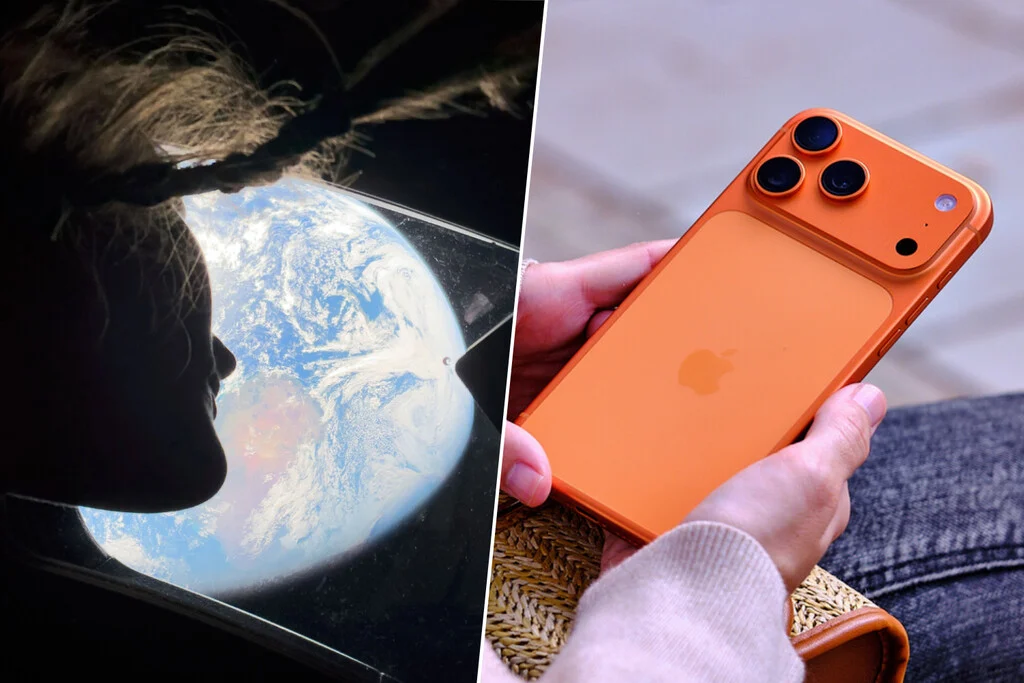

The long-standing rivalry between Apple’s iPhone and Android devices has traditionally played out in arenas of fluid user interfaces, app ecosystems, processing power, and even camera megapixels. However, NASA has just delivered a victory to Apple that is, quite literally, out of this world. Astronauts aboard the groundbreaking Artemis II mission have utilized an iPhone 17 Pro Max to capture stunning photographs of our home planet from the profound depths of space, marking an unprecedented achievement for a commercial mobile phone. This event not only elevates the status of consumer-grade technology in critical space endeavors but also underscores the rapid advancements in mobile photography.
The Artemis II Mission: A New Chapter in Lunar Exploration
The historic launch of Artemis II marked humanity’s return to a lunar trajectory after more than half a century, following in the footsteps of the Apollo program. This ten-day mission, a crucial precursor to landing humans on the Moon again, is designed to test the Orion spacecraft’s systems, life support, and procedures in a real space environment, pushing the boundaries of human spaceflight further than ever since 1972. Aboard the Orion capsule are Commander Reid Wiseman, Pilot Victor Glover, Mission Specialist Christina Koch, and Canadian Space Agency astronaut Jeremy Hansen. Their primary objective is to complete a lunar flyby, circling the Moon and returning to Earth, demonstrating the capabilities necessary for future lunar landings.
While the mission is equipped with state-of-the-art professional imaging hardware, including high-end DSLR and mirrorless cameras such as the Nikon D5 and Z9, the crew also carries authorized personal mobile terminals. These devices, primarily for communication and personal use, have proven their worth as unexpected photographic tools. The decision to allow personal devices like the iPhone 17 Pro Max on such a critical mission reflects NASA’s evolving approach to incorporating Commercial Off-The-Shelf (COTS) technology, leveraging its accessibility, cost-effectiveness, and often robust capabilities developed for mass markets.
The iPhone 17 Pro Max: A Lens to the Cosmos
The specific model in question, the iPhone 17 Pro Max, represents the pinnacle of Apple’s mobile technology, featuring an advanced camera system, robust build quality, and powerful computational photography capabilities. Although its exact specifications in a future iteration are speculative, it can be inferred to possess a multi-lens array, enhanced low-light performance, and sophisticated image processing algorithms driven by an advanced A-series Bionic chip (e.g., A19 Bionic). These features are crucial for capturing high-quality images in the challenging environment of space, where extreme lighting contrasts, zero gravity, and potential radiation exposure are factors.
Metadata embedded in the images shared from space explicitly reveals that Commander Reid Wiseman and Mission Specialist Christina Koch employed the front-facing camera of their iPhone 17 Pro Max units. These "space selfies" capture the astronauts against the backdrop of Earth, viewed through the Orion spacecraft’s viewport. The raw images were subsequently processed and edited using Adobe Lightroom Classic, a professional-grade photo editing software, to fine-tune parameters such as exposure, contrast, and color balance, demonstrating that even advanced smartphone photography benefits from post-processing for optimal results. This practice bridges the gap between consumer accessibility and professional quality, showcasing the hybrid approach often adopted in space photography.
Computational Photography: Redefining Astrophotography
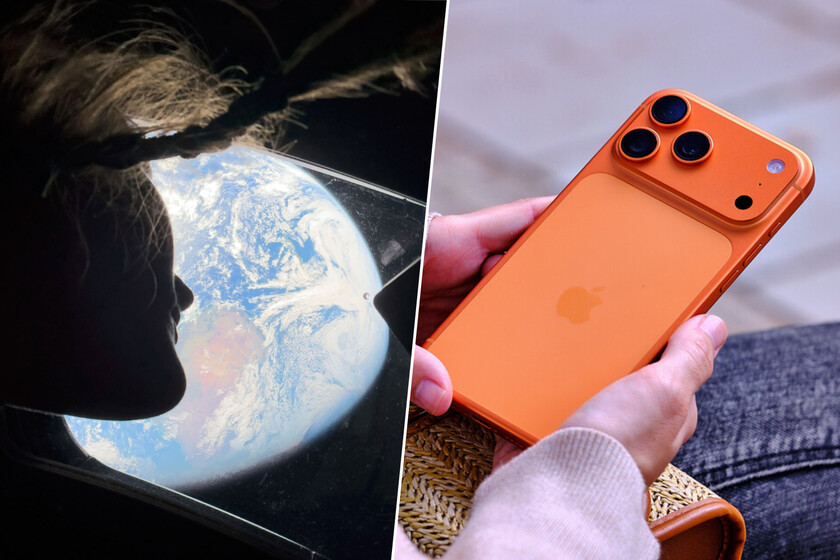
The successful capture of Earth from deep space by a commercial smartphone highlights the transformative power of computational photography. This technology, which uses software algorithms to enhance or create images beyond the capabilities of traditional optics alone, has significantly evolved. Features like "Night Mode" and "Astrophotography Mode," popularized by devices such as the Google Pixel, leverage techniques like image stacking and long exposure processing to produce detailed photos in extremely low-light conditions. While the original article references Google Pixel’s astrophotography, the iPhone 17 Pro Max’s ability to achieve this feat from deep space suggests that Apple’s iteration of computational photography has reached an equally, if not more, advanced stage.
From the vacuum of space, with no atmospheric interference, the challenge shifts from combating light pollution to managing extreme luminosity differences (the blinding sun vs. the blackness of space) and capturing subtle details of a distant planet. The iPhone’s advanced sensors and computational algorithms likely played a pivotal role in aggregating light, reducing noise, and rendering accurate colors of Earth’s atmosphere, landmasses, and oceans from millions of kilometers away. This not only validates the efficacy of these smartphone features but also opens new avenues for amateur space enthusiasts and citizen science projects.
Professional vs. Personal: A Complementary Approach
While the iPhone 17 Pro Max has garnered headlines for its unique contribution, it’s essential to contextualize its role alongside the professional photographic equipment on board. Cameras like the Nikon D5, a rugged DSLR known for its exceptional low-light performance and fast autofocus, and the Nikon Z9, a high-end mirrorless camera offering superior resolution and video capabilities, are the workhorses for official mission documentation. These professional cameras offer larger sensors, interchangeable lenses, manual controls, and robust construction designed for extreme environments, ensuring scientific-grade imagery.
The iPhone, by contrast, offers unparalleled convenience, immediacy, and ease of use. Its compact size allows for quick captures from various angles, and its intuitive interface makes it accessible for astronauts who are primarily scientists and engineers, not professional photographers. Moreover, the integration of cellular or satellite communication capabilities (if enabled for orbital use) allows for rapid sharing of images, fostering immediate public engagement and real-time mission updates. Thus, the iPhone serves as a valuable complement, providing a personal, intimate perspective that enriches the mission’s visual narrative and connects the public more directly with the human element of space exploration.
The Limits of Android: A Stratospheric Precedent
The achievement of the iPhone 17 Pro Max stands in contrast to previous attempts by rival manufacturers to push their devices into the near-space environment. In 2024, Samsung orchestrated a high-profile advertising campaign involving the deployment of several Galaxy S24 Ultra smartphones attached to stratospheric balloons. These devices ascended to altitudes of approximately 36 kilometers (about 22 miles), capturing stunning wide-angle images of the Earth’s curvature. While visually impressive, these endeavors, technically speaking, did not breach the Karman Line, the internationally recognized boundary of space, typically set at 100 kilometers (62 miles) above sea level.
Samsung’s campaign showcased the advanced camera capabilities of the S24 Ultra, including its multi-sensor array and zoom functionalities, proving that commercial smartphones can withstand near-space conditions and deliver captivating imagery. However, the iPhone 17 Pro Max’s journey aboard Artemis II has propelled it far beyond the stratosphere, into deep space – distances that dwarf the altitudes reached by atmospheric balloons. This distinction is critical: reaching deep space involves enduring far more extreme radiation, vacuum, and temperature fluctuations, along with the engineering complexities of operating aboard a spacecraft designed for lunar transit. The iPhone’s success therefore represents a fundamentally different class of achievement.
The Most Traveled Smartphone: A Record for the Ages
As the Orion spacecraft continues its ambitious ten-day odyssey, the iPhone 17 Pro Max on board is poised to establish an absolute record for distance traveled by a commercial mobile phone. The Artemis II mission is designed to take humans further from Earth than they have been since the Apollo 17 mission in 1972. The spacecraft will journey approximately 370,000 kilometers (230,000 miles) from Earth, looping around the Moon before returning. This trajectory will place the iPhone at an unprecedented distance from our planet, cementing its status as the most traveled consumer mobile device in history.
This record is not merely a novelty; it symbolizes the increasing robustness and reliability of consumer electronics. The ability of a device, initially designed for terrestrial use, to function and capture images in the harsh environment of deep space underscores significant advancements in materials science, component miniaturization, and power efficiency. It also highlights the potential for future space missions to integrate even more commercial technologies, driving down costs and increasing accessibility for various applications, from scientific data collection to personal communication.
Spectacular Views and Engaging the Public
Beyond the technical milestones, the Artemis II mission is already delivering breathtaking visual content. Even within the initial days of its journey, the onboard cameras have transmitted spectacular nocturnal images of Earth, crowned by the ethereal glow of the Northern and Southern Lights. These vistas, captured with both professional and personal devices, offer humanity a profound perspective of our home planet, emphasizing its beauty and fragility.
To enhance public engagement and allow enthusiasts to follow the mission in real-time, NASA has launched innovative interactive tools. These include a "Google Maps"-like web application that tracks the Orion spacecraft’s position, trajectory, and mission milestones. Additionally, a mobile application leveraging augmented reality (AR) technology allows users to point their phones at the sky and visualize Orion’s real-time location, creating an immersive and educational experience. These initiatives democratize access to space exploration, allowing millions to virtually participate in humanity’s return to the Moon and witness the journey through the eyes of the astronauts and their remarkable devices, including the now-famous iPhone 17 Pro Max.
Implications for Technology and Future Space Exploration
The iPhone 17 Pro Max’s deep space photographic achievement carries significant implications for both the consumer electronics industry and the future of space exploration. For smartphone manufacturers, it validates the relentless pursuit of camera technology, computational photography, and device durability. It serves as a powerful testament to how far commercial technology has advanced, blurring the lines between specialized scientific instruments and everyday gadgets. This success could inspire further innovation in smartphone design, pushing manufacturers to develop even more robust and capable devices, potentially leading to new applications in extreme environments.
For NASA and other space agencies, the event reinforces the value of integrating COTS technologies. By leveraging commercially available, tested, and relatively inexpensive devices, agencies can potentially reduce development costs, accelerate mission timelines, and increase the resilience of their systems through redundancy. The reliability of an iPhone in deep space suggests that future missions, including long-duration stays on the Moon or journeys to Mars, could incorporate consumer-grade devices for a wider array of tasks, from crew communication and entertainment to secondary data collection and even basic navigation.
Furthermore, this event significantly boosts public interest and engagement in space exploration. The relatable nature of a smartphone being used in such an extraordinary context makes the mission more accessible to the general public, particularly younger generations. It transforms abstract scientific endeavors into tangible experiences, fostering a sense of wonder and encouraging future generations to pursue STEM fields. The images captured by the iPhone 17 Pro Max from deep space are not just technical achievements; they are powerful reminders of humanity’s boundless curiosity and our innate desire to explore the unknown, now captured through the lens of a device many carry in their pockets every day. This symbolic victory for Apple, facilitated by NASA, truly puts the "space" in smartphone, redefining what we expect from our personal devices and what is possible in the vastness of the cosmos.