
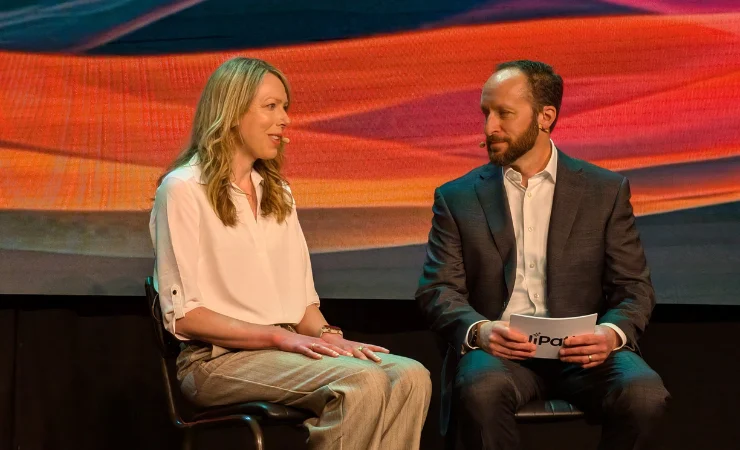

The insurance industry, traditionally characterized by its cautious approach to emerging technologies and stringent regulatory requirements, is witnessing a significant shift as "agentic" artificial intelligence moves from theoretical potential to practical application. At the recent UiPath Fusion London event, NFU Mutual, a leading UK-based rural insurer, provided a comprehensive look into its journey from traditional Robotic Process Automation (RPA) to sophisticated agentic workflows. The presentation, delivered by Katie Brown, Process Automation Manager at NFU Mutual, highlighted a successful pilot program in pet and equine claims that not only improved accuracy but also identified financial leakage that had previously eluded human handlers. However, the transition has also exposed critical organizational hurdles, particularly regarding governance, risk ownership, and the evolving nature of internal approval processes.
The Strategic Evolution of Automation at NFU Mutual
NFU Mutual’s foray into automation did not happen overnight. The insurer’s journey began in 2018 with a focus on foundational RPA, designed to handle high-volume, low-complexity tasks. By 2020, the organization began realizing tangible business value, establishing a framework for "benefit contracting" to ensure that every automation project delivered a measurable return on investment. Today, the company operates more than 100 live automations.
In 2023, the scope of these operations expanded significantly. The insurer deployed communications mining and document understanding technologies to manage 1.2 million emails within its claims service. These tools allowed the organization to categorize inquiries and extract data from unstructured documents, such as PDFs and scanned images, laying the groundwork for more advanced AI integration.
Despite this progress, agentic AI—systems capable of making autonomous recommendations and navigating complex workflows without rigid, step-by-step programming—was not originally on the company’s 2025 roadmap. The shift occurred following a collaborative workshop between UiPath and NFU Mutual’s IT and business stakeholders. By July 2024, the team identified a high-impact use case within their pet and equine insurance division, a sector deeply connected to the insurer’s agricultural roots.
The Pilot Program: Addressing Complexity in Pet and Equine Claims
The focus of the agentic AI pilot was "continuation payments." In the world of pet and equine insurance, a single claim often involves multiple veterinary invoices arriving over a period of months or even years. These recurring invoices account for approximately 70% of the total volume handled by the claims team. For human handlers, processing these invoices is often viewed as repetitive administrative work, yet it requires a high degree of precision to ensure that payments align with the original policy coverage and previous payouts.
The pilot, which ran from September to November 2024, was designed with a "human-in-the-loop" philosophy. NFU Mutual was adamant that technology should support, rather than replace, the expertise of its staff. Brown emphasized that the company views its employees as "gold dust," noting that no technology can replicate the genuine human connection required when dealing with policyholders who may be distressed over a sick or injured animal.
In the designed workflow, the agentic AI reviews incoming invoices and generates recommendations on what should be paid and what should be excluded based on the claim’s history and policy limits. These recommendations are then surfaced to a claims handler through the UiPath Action Center. The handler retains full control, with the ability to accept the AI’s suggestion, edit the details, or divert the case for manual processing if it appears overly complex.
Quantifiable Success and the Discovery of Leakage
The results of the three-month pilot provided a robust business case for further investment. The agentic system demonstrated a high degree of accuracy in its recommendations, but the most significant moment for the team occurred when the AI identified "leakage"—a term used in the insurance industry to describe unnecessary losses due to overpayments or errors.
In one specific instance, the agent identified a payment that should have been excluded under the policy terms. A human claims handler had previously missed this detail, but the AI, through its ability to cross-reference vast amounts of historical data and policy nuances instantaneously, flagged the error. This discovery proved the technology’s ability to provide a level of oversight that goes beyond mere administrative assistance.
Furthermore, the pilot established a feedback loop. If a handler encountered a new drug or treatment not yet recognized by the AI, they could flag it. However, to maintain strict quality control, the model does not update itself automatically. Instead, a senior team member must verify the new information before it is integrated into the agent’s knowledge base. This ensures that the AI’s "learning" is supervised and remains within the bounds of company policy.
The Governance Gap: A New Organizational Bottleneck
While the technology proved its efficacy, Brown was candid about the challenges that arise when moving beyond a proof of concept. The rapid pace of AI development has outstripped the speed of internal governance frameworks. At NFU Mutual, and likely across the broader financial services sector, the primary hurdle is no longer "can we build it?" but "how do we approve it?"
"The AI governance is trying to keep up and is evolving just as fast to try and meet the needs here," Brown noted during the event. This creates a state of flux where internal routes for approvals, risk assessments, and long-term ownership are not yet clearly defined. As AI agents begin to make decisions—or at least influential recommendations—traditional audit trails and quality assurance models must be reimagined to account for non-linear processing.
There is also the question of long-term support. Unlike traditional RPA, which follows a "set and forget" logic until a system interface changes, agentic systems require ongoing monitoring of their decision-making logic. Determining who "owns" the performance of an AI agent—whether it is the business unit, the IT department, or a dedicated AI COE (Center of Excellence)—remains a work in progress for NFU Mutual.
The Orchestration Layer: UiPath Maestro and the Microsoft Partnership
A critical component of the London event was the live demonstration of UiPath Maestro, the orchestration layer that powers these agentic workflows. Unlike traditional automation, which moves linearly from Task A to Task B, Maestro manages work as an evolving "case."
In the demonstration, which mirrored the NFU Mutual use case, multiple AI agents operated in parallel:
- Document Ingestion: Extracting data from veterinary records.
- Structured Evaluation: Analyzing claim data against policy limits.
- Unstructured Interpretation: Using computer vision and natural language processing to interpret handwritten notes or images.
- Consolidation: Bringing all these threads together into a single, contextualized view for the human handler.
This approach allows for a "Better Together" strategy involving both UiPath and Microsoft. David Mayhard from Microsoft reinforced this narrative, positioning Microsoft as the provider of the foundational AI infrastructure (such as Azure OpenAI Service) and UiPath as the essential layer that connects those models to legacy systems, APIs, and complex business processes. For NFU Mutual, this partnership allows them to trial different models and platforms to compare outputs without being locked into a single ecosystem.
Industry Implications and the Road to 2026
The broader implications of NFU Mutual’s pilot are significant for the global insurance market. Efficiency in claims processing is a primary driver of profitability. NFU Mutual revealed that its broader payments workstream currently consumes the equivalent of 30 full-time employees’ worth of time each year. By automating the repetitive elements of continuation payments, the insurer can reallocate that human capital to more complex cases, fraud detection, and customer service.
The insurer has set a timeline for a full production rollout in the second half of 2026. This deliberate pace reflects the need to resolve the aforementioned governance and support issues before the system handles live, high-volume traffic.
The transition from RPA to agentic AI represents a shift from "doing" to "thinking." While RPA mimics human clicks, agentic AI mimics human reasoning within a defined context. For the insurance industry, this means a move away from rigid scripts toward flexible, data-driven orchestration.
Conclusion: A Mature Conversation on AI Integration
The NFU Mutual case study at UiPath Fusion London signals a maturing of the conversation surrounding AI in the enterprise. The focus has moved away from the "magic" of large language models toward the "mechanics" of organizational integration. The success of the pet and equine pilot demonstrates that the technology is ready to handle complex, high-stakes business processes.
However, the "friction" described by Katie Brown regarding internal approvals and governance serves as a vital reminder for other organizations. The technology is no longer the primary constraint; rather, it is the ability of corporate structures to adapt to a world where software can reason, recommend, and catch errors that humans might miss. As NFU Mutual moves toward its 2026 rollout, it will serve as a bellwether for how the insurance industry balances the pursuit of efficiency with the necessity of human-centric risk management.