
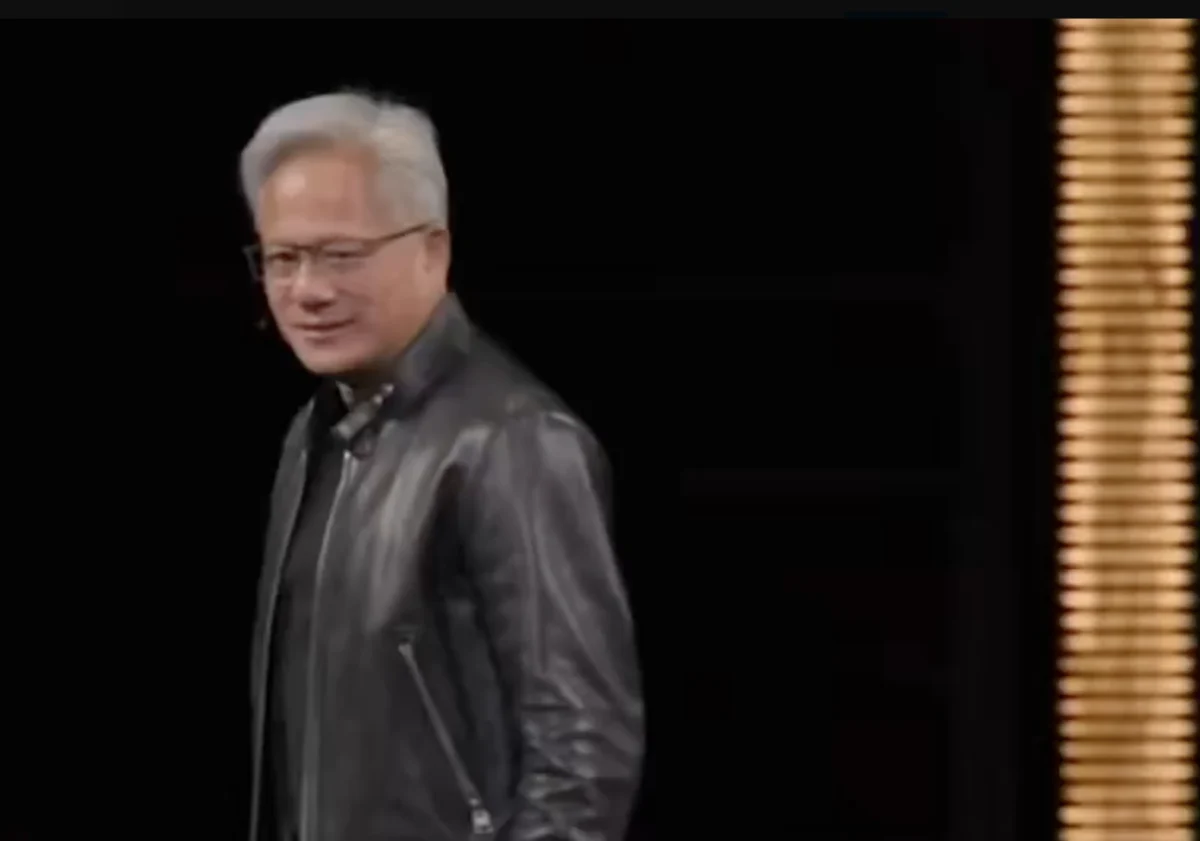

NVIDIA President and CEO Jensen Huang delivered a comprehensive keynote address at the company’s GTC conference in San Jose, outlining a transformative vision for the future of artificial intelligence that transitions from digital assistants to autonomous "agentic" systems and physical robotics. During the marathon presentation, Huang introduced 18 new product launches and issued a bold forecast of $1 trillion in AI chip revenues over the next two years. However, despite the scale of these announcements, NVIDIA’s share price experienced a marginal decline by the conclusion of the speech, reflecting growing investor caution regarding the massive capital expenditure (CapEx) required for AI infrastructure and the timeline for enterprise return on investment (ROI).
The GTC Keynote: A Roadmap for the Agentic Era
The San Jose keynote served as a platform for NVIDIA to pivot its brand identity from a hardware provider to a full-stack AI infrastructure company. Central to this shift was the announcement of the NVIDIA Vera CPU, the company’s first processor specifically engineered for agentic AI and reinforcement learning. Unlike traditional processors, the Vera CPU is optimized to handle the iterative reasoning processes required for autonomous agents to function effectively in complex environments.
In addition to hardware, Huang emphasized the importance of software ecosystems with the launch of NVIDIA Dynamo 1.0. This open-source software is designed for generative and agentic inference at scale, providing developers with the tools necessary to deploy large language models (LLMs) that can perform tasks rather than merely answering queries. The company also introduced the NVIDIA Agent Toolkit, which provides open-source models intended to scale productivity by allowing AI to autonomously determine the best methods for completing assigned tasks.
A significant highlight of the presentation was the focus on OpenClaw, an autonomous agent platform described by Huang as the "operating system for personal AI." Originally an independent project, OpenClaw was acquired by OpenAI in February but is slated to move to a foundation to preserve its open-source ethos. Huang positioned OpenClaw as a successor to the ChatGPT era, suggesting it would become the standard interface for human-AI interaction. To bolster this ecosystem, NVIDIA launched the NemoClaw stack, which integrates privacy and security guardrails into the OpenClaw platform to facilitate the deployment of self-evolving, autonomous agents.
Expanding the Infrastructure: From Earth to Orbit
The scope of NVIDIA’s hardware ambitions now extends beyond terrestrial data centers. Among the product reveals was the NVIDIA Space-1 Vera Rubin Module, a specialized component designed for orbital data centers (ODCs). This development aligns with broader industry trends, such as SpaceX’s projected deployment of satellite-based computing clusters, suggesting a future where data processing occurs in the "twinkling firmament" to reduce latency and bypass terrestrial power constraints.
Closer to home, NVIDIA introduced the Physical AI Data Factory Blueprint. This open reference architecture aims to unify how training data for robots is generated and evaluated. By utilizing NVIDIA Cosmos World Foundation Models (WFMs), developers can create large, diverse synthetic datasets. This approach is intended to bridge the "Robot Data Gap"—the historical difficulty in capturing enough real-world 3D data to train intelligent machines efficiently. Huang asserted that "physical AI has arrived," predicting that every industrial company will eventually transition into a robotics company, utilizing NVIDIA’s full-stack platform for logistics, transportation, and manufacturing.
The Economics of the Token: A New Industrial Revolution
During a subsequent call with Wall Street analysts, Huang elaborated on the economic philosophy underpinning NVIDIA’s growth. He argued that the industry has reached a third inflection point: following generative AI and reasoning, the world is now entering the age of agentic systems. In this new paradigm, Huang suggests that "tokens"—the units of data processed by AI—will become a form of industrial currency.
Huang envisioned a future where every engineer is assigned a "token budget," and computers are viewed not merely as tools but as manufacturing equipment that produces digital intelligence. He projected that the current $2 trillion software license market would evolve into an $8 trillion industry centered on the resale and consumption of tokens. Under this model, major IT firms would transition from licensing software to renting "agentic systems" that require continuous token generation through "AI factories."
Market Reaction and Financial Skepticism
Despite the expansive vision presented at GTC, NVIDIA’s market valuation saw a slight dip, highlighting a disconnect between the company’s projections and analyst expectations. While NVIDIA remains the world’s most valuable company—surpassing Apple’s market capitalization by more than $600 billion—investors are increasingly focused on the "CapEx vs. Revenue" gap.
Industry data suggests that 76% of the projected $1.37 trillion global AI hardware spend in 2026 will occur within the United States. This figure significantly dwarfs current AI software revenues. Analysts, such as Benjamin Reitzes of Melius Research LLC, have questioned whether the "juice is worth the squeeze," noting that for many hyperscalers, capital expenditure is currently 20% higher than their cloud and API revenues.
Huang’s forecast of a $1 trillion order book over the next two years also faces scrutiny. This figure exceeds the consensus analyst prediction of $835 billion by the end of 2028. While Huang maintains that demand is driven by customers who are "desperate for more compute," skeptics point to a 2025 study from MIT’s NANDA autonomous agent division, which found that 95% of autonomous agent projects have yet to produce measurable enterprise value.
Environmental and Geopolitical Considerations
The rapid expansion of AI infrastructure brings significant environmental challenges. According to research from BestBrokers.com, the energy consumption of ChatGPT alone is estimated at 22.15 TWh per year—equivalent to the annual power needs of 2.1 million households or the entire nation of France for seventeen days. As data centers proliferate, they are increasingly competing with other sectors for land and energy. In the U.S., hyperscalers are reportedly purchasing vast tracts of agricultural land to convert family farms into "data farms," raising long-term concerns regarding food security and rural land use.
Furthermore, the semiconductor supply chain remains vulnerable to geopolitical instability. With ongoing conflicts in the Middle East and tensions in the Taiwan Strait, the physical production of the chips required to fuel Huang’s $1 trillion vision is subject to external shocks. NVIDIA’s reliance on a globalized manufacturing network means that any disruption to the "atom-related" side of the business could stall the progress of the digital and physical AI industries.
Analysis of Broader Implications
The GTC keynote signals that NVIDIA is betting heavily on the "agentic" shift—the idea that AI will move from being a passive tool to an active participant in the workforce. If Huang’s predictions hold true, the "token economy" will redefine corporate productivity, making AI consumption a baseline operational expense for every business.
However, the path to this future is fraught with economic hurdles. The transition to physical AI requires massive investment in "AI factories" and on-premise edge computing. While NVIDIA is well-positioned as the primary supplier for this transition, the broader tech ecosystem must still prove that these investments can generate sustainable profits. As the industry moves forward, the focus is likely to shift from the raw power of chips to the efficiency of the agents they support and the environmental sustainability of the infrastructure that houses them.
For now, the market’s "polite dip" serves as a reminder that even the most compelling technological visions must eventually reconcile with the realities of energy constraints, infrastructure costs, and the tangible ROI required by global investors. NVIDIA has provided the blueprint for a new era of computing; the coming years will determine if the world’s industries are ready to populate it.