

The escalating demand for high-performance electronic components, particularly memory modules, driven by the artificial intelligence boom, has reached a critical juncture. In a significant development that underscores the intense competition for advanced hardware, OpenAI, the pioneering force behind ChatGPT, has reportedly secured a substantial contract for Samsung’s cutting-edge High Bandwidth Memory 4 (HBM4). This strategic procurement not only validates Samsung’s technological prowess in the advanced memory sector but also solidifies OpenAI’s position in the global AI race, while simultaneously signaling further upward pressure on memory prices across the consumer electronics market. The agreement, first reported by the South Korean economic publication Hankyung, positions OpenAI as Samsung’s third-largest client for HBM4, trailing only behind industry giants NVIDIA and AMD. This move is poised to reshape supply chain dynamics and the economic landscape of the semiconductor industry.
The Unfolding AI Tsunami and Its Impact on Memory Demand
For months, the technology industry has observed a relentless ascent in the prices of electronic components, with memory, particularly RAM, leading the charge. This inflationary trend is not merely a cyclical market fluctuation but a direct consequence of what many describe as an "AI tsunami" – an unprecedented surge in demand for computational power and specialized hardware required to train and deploy sophisticated AI models. These models, from large language models (LLMs) to complex neural networks, necessitate vast amounts of data processing at incredibly high speeds, making traditional memory solutions inadequate.
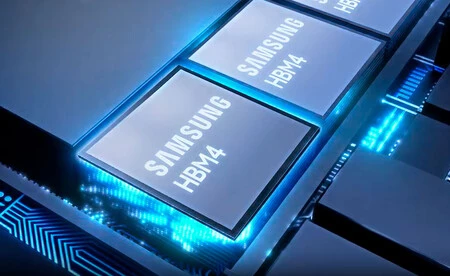
High Bandwidth Memory (HBM) has emerged as the cornerstone of this new era of computing. Unlike conventional DDR (Double Data Rate) memory, HBM stacks multiple memory dies vertically, connecting them with through-silicon vias (TSVs) to achieve significantly wider data paths and higher bandwidth within a smaller footprint. This architecture drastically reduces the distance data needs to travel, minimizing latency and maximizing throughput—qualities indispensable for AI accelerators like GPUs and specialized AI chips. The latest iteration, HBM4, represents a leap forward, offering even greater capacities, higher speeds, and enhanced power efficiency, making it the most coveted memory technology for advanced AI applications. The limited manufacturing capabilities for such complex, high-performance components, coupled with explosive demand, have created a perfect storm, pushing prices to unprecedented levels and making hardware upgrades for personal computers an increasingly costly endeavor. This ripple effect is now inevitably extending to consumer devices, including smartphones, where memory is a critical, high-volume component.
Samsung’s HBM4 Breakthrough and Strategic Alliances
South Korea stands as the undisputed epicenter of HBM manufacturing, with Samsung Electronics at the forefront, alongside formidable competitors like SK Hynix. Samsung, a global leader in memory production, controls the entire vertical integration process, from design to fabrication, giving it a unique advantage. However, its journey in the HBM market has not been without challenges. While Samsung has historically supplied RAM to major players like NVIDIA, it faced notable setbacks with earlier generations of HBM. Reports, including one from Reuters citing sources, indicated that Samsung’s HBM3 and HBM3E chips had failed some of NVIDIA’s rigorous qualification tests. These hurdles underscored the immense technical complexities and stringent performance requirements demanded by AI leaders.
The successful qualification and subsequent acquisition of Samsung’s HBM4 by not only NVIDIA and AMD but now also OpenAI, signifies a critical turning point for the South Korean conglomerate. It marks a decisive validation of Samsung’s intensified research and development efforts and its ability to overcome previous manufacturing challenges. This new generation of HBM4 modules, reportedly featuring 12 stacked layers, is specifically engineered to meet the extremely demanding performance and efficiency requirements of next-generation AI tasks. The commitment from OpenAI, a company at the very vanguard of AI innovation, provides a significant boost to Samsung’s credibility and market share in this lucrative, high-margin segment. The deal is projected to see Samsung deliver up to 800 million gigabits (Gb) of HBM4 to OpenAI in the second half of 2026, representing approximately 7% of Samsung’s anticipated HBM production of 11 billion Gb for the current year, according to Hankyung. This substantial order positions OpenAI as a pivotal client, further solidifying Samsung’s dominant role in the advanced memory ecosystem.
OpenAI’s Crucial Investment: Securing the Future of AI
For OpenAI, the strategic acquisition of HBM4 from Samsung is a critical maneuver in the rapidly intensifying AI arms race. As AI models grow exponentially in size and complexity, the availability of high-performance memory becomes a bottleneck. Training a single large language model can require thousands of GPUs, each needing vast quantities of HBM. Securing a direct supply of the most advanced memory technology ensures that OpenAI can continue its ambitious research and development initiatives without being hindered by potential supply chain constraints or relying solely on the HBM integrated into pre-built AI accelerators from vendors like NVIDIA.
This move aligns with OpenAI’s broader strategy to control key aspects of its AI infrastructure. CEO Sam Altman has frequently emphasized the need for substantial investments in compute power to realize the full potential of artificial general intelligence (AGI). By directly procuring HBM4, OpenAI is not just buying components; it is investing in its future capabilities, guaranteeing access to the foundational technology that will power its next generation of AI models. This proactive approach helps mitigate risks associated with an increasingly competitive hardware market where demand often outstrips supply. From OpenAI’s perspective, this deal is a strategic imperative to maintain its competitive edge and accelerate its innovation roadmap. While no official statement has been released by OpenAI or Samsung regarding this specific contract, the implications for both companies are profound, signaling a deepening collaboration that could shape the future trajectory of AI development. Industry analysts, speaking on background, note that such direct procurements are indicative of the extreme pressure AI companies face to secure resources, often bypassing traditional supply channels to ensure long-term availability.
The Broader Market Repercussions: A Looming Price Hike for Consumers
The significant shift in manufacturing focus towards high-margin HBM4 for AI applications by leading memory producers like Samsung carries substantial implications for the broader memory market, particularly for consumer-grade components. Memory fabrication facilities operate with finite production capacities. When a substantial portion of these capacities is redirected to produce specialized, high-demand, and highly profitable HBM4 modules, it inevitably reduces the output of conventional memory types such as DDR5 for PCs and LPDDR5X for mobile devices. This reallocation creates an imbalance between supply and demand in the consumer memory segment.
The basic economic principle dictates that when supply decreases while demand remains stable or continues to grow, prices will rise. This scenario is precisely what is anticipated for consumer electronics. Smartphones, laptops, and other personal computing devices heavily rely on standard DRAM modules. As manufacturers like Samsung prioritize HBM4 production, the availability of these conventional modules shrinks, leading to increased costs for device makers. These increased costs are then, almost invariably, passed on to the end-consumer. For instance, the memory module destined for a high-end smartphone like the Samsung Galaxy S26 offers significantly lower profit margins compared to a specialized HBM4 module sold to an AI giant. Therefore, from a business perspective, allocating wafer production to HBM4 is a more financially lucrative decision for Samsung.
This trend is not isolated to RAM; the storage market, particularly NAND flash memory, is experiencing a similar upward spiral in pricing due to related supply chain dynamics and increased demand for enterprise storage solutions driven by AI data centers. Consumers should brace for potentially higher prices for their next smartphones, laptops, and other electronic gadgets, or observe a deceleration in the pace of memory capacity upgrades in mainstream devices. The current market dynamic represents a clear trade-off: immense profits for memory manufacturers and AI companies, but potentially higher costs and slower innovation for the average technology user.
Global Semiconductor Landscape: Competition and Innovation
The deal between OpenAI and Samsung also casts a spotlight on the intense competition and rapid innovation defining the global semiconductor industry. While Samsung has secured this significant HBM4 contract, it operates in a highly competitive environment. SK Hynix, another South Korean powerhouse, has historically held a strong lead in certain HBM generations and remains a formidable player, especially with its HBM3E offerings. Micron Technology, an American semiconductor giant, is also making aggressive strides in HBM development, aiming to capture a larger share of the burgeoning AI memory market.
The success of Samsung’s HBM4 is crucial for the company’s long-term strategy, especially given the challenges it faced with earlier HBM generations. Reaffirming its technological leadership in HBM is vital for Samsung to diversify its revenue streams and reduce its reliance on fluctuating consumer electronics sales. The AI boom has provided a golden opportunity for memory manufacturers to pivot towards high-value, high-performance products, thereby boosting their profitability and securing their position in the future of computing. This competitive landscape fuels continuous innovation, pushing companies to develop faster, more efficient, and higher-capacity memory solutions to meet the insatiable demands of AI. The implications extend beyond just memory; the entire semiconductor ecosystem, from chip designers to foundries and packaging specialists, is being reshaped by the unique requirements of AI hardware. Governments worldwide are also increasingly recognizing the strategic importance of semiconductor manufacturing, leading to significant investments and geopolitical considerations surrounding supply chain resilience.
The Road Ahead: Navigating Supply, Demand, and Technological Advancement
The strategic partnership between OpenAI and Samsung for HBM4 marks a pivotal moment in the evolution of artificial intelligence and the semiconductor industry. It underscores the critical role that advanced memory technology plays in powering the next generation of AI models and highlights the fierce competition among tech giants to secure these vital components. For Samsung, the deal represents a triumph of engineering and a significant financial boost, reaffirming its position at the pinnacle of advanced memory manufacturing. For OpenAI, it ensures a stable and cutting-edge supply of the memory essential for its ambitious research and development goals.
However, the ripple effects of this intensified focus on AI-specific hardware will undoubtedly be felt across the broader technology market. Consumers are likely to face increased prices for their everyday electronic devices as manufacturing capacities are redirected towards more profitable, high-performance AI components. Navigating this landscape of escalating demand, limited supply, and rapid technological advancement will require careful strategic planning from all stakeholders. The challenge for memory manufacturers will be to balance the lucrative AI market with the needs of the vast consumer electronics sector, while for consumers, it will mean adapting to new pricing realities driven by the relentless march of artificial intelligence. The trajectory suggests that as long as the AI wave continues its powerful surge, the premium placed on high-performance memory will only continue to grow, making such components not just valuable, but truly indispensable.