
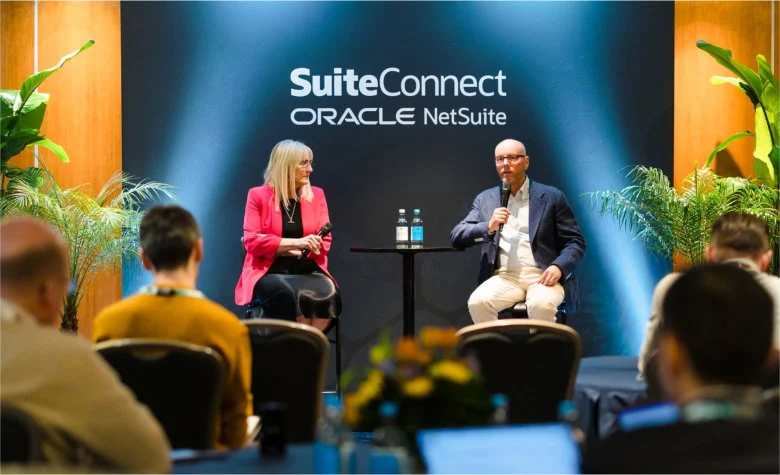

Oracle NetSuite has unveiled a comprehensive suite of artificial intelligence (AI) enhancements and a new industry-specific vertical solution during the London leg of its SuiteConnect global tour. The announcements represent a significant evolution in the vendor’s strategy to integrate generative AI into the daily workflows of small and mid-sized businesses (SMBs), focusing on security, governance, and user accessibility. By providing tools that bridge the gap between internal enterprise data and external large language models (LLMs) like ChatGPT and Claude, NetSuite aims to democratize advanced AI capabilities while maintaining the rigorous control structures required by modern financial and operational departments.
The central pillar of this week’s release is a refined framework for the Model Context Protocol (MCP), an open standard that allows AI assistants to interact seamlessly with various data sources. While NetSuite initially introduced MCP integration last summer, the latest updates address critical concerns regarding data security and administrative overhead. Previously, developers were required to manually construct guardrails to prevent AI agents from accessing sensitive information or performing unauthorized actions. The new launch introduces pre-configured guidance, structure, and controls, effectively providing a "turnkey" solution for businesses to connect their NetSuite environment to third-party AI models without compromising corporate governance.
The Evolution of AI Integration and Governance
The introduction of these tools marks a strategic pivot from mere connectivity to managed orchestration. The new AI Connector Service is now accompanied by a "companion" tool designed specifically for finance professionals. This companion includes a library of finance-specific prompt templates, which are engineered to align with NetSuite’s proprietary data structures, terminology, and permissions. This ensures that when a user interacts with an AI model, the model understands the specific context of a NetSuite general ledger, an accounts payable (AP) workflow, or a treasury report.
Furthermore, NetSuite has introduced a series of "MCP Apps," which serve as structured interfaces within third-party AI assistants. These include features like a Report Picker and a Record Picker, allowing users to use familiar point-and-click navigation—such as filters and selectors—inside a conversational AI interface. This hybrid approach mitigates the "blank page" problem often associated with generative AI, where users struggle to craft the precise text-based prompts necessary to extract accurate data.
In tandem with these connectivity tools, the company has expanded its data reach with a new connector for the NetSuite Analytics Warehouse (NSAW). This allows businesses to synthesize NetSuite data with external datasets, providing a more holistic view for AI-driven analysis. By grounding AI responses in the combined data of the ERP and the warehouse, NetSuite is positioning its platform as a "System of Knowledge," where the value lies not just in the raw data, but in the business context and rules surrounding it.
Chronology of NetSuite’s AI and Cloud Strategy
To understand the significance of these announcements, it is necessary to view them within the context of NetSuite’s long-term trajectory. Founded in 1998 as one of the first "cloud-native" companies, NetSuite spent over two decades advocating for the transition from on-premise servers to the cloud. Following its $9.3 billion acquisition by Oracle in 2016, the company gained access to Oracle’s massive infrastructure and research and development resources, which have been pivotal in accelerating its AI roadmap.
The timeline of the current AI rollout began in earnest during the summer of 2024, when NetSuite first introduced the MCP connector. This was followed by the Fall 2024 announcement of "NetSuite Next," a reimagined user experience centered on a conversational interface powered by the "Ask Oracle" assistant. The London SuiteConnect event serves as the delivery phase of these promises, providing the specific tools—such as the prompt libraries and pre-configured roles—that make the broader AI vision actionable for the company’s 44,000 global customers.
According to Evan Goldberg, founder and CEO of NetSuite, the current AI revolution mirrors the early days of cloud computing. "This moment demands more than incremental innovation," Goldberg stated during the event. "It calls for the same reinvention that we sparked 28 years ago. Back then, we had to convince businesses that the cloud wouldn’t disrupt their business, it actually would transform their business." Goldberg’s thesis is that businesses adopting agentic AI at the core of their operations today will see compounding advantages similar to those realized by early cloud adopters.
Sector-Specific Expansion: The Hospitality Solution
Beyond horizontal AI tools, NetSuite is leveraging its relationship with Oracle to launch a new vertical solution for the hospitality industry. This offering integrates NetSuite’s core ERP capabilities with Oracle’s extensive portfolio of point-of-sale (POS) and restaurant management software. The solution is designed to provide a unified platform for restaurant groups, whether they operate a single location or a multi-national franchise.
The hospitality suite addresses a long-standing pain point in the industry: the fragmentation between front-of-house sales data and back-office financial reporting. By creating a seamless data flow between POS systems and the general ledger, restaurant operators can gain real-time insights into labor costs, inventory depletion, and margin fluctuations. In an era of rising food costs and labor shortages, this level of integration is viewed as essential for maintaining profitability in the low-margin hospitality sector.
Customer Adoption and Real-World Impact
The efficacy of NetSuite’s AI strategy was highlighted by several high-profile customers during the London event. Yoto, an interactive audio platform for children, has already begun integrating NetSuite data with Anthropic’s Claude model. Ben Averis, CFO of Yoto, reported that the integration has dramatically reduced the manual labor involved in financial reporting.
"We’ve been using it to do a lot of search queries that can all happen in Claude," Averis explained. "In Claude skills, we can then build PowerPoints and Excels, essentially getting the data and being able to run the skill within minutes, which would have previously been three or four hours’ worth of time." This efficiency gain—turning hours of manual data manipulation into minutes of AI-assisted generation—is a primary driver for mid-market adoption.
Octopus Energy, the UK’s largest domestic electricity and gas supplier, is also exploring agentic AI within its procure-to-pay processes. Malcolm Finn, Group Financial Controller at Octopus Energy, emphasized a pragmatic approach to the technology. "It’s intent first, rather than AI first," Finn noted. "We’re trying to think, what can we solve? How can we intelligently use AI?" This sentiment reflects a broader trend among mature enterprises that are moving past the "hype" phase of generative AI and into a phase of targeted, problem-solving implementation.
Strategic Implications and Market Analysis
NetSuite’s decision to support MCP-compliant agents rather than forcing users into a proprietary walled garden is a calculated strategic move. By allowing customers to use their preferred AI assistants—whether it be Microsoft Copilot, ChatGPT, or Claude—NetSuite ensures its data remains the central source of truth regardless of which interface the end-user prefers.
However, this "open" approach presents a unique challenge to the traditional ERP business model. If users begin to interact with their business data primarily through third-party AI agents, the importance of the ERP’s native user interface (UI) could diminish. Goldberg acknowledged this uncertainty but maintained that NetSuite’s value lies in its data model and "System of Knowledge." He suggested that while the way people interact with the system will change, the underlying logic and governance provided by NetSuite remain indispensable.
Another point of industry interest is NetSuite’s stance on licensing. While many competitors, including Salesforce and Microsoft, are moving toward consumption-based pricing for AI features, NetSuite is currently maintaining its seat-based licensing model. Goldberg indicated a "wait-and-see" approach, noting that it remains unclear whether AI will lead to fewer people using ERP systems or if it will expand access to a broader range of employees who previously found the systems too complex.
Future Outlook and Implementation Timeline
For NetSuite users in the United Kingdom and the broader EMEA region, the rollout of these tools will occur in phases. The MCP tools and connectors are becoming available immediately, while the more advanced "NetSuite Next" conversational interface is expected to reach UK customers within the next 6 to 12 months.
The broader implication for the SMB market is clear: AI is no longer a futuristic concept but a functional layer of the enterprise stack. As NetSuite provides the "scaffolding" necessary to deploy AI safely, the barrier to entry for sophisticated financial automation continues to lower. The focus for businesses over the coming year will likely shift from experimentation to the rigorous application of these tools to solve specific operational bottlenecks.
As the SuiteConnect tour continues, the industry will be watching closely to see how NetSuite’s 44,000 customers utilize these new governance tools. The success of this rollout will depend on whether the promised "guardrails" are robust enough to satisfy the security requirements of CFOs while being flexible enough to provide the efficiency gains showcased by early adopters like Yoto and Octopus Energy. In the competitive landscape of ERP software, NetSuite’s move to balance openness with strict governance may well set the standard for how mid-market enterprises navigate the transition to an AI-driven economy.