
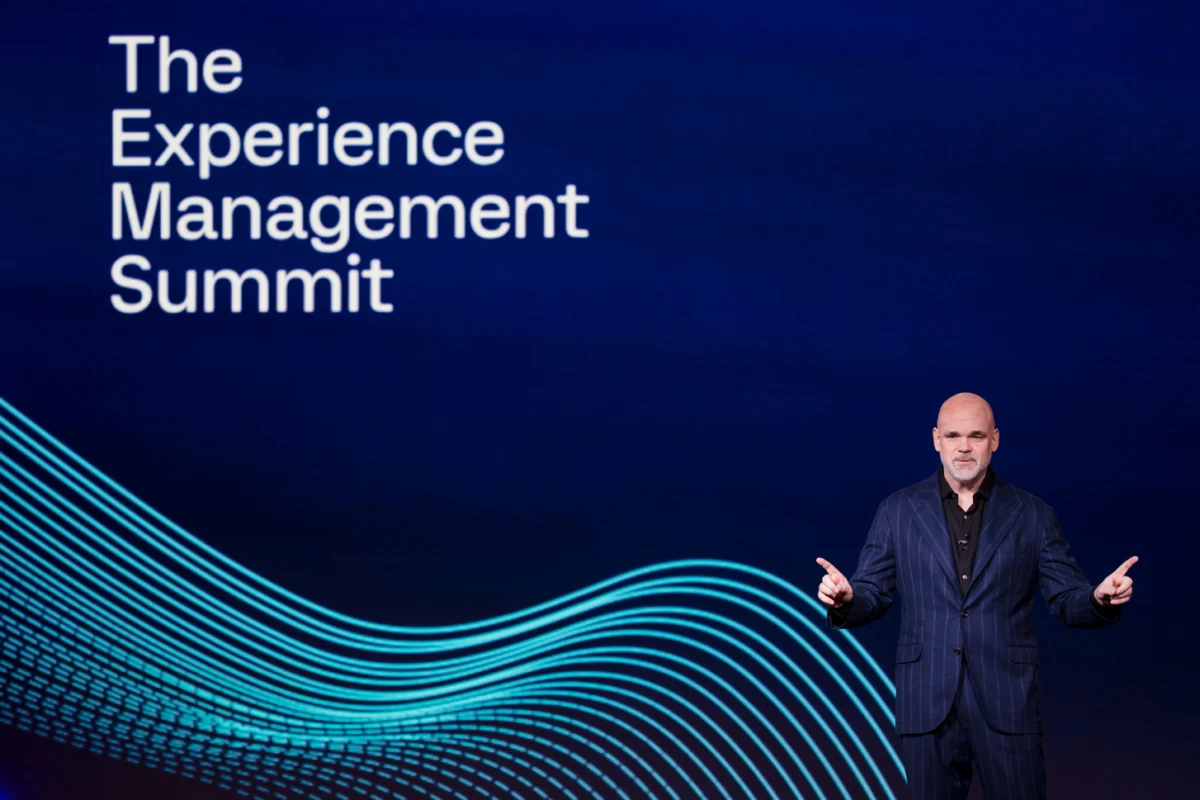

The global landscape of Experience Management (XM) underwent a significant strategic realignment this week as Qualtrics CEO Jason Maynard took the stage at the X4 Summit in Seattle. Marking his first major public address since assuming the leadership role in February 2026, Maynard articulated a vision that moves beyond the traditional boundaries of data collection and sentiment analysis. The core of the vendor’s new strategy rests on the transition from "listening" to "acting," leveraging agentic artificial intelligence to close what Maynard describes as the "experience gap." This shift signals a departure from the "system of record" model toward a "system of decision," where real-time experience context informs every automated interaction across the enterprise.
For over a decade, the experience management industry has focused on the "insight gap"—the distance between a customer or employee event and the organization’s understanding of why that event occurred. According to Maynard, this problem has largely been solved. Organizations now possess the infrastructure to listen across diverse channels, integrate operational signals, and identify the root causes of churn or disengagement. However, the CEO argued that simply knowing why a customer is unhappy after they have already left is no longer a competitive advantage, characterizing such post-event analysis as an "autopsy." The new frontier, he posits, is the "experience gap," defined as the space between understanding a problem and executing a meaningful outcome in real time.
The Evolution of Experience Management: From Insight to Action
The X4 2026 Summit serves as a pivotal moment in the chronology of Qualtrics, a company that has navigated significant structural changes over the past five years. Following its $8 billion acquisition by SAP in 2018 and its subsequent spin-off and $12.5 billion privatization by Silver Lake and CPP Investments in 2023, the company has sought to redefine its value proposition in an AI-saturated market. Maynard’s keynote highlighted that while data to understanding was the goal of the last decade, understanding to outcomes is the mandate for the next.
Central to this evolution is the concept of "experience context." Maynard argued that without this context—the nuanced understanding of how a person feels during a specific interaction—AI is "fast and blind." By integrating experience data into agentic AI workflows, Qualtrics aims to ensure that automation does not merely scale frustration but instead provides personalized, empathetic, and effective resolutions. This positioning attempts to place Qualtrics at the center of the enterprise tech stack, acting as the reasoning layer that sits above traditional systems like Salesforce, Workday, and ServiceNow.
Strategic Product Announcements: Listen, Understand, and Act
To operationalize this vision, Qualtrics unveiled a suite of product innovations categorized into three functional pillars: listen, understand, and act. The most significant advancement lies in the "Act" category with the full commercial launch of Experience Agents. These autonomous AI entities are designed to intervene in the customer or employee journey the moment a friction point is detected.
The efficacy of these agents was illustrated through early adoption data from TruGreen, North America’s largest lawn care provider. Faced with the challenge of managing hundreds of millions of data points, TruGreen deployed Experience Agents within their post-service feedback loops. Within the first week of implementation, the system successfully addressed 51% of customer concerns autonomously and reduced escalations to human support teams by over 30%. This represents a fundamental shift in the ROI of feedback; rather than serving as a metric for a quarterly report, the feedback becomes the trigger for an immediate service recovery.
In the "Understand" category, Qualtrics introduced automated text analytics powered by generative AI. This technology aims to eliminate the months of manual topic modeling previously required to categorize customer sentiment. By detecting and organizing emerging themes across all channels in real time, organizations can identify burgeoning issues—such as a specific product defect or a regional service outage—before they escalate.
On the "Listen" side, the company announced enhanced omnichannel capabilities, including out-of-the-box connectors for major platforms such as Genesys, NICE, and Salesforce. Integration with social listening tools for Facebook and Instagram has also been streamlined, with Qualtrics claiming deployment speeds up to four times faster than previous iterations.
Innovation in Market Research and Employee Engagement
Beyond customer service, the X4 Summit showcased advancements in market research and HR technology. A standout announcement was the introduction of "synthetic panels"—fine-tuned large language models (LLMs) built specifically to simulate human responses in market research scenarios. Qualtrics claims these synthetic panels are 12 times more accurate than general-purpose AI in matching human feedback.
Case studies provided by the vendor, including one from the children’s tech company Gabb, suggest that synthetic panels can deliver insights 98% faster than traditional human panels at approximately half the cost. While the technology is currently being rolled out in North American markets, expansion to the UK, Ireland, Canada, Australia, and New Zealand is slated for the first half of 2026.
In the realm of Employee Experience (EX), Qualtrics introduced "conversational feedback" tools. This AI-driven survey methodology asks intelligent, real-time follow-up questions based on the specific text an employee provides, rather than following a static branching logic. Early results indicate a 40% increase in the depth of insights gathered. Global sportswear giant Adidas was cited as a primary beneficiary, seeing a 70% increase in managers creating personalized action plans following the deployment of these AI recommendations. This automation reportedly saved Adidas managers over 160 hours of manual content creation per engagement cycle.
Organizational and Commercial Challenges Ahead
Despite the technological momentum, the shift toward agentic AI introduces complex organizational hurdles. Historically, Qualtrics has sold its platform to Chief Experience Officers (CXOs) and HR directors. However, as AI agents become a core component of enterprise architecture, the decision-making power is increasingly shifting toward Chief Information Officers (CIOs) and Chief Technology Officers (CTOs).
Maynard acknowledged that for Experience Management to remain relevant, it must move beyond functional silos. The challenge for Qualtrics lies in convincing IT leadership that "experience context" is as critical to an AI agent’s success as the underlying transactional data. Without this buy-in, Qualtrics risks being sidelined as enterprises build their own agentic layers using broader platforms from Microsoft, Google, or Amazon.
Commercially, the transition to an outcome-based model also necessitates a reimagining of pricing and metrics. Brad Anderson, President of Products at Qualtrics, noted that agentic interactions are "significantly more expensive" to run than traditional survey-based interactions. As the company iterates on its pricing models, it must demonstrate that the cost of these agents is offset by tangible reductions in churn, increased customer lifetime value, and operational efficiencies.
Corporate Volatility and the Press Ganey Deal
The strategic optimism of the X4 Summit was tempered by breaking financial news regarding one of Qualtrics’ most ambitious expansion efforts. Reports surfaced during the event that JP Morgan has halted its financing for Qualtrics’ $6.75 billion acquisition of Press Ganey. Announced in October 2025, the deal was intended to significantly expand Qualtrics’ footprint in the healthcare sector, adding 41,000 providers across 30 countries.
The acquisition was positioned as a cornerstone of Maynard’s strategy, with healthcare serving as a "proving ground" for high-stakes experience management. While Qualtrics has maintained an official "no comment" stance on the financing developments due to regulatory and legal constraints, the uncertainty surrounding the deal’s trajectory presents a potential distraction at a time when the company is seeking to project a unified vision of growth and stability.
Market Implications and Future Outlook
The strategic pivot unveiled at X4 2026 reflects a broader trend in the enterprise software market: the "agentification" of software. As traditional user interfaces are replaced by autonomous agents, the quality of the data fueling those agents becomes the primary differentiator. Qualtrics is betting that its vast repository of human sentiment data—how people feel, what they expect, and why they react—will be the essential "missing ingredient" for successful AI deployments.
Industry analysts suggest that the success of this pivot will depend on Qualtrics’ ability to prove that its "system of decision" can operate effectively across a fragmented enterprise ecosystem. If Experience Agents can successfully navigate complex workflows involving multiple third-party systems, Qualtrics could secure a dominant position in the next generation of business process automation. However, if these agents remain confined to the Qualtrics platform, the company may struggle to compete with the horizontal AI capabilities of the "Big Tech" giants.
As the X4 Summit concludes, the mandate for Qualtrics is clear. The company has successfully closed the "insight gap" and articulated a compelling vision for the "experience gap." The coming year will determine whether it can execute the "action and outcomes" phase of its strategy with the same efficacy it brought to the era of listening. With a new leadership team, a robust AI roadmap, and a shifting financial landscape, Qualtrics is entering its most transformative period since its inception. The "autopsy" era of experience management is over; the era of real-time, agentic intervention has begun.