
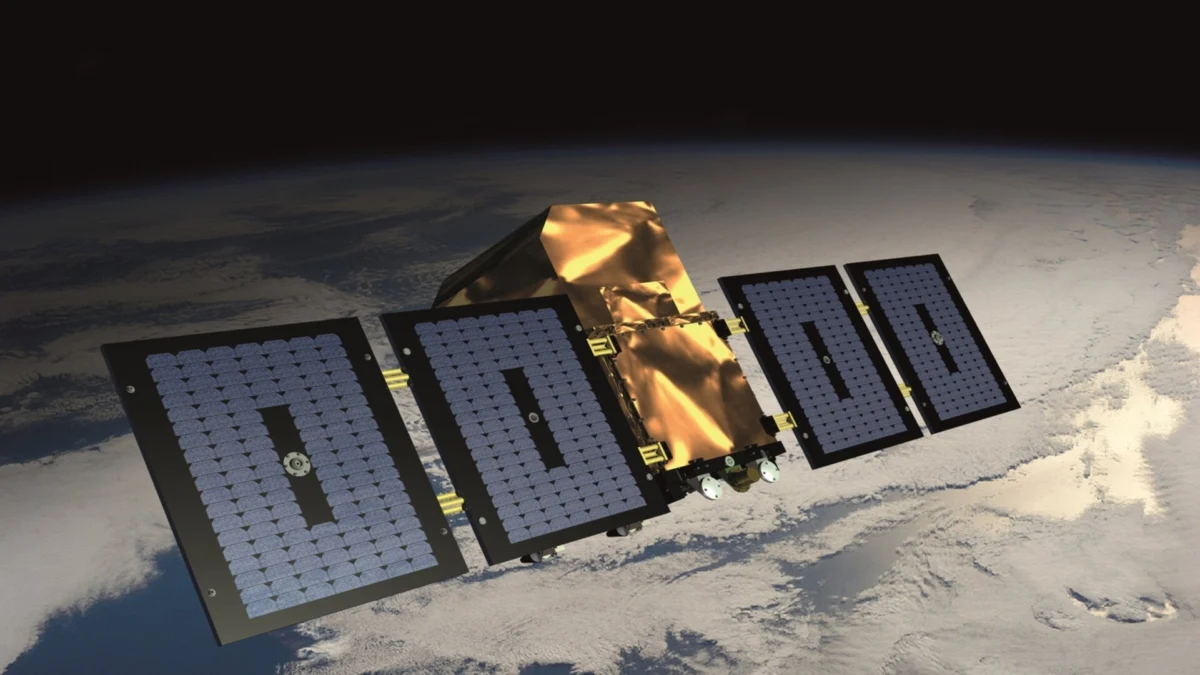

Redwire Corporation, a global leader in space infrastructure, has officially secured a pivotal contract to develop a quantum-secure satellite under the European Space Agency’s (ESA) Quantum Key Distribution Satellite (QKDSat) program. This initiative, part of the ESA’s Advanced Research in Telecommunications Systems (ARTES) partnership projects, marks a significant milestone in the continent’s pursuit of secure, unhackable communication networks. Announced on April 2, the contract positions Redwire as a central architectural provider for the mission, tasking the company with the manufacturing and delivery of its specialized Hammerhead spacecraft platform.
The QKDSat project is being executed by a high-profile multi-country consortium led by Honeywell Aerospace’s United Kingdom division. This industrial alliance reflects the collaborative nature of modern European space endeavors, integrating expertise from Redwire Space of Belgium, Craft Prospect and British Telecom (BT) of the United Kingdom, QTLabs of Austria, and Honeywell’s specialized teams in Canada. Additionally, key industrial players from the Czech Republic and Switzerland are contributing to the mission’s infrastructure. The primary objective of this consortium is to demonstrate and operationalize quantum key distribution (QKD) via satellite, a technology designed to safeguard sensitive data against the emerging threat of quantum computing-enabled breaches.
Technical Foundation: The Hammerhead Platform and ADPMS-3 Avionics
Central to Redwire’s contribution is the Hammerhead spacecraft platform. Designed for versatility and high-performance missions in Low Earth Orbit (LEO), the Hammerhead platform provides the structural and operational foundation required for the delicate task of quantum signaling. The spacecraft will be integrated with Redwire’s proprietary ADPMS-3 (Advanced Data and Power Management System) suite of avionics.
The ADPMS-3 is the third generation of Redwire’s highly successful avionics line, which has a long heritage of reliability in ESA missions. This system acts as the "brain" of the satellite, managing everything from power distribution and thermal regulation to complex data processing and attitude control. For the QKDSat mission, the ADPMS-3 must provide the high level of stability and precision required to maintain the optical link between the satellite and ground stations. Quantum communication relies on the transmission of individual photons; any minor vibration or deviation in the satellite’s orientation could result in the loss of the quantum key, rendering the communication attempt void.
Beyond the platform itself, Redwire is tasked with the design and integration of the QKD payload. This payload will work in tandem with advanced optical terminals developed by Honeywell Canada. The synergy between Redwire’s spacecraft bus and Honeywell’s optical technology is critical for establishing the "space-to-ground" quantum link that forms the backbone of the QKDSat mission.
The Science and Necessity of Quantum Key Distribution
As classical encryption methods face potential obsolescence due to the rapid advancement of quantum computers, the global security community has turned to Quantum Key Distribution as the ultimate solution for data protection. Classical encryption relies on complex mathematical problems that are difficult for current computers to solve but could be cracked in seconds by a sufficiently powerful quantum processor.
QKD, however, relies on the fundamental principles of quantum mechanics rather than mathematical complexity. By using the properties of quantum states—such as the polarization of photons—to exchange cryptographic keys, the system ensures that any attempt at eavesdropping is immediately detectable. According to the "no-cloning theorem" in quantum physics, it is impossible to intercept or copy a quantum state without altering it. If a third party attempts to observe the key during transmission, the quantum state collapses, alerting the legitimate users to the breach and causing the compromised key to be discarded.
While terrestrial fiber-optic networks can facilitate QKD, they are limited by physical distance. Photons traveling through fiber-optic cables suffer from attenuation, or signal loss, typically limiting the range of ground-based quantum networks to approximately 100 kilometers. Satellites offer a solution to this "distance barrier." By transmitting photons through the vacuum of space, where there is minimal interference and no signal-absorbing fiber, satellites can facilitate secure communication across thousands of kilometers, connecting disparate regions and continents.
Chronology of the QKDSat Program and ARTES Initiative
The development of QKDSat follows a strategic roadmap established by the European Space Agency to maintain a competitive edge in the global space economy. The ARTES program, under which this contract falls, was created to support the development of innovative products and services in the satellite communications market.
- Conceptual Phase: In the mid-2010s, ESA identified quantum technologies as a priority for future telecommunications. Initial studies focused on the feasibility of satellite-to-ground quantum links.
- Consortium Formation: Following the success of early experiments, ESA sought industrial partners to move from theory to implementation. Honeywell was selected to lead the consortium, bringing together regional specialists.
- Platform Selection: Redwire’s Hammerhead was selected due to its modularity and the proven track record of the ADPMS avionics suite, which had already demonstrated high reliability on previous ESA missions like PROBA.
- Contractual Milestone (April 2026): The formal announcement of Redwire’s role in the QKDSat program marks the transition into the full-scale development and manufacturing phase.
- Future Milestones: The mission is expected to move toward a launch window within the next three to five years, followed by a rigorous testing phase to validate the quantum link in various atmospheric conditions.
Official Responses and Strategic Vision
The leadership at Redwire has emphasized that this project is not merely a technical achievement but a strategic necessity for the region. Marc Dielissen, Executive Vice President of Redwire Europe, highlighted the broader implications of the contract in an official statement.
"Quantum secure communications are critical to the future of European autonomy," Dielissen stated. "We are proud to leverage Redwire’s expertise in spacecraft development and avionics to support QKDSat. Satellite quantum key distribution enables truly global, long-distance secure communication, overcoming the range limitations of terrestrial fiber-based quantum networks."
This sentiment aligns with the European Union’s broader "EuroQCI" (European Quantum Communication Infrastructure) initiative, which aims to build a secure quantum network spanning the entire EU. By integrating satellite-based QKD into this infrastructure, Europe ensures that its most sensitive government, military, and financial data remains protected from foreign intelligence services and cyber-criminal organizations.
Industry analysts suggest that the involvement of Honeywell and Redwire signifies a shift toward "NewSpace" methodologies within ESA projects. By leveraging commercially developed platforms like the Hammerhead, ESA can reduce development costs and timelines while benefiting from the rapid innovation cycles of the private sector.
Supporting Data: The Expanding Quantum Space Market
The investment in QKDSat is supported by a growing body of data suggesting that the quantum communication market is on the verge of exponential growth. Market research indicates that the global quantum cryptography market is projected to grow from roughly $500 million in 2023 to over $3 billion by 2030, representing a compound annual growth rate (CAGR) of nearly 30%.
The demand is driven by several factors:
- Governmental and Defense Requirements: Nation-states are prioritizing the protection of "Top Secret" communications against future quantum threats, a strategy often referred to as "Harvest Now, Decrypt Later."
- Financial Sector Security: Global banking systems require ultra-secure methods for high-value cross-border transactions.
- Critical Infrastructure Protection: As power grids and transport networks become increasingly digitized, they require encryption that cannot be compromised by state-sponsored cyberattacks.
Europe’s focus on satellite QKD is also a response to global competition. China currently leads the world in this field, having launched the "Micius" satellite in 2016, which successfully demonstrated intercontinental quantum communication. The United States and various private entities are also accelerating their quantum space programs. For Europe, QKDSat is the vehicle through which it intends to secure its "digital sovereignty."
Broader Impact and Industry Implications
The success of the QKDSat mission will have far-reaching implications for the aerospace and telecommunications industries. For Redwire, the contract solidifies its position as a Tier-1 provider of spacecraft for complex, high-stakes missions. The use of the Hammerhead platform for QKD may lead to future contracts for other specialized payloads, including Earth observation and deep-space exploration.
Furthermore, the mission will serve as a proof-of-concept for the "Quantum Internet." While the current focus is on distributing cryptographic keys, the ultimate goal of these technologies is to link quantum computers across the globe, allowing them to share quantum information directly. This would enable a new era of distributed quantum computing, potentially revolutionizing fields such as material science, drug discovery, and climate modeling.
The collaboration between UK, Belgian, Canadian, and Austrian entities also demonstrates the resilience of international space cooperation. Despite geopolitical shifts, the technical and scientific requirements of space missions continue to foster cross-border partnerships that pool resources and expertise.
Conclusion: A New Era of Secure Connectivity
As Redwire begins the manufacturing of the Hammerhead spacecraft and the integration of the ADPMS-3 avionics, the QKDSat mission stands as a testament to the convergence of advanced physics and aerospace engineering. The project represents a proactive defense against the cyber threats of tomorrow, ensuring that the global digital economy remains resilient in the face of the quantum revolution.
By overcoming the physical limitations of terrestrial networks, Redwire and its partners in the Honeywell-led consortium are not just building a satellite; they are constructing the first nodes of a global, secure, and autonomous quantum network. The coming years will be critical as the hardware undergoes testing and validation, eventually culminating in a launch that will redefine the boundaries of secure communication in the 21st century. For the European Space Agency and its industrial partners, the QKDSat program is a clear signal that the future of space is not just about exploration, but about securing the very fabric of modern society.