

Creating software has never been more accessible, thanks to advancements in AI and low-code platforms. However, the crucial step of transforming these digital creations into profitable ventures remains a significant hurdle for many developers. Recognizing this critical gap, Replit, a leading browser-based integrated development environment (IDE), has announced a strategic partnership with RevenueCat, a prominent subscription management platform. This collaboration aims to embed subscription tooling directly into Replit’s platform, enabling users to add monetization features through simple, natural language prompts, thereby streamlining the path from app conception to revenue generation.
The integration signifies a fundamental shift in how developers approach monetization. Historically, adding subscription services or in-app purchases required significant technical expertise, often involving complex integrations with payment gateways, app store APIs, and intricate billing logic. This process frequently occurred after the core application development was complete, making it an “afterthought” that could delay launch or deter less experienced developers. Replit’s innovative approach, powered by its AI-driven "vibe coding" capabilities, allows users to generate functional applications from plain-English descriptions. The partnership with RevenueCat extends this ease of creation directly into the monetization phase.
Revolutionizing App Monetization Through AI Integration
Replit, founded in 2016, has established itself as a powerful democratizing force in software development. Its initial success was built on providing a seamless, browser-based coding environment that eliminated the need for complex local setup. This accessibility allowed a wide spectrum of users, from students learning to code to professional enterprise teams, to write, run, and share code effortlessly. Over time, Replit’s platform evolved significantly, incorporating AI-powered features that enable users to generate and deploy applications using natural language prompts. This trajectory has seen the company achieve a remarkable $9 billion valuation and attract a user base exceeding 50 million individuals.
The proliferation of AI-assisted development tools, often referred to as "vibe coding," has dramatically lowered the barrier to entry for app creation. Developers can now conceptualize and build working applications with unprecedented speed and ease. However, the intricate domain of monetization has largely remained a separate, more challenging endeavor. Developers have traditionally been required to independently configure subscription models, integrate payment processing systems, and navigate the complex regulatory frameworks of app stores like Apple and Google. This often demanded specialized knowledge in areas such as payment systems, recurring billing, and compliance, adding a layer of complexity that could stall or even halt the commercialization of promising applications.
RevenueCat, established in 2017, has carved out a specialized niche by focusing exclusively on this critical monetization layer. The company’s platform is designed to simplify and manage in-app purchases and subscriptions for a vast network of over 80,000 applications. RevenueCat handles the complexities of billing, tier management, and access control across both the Apple App Store and Google Play Store ecosystems. The scale of its operations is substantial, with the company reporting that it processes approximately $1 billion in subscription transactions each month. This extensive experience and robust infrastructure make RevenueCat an ideal partner for Replit in its mission to empower developers.
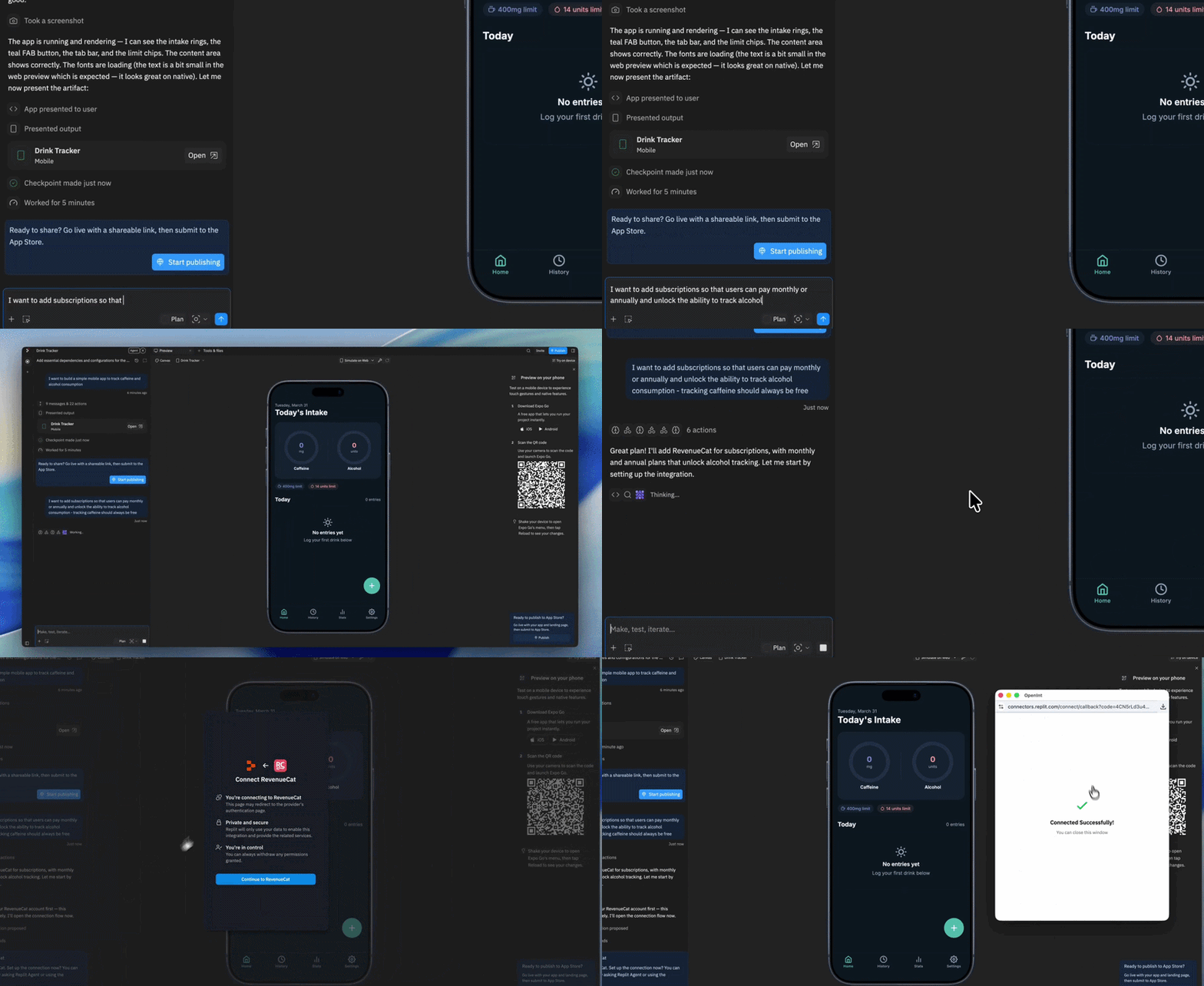
The core innovation of this partnership lies in the direct integration of RevenueCat’s functionalities into the Replit development environment. This means that once a user has built their application on Replit, they can initiate the monetization process without ever leaving the platform. By simply using prompts such as "add subscriptions" or "monetize my app," users can trigger a cascade of automated configurations. The system, powered by Replit’s AI and RevenueCat’s backend, will handle the intricate setup of subscription features in the background.

Asif Bhatti, who leads product partnerships at Replit, emphasized the strategic intent behind this integration. The goal, he explained, is to fundamentally alter the perception and execution of monetization, transforming it from a distinct, post-development task into an inherent part of the creative process itself. "Vibe coding created a new generation of app builders who think in ideas, not code," Bhatti stated in an interview with The New Stack. "With RevenueCat, we’ll see builders’ ideas become successful, profitable businesses. Monetization is no longer an afterthought; it’s built into the creative process from day one."
The user experience is designed to be intuitive and seamless. Developers will continue to build their applications within the familiar Replit interface, utilizing prompts for feature development. When they decide to introduce subscription options, they communicate this intent to Replit in plain English. The platform then guides them through connecting their RevenueCat account, authorizing the integration. Once connected, Replit leverages RevenueCat’s capabilities to configure subscriptions and manage billing on behalf of the user. Replit will then notify the user upon completion of the integration, and a functional preview of the app will display the implemented subscription paywall, offering immediate visual feedback on the monetization strategy.
Automating Pricing Strategies and Paywall Design
Beyond the fundamental setup of payment processing, the integration offers a sophisticated layer of intelligent guidance. Matt Berry, head of partnerships at RevenueCat, highlighted that the system draws upon extensive data from RevenueCat’s annual "State of Subscription Apps Report." This report aggregates benchmarking data from over 80,000 apps, providing invaluable insights into successful monetization strategies. This data is leveraged to offer Replit users personalized recommendations on pricing and product packaging.
"It uses this data to give users personalized guidance on pricing and monetization, taking into account factors like app category, target audience, geography and more," Berry explained to The New Stack. "This provides Replit users with the guidance they need to implement the correct pricing model from day one and monetize their apps effectively." This data-driven approach aims to equip developers, particularly those new to the mobile ecosystem, with the knowledge to make informed decisions about their revenue models.
For many Replit users, especially those who might be embarking on their first app development journey, navigating the intricacies of mobile app monetization can be daunting. This includes understanding the diverse rules governing subscriptions, revenue sharing models, and the nuances of app store policies. The guidance provided by RevenueCat extends to these critical areas, offering support with app store compliance and paywall design. This is particularly beneficial for first-time developers who may lack prior experience with these complex requirements.
The commercial model of RevenueCat further supports this early-stage developer focus. The platform remains free for users until their application generates $2,500 in monthly tracked revenue. After this threshold is met, RevenueCat implements a modest 1% fee on subsequent revenue. "This means users monetizing their apps on Replit get access to the same platform and features used by some of the world’s biggest consumer subscription apps completely for free, which is a great way to start building and experimenting without any barriers," Berry stated. This freemium model significantly reduces the financial risk for new developers, allowing them to focus on building and validating their product before incurring significant costs.
While RevenueCat’s subscription management capabilities span both iOS and Android platforms, Replit’s current one-click publishing functionality is primarily directed towards Apple’s App Store. Publishing to the Google Play Store currently requires a manual upload process outside of the Replit platform. However, support for direct Android builds is reportedly under development, indicating Replit’s commitment to a comprehensive cross-platform offering in the near future.

Addressing Quality Control in a Democratized Development Landscape
The democratization of both app creation and monetization, while a significant boon for aspiring entrepreneurs, naturally raises questions about the potential influx of low-quality applications into app stores. The ease with which apps can now be built and monetized could, in theory, lead to a saturation of the market with poorly designed or uninspired products.
Bhatti acknowledged this concern, stating that while not every app will achieve commercial success, the sustainability of revenue generation is inherently tied to the value an app provides to its users. "Our goal from the start has been to democratize coding so that anyone, regardless of their technical experience, can build an app," Bhatti commented. "For apps to create and sustain revenue streams, though, they need to be high-quality." Replit is actively working to support the development of more robust applications through features like automated security and privacy analysis, aiming to instill a baseline level of quality even in AI-generated code. However, the broader challenge of how app marketplaces manage increased volume and maintain quality standards remains an ongoing industry-wide discussion.
Furthermore, there is an ongoing discussion about the extent to which complex business logic, such as pricing and monetization strategies, can be abstracted away. As tools increasingly automate these decisions, there is a potential for some developers to operate subscription businesses without a deep, fundamental understanding of the underlying mechanics. Bhatti addressed this by emphasizing that Replit aims to provide guidance alongside automation, ultimately leaving the success of their ventures to user demand and market validation.
"Vibe coding is still in its early days, so we’re going to see some amazing apps and businesses pop up," Bhatti predicted. "And, of course, a fair share that don’t quite make it. That’s true of any new market." This sentiment suggests a pragmatic outlook, recognizing that innovation often involves experimentation and a degree of trial and error.
For Replit, this partnership with RevenueCat marks a significant expansion of its mission. The company is evolving from solely facilitating software creation to actively supporting its users in sustaining and growing their digital ventures. RevenueCat, meanwhile, continues to solidify its position as a vital infrastructure provider for the burgeoning creator economy, having already partnered with major AI players like OpenAI to power subscriptions for services like ChatGPT.
The integration with Replit represents a strategic move to embed its monetization expertise much earlier in the development lifecycle. By allowing users to build and monetize within a single, cohesive flow, Replit and RevenueCat are setting a new precedent for how app businesses can be launched. The ultimate impact of this streamlined approach—whether it fosters a new generation of viable app businesses or simply increases the noise in a crowded marketplace—will be a critical development to observe in the coming years. The partnership underscores a broader trend toward the integration of business operations directly into the tools developers use daily, blurring the lines between creation and commerce.