
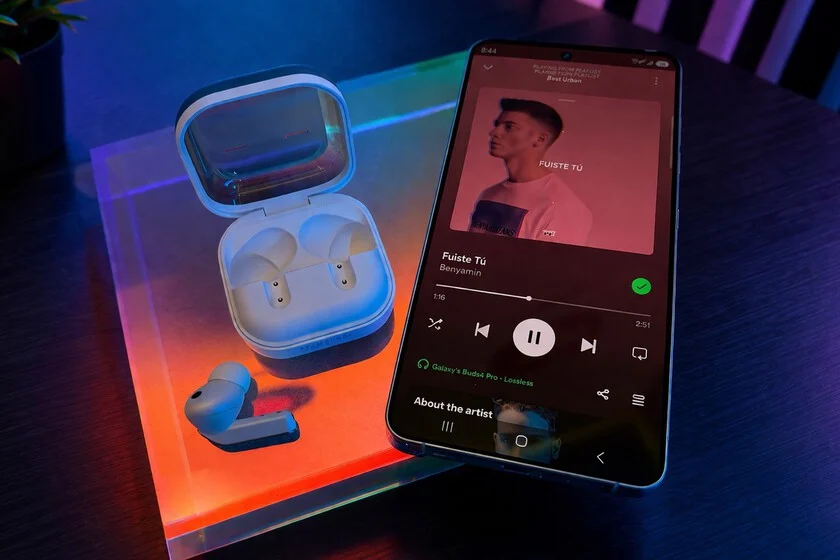

The landscape of personal audio has undergone a profound transformation, moving beyond mere sound reproduction to embrace sophisticated integration and intelligent functionalities. While many true wireless stereo (TWS) earbuds primarily serve as conduits for music and calls, the latest Samsung Galaxy Buds4 series—including the anticipated Galaxy Buds4 and Galaxy Buds4 Pro—marks a significant pivot, positioning these devices not just as audio accessories but as active, indispensable extensions of the broader Samsung Galaxy ecosystem. This strategic evolution highlights Samsung’s ambition to redefine user interaction and convenience, embedding advanced features that, while not always immediately apparent, deliver substantial value upon activation, fundamentally altering the perception and utility of personal audio devices.
The global TWS market has witnessed explosive growth over the past few years, driven by increasing smartphone penetration, the demand for untethered audio experiences, and continuous technological advancements. According to market research firms, the TWS segment is projected to continue its upward trajectory, with innovation in features like active noise cancellation (ANC), spatial audio, and seamless device switching becoming key differentiators. Samsung, a major player in this competitive arena, has consistently pushed the boundaries with its Galaxy Buds line, aiming to carve out a unique niche through deep integration with its extensive portfolio of Galaxy devices. This latest iteration, the Galaxy Buds4, exemplifies this strategy, integrating a suite of features that enhance user experience across gaming, communication, productivity, and personal safety, all meticulously woven into the fabric of the Galaxy ecosystem.
Gaming Mode: Eliminating Latency for an Immersive Experience
One of the most compelling additions to the Galaxy Buds4 is the dedicated Gaming Mode, a feature specifically designed to address the pervasive issue of audio latency in wireless listening. When paired with compatible Galaxy devices, the Gaming Mode significantly reduces the delay between on-screen action and auditory feedback. This optimization is critical, particularly in fast-paced mobile games, where even a minuscule lag can detrimentally affect gameplay and overall immersion. For competitive gamers, precise audio cues are as vital as visual information, dictating reaction times and strategic decisions. Beyond gaming, this reduced latency also enhances the viewing experience for videos and other dynamic content, eliminating the subtle, yet often irritating, desynchronization between speech and lip movements.
The challenge of latency in Bluetooth audio transmission is a well-documented technical hurdle. Standard Bluetooth codecs can introduce delays ranging from 100 to 200 milliseconds, which, while negligible for casual music listening, becomes acutely noticeable in interactive media. Samsung’s implementation of Gaming Mode leverages proprietary algorithms and optimized hardware-software communication within the Galaxy ecosystem to minimize this delay, often bringing it down to sub-50ms levels, approaching the responsiveness of wired connections. This enhancement is not merely a technical refinement; it’s a strategic move to solidify the Galaxy Buds4’s appeal among the rapidly expanding mobile gaming community. It underscores Samsung’s commitment to creating a cohesive and high-performance environment for its users, reinforcing the idea that the best experience is found within the Galaxy family, as this feature is explicitly unavailable when the Buds4 are connected to non-Galaxy devices like PCs or iPhones via Bluetooth. The practical benefit extends beyond hardcore gamers to everyday users who simply appreciate a more synchronized and enjoyable media consumption experience.
Real-time Translation: Breaking Down Language Barriers
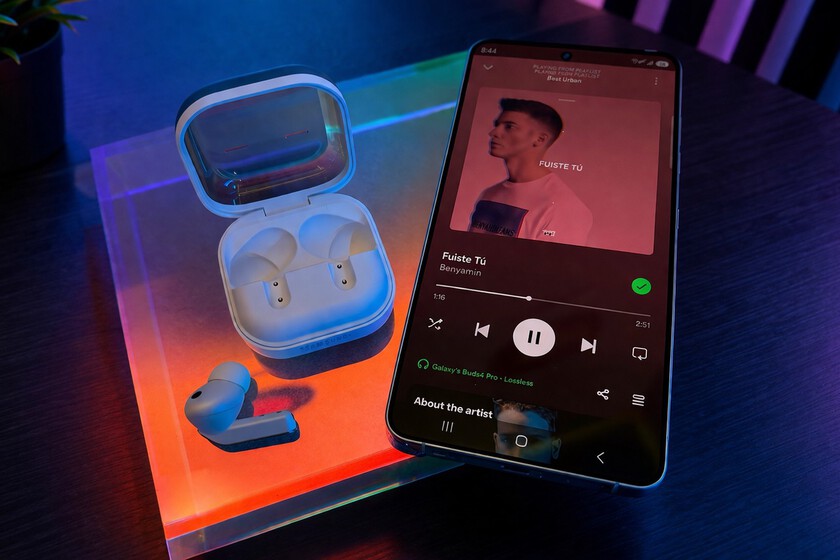
Perhaps one of the most transformative features of the Galaxy Buds4 is its deep integration with Samsung’s Interpreter and Live Translate functionalities. This innovation elevates the earbuds from a personal audio device to a powerful, real-time communication tool. Users can now experience seamless, on-the-fly translation directly within their ears, while the accompanying Galaxy mobile device simultaneously displays the translated text on its screen. This dual-modal approach—auditory and visual—significantly enhances comprehension and facilitates smoother cross-linguistic interactions.
The implications of real-time translation are far-reaching. For international travelers, it alleviates the common anxieties associated with language barriers, enabling more natural conversations with locals, understanding directions, or navigating foreign markets. In professional settings, it can facilitate impromptu discussions or provide immediate clarity during multilingual meetings, albeit not replacing professional human interpreters for complex, nuanced discussions. From a societal perspective, this technology democratizes access to information and fosters greater cultural understanding by making communication more accessible. Samsung’s broader investment in artificial intelligence, exemplified by its Galaxy AI initiatives, provides the technological backbone for these advanced translation capabilities. The integration within the Buds4 highlights a strategic vision where wearable technology acts as an intelligent interface, extending the capabilities of the smartphone into a more discreet and intuitive form factor. This marks a significant step towards a future where language is less of a hurdle and more of a bridge, facilitated by ubiquitous smart devices.
Auracast: A Paradigm Shift in Audio Sharing
The inclusion of Auracast in the Galaxy Buds4 series represents another forward-looking innovation, leveraging the capabilities of Bluetooth LE Audio. Auracast is a groundbreaking technology that allows a single compatible device to broadcast audio to an unlimited number of nearby Auracast-enabled receivers simultaneously. This fundamentally redefines the concept of audio sharing, moving beyond the traditional point-to-point Bluetooth connection.
Introduced as part of the Bluetooth LE Audio standard (primarily based on Bluetooth 5.2 and later), Auracast addresses several limitations of previous audio sharing methods. For instance, while some devices allow sharing audio with one or two other earbuds, Auracast enables broadcasting to an entire group, or even a public audience. This technology opens up a myriad of potential applications:
- Public Spaces: Imagine gyms broadcasting TV audio to multiple users, airports sharing flight announcements discreetly, or museums offering multilingual audio guides directly to visitors’ personal earbuds.
- Home Entertainment: Families could watch a movie together, each with their own Buds4, listening at personalized volume levels without disturbing others.
- Events and Conferences: Live translations or specific audio tracks could be broadcast to attendees, offering an inclusive and customizable experience.
- Education: Classrooms could broadcast lessons directly to students, enhancing focus and accessibility.
While still in its nascent stages of widespread adoption, Auracast is poised to revolutionize how we consume and share audio in both private and public environments. Samsung’s early adoption in the Galaxy Buds4 positions these earbuds as future-ready, anticipating and facilitating the growth of an ecosystem where shared, personalized audio is the norm. It underscores a strategic move by Samsung to align its products with emerging industry standards, ensuring longevity and adaptability in a rapidly evolving technological landscape. Analysts suggest that such features will become increasingly important as smart environments and public spaces integrate more advanced audio capabilities, making the Buds4 a crucial component for experiencing these future interactions.
Samsung Find: Enhanced Security and Peace of Mind
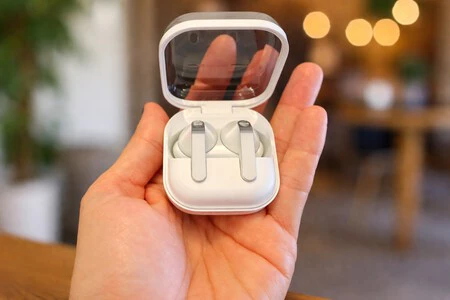
The compact and often inconspicuous nature of TWS earbuds makes them incredibly prone to being misplaced or lost. Recognizing this pervasive user pain point, Samsung has wisely integrated the Galaxy Buds4 with its robust device location service, Samsung Find. This feature significantly enhances the practical value of the earbuds by offering a comprehensive safety net against loss.
Samsung Find allows users to precisely locate their Galaxy Buds4, displaying their last known location on a map, tracking their real-time movement if they are within range, and even emitting a loud sound to help pinpoint them when they are nearby but out of sight (e.g., buried under sofa cushions or hidden in a bag). Crucially, the service leverages the vast network of other Galaxy devices in the vicinity. If a pair of Buds4 is outside the owner’s Bluetooth range, any nearby Galaxy smartphone or tablet can anonymously detect its presence and relay its location data back to the owner via Samsung Find. This crowd-sourced tracking capability dramatically increases the chances of recovery, transforming a potentially costly loss into a recoverable inconvenience.
This seemingly minor feature holds substantial importance for consumer confidence and product satisfaction. Losing expensive earbuds is a common frustration, and the added layer of security provided by Samsung Find contributes significantly to the overall user experience. It reflects a holistic approach to product design that considers the entire lifecycle of a device, from initial purchase to long-term usage and potential mishaps. For Samsung, it strengthens the appeal of its ecosystem, offering a comprehensive suite of interconnected services that extend beyond core functionalities to address practical, everyday challenges faced by users. The peace of mind offered by reliable tracking services is a powerful differentiator in a market flooded with similar devices.
Head Gestures: Intuitive Control for Hands-Free Interaction
The Galaxy Buds4 series introduces an innovative form of user interaction: Head Gestures. This feature allows users to answer or reject incoming calls with simple, intuitive head movements, eliminating the need to physically touch the phone or even the earbuds themselves. For instance, a subtle nod might answer a call, while a shake of the head could decline it. While initially feeling somewhat unconventional or even "theatrical" as described in early previews, the utility of Head Gestures quickly becomes apparent in specific, high-friction scenarios.
This hands-free control mechanism is particularly beneficial when a user’s hands are occupied. Imagine accepting a call while cooking, exercising, carrying groceries, or driving, without breaking stride or fumbling for a device. It enhances safety in situations where diverting attention to a screen or small earbud surface could be problematic. By default, Head Gestures are deactivated, allowing users to enable and customize them via the Galaxy Wearable app on their connected Galaxy device. This user-centric approach ensures that the feature is adopted by those who find it most valuable, rather than being an imposed interaction method.
The introduction of Head Gestures aligns with a broader industry trend towards more natural and less intrusive forms of human-computer interaction. As smart devices become more integrated into our daily lives, the demand for seamless, context-aware interfaces grows. These gestures position the Buds4 less as a separate gadget and more as an intuitive extension of the user’s body and their connected smartphone, further solidifying its role as an integrated accessory within the Galaxy ecosystem. It represents a subtle yet significant step towards making technology blend more seamlessly into the background of daily life, offering convenience where it is most needed.

The Galaxy Ecosystem Advantage: Synergy and Future Prospects
The collective power of these features—Gaming Mode, real-time translation, Auracast, Samsung Find, and Head Gestures—lies not just in their individual capabilities, but in their synergistic integration within the Samsung Galaxy ecosystem. Samsung’s strategy is clear: to offer a cohesive, enriched experience that rewards users for investing in its product family. By optimizing hardware and software interactions between Galaxy smartphones, tablets, smartwatches, and earbuds, Samsung creates a user journey that is smoother, more powerful, and more convenient than what standalone devices can offer.
This ecosystem-centric approach is a powerful differentiator in a highly competitive market. While competitors like Apple also leverage a strong ecosystem play, Samsung distinguishes itself through its diverse product portfolio and its commitment to offering a wide range of innovations that cater to various user segments—from mobile gamers to international travelers and everyday users seeking enhanced convenience and security. The Galaxy Buds4 series is not merely an incremental upgrade; it represents a significant leap forward in making TWS earbuds truly smart, proactive companions rather than passive audio output devices.
Looking ahead, the trajectory set by the Galaxy Buds4 suggests a future where personal audio devices will become even more intelligent and integrated. We can anticipate further advancements in health monitoring capabilities, more sophisticated AI-driven functionalities, and an even deeper merging with augmented reality (AR) and virtual reality (VR) experiences. Samsung’s continuous innovation in its Galaxy Buds line, particularly with the Buds4, firmly establishes its position at the forefront of this evolving landscape, promising a future where our earbuds are not just for listening, but for experiencing, communicating, and interacting with the world in entirely new ways. The Galaxy Buds4 are a testament to Samsung’s vision for a seamlessly connected and intelligently augmented future.