
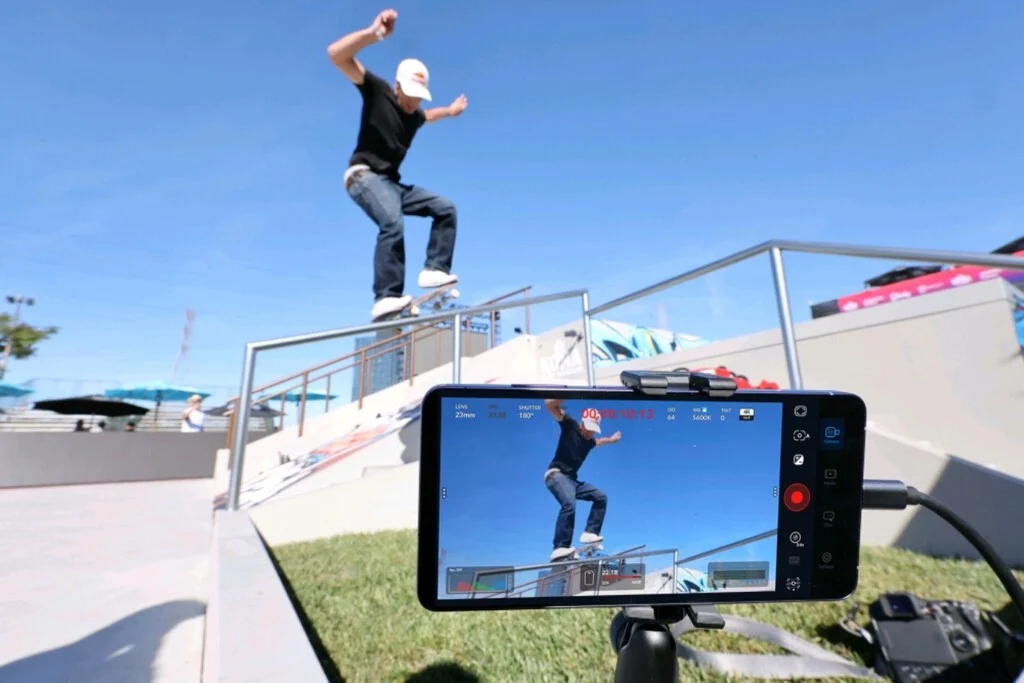

Samsung has initiated an ambitious strategy, positioning its latest flagship smartphone, the Galaxy S26 Ultra, not merely as a premium consumer device but as a viable professional-grade camera for sports production. This strategic pivot emphasizes the phone’s ability to capture dynamic, close-up footage from within the action, a feat traditionally challenging and costly for conventional broadcast equipment. The announcement underscores a potential paradigm shift in how sports content is produced, moving beyond external, static views to deeply immersive perspectives that bring viewers closer to the athletic experience.
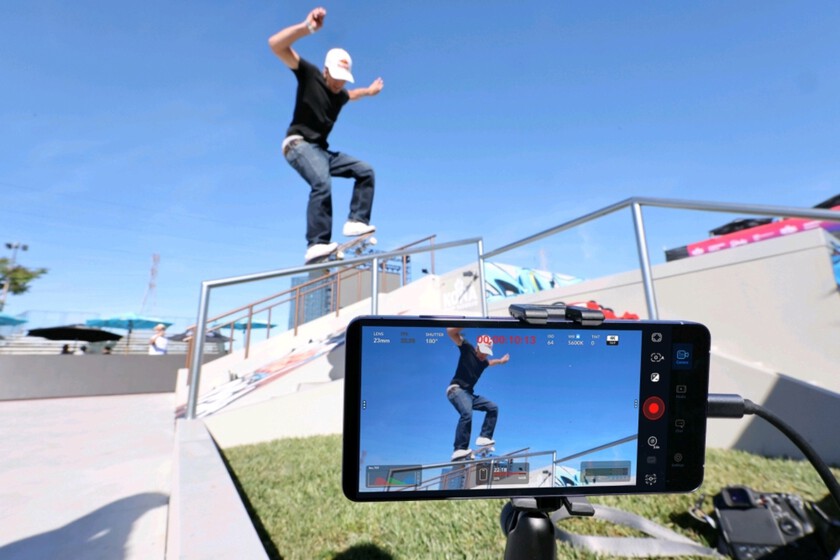
The core of Samsung’s proposition lies in the Galaxy S26 Ultra’s inherent advantages: its compact form factor, advanced imaging capabilities, and robust stabilization. These attributes allow the device to be placed directly within the flow of action, in locations where larger, more cumbersome professional cameras would be impractical, intrusive, or even unsafe. The company recently showcased this concept using the demanding environment of skateboarding, demonstrating how the S26 Ultra could be strategically mounted within a skate park to capture jumps, grinds, and landings from angles previously unattainable without significant logistical and financial investment. This approach promises to enrich the visual narrative of sports, offering spectators an unparalleled sense of presence and insight into the athletes’ technique and skill.
A New Frontier in Sports Broadcasting: Beyond Traditional Angles
For decades, sports broadcasting has largely relied on an array of fixed cameras, telephoto lenses, and a limited number of mobile solutions like Steadicams or crane systems to cover events. While effective, these methods often present a view of the action rather than from within it. The rise of extreme sports, esports, and a global audience increasingly accustomed to dynamic, first-person content through social media and user-generated platforms has fueled a demand for more intimate and engaging perspectives. This demand has spurred innovation in miniaturized cameras, drone technology, and wearable devices, but integrating these into high-stakes professional broadcasts has presented its own set of challenges regarding image quality, reliability, and workflow.
Samsung’s move with the Galaxy S26 Ultra directly addresses this gap. By leveraging a device that millions already carry in their pockets, the company is not just selling superior video recording quality; it is selling access to novel perspectives. The implicit message is that the S26 Ultra enables producers to "put the camera inside the sport," transforming the viewing experience. In a sport like skateboarding, where the nuance of a trick, the precise rotation of the board, or the control during a landing are paramount, seeing these details from an internal vantage point offers a depth of understanding that external shots often miss. This isn’t merely about higher resolution; it’s about a fundamental shift in spatial storytelling.
The Technical Edge of the Galaxy S26 Ultra
While Samsung has not disclosed the full technical specifications related to this professional application in detail, the underlying capabilities of a flagship device like the Galaxy S26 Ultra are crucial to its viability. Modern high-end smartphones boast increasingly large camera sensors, advanced optical image stabilization (OIS) combined with sophisticated electronic image stabilization (EIS) algorithms, and powerful computational photography engines. These elements work in concert to deliver stable, high-quality video even in challenging, fast-moving environments.
For instance, the S26 Ultra would likely feature multi-lens systems offering various focal lengths, high dynamic range (HDR) video capture, and perhaps even advanced low-light performance. Its onboard processing power, driven by cutting-edge mobile chipsets, would be instrumental in real-time stabilization and image optimization, ensuring broadcast-ready footage. The integration of artificial intelligence (AI), a growing focus for Samsung, could further enhance video quality through intelligent scene recognition, object tracking, and noise reduction, crucial for dynamic sports environments. Furthermore, the robust build quality of premium smartphones, often featuring water and dust resistance, makes them inherently more resilient to the rigors of outdoor sports production compared to delicate traditional broadcast cameras.
Democratizing Immersive Content: Economic and Creative Paradigm Shifts
One of the most significant implications of this strategy is the potential for democratizing access to high-quality immersive content. Traditional broadcast cameras and their associated professional rigging can cost tens of thousands, if not hundreds of thousands, of dollars. Specialized equipment for unique angles, such as cable cams or bespoke robotic systems, adds further to this expense, often limiting their use to major events with substantial budgets.
A high-end smartphone, while not inexpensive, represents a fraction of this cost. This cost differential significantly lowers the barrier to entry for production companies, independent filmmakers, and even sports leagues looking to experiment with new angles. For smaller organizations or emerging sports, the S26 Ultra could enable them to produce visually compelling content that rivals larger productions, fostering innovation and broader engagement. This economic advantage is not just about reducing equipment costs but also about streamlining logistics. A compact smartphone requires less space, fewer dedicated personnel for setup and monitoring (especially with remote control capabilities), and is easier to deploy and retrieve in complex environments.
Beyond economics, the creative possibilities are vast. Sports storytelling can evolve from merely documenting events to truly immersing the viewer in the athlete’s perspective. Imagine footage from inside a basketball hoop, at the base of a ski jump, or mounted directly on a racing car’s spoiler. These perspectives not only make the action more thrilling but also provide analytical value. Coaches and athletes could review performance with unprecedented detail, dissecting technique from angles previously unavailable. This shift changes not just what is seen, but how it is understood and appreciated by both casual fans and connoisseurs of the sport.
Case Study: Skateboarding – A Perfect Proving Ground
The choice of skateboarding as a demonstration sport for the Galaxy S26 Ultra’s capabilities is particularly insightful. Skateboarding is inherently dynamic, relies heavily on complex technical maneuvers, and has a culture deeply intertwined with grassroots videography and self-produced content. The sport thrives on close-up, visceral footage that captures the speed, height, and intricate balance of tricks.
Traditional broadcast setups often struggle to capture the raw energy and precise details of skateboarding. Large cameras on tripods are relegated to the periphery, offering wide shots that lose the nuances of foot placement, board control, and body rotation. Smaller, action-oriented cameras like GoPros have been widely adopted by skaters themselves, but their image quality and integration into professional broadcast workflows have historically been limitations.
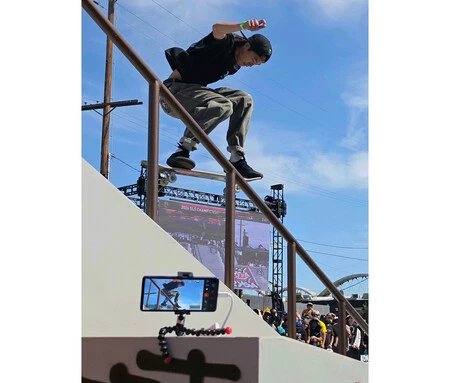
By placing the S26 Ultra directly within the skate park – perhaps mounted on obstacles, ramps, or even on a skater’s protective gear (with appropriate safety considerations) – Samsung can capture the exact moment a board grinds a rail, the precise rotation of an aerial trick, or the impact of a landing, all with a level of clarity and stability previously difficult to achieve. This provides a viewing experience that resonates deeply with the skateboarding community and offers a fresh perspective to mainstream audiences, bridging the gap between raw, authentic street footage and polished, high-definition broadcast production.
Broader Impact and Future Outlook for Sports Media
The potential applications of the Galaxy S26 Ultra’s "inside-the-action" videography extend far beyond skateboarding. Consider other extreme sports like surfing, mountain biking, or parkour, where proximity to the action is key to conveying the thrill and danger. In team sports, cameras strategically placed near goals, court lines, or even embedded into protective gear could offer tactical insights and a player’s-eye view.
This trend aligns with a broader industry push towards augmented reality (AR) and virtual reality (VR) content, where immersive video is a fundamental component. High-quality, dynamically captured footage from multiple unique angles could feed into future AR/VR experiences, offering viewers the ability to virtually "step into" the game or event.
However, challenges remain. The durability of smartphones, even ruggedized ones, against repeated impacts in high-contact sports would need rigorous testing. Battery life for extended professional shoots, data offloading and storage solutions for vast amounts of high-resolution footage, and seamless integration into existing multi-camera production workflows (including remote control and synchronization) are all critical considerations for widespread adoption. Samsung, by actively engaging with sports organizations and production houses, would need to address these practicalities to solidify the S26 Ultra’s role as a true professional tool.
Samsung’s Strategic Vision: Beyond Consumer Electronics
This initiative positions Samsung not just as a leader in consumer electronics, but as an innovator shaping the future of media production. By demonstrating practical, professional applications for its flagship smartphone, Samsung aims to differentiate its products in an increasingly competitive market. It elevates the Galaxy S26 Ultra beyond its technical specifications (like "records 8K" or "has advanced zoom") to a functional tool that creates tangible value for a professional segment.
This strategy could also inspire other smartphone manufacturers to explore similar applications, driving further innovation in mobile imaging technology and its integration into specialized fields. The convergence of consumer technology and professional tools is a powerful trend, and Samsung appears intent on being at the forefront of this evolution in sports media. The company is not merely selling a phone; it is selling a distinct advantage in content creation, promising "new perspectives" that are not just marketing rhetoric but a credible means to enrich and redefine sports broadcasting for a globally engaged audience.