
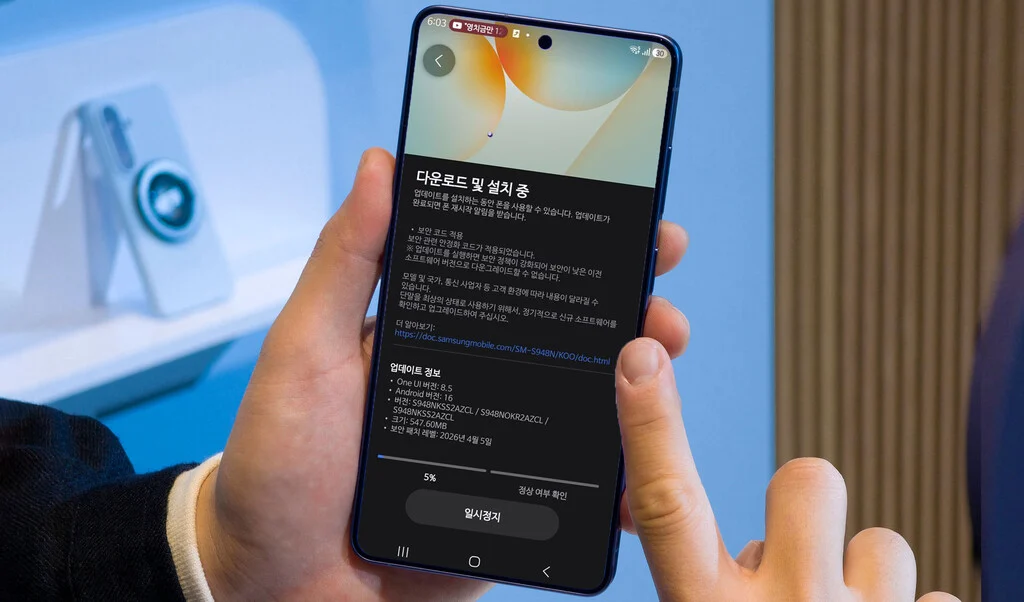

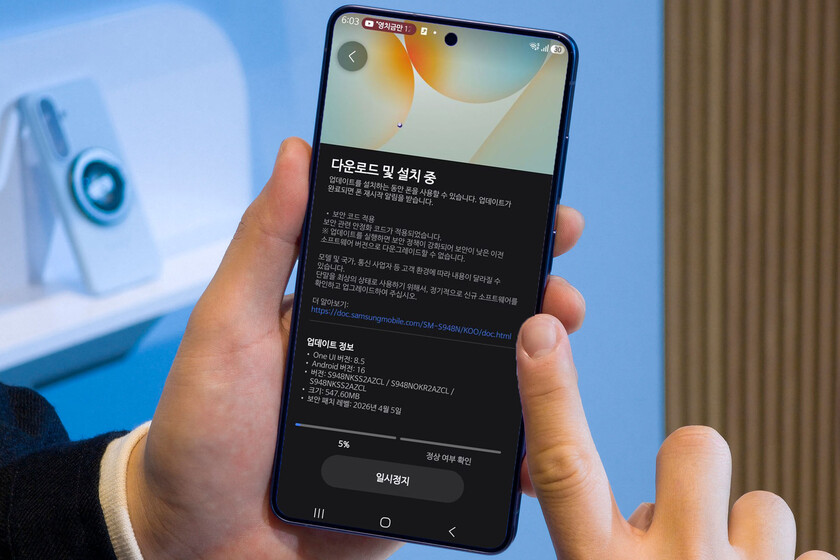
In a notable deviation from typical update schedules, Samsung has commenced the rollout of its April security patch for the flagship Galaxy S26, S26+, and S26 Ultra devices on the very first day of the month. This expedited release marks a significant acceleration compared to the usual mid-month deployment observed in previous cycles, underscoring Samsung’s renewed commitment to delivering timely security enhancements for its premium smartphone lineup. The swift deployment, initiated in Samsung’s home market of South Korea, signals a proactive approach to cybersecurity, aiming to fortify devices against emerging threats as promptly as possible.
Prompt Rollout for Flagship Devices
Historically, both Google and Samsung often release their monthly Android security updates well into the respective month, with users typically receiving notifications and download options in the second or even third week. This pattern has, at times, led to minor delays in patching known vulnerabilities. However, the immediate availability of the April security update for the Galaxy S26 series represents a distinct shift. Within hours of April 1st, users in South Korea began reporting the update, identified by firmware versions AZCO and AZCL, depending on the specific model. These packages vary in size, generally ranging between 400 MB and 600 MB, a typical footprint for monthly security patches that primarily focus on system-level fixes and stability improvements.
The Galaxy S26 series, comprising Samsung’s latest and most advanced smartphones, naturally receives priority in the update queue. This strategy is not uncommon among major manufacturers, as flagship devices often represent the cutting edge of hardware and software integration, and maintaining their security integrity is paramount for brand reputation and user trust. The rapid deployment suggests an optimized internal process within Samsung, potentially leveraging a more streamlined testing and distribution pipeline for its most current generation of devices. This could be a direct response to industry demands for more consistent and faster software support, a critical differentiator in an increasingly competitive smartphone market.
The Significance of Timely Security Updates
Monthly security updates are far from trivial; they are crucial components of a device’s ongoing protection against a myriad of cyber threats. These patches address vulnerabilities identified in the Android operating system and Samsung’s proprietary software (One UI), which could otherwise be exploited by malicious actors. Such vulnerabilities range from minor flaws that might cause performance issues to critical exploits that could allow remote code execution, data theft, or complete device compromise. Google regularly publishes detailed Android Security Bulletins that outline the Common Vulnerabilities and Exposures (CVEs) addressed in each monthly patch. These bulletins provide transparency and guide manufacturers on necessary fixes.
For instance, past security updates have patched critical vulnerabilities related to memory corruption, elevation of privilege, and arbitrary code execution within various Android components, including the framework, media framework, and kernel. While Samsung has not yet published the specific details for the April 2024 update at the time of this initial rollout, it is expected to incorporate Google’s latest security fixes for Android, alongside Samsung-specific patches targeting potential weaknesses in its custom software and hardware components. The immediate availability minimizes the "exposure window," the period during which a device might be vulnerable to newly discovered exploits before a patch is applied. For high-profile flagship devices, which are often targets for sophisticated attacks due to their user base and the sensitive data they handle, this reduced exposure window is particularly valuable.
Samsung’s Evolving Update Strategy: A Chronology of Commitment
Samsung’s approach to software updates has seen considerable evolution over the past few years. Historically, the company faced criticism for inconsistent and sometimes slow updates compared to competitors or Google’s Pixel devices. However, this narrative has shifted dramatically. In recent times, Samsung has made significant strides, not only in speeding up monthly security patches but also in extending the longevity of software support for its devices.
A key turning point was Samsung’s commitment to providing up to seven years of operating system and security updates for its flagship devices, including the Galaxy S26 series. This policy, announced recently, puts Samsung on par with Google’s Pixel lineup and sets a new benchmark in the Android ecosystem. This long-term support not only enhances the value proposition for consumers but also aligns with growing environmental concerns by promoting device longevity.
The early April security update for the S26 series is a direct manifestation of this renewed commitment. It follows closely on the heels of other proactive updates, such as the March security patch for various Galaxy models and, notably, the rollout of Quick Share compatibility with Apple’s AirDrop for the S26 series just days prior. The Quick Share-AirDrop integration, a highly anticipated feature enabling seamless file transfers between Samsung and Apple devices, demonstrated Samsung’s ability to deliver significant functional enhancements promptly. While the April security patch is distinct from this feature update, their close proximity reinforces the perception of an agile and responsive software development team at Samsung. The concurrent focus on both security and functionality underscores a holistic approach to user experience.
Technical Details of the Update and Expected Features
The specific firmware versions AZCO and AZCL, currently rolling out in South Korea, primarily focus on enhancing "stability and security." This generic description is standard for initial security patch announcements, as detailed changelogs are often published by Google and Samsung a few days or weeks after the initial deployment begins. These detailed logs will specify the exact Android Security Bulletin vulnerabilities addressed and any Samsung-specific fixes.
It is important to note what this particular update does not include. As mentioned, the highly anticipated Quick Share compatibility with AirDrop was already deployed for the Galaxy S26 series in the preceding days. This means the April security patch is a standalone security and stability enhancement, not bundled with new user-facing features. This separation of security patches from major feature drops is a common practice that allows for faster deployment of critical security fixes without the extensive testing and potential delays associated with larger feature integrations.
The size of the update, ranging from 400 MB to 600 MB, is typical for monthly security patches. Such a size usually indicates that it contains a comprehensive set of bug fixes and performance optimizations in addition to the core security vulnerability patches. Users are advised to ensure sufficient battery life and a stable Wi-Fi connection before initiating the download and installation process to prevent any potential interruptions.
Broader Implications for Users and the Brand
For Galaxy S26 series users, this early update translates directly into enhanced peace of mind. Knowing that their cutting-edge devices are among the first to receive the latest security protections from Google and Samsung offers a significant boost in confidence regarding data privacy and overall device integrity. In an era of escalating cyber threats, timely security updates are no longer a luxury but a fundamental expectation from premium smartphone manufacturers.
From Samsung’s perspective, this accelerated rollout reinforces its brand image as a leader in the Android ecosystem, committed to delivering not just innovative hardware but also robust and timely software support. This move helps to solidify its position against competitors, particularly Apple, which is renowned for its consistent and immediate software updates across its device ecosystem. By matching or even surpassing the speed of some competitors in delivering essential security patches, Samsung strengthens its competitive edge and bolsters customer loyalty.
Furthermore, this early release could serve as a bellwether for future update cycles. If Samsung maintains this pace for its flagship series, it could set a new standard for the Android industry, compelling other manufacturers to similarly prioritize the speed and consistency of their software updates. This would ultimately benefit the entire Android user base by fostering a more secure and reliable mobile computing environment.
Looking Ahead: What This Means for Future Updates
The initial rollout in South Korea is merely the first phase of a global deployment. Typically, Samsung rolls out updates regionally, gradually expanding availability to other markets in Asia, Europe, North America, and other parts of the world. This staggered approach allows the company to monitor for any unforeseen issues and ensure stability across diverse network environments and device configurations.
Users outside of South Korea who own a Galaxy S26, S26+, or S26 Ultra should anticipate receiving the April security update in the coming days and weeks. The exact timeline will vary based on region, carrier, and specific device models. Samsung is expected to publish more comprehensive details regarding the update’s content and its broader rollout schedule later this week, likely in conjunction with Google’s official Android Security Bulletin for April.
This proactive stance by Samsung is a strong indicator of its commitment to maintaining the long-term value and security of its flagship devices. It suggests a strategic shift towards prioritizing software support as a core pillar of its product offering, moving beyond hardware innovation alone. As the smartphone market matures, the quality and longevity of software support are increasingly becoming decisive factors for consumers when choosing a new device. Samsung’s early April security update is a clear signal that the company understands this dynamic and is actively working to meet and exceed these evolving customer expectations.
To check for the update, Galaxy S26 series users can navigate to their phone’s settings menu, select "Software Update," and then tap "Download and install." Following the on-screen prompts will initiate the download, and a device restart will be required to complete the installation. Regular checking for updates is always recommended to ensure devices are running the latest and most secure software available. This early rollout provides a positive outlook for future software maintenance for the Galaxy S26 series, promising a consistently secure and stable user experience throughout the device’s lifecycle.