
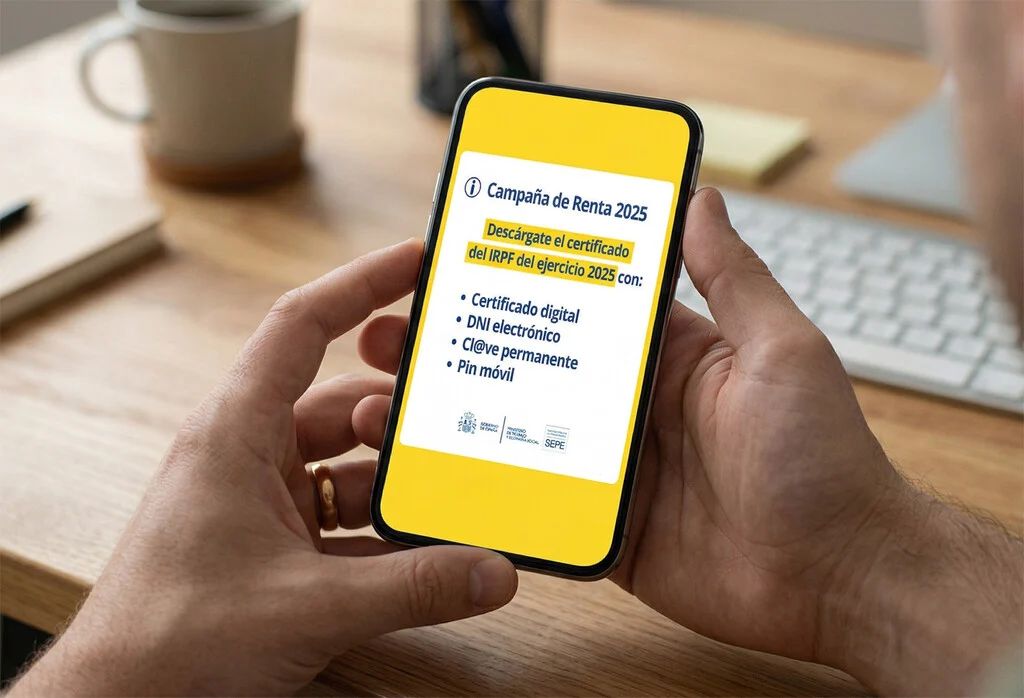

The Spanish Public State Employment Service (SEPE) has announced the early availability of Personal Income Tax (IRPF) certificates for the 2025 tax campaign, a crucial document for millions of citizens as they prepare their annual declarations. This proactive measure, facilitated primarily through digital channels and a streamlined mobile PIN verification system, underscores the ongoing commitment of Spanish public administrations to enhance efficiency, accessibility, and convenience for taxpayers. While the official window for submitting the full Renta 2025 declaration — which pertains to the fiscal year 2024 — is still some weeks away, the ability to consult and download these essential documents now allows individuals to get a head start on gathering their financial information, ensuring a smoother and more accurate tax filing process.
This early access is particularly beneficial for individuals who have received unemployment benefits, subsidies, or other forms of assistance from SEPE during the 2024 fiscal year. These certificates detail the total income received and any withholdings applied, information that is absolutely vital for correctly completing the IRPF declaration. The SEPE’s initiative aligns with broader efforts by the Spanish Tax Agency (AEAT) to digitize and simplify tax procedures, encouraging citizens to utilize online tools for various preliminary steps, such as consulting fiscal data and obtaining the necessary reference number for their tax draft. The integration of mobile technology into these processes is a key feature, reflecting a national trend towards mobile-first public services.
The Spanish Tax Landscape: Context for the Renta Campaign
Spain’s personal income tax, or IRPF (Impuesto sobre la Renta de las Personas Físicas), is a progressive tax levied on an individual’s income. Each year, millions of Spanish residents are required to file a declaration, known as the "Campaña de la Renta," to report their earnings, deductions, and withholdings. The campaign typically runs from April to June, with specific dates for online submissions, telephone assistance, and in-person appointments. The "Renta 2025" campaign, therefore, refers to the declaration process taking place in 2025 for income earned during the calendar year 2024. This annual cycle is a cornerstone of Spain’s fiscal system, funding public services and infrastructure.
The process of filing the IRPF declaration can be complex, involving numerous data points from various sources: employers, banks, investment firms, and public bodies like SEPE. Obtaining accurate certificates from all relevant entities is a prerequisite for a correct declaration. Errors or omissions can lead to delays, penalties, or incorrect tax outcomes. Consequently, the early availability of documents like the SEPE IRPF certificate is not merely a convenience but a critical aid in promoting compliance and reducing the administrative burden on taxpayers.
A Chronology of Digital Transformation in Tax Filing
The journey towards fully digitalized tax services in Spain has been a gradual but steady one. Over the past decade, both the AEAT and other public service providers have significantly invested in their electronic platforms.
- Early 2000s: Introduction of basic online tax filing options, primarily for self-employed individuals and businesses.
- Mid-2000s: Expansion of online services for individual taxpayers, with the advent of "Borrador de la Renta" (tax draft) accessible online.
- 2010s: Increased emphasis on secure digital identification methods like digital certificates and Cl@ve Permanente. Mobile applications began to emerge for basic consultations.
- Late 2010s – Early 2020s: Acceleration of digital transformation driven by technological advancements and the need for remote services, particularly during the pandemic. This period saw a significant uptake in mobile-based interactions.
- Current Renta 2025 Campaign (Fiscal Year 2024): The focus is on consolidating and expanding these digital channels. Services like SEPE’s early certificate access via mobile PIN are prime examples of this evolution, aimed at making the process as seamless as possible from a smartphone or computer. The AEAT typically activates its tax data consultation service and the reference number generation facility well in advance of the formal campaign opening, often in late March or early April, further underscoring the preparatory phase’s importance.
SEPE’s Digital Gateway: Obtaining Your IRPF Certificate
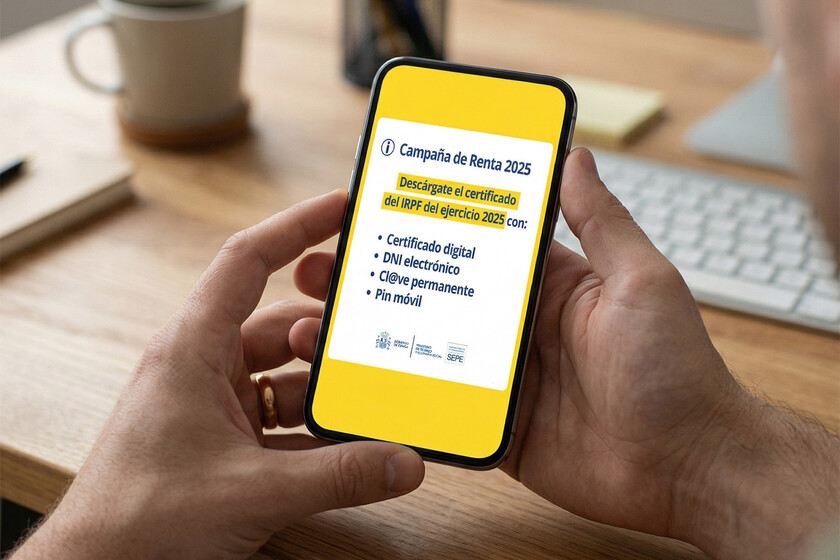
The SEPE has actively promoted its digital channels for certificate retrieval, notably through social media. A recent message from the official SEPE account highlighted the ease of access: "You can now download your IRPF certificate for the Renta 2025 campaign. You can obtain it via a PIN sent to your mobile phone." This direct communication strategy aims to inform and guide citizens towards the most convenient method.

The process for obtaining the IRPF certificate is designed to be straightforward, although familiarity with digital platforms is beneficial. Taxpayers need to navigate to the electronic headquarters of SEPE.
- Access the SEPE Electronic Headquarters: Users must visit
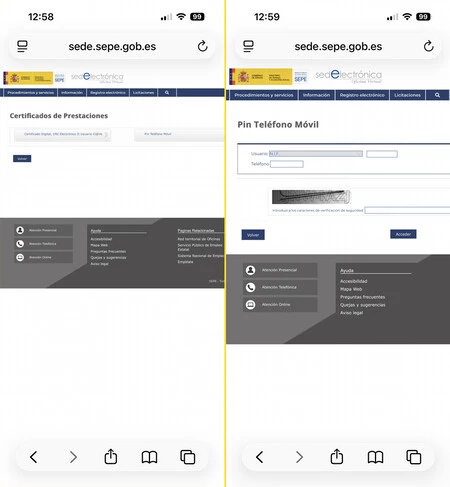
sede.sepe.gob.es. While theoretically accessible via a mobile browser, SEPE’s website, as of the current year, has not been fully optimized for mobile devices. This often results in a less-than-ideal user experience on smaller screens, prompting a recommendation to use a desktop computer for smoother navigation. - Navigate to ‘Procedures and Services’: Once on the homepage, select the ‘Procedimientos y Servicios’ section.
- Select ‘Persons’ and ‘Obtain a Certificate on Your Benefit’: Within the procedures, users will find a category for ‘Personas’ (Persons), and from there, the specific option ‘Obtén un certificado sobre tu prestación’ (Obtain a certificate about your benefit).
- Identification Methods: This is a critical step where users must authenticate their identity. SEPE offers several secure methods:
- Digital Certificate: This includes certificates issued by the Fábrica Nacional de Moneda y Timbre (FNMT) or the electronic DNI (DNIe). These methods provide a high level of security and are widely used for interactions with all public administrations. Users need to have their certificate installed on their device or possess a DNIe reader.
- Cl@ve Permanente: This is a unified electronic identification system for citizens to interact with public administrations. Users register once and receive a permanent username and password, often complemented by a one-time SMS code for added security. It is highly recommended for frequent users of government digital services.
- PIN via Mobile: This is the most advertised and arguably the most convenient method for many. Users simply enter their DNI/NIF (National Identity Document/Tax Identification Number) and their mobile phone number. Crucially, this phone number must be registered in SEPE’s database. If the number is not current or not on file, this option will not work, necessitating an update of personal details with SEPE beforehand.
- PIN Verification: If the mobile PIN option is chosen, a unique code is sent via SMS to the registered phone number. This PIN must be entered into the designated field on the SEPE website within a short timeframe to complete the authentication.
- Certificate Selection and Download: After successful authentication, the system presents a list of available certificates. Users select the ‘Certificado de ingresos y retenciones’ (Certificate of income and withholdings) corresponding to the 2024 fiscal year (referred to as "ejercicio 2025" in the context of the campaign). The certificate is then generated as a PDF file, which can be saved to the device or easily sent via email for safekeeping or printing.
This detailed, step-by-step approach, particularly the emphasis on the mobile PIN, aims to demystify the process and encourage broader participation in digital tax preparation.
Supporting Data and Broader Implications
The push towards digital public services is supported by compelling statistics and a clear policy direction. According to reports from the AEAT, a significant majority of tax declarations are now filed online. For instance, in recent tax campaigns, over 90% of all IRPF declarations were submitted electronically, highlighting the public’s embrace of digital platforms. While specific figures for SEPE certificate downloads are not always publicly disaggregated, the general trend indicates millions of digital interactions annually across various public service domains.
The implications of SEPE’s early certificate availability are multifaceted:
- Enhanced Citizen Convenience: By enabling early access, SEPE empowers citizens to organize their tax documents without last-minute stress. The mobile PIN option, in particular, caters to a population increasingly reliant on smartphones for daily tasks, reducing the need for physical visits or complex digital setups.
- Improved Accuracy of Declarations: Having official income and withholding data directly from SEPE significantly reduces the likelihood of errors in tax declarations. This helps taxpayers avoid potential audits or corrections from the AEAT, ensuring compliance and peace of mind.
- Reduced Administrative Burden: For SEPE itself, automating the issuance of these certificates through a self-service portal substantially reduces the workload on its staff, allowing resources to be reallocated to other critical services. This is a core tenet of modern public administration efficiency.
- Security and Data Integrity: The use of robust identification methods like digital certificates, Cl@ve Permanente, and SMS-based PINs ensures that personal tax data is accessed securely, protecting against unauthorized disclosure.
- Addressing the Digital Divide (and its Challenges): While digital tools offer immense benefits, they also pose challenges for segments of the population less comfortable with technology, often older individuals or those with limited internet access. The recommendation to use a desktop computer due to SEPE’s non-mobile-optimized website, as mentioned in the original source, underscores an area for continued improvement. Future efforts will need to focus on making all public administration websites fully responsive and intuitive across all devices to ensure true universal accessibility.
Official Statements and Future Outlook
While SEPE’s social media message serves as a direct official statement on the availability of the certificates, the broader context includes consistent messaging from both SEPE and the AEAT about promoting digital channels. Both agencies routinely emphasize the benefits of using online services: speed, security, and convenience. The AEAT, for its part, provides a range of digital tools, including a tax simulator that allows taxpayers to estimate their payable or refundable amount, further aiding in early preparation.
The future of tax administration in Spain points towards even greater integration and user-centric design. This could include:
- Full Mobile Optimization: A complete overhaul of public administration websites, including SEPE’s, to be fully responsive and user-friendly on mobile devices, eliminating the current disparity between desktop and mobile experiences.
- Proactive Notifications: Leveraging data analytics to send proactive notifications to citizens when their relevant tax documents are available.
- AI-Assisted Support: Integrating artificial intelligence into online portals to provide instant answers to common tax queries, further reducing the need for direct human intervention for routine tasks.
- Enhanced Data Sharing (Securely): Even more seamless and secure data exchange between different public bodies (e.g., SEPE and AEAT) to pre-populate tax declarations with greater accuracy, minimizing manual input from taxpayers.
In conclusion, SEPE’s early release of IRPF certificates for the Renta 2025 campaign, with a strong emphasis on digital accessibility and mobile verification, represents a significant step forward in streamlining tax preparation for Spanish citizens. It reflects a strategic vision for public services that prioritizes convenience, accuracy, and efficiency, albeit with continued opportunities for improvement in ensuring truly universal digital access. As the main tax season approaches, proactive engagement with these digital tools will be key for taxpayers to navigate their fiscal obligations successfully.