


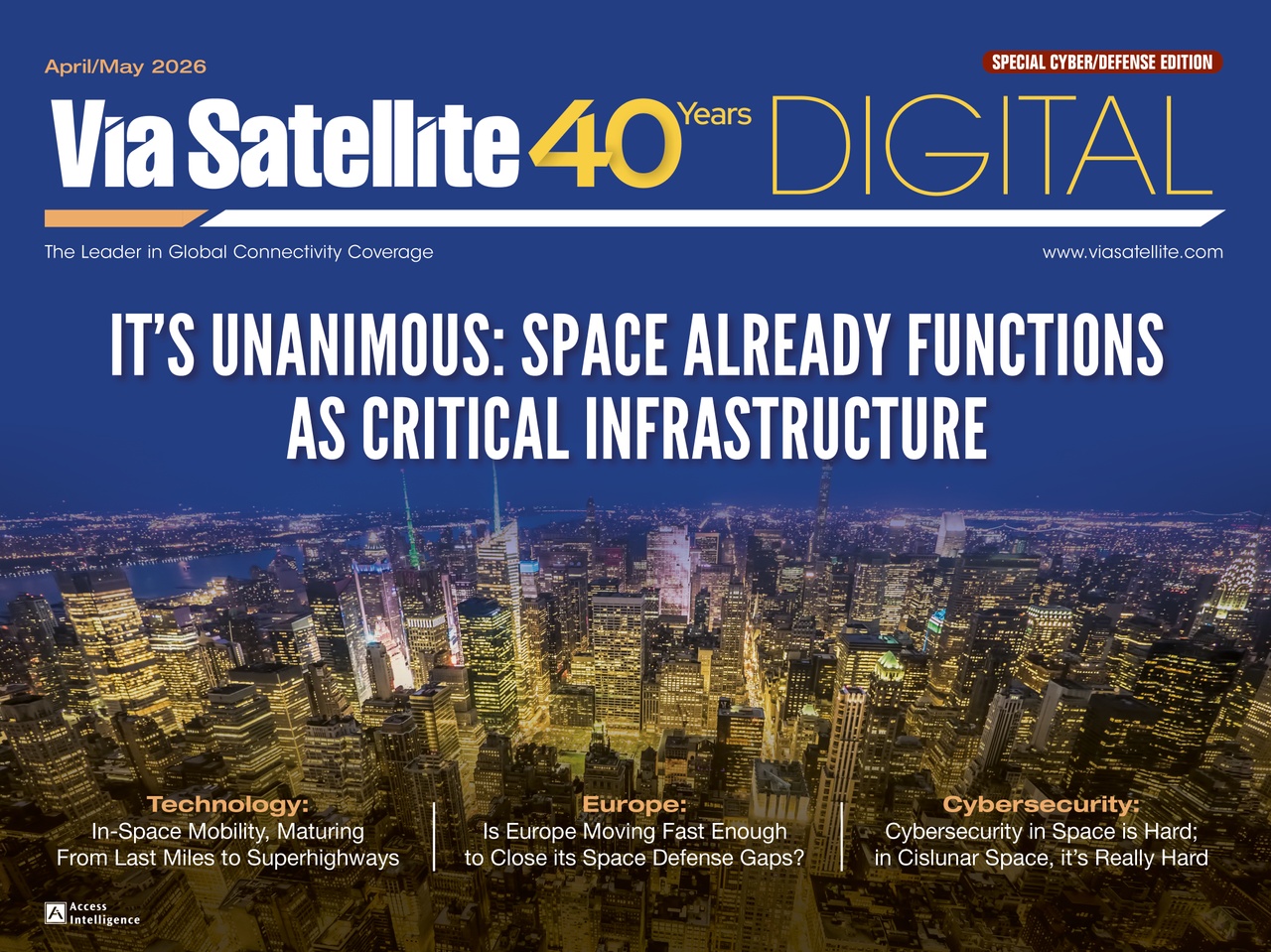
The global security landscape is undergoing a fundamental transformation as space-based assets transition from being peripheral support tools to the central nervous system of modern civilization. In early 2026, a consensus has emerged among defense analysts, commercial operators, and international policy-makers: space is no longer just a high-ground advantage but has officially matured into a recognized tier of critical infrastructure. This evolution reflects a seismic shift in how nations perceive the vacuum beyond Earth’s atmosphere, viewing it as a domain that requires the same level of protection and resilience as power grids, water systems, and terrestrial telecommunications networks. As the reliance on satellite-enabled positioning, navigation, and timing (PNT), secure communications, and Earth observation reaches unprecedented levels, the vulnerability of these systems has moved to the forefront of national security agendas.

The Unanimous Recognition of Space as Critical Infrastructure
For decades, the designation of "critical infrastructure" was reserved for physical assets on the ground. However, the integration of satellite data into every facet of the global economy—from high-frequency financial trading to precision agriculture and emergency response—has made the orbital environment indispensable. In 2026, major global powers have reached a rare point of unanimity regarding this status. This recognition is driven by the fact that a "day without space" would result in the immediate cessation of global logistics, the blinding of modern military forces, and a multi-trillion-dollar shock to the global GDP.
The formalization of this status has led to new regulatory frameworks. Governments are now treating satellite constellations with the same level of sovereign protection as maritime trade routes. This shift is characterized by increased public-private partnerships, where commercial operators are integrated into national defense architectures. The rationale is clear: the sheer volume of data processed through commercial LEO (Low Earth Orbit) and MEO (Medium Earth Orbit) constellations makes them prime targets for adversaries seeking to disrupt a nation’s stability without firing a single kinetic shot.
Cybersecurity Challenges in the Cislunar Domain
As humanity extends its reach beyond geostationary orbit (GEO), the complexity of securing space assets has grown exponentially. Cybersecurity in space has always been a formidable challenge due to the constraints of power, processing speed, and the longevity of hardware. However, in cislunar space—the vast region between Earth and the Moon—these challenges are magnified. The expansion of the Artemis program and the rise of commercial lunar missions have turned the cislunar domain into a new frontier for strategic competition.
Securing assets in cislunar space is "really hard" because of the immense distances involved and the resulting latency in communications. Traditional cybersecurity protocols that rely on rapid, real-time handshakes between ground stations and satellites are difficult to implement at a distance of 384,400 kilometers. Furthermore, the orbital mechanics of cislunar space allow for "hidden" trajectories, making it easier for rogue actors to approach assets undetected. To counter these threats, the industry is moving toward autonomous on-board security systems. These systems use artificial intelligence to detect and mitigate cyber-intrusions locally, without waiting for instructions from Earth, ensuring that the next generation of lunar outposts remains resilient against electronic warfare and data spoofing.

The Evolution of In-Space Mobility: From Last Miles to Superhighways
The logistics of the space industry are moving away from the era of "static" satellites. Historically, a satellite was launched into a fixed orbit where it remained until its fuel was exhausted, eventually becoming space debris. By 2026, the concept of In-Space Servicing, Assembly, and Manufacturing (ISAM) has matured. We are witnessing a transition from "last-mile" delivery services—small space tugs moving satellites from a drop-off point to a final orbit—to a sophisticated network of "orbital superhighways."
This new infrastructure includes orbital refueling depots, modular docking interfaces, and life-extension vehicles. The ability to maneuver in space is no longer a luxury; it is a strategic necessity. For commercial operators, mobility means the ability to adjust coverage areas based on market demand. For military commanders, mobility is the ultimate defense. A satellite that can maneuver can dodge kinetic interceptors or relocate to avoid jamming. The development of high-efficiency electric propulsion and nuclear-thermal engines is providing the "horsepower" needed for these highways, allowing for a more dynamic and sustainable presence in orbit.

Addressing the European Space Defense Gap
As the United States and China accelerate their space capabilities, Europe finds itself at a critical crossroads. For years, European space policy focused primarily on civil and scientific endeavors, such as the Copernicus and Galileo programs. However, the shifting geopolitical climate has exposed a significant gap in Europe’s space defense posture. While Europe possesses world-class engineering and launch capabilities through ArianeGroup and various "New Space" startups, it has lagged in the development of dedicated military space assets and unified space command structures.
In 2026, the question remains: is Europe moving fast enough? The European Union’s Space Strategy for Security and Defence is a step toward closing this gap, but hurdles remain. Fragmented national interests among member states have historically slowed the procurement of continent-wide defense systems. To remain a relevant power, analysts suggest that Europe must move beyond "dual-use" rhetoric and invest heavily in space domain awareness (SDA) and sovereign launch resilience. The goal is to ensure that Europe can protect its own critical infrastructure in space without total reliance on external allies.

Space as the Ultimate Offset Strategy
In military theory, an "offset strategy" is an approach that seeks to negate an adversary’s numerical or conventional advantages through superior technology and innovation. During the Cold War, the U.S. used precision-guided munitions and stealth technology as an offset. Today, space is recognized as the "best offset strategy." By leveraging ubiquitous sensor networks and instant global connectivity, a smaller force can achieve disproportionate effects on the battlefield.
The integration of hyperspectral imaging, synthetic aperture radar (SAR), and low-latency communication links allows for a "transparent" battlefield. Adversaries can no longer hide large-scale troop movements or missile preparations. This transparency acts as a deterrent, as it removes the element of surprise. However, this strategy only works if the space assets themselves are survivable. This has led to the "proliferation" strategy—launching hundreds of small, inexpensive satellites rather than a few large, expensive ones. If an adversary destroys one or two, the network remains intact, effectively "offsetting" the threat of anti-satellite (ASAT) weapons.

Seismic Shifts in the Satellite Communications Landscape
The commercial satellite communications (SatCom) market is in the midst of a period of unprecedented consolidation and technological disruption. The traditional divide between GEO broadcast and LEO broadband is disappearing. Major operators are now pursuing multi-orbit strategies, offering customers a blend of high-capacity GEO links and low-latency LEO connectivity.
The "seismic shifts" mentioned by industry leaders refer to the move toward Direct-to-Device (D2D) technology. In 2026, the dream of a standard smartphone connecting directly to a satellite is a reality. This has forced a realignment of the entire industry. Satellite operators are no longer just wholesalers of bandwidth; they are becoming integrated telecom providers. This shift has also sparked a wave of mergers and acquisitions, as legacy companies scramble to acquire the software-defined satellite capabilities needed to compete with agile tech giants entering the space.

Chronology of Key Events Leading to 2026
The current state of the industry is the result of a decade of rapid acceleration:
- 2015-2019: The rise of reusable launch vehicles drastically lowers the cost of access to space, enabling the first "mega-constellations."
- 2020-2022: The conflict in Ukraine demonstrates the vital importance of commercial satellite internet (Starlink) in modern warfare, prompting a re-evaluation of space in national defense.
- 2023-2024: The U.S. Space Force and other international agencies begin formalizing "Space Command" structures, treating space as a distinct warfighting domain.
- 2025: A series of high-profile cyberattacks on ground stations and satellite uplinks leads to the "Unanimous Declaration" of space as critical infrastructure by the G7 nations.
- 2026: The industry focuses on cislunar security and in-space mobility as the next frontiers of commercial and strategic growth.
Broader Impact and Future Implications
The implications of space becoming critical infrastructure are profound. For the insurance industry, it means developing new products to cover "on-orbit collisions" and "cyber-hijacking." For international law, it necessitates an update to the Outer Space Treaty of 1967, which lacks specific provisions for commercial resource extraction or military maneuvers in cislunar space.

Furthermore, the "democratization" of space—where more nations and private companies have orbital access than ever before—creates a crowded and complex environment. The need for Space Traffic Management (STM) has become as urgent as air traffic control is for aviation. As we look toward the end of the decade, the ability to manage, move within, and defend the orbital environment will be the primary metric of a nation’s power. Space is no longer a vacuum; it is a vibrant, contested, and essential pillar of the global security architecture. The seismic shifts of today are merely the foundation for a future where the distinction between "Earth-based" and "space-based" security will eventually cease to exist.