
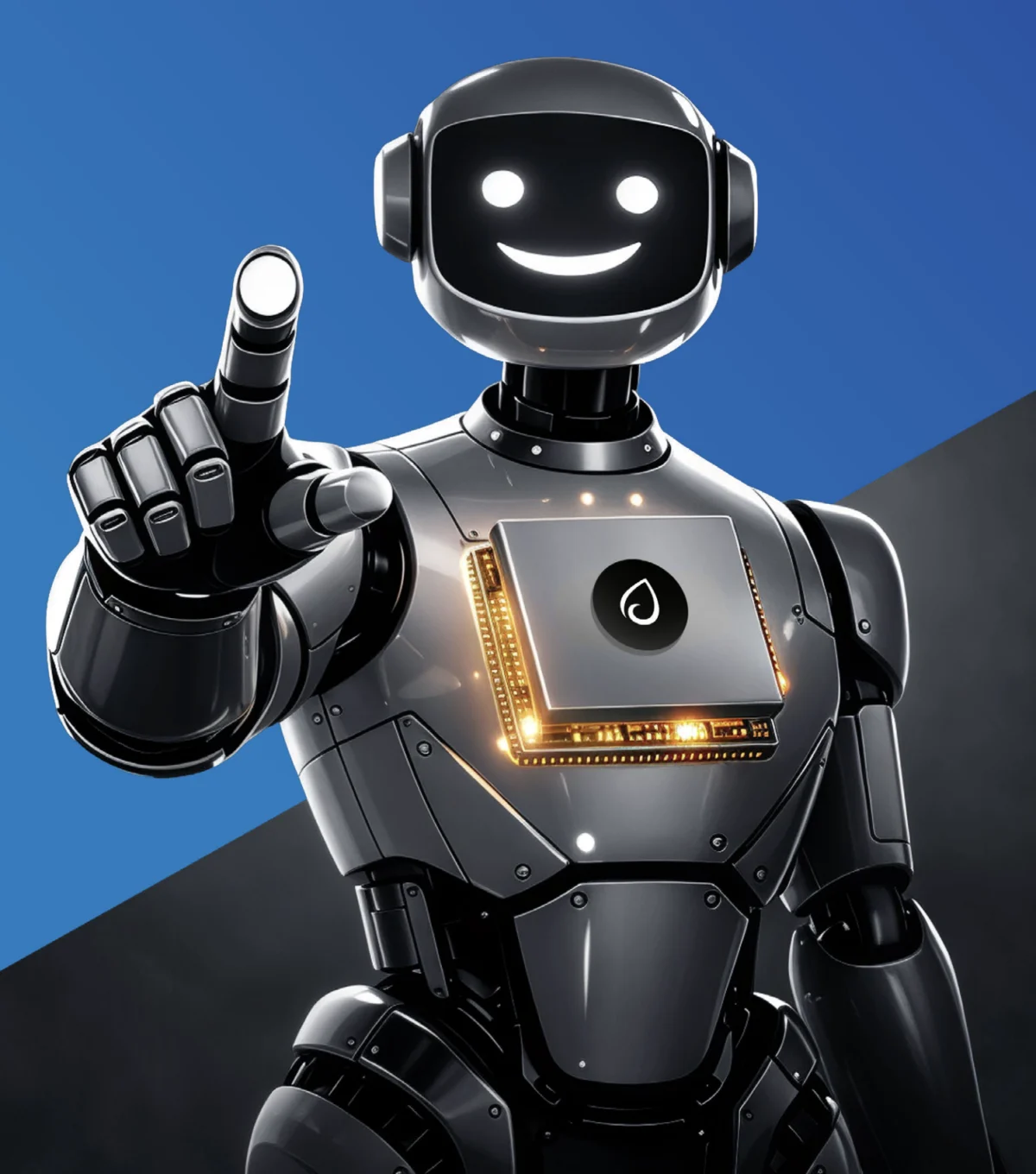

Physical AI has emerged as the definitive technological frontier in the evolution of robotics, effectively closing the gap between digital perception and physical action through the integration of high-performance artificial intelligence models directly into hardware. Unlike traditional AI, which often operates within the confines of large-language models or data-center-bound algorithms, Physical AI represents the "embodied" version of intelligence—systems that can see, hear, feel, and react to their environments in real-time. This paradigm shift is fundamentally driven by the migration of processing power from centralized cloud servers to the "Edge," where sensors and actuators reside. By enabling robots and autonomous machines to interpret complex datasets locally, Edge AI facilitates a level of responsiveness and autonomy that was previously unattainable, marking a new chapter in industrial automation, consumer electronics, and smart infrastructure.
The Architectural Shift: From Cloud-Centric to Edge-First
The transition to Physical AI is predicated on a significant change in how data is handled. In the previous decade, the prevailing trend in AI development relied on "Cloud AI," where massive datasets were transmitted to remote data centers for inference. While this provided access to immense computational resources, it introduced three critical bottlenecks: latency, bandwidth constraints, and connectivity dependence. For a robot navigating a dynamic warehouse or a self-driving vehicle responding to a sudden obstacle, a delay of even a few hundred milliseconds while waiting for a cloud response can lead to catastrophic failure.
Physical AI, when driven by Edge AI silicon, resolves these issues by pushing the "reasoning" phase of the AI loop onto the device itself. This localized approach allows for a seamless "perception-reasoning-action" cycle. The robot perceives its environment through sensors, reasons through the data using on-device AI models, and executes an action via its mechanical components—all within a deterministic timeframe. This shift is supported by the rapid advancement of Neural Processing Units (NPUs) and specialized AI accelerators that provide the necessary tera-operations per second (TOPS) while maintaining the low power profiles required for battery-operated devices.
A Chronology of Intelligent Automation
To understand the current state of Physical AI, one must examine the timeline of robotic development. The journey began with "Fixed Automation" in the late 20th century, where robots followed rigid, pre-programmed scripts in controlled environments like automotive assembly lines. These machines had no "intelligence"; they simply repeated motions.
By the early 2010s, the "Cloud AI" era introduced basic machine learning, allowing robots to identify objects if they had a stable internet connection. However, these systems remained tethered to the digital world. The period between 2018 and 2022 saw the rise of "Edge Inference," where simplified versions of AI models could run on-device, but they were often limited to single-task functions, such as simple voice recognition or basic obstacle detection.
The current era, beginning in 2023 and accelerating through 2024, is defined by "Generative Physical AI" and "Multi-Modal Edge AI." Today’s systems are no longer limited to single-sensor inputs. They can simultaneously process visual feeds, auditory signals, and haptic feedback to build a comprehensive "world model." This evolution has been catalyzed by the development of sophisticated whitepapers and technical frameworks by industry leaders like Synaptics, which outline the roadmap for integrating multi-modal sensors with intelligent edge processing.
The Five Pillars of Edge-Driven Physical AI
The industry consensus identifies five core characteristics that define the effectiveness of Physical AI systems. Each of these pillars represents a technical hurdle that has been overcome by the latest generation of edge silicon and AI modeling.
1. Real-Time Control and Deterministic Latency
In physical environments, timing is everything. Real-time control enables deterministic, low-latency responses powered by modern, resilient AI models. Unlike a chatbot that can take several seconds to generate a sentence, a Physical AI system must operate at the speed of physics. Whether it is a drone stabilizing itself against a gust of wind or a robotic arm catching a falling object, the inference must occur in milliseconds. Edge AI removes the variability of network jitter, ensuring that the control loop remains tight and predictable.
2. Reliability through Autonomy
A primary weakness of cloud-dependent systems is their vulnerability to connectivity drops. Physical AI ensures reliability by making local decisions that do not depend on a connection to a remote data center. This is vital for critical infrastructure, such as autonomous mining equipment operating deep underground or medical robots in surgical theaters. By hosting the intelligence locally, these machines remain fully functional even in "denied-environment" scenarios where Wi-Fi or cellular signals are unavailable.
3. Scalability and Data Distillation
The sheer volume of data generated by modern sensors is staggering. A single high-definition camera combined with LiDAR and ultrasonic sensors can produce gigabytes of data every minute. Physical AI sensors produce enormous amounts of data that would be prohibitively expensive to stream to the cloud. Deploying Edge AI silicon allows the system to analyze and distill this raw sensor data down to important features. Instead of uploading a 4K video stream, the device only processes and transmits the relevant metadata—such as the coordinates of a detected object—avoiding the massive costs and energy consumption of large-scale cloud deployments.

4. Privacy and Data Sovereignty
As AI enters more personal spaces, such as smart homes and healthcare facilities, privacy has become a paramount concern. Edge-driven Physical AI ensures that data and operations remain local. This includes voice commands, facial recognition data, and behavioral patterns. By processing this sensitive information on-device, manufacturers can guarantee that "what happens on the device stays on the device," mitigating the risks of data breaches or unauthorized surveillance associated with cloud storage.
5. Multi-Modal Integration
Human intelligence is inherently multi-modal; we use our eyes, ears, and sense of touch in unison to understand the world. Modern Physical AI mimics this by blending vision, touch, audio, and other sensors. These models understand the relationships among all inputs. For instance, a robot might see a glass of water, hear it sliding across a table, and feel the weight change as it picks it up. Edge AI processors are now designed to fuse these disparate data streams into a singular situational awareness, allowing for more nuanced and "human-like" interaction with the physical world.
Supporting Data and Market Trends
The economic implications of Physical AI are substantial. According to recent market analysis reports, the global Edge AI market is projected to reach an estimated $60 billion by 2030, growing at a compound annual growth rate (CAGR) of nearly 25%. This growth is fueled by the decreasing cost of specialized AI silicon and the increasing demand for automation in the face of global labor shortages.
Data from the International Federation of Robotics (IFR) suggests that the operational stock of industrial robots hit a new record of approximately 3.9 million units in 2023. However, the next wave of growth is expected to come from "Service Robots" and "Collaborative Robots" (cobots), which require the advanced Physical AI capabilities of edge processing to work safely alongside humans. Furthermore, semiconductor companies are reporting a shift in R&D investment, with a significant portion of capital now flowing into "AI-at-the-Edge" chipsets that prioritize energy efficiency—measured in microwatts per inference—over raw floating-point performance.
Industry Perspectives and Strategic Adoption
The tech industry has responded to these trends with a flurry of strategic whitepapers and hardware releases. Companies like Synaptics have been vocal about the necessity of "Enabling Physical AI," emphasizing that the future of the "Intelligent Edge" depends on the seamless integration of sensors and processing. Industry experts argue that the move to Physical AI is not just a trend but a necessity for the survival of the Internet of Things (IoT).
"The cloud was the nursery for AI," noted one senior semiconductor analyst during a recent industry summit. "But for AI to grow up and actually do work in our world, it has to move into the physical objects themselves. We are seeing a transition from ‘Connected Devices’ to ‘Autonomous Agents.’"
Technical leaders suggest that the next major hurdle will be the standardization of communication protocols between different Physical AI systems. As these machines become more prevalent, the ability for a delivery robot to communicate its intent to an autonomous vehicle—locally and instantly—will be crucial for the safety of smart city ecosystems.
Broader Impact and Future Implications
The long-term implications of Physical AI extend far beyond factory floors. In the realm of environmental conservation, autonomous edge-powered drones can monitor vast forests for smoke, processing thermal data locally to detect wildfires before they spread. In healthcare, wearable Physical AI devices can monitor a patient’s gait and vitals, predicting and preventing falls or cardiac events without ever compromising the patient’s data privacy.
However, the rise of Physical AI also brings challenges. As machines gain the ability to make real-time decisions in the physical world, questions of liability and ethics come to the fore. If an autonomous system makes a decision that leads to property damage, the industry must determine whether the responsibility lies with the software developer, the hardware manufacturer, or the end-user.
Despite these complexities, the trajectory is clear. The integration of sensors, edge processing, and connectivity is transforming static machines into intelligent, reactive entities. Physical AI is closing the loop between the digital and the physical, creating a world where intelligence is not something we access through a screen, but something that exists and acts within the very environment around us. The shift to the edge is not merely a technical optimization; it is the foundational step in making the promise of truly autonomous, reliable, and private robotic systems a reality.