
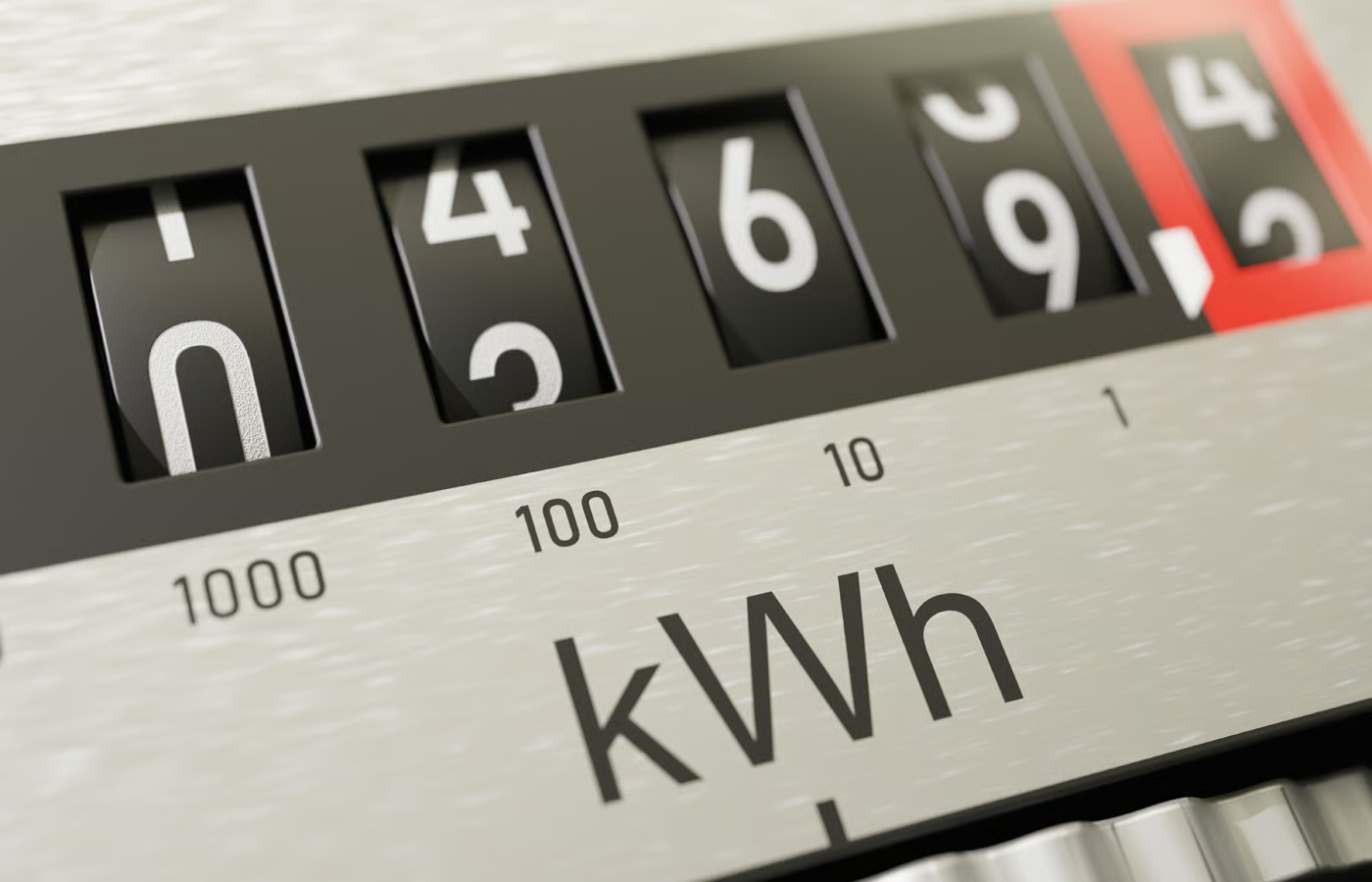

Energy consumption represents one of the largest operational expenses for data centers, a critical infrastructure supporting the digital economy. The cost of powering servers and the extensive cooling systems required to dissipate the immense heat they generate can amount to substantial sums. As data centers continue to expand and process ever-increasing volumes of data, their energy consumption, and consequently their operating costs, are projected to rise significantly, presenting both economic and environmental challenges. This article delves into the intricate workings of data center power consumption, identifies key contributors to energy usage, and explores essential strategies for optimization, along with their broader business and environmental implications.
Understanding the Anatomy of Data Center Power Consumption
The operational core of a data center is a complex ecosystem of hardware and infrastructure meticulously designed to ensure the continuous processing, storage, and transmission of data. Understanding how power is consumed within these facilities necessitates a detailed examination of their various operational facets.
The Power Infrastructure: The Backbone of Operations
At the foundational level of data center power consumption lies its robust power infrastructure. This comprises a network of external power sources, typically drawing from the national grid, supplemented by critical backup systems such as generators and uninterruptible power supplies (UPS). Power distribution units (PDUs) then meticulously channel this electricity to every component within the facility. The primary power source initiates the flow of electricity, which is then regulated and distributed through PDUs. Crucially, backup systems like generators and UPS units are engineered to provide seamless power continuity, safeguarding operations against even the most transient of grid outages. These systems are not merely supplementary; they are integral to maintaining the high availability standards expected of modern data centers, where downtime can translate to significant financial losses and reputational damage.
Servers and Computing Equipment: The Primary Energy Consumers
The servers themselves form the heart of any data center and are unequivocally the primary consumers of electrical power. These machines are tasked with the arduous duties of data processing, storage, and network management. The energy footprint of individual servers is directly correlated with their workload; tasks demanding intensive processing power inevitably lead to increased energy expenditure. Beyond servers, other vital computing equipment, including expansive storage arrays and high-speed network devices, also contribute substantially to the overall power demand of a data center. Industry analyses suggest that computing equipment can account for approximately 40-50% of a data center’s total energy usage, underscoring its significant role.
Cooling and Climate Control: A Necessary Energy Drain
To ensure the optimal and sustained operation of sensitive electronic components, data centers require sophisticated and energy-intensive cooling and climate control systems. These systems, which encompass units such as Computer Room Air Conditioners (CRACs), large-scale chillers, and cooling towers, are indispensable for dissipating the considerable heat generated by the servers and other hardware. The energy dedicated to cooling can represent a substantial, and often surprisingly large, portion of a data center’s total power consumption. In some instances, the energy required for cooling can approach, or even equal, the energy consumed by the computing equipment itself. This critical dependency highlights the need for highly efficient cooling solutions.
Power Usage Effectiveness (PUE): A Key Metric for Efficiency
The industry standard for quantifying a data center’s energy efficiency is the Power Usage Effectiveness (PUE) metric. PUE is calculated as the ratio of the total power entering a data center to the power actually utilized by the IT equipment. An ideal PUE of 1.0 signifies that every watt of power entering the facility is used for computing operations, a theoretical benchmark rarely achieved in practice. Most data centers operate with a PUE greater than 1.0 due to the energy consumed by auxiliary systems such as cooling, lighting, and power distribution losses. A PUE of 1.5, for example, indicates that for every 1.5 watts of power consumed, 1 watt is used by the IT equipment, with the remaining 0.5 watts attributed to support infrastructure. The global average PUE for data centers has been steadily decreasing, with many modern facilities achieving PUEs below 1.3, a testament to ongoing efficiency efforts.
Lighting and Auxiliary Systems: Incremental Energy Contributors
While servers and cooling systems dominate energy consumption, lighting and other ancillary systems, including security apparatus and environmental monitoring equipment, also contribute to the overall power demand. Though their individual impact may be less significant, adopting energy-efficient LED lighting solutions and implementing intelligent automation for these systems can yield incremental yet valuable reductions in overall power usage.
Power Fluctuations and Demand Scaling: Adapting to Workload Variability
Data center power consumption is not a static figure; it exhibits considerable fluctuation, largely dictated by the prevailing demand for data processing and storage. During peak operational periods, a higher number of servers may be activated to manage the increased load, consequently elevating power consumption. Conversely, during off-peak hours, power usage typically declines. Advanced data centers often leverage sophisticated demand scaling mechanisms and virtualization technologies to dynamically adjust power consumption in accordance with the real-time workload, thereby optimizing energy efficiency.
Key Factors Influencing Data Center Power Consumption
The energy demands of data centers are shaped by a confluence of technological, infrastructural, and environmental factors. A comprehensive understanding of these elements is paramount for implementing effective strategies to enhance efficiency and curtail energy consumption.
- IT Load Density: The concentration of computing power within a given space directly impacts energy consumption. Higher density racks and blade servers, while space-efficient, generate more heat and require more robust cooling, leading to increased power draw.
- Hardware Efficiency: The power efficiency ratings of servers, storage devices, and network equipment play a crucial role. Newer, more advanced hardware often offers superior performance per watt.
- Cooling System Design and Efficiency: The type of cooling technology employed (e.g., air cooling, liquid cooling), its design, and its operational efficiency are major determinants of energy usage.
- Ambient Temperature and Humidity: External environmental conditions can significantly influence the energy required for cooling. Data centers in warmer climates or those with less controlled external air intake may need to expend more energy on climate control.
- Power Distribution Losses: Inefficiencies in power conversion and distribution within the data center can lead to energy wastage.
- Utilization Rates of IT Equipment: Underutilized servers and equipment continue to consume power, even when idle. Maximizing server utilization through virtualization is therefore critical.
- Data Center Design and Layout: The physical arrangement of equipment, including the implementation of hot aisle/cold aisle containment, can significantly impact airflow and cooling efficiency.
- Operational Practices and Management: The policies and procedures governing data center operations, including power management settings and maintenance schedules, contribute to overall energy consumption.
Five Strategic Pillars for Optimizing Data Center Power Consumption
Achieving optimal power consumption in data centers is not merely an operational objective; it is a strategic imperative for enhancing efficiency, reducing expenditure, and mitigating environmental impact. The following five strategies offer a robust framework for achieving these goals.
1. Embracing Energy-Efficient Hardware
A fundamental step towards reducing power consumption involves a commitment to deploying energy-efficient hardware. Upgrading to servers with superior power efficiency ratings can yield substantial reductions in a data center’s overall energy footprint. Furthermore, the transition from traditional Hard Disk Drives (HDDs) to Solid State Drives (SSDs) offers additional energy savings, as SSDs typically consume significantly less power. Investing in hardware that meets or exceeds Energy Star ratings ensures that equipment adheres to stringent energy efficiency standards, contributing directly to power optimization efforts. As of recent reports, the energy efficiency of servers has improved by approximately 30% over the last decade, with further gains anticipated through advancements in processor architecture and power management technologies.
2. Revolutionizing Cooling Systems
Cooling systems, while essential for maintaining optimal operating temperatures, are often significant energy consumers. Implementing advanced cooling methodologies, such as direct liquid cooling or evaporative cooling, can offer substantially more efficient heat dissipation compared to conventional air-cooling methods. The utilization of economizers, which leverage cooler external air for cooling purposes, can also dramatically reduce reliance on energy-intensive mechanical cooling. Optimizing the physical layout of the data center to facilitate effective airflow management, employing strategies like hot/cold aisle containment, can further enhance cooling efficiency and drive down power consumption. These advanced cooling techniques can reduce cooling energy consumption by as much as 30-50%.
3. Harnessing the Power of Virtualization and Server Consolidation
Virtualization stands as a transformative technology for optimizing energy usage within data centers. By enabling the operation of multiple virtual machines (VMs) on a single physical server, virtualization drastically reduces the need for a vast array of physical machines. This consolidation not only conserves valuable physical space but also leads to a significant reduction in power requirements. Leveraging sophisticated virtualization software to efficiently distribute workloads across fewer, yet more utilized, servers maximizes their operational efficiency and generates substantial energy savings. Industry estimates suggest that widespread virtualization has led to energy savings of up to 70% in some data center environments. Additionally, strategically migrating certain workloads to cloud computing platforms can further diminish the demand for on-premises servers, contributing to overall energy efficiency on a larger scale.
4. Implementing Intelligent Power Management Software
The adoption of Data Center Infrastructure Management (DCIM) tools is pivotal for gaining granular control and effective management of energy consumption within data centers. These comprehensive platforms facilitate superior monitoring and management of power usage across all facility components. Employing software solutions designed for real-time power monitoring allows for continuous tracking and dynamic adjustment of power consumption, leading to more efficient and responsive operations. The integration of Artificial Intelligence (AI) and Machine Learning (ML) technologies offers predictive analytics capabilities, enabling proactive optimization of power consumption based on data-driven insights and anticipated demand. DCIM solutions have been shown to identify opportunities for energy savings ranging from 10% to 30%.
5. Integrating Renewable Energy Sources
The integration of renewable energy sources, such as solar, wind, or hydroelectric power, represents a significant stride towards reducing a data center’s reliance on fossil fuels and substantially decreasing its environmental footprint. Participation in Renewable Energy Credits (RECs) programs actively supports the development and expansion of renewable energy initiatives globally. For data centers possessing the necessary infrastructure and resources, investing in on-site renewable energy generation, such as solar panels or small-scale wind turbines, provides a direct pathway to harness clean energy, fostering greater energy independence and contributing to sustainable operational practices. Global renewable energy adoption in the data center sector has seen a marked increase, with many major providers committing to 100% renewable energy sourcing.
The Multifaceted Benefits of Data Center Energy Efficiency
The pursuit of power consumption efficiency within data centers yields a rich tapestry of benefits, encompassing economic, environmental, and operational advantages. These advantages not only enhance the sustainability profile of data centers but also contribute significantly to their overall performance, resilience, and long-term viability.
- Reduced Operational Costs: Lower energy consumption directly translates to substantial savings on utility bills, a significant operational expense for data centers.
- Enhanced Environmental Sustainability: Decreased reliance on fossil fuels and reduced greenhouse gas emissions contribute to a smaller carbon footprint and support global climate goals.
- Improved Capacity and Scalability: By optimizing power usage, data centers can potentially increase their IT load within existing infrastructure, delaying the need for costly expansions.
- Increased Reliability and Uptime: Efficient power management often goes hand-in-hand with robust infrastructure, leading to greater system stability and reduced risk of outages.
- Positive Brand Reputation and Corporate Social Responsibility: Demonstrating a commitment to sustainability enhances a company’s image and attracts environmentally conscious clients and investors.
- Compliance with Regulations: Increasingly stringent environmental regulations worldwide necessitate a focus on energy efficiency to avoid penalties and ensure compliance.
Navigating the Challenges of Data Center Power Consumption
Despite the clear imperative for energy efficiency, achieving it within the complex environment of a data center is not without its challenges. These obstacles span technical, financial, regulatory, and environmental domains, requiring strategic foresight and persistent effort to overcome.
Balancing Performance with Efficiency: A Persistent Dilemma
A primary challenge lies in the delicate balancing act between the ever-increasing demand for computing power and the concurrent need for energy efficiency. As the volume and complexity of data processing tasks escalate, so too does the requirement for high-performance computing, which inherently tends to increase power consumption. This dynamic is often exacerbated by technological limitations, where current hardware may not always offer the optimal equilibrium between raw computing power and energy efficiency, necessitating careful selection and configuration.
Technological and Infrastructure Upgrades: The Cost Hurdle
While upgrading to more energy-efficient hardware and advanced cooling systems presents a clear path to optimization, these initiatives are often constrained by substantial initial investment costs. Many data centers also contend with the presence of legacy systems that are inherently less energy-efficient. The process of upgrading or replacing these older systems can be particularly costly and complex, posing a significant hurdle to achieving comprehensive efficiency. The average lifespan of data center hardware, while varying by component, can necessitate significant capital expenditure for regular refreshes to maintain optimal efficiency.
Cooling System Efficiency: A Constant Battle Against Heat
Cooling systems, indispensable for maintaining the operational integrity of sensitive electronic equipment, present an ongoing challenge. Efficiently managing the substantial heat generated, particularly within high-density computing environments, remains a paramount concern. While innovative cooling solutions are continually emerging, their implementation can be complex and may not be universally feasible or cost-effective for all data center configurations, especially for older facilities.
The Bottom Line: The Critical Role of Efficient Power Management in Data Centers
The efficient management of power within data centers transcends mere operational concerns, emerging as a critical determinant of both economic viability and environmental stewardship. The increasing reliance on digital infrastructure places a profound responsibility on data center operators to manage their energy consumption judiciously.
Effective power management not only yields significant reductions in operational costs but also plays a pivotal role in environmental sustainability and the cultivation of a positive organizational reputation. By minimizing energy consumption and strategically optimizing the utilization of renewable resources, data centers can substantially reduce their carbon footprint, visibly demonstrating their commitment to the global imperative of sustainability. The ongoing evolution of data center technology, coupled with a growing awareness of environmental impact, underscores the critical importance of prioritizing energy efficiency as a core operational principle.
For those seeking to deepen their understanding of sustainable IT practices, a comprehensive exploration of Green IT principles, benefits, and challenges is readily available. Furthermore, for organizations ready to embark on the journey of infrastructure virtualization, a curated list of leading virtualization companies can provide valuable partnership opportunities.