
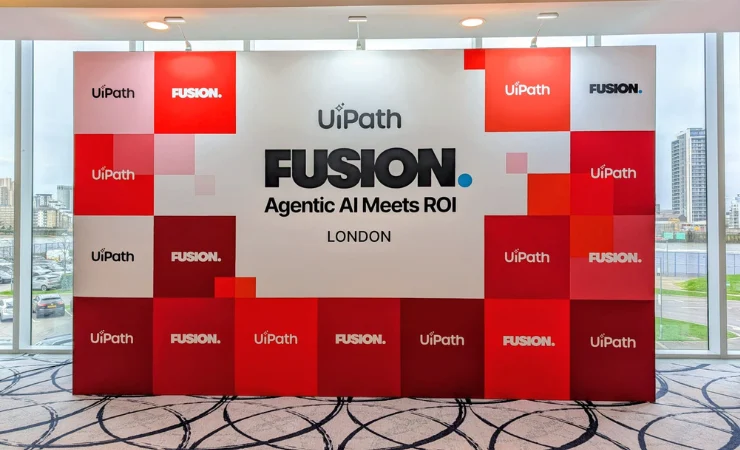

The rapid advancement of artificial intelligence has shifted the corporate focus from generative capabilities to agentic systems—autonomous entities capable of executing complex workflows with minimal human intervention. At the recent UiPath Fusion conference in London, Chris Ashley, Director of Business Development and Strategy at UiPath, addressed a fundamental yet often overlooked prerequisite for AI success: the necessity of deep process and decisioning maturity. Ashley, who joined the enterprise automation leader following its acquisition of Peak AI in March 2025, argues that many organizations are currently attempting to build sophisticated AI strategies on unstable foundations, lacking a granular understanding of how their internal decisions are actually made.
The Shift Toward Decisioning Maturity
In the current enterprise landscape, the conversation around AI has matured beyond simple data ingestion. While data maturity—the cleanliness, accessibility, and structure of information—remains a hurdle, Ashley identifies "decisioning maturity" as the new frontier for competitive advantage. This concept refers to an organization’s ability to articulate the specific logic, context, and variables that inform a human decision at the moment it occurs.
For many firms, official process documentation and actual employee behavior are drastically different. A merchandiser deciding where to allocate stock or a pricing manager responding to margin pressure often relies on "tribal knowledge" or informal signals that are not captured in a standard workflow diagram. Ashley contends that agentic AI cannot function effectively in a vacuum; it requires these nuanced "decisioning" blueprints to operate reliably. Without this clarity, the deployment of autonomous agents risks automating inefficiency or, worse, introducing unpredictable errors into core business functions.
The Peak AI Acquisition and the UiPath Roadmap
The context of Ashley’s insights is rooted in the strategic evolution of UiPath. The acquisition of Peak AI in March 2025 marked a significant milestone in UiPath’s transition from a Robotic Process Automation (RPA) provider to a comprehensive "Business Automation" platform. Peak AI, known for its "Decision Intelligence" platform, specialized in helping retail, consumer packaged goods (CPG), and manufacturing firms optimize inventory, pricing, and marketing through predictive modeling.
By integrating Peak’s decision-intelligence capabilities, UiPath has positioned itself to offer "agentic" solutions that do more than just move data between systems. These agents are designed to weigh trade-offs and execute actions based on real-time business objectives. The timeline of this integration suggests a broader industry trend: the merging of execution (RPA) with intelligence (AI) to create closed-loop autonomous systems.
The Compounding Advantage of Process Modeling
A significant divide is emerging between organizations that have historically invested in "unglamorous" operational disciplines—such as Lean thinking, Six Sigma, and cross-functional process modeling—and those that have not. Ashley pointed to companies like Debenhams Group and The Fragrance Shop as examples of organizations that did the "hard work" of mapping their processes before AI became a boardroom priority.
For these leaders, the transition to agentic AI is a natural progression rather than a frantic reconstruction. Because they already understand where their data flows and where workarounds exist, they can deploy agents rapidly to augment merchandising, marketing, and pricing. Conversely, organizations lacking this foundation must now "spin up an army of business analysts" to map their operations from scratch.
This discrepancy creates what Ashley describes as a "compounding advantage." As early adopters deploy agents to optimize working capital and margins, the efficiency gap between them and their competitors widens exponentially. In high-volume sectors like retail, where margins are razor-thin, this gap is expected to drive significant market consolidation, as laggards find themselves unable to match the speed and precision of AI-driven incumbents.
Addressing the Limitations of Large Language Models
A critical component of Ashley’s thesis is the debunking of the "LLM as a silver bullet" myth. Since the mainstream explosion of generative AI in late 2022, Large Language Models (LLMs) have become synonymous with AI in the public imagination. However, Ashley warns that LLMs are general-purpose tools and are often ill-suited for mathematically intensive tasks requiring high precision.
In scenarios such as pricing elasticity simulations or complex inventory optimization—which may involve 20 million or more individual decisions annually—LLMs can struggle with accuracy and consistency. The inherent "probabilistic" nature of LLMs means they can produce varying results for the same mathematical problem, a risk that is unacceptable in high-stakes commercial environments.
Instead, robust agentic systems utilize a hybrid architecture. This involves:
- Large Language Models: Used for natural language interfaces, summarization, and interpreting unstructured context.
- Classical Machine Learning: Employed for predictive analytics and pattern recognition based on historical data.
- Operational Research and Optimizers: Utilized for hard mathematical constraints and logic-based decision-making that has been refined over decades.
Treating these distinct technologies as interchangeable is a strategic error. A well-constructed agent uses the LLM as the "communicator" or "reasoner," while relying on deterministic solvers for the "calculation" phase. This ensures that business logic and guardrails remain inviolable.
Strategic Prioritization and Financial KPIs
For organizations overwhelmed by the technical complexity of AI, Ashley suggests a return to fundamental business outcomes. Rather than starting with a "tech stack" or "data architecture" review, leadership should identify the most acute points of operational pain.
The focus should be narrowed to three primary Key Performance Indicators (KPIs) that hold the most weight with corporate boards:
- Operating Margin: How can AI reduce the cost of goods sold or operational overhead?
- Revenue Growth: Where can AI identify untapped demand or optimize pricing to capture more value?
- Working Capital Efficiency: Can AI better manage inventory levels to free up cash flow?
By solving for one specific problem that impacts these KPIs, organizations can create a proof of concept that justifies further investment in process mapping and data maturity.
Governance as an Upstream Responsibility
The question of accountability in autonomous systems is a growing concern for regulators and executives alike. If an AI agent makes a catastrophic pricing error, where does the blame lie? Ashley argues that governance is not a feature added at the end of a project; it is a consequence of the work done before a single line of code is written.
Effective governance in the age of agentic AI requires the establishment of two types of boundaries:
- Hard Guardrails: Fixed limits that the system cannot cross under any circumstances (e.g., a minimum price floor that ensures a product is never sold at a loss).
- Soft Guardrails: Defined ranges within which the agent has the autonomy to experiment and optimize (e.g., allowing an agent to adjust a discount within a 5-10% range).
The responsibility for these systems rests with the humans who map the decision logic and provide the context. Auditability must be baked into the system so that every decision can be traced back to the specific data and logic that triggered it. This transparency is essential not only for compliance but for the iterative improvement of the AI itself.
Broader Industry Implications and Analysis
The insights shared by Ashley reflect a broader maturation of the AI market. The "hype cycle" characterized by simple chatbots is giving way to a more sober realization that enterprise AI is an extension of digital transformation, not a shortcut around it.
The emphasis on process mapping suggests that the most valuable employees in the AI era may not be just data scientists, but "process architects"—individuals who understand the end-to-end flow of value within a business. Furthermore, the move toward agentic systems indicates a shift in labor dynamics. Agents are increasingly viewed as "digital coworkers" that handle high-frequency, low-variability decisions, allowing human staff to focus on strategy and exceptional cases.
As industries move toward the latter half of the decade, the distinction between "AI-first" companies and traditional firms will likely vanish, replaced by a distinction between "process-mature" and "process-opaque" organizations. For the latter, the cost of skipping the foundational work of process modeling is becoming prohibitively high. In the words of Ashley, the journey of mapping one’s business is valuable even without AI, as it invariably reveals hidden efficiencies. However, in the context of the agentic evolution, it has become a matter of survival.
The future of enterprise AI is not merely about smarter models; it is about smarter organizations that have the discipline to document, understand, and then automate the logic of their own success. As UiPath and its contemporaries continue to refine these agentic frameworks, the mandate for business leaders is clear: understand your decisions today, or you will be unable to automate them tomorrow.