
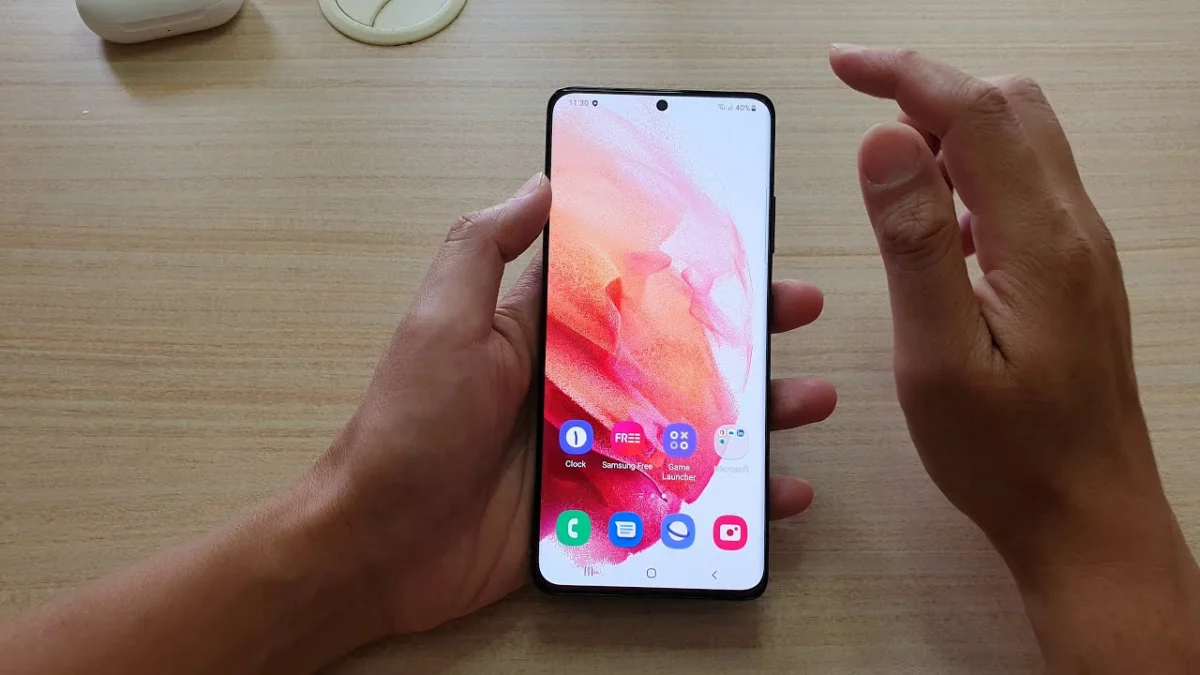

The telecommunications landscape is currently undergoing a fundamental transformation as the industry shifts away from traditional physical hardware toward software-defined connectivity. At the forefront of this transition is the embedded SIM, or eSIM, a technology that has redefined how consumers interact with mobile networks. For Samsung Electronics, a global leader in the smartphone market, the integration of eSIM technology across its Galaxy portfolio represents a strategic pivot toward greater device versatility, enhanced security, and improved user convenience. As mobile devices become increasingly sophisticated, the move toward digital SIM profiles is no longer a luxury but a standard requirement for modern connectivity.
The Fundamental Mechanics of eSIM Technology
An eSIM is a programmable SIM card that is soldered directly into a device’s motherboard during the manufacturing process. Unlike the traditional plastic subscriber identity module (SIM) that users have relied on for decades, the eSIM—technically known as an eUICC (Embedded Universal Integrated Circuit Card)—does not require physical handling. Instead of inserting a piece of plastic into a tray, users download a digital profile provided by their carrier. This profile contains all the necessary authentication credentials to connect the device to a cellular network.
On Samsung Galaxy devices, this technology works through a dedicated microchip that stores multiple carrier profiles simultaneously. While only one or two profiles can typically be active at a once, the ability to store several plans allows for seamless switching between personal and business lines, or between local and international data plans during travel. This digital-first approach eliminates the need for SIM ejector tools and reduces the physical footprint of internal components, allowing manufacturers like Samsung to utilize the saved space for larger batteries, improved thermal management, or more advanced camera sensors.
A Chronology of SIM Evolution and Samsung’s Integration
The journey toward the eSIM began long before its mainstream adoption in smartphones. To understand its significance, one must look at the timeline of cellular identification technology:
- 1991: The first SIM card, the size of a credit card, was introduced by Giesecke & Devrient.
- 1996 – 2012: The industry saw a rapid miniaturization of SIM cards, moving from the Mini-SIM to the Micro-SIM, and finally the Nano-SIM, which remains the physical standard today.
- 2016: Samsung made history by launching the Gear S2 Classic 3G, the first consumer device in the world to feature an eSIM compliant with GSMA specifications.
- 2020: Samsung officially brought eSIM technology to its flagship smartphone lineup with the Galaxy S20 series. This marked a major turning point for the Android ecosystem, as it pushed carriers worldwide to accelerate their support for digital provisioning.
- 2021 – Present: Samsung expanded eSIM support to its foldable devices (Galaxy Z Fold and Z Flip series) and increasingly into its mid-range Galaxy A series in specific markets, signaling a commitment to making the technology a standard feature across various price points.
Supporting Data and Market Adoption Trends
The adoption of eSIM technology is backed by significant market data indicating a permanent shift in consumer behavior. According to reports from the GSMA (Global System for Mobile Communications Association), the number of eSIM-capable smartphone models has grown by over 150% in the last three years. Analysts project that by 2025, over 2 billion eSIM-equipped devices will be in circulation globally.
Samsung’s role in this growth is pivotal. By including eSIM capabilities in the Galaxy S, Note (discontinued), and Z series, Samsung has provided a massive install base for carriers to test and refine their digital activation platforms. Data from market research firms suggests that the "travel eSIM" sector—services that offer temporary data plans for tourists—has seen a 400% increase in revenue since 2021, largely driven by the ease of use on devices like the Galaxy S23 and S24 series.
Comprehensive List of eSIM-Compatible Samsung Devices
While availability can vary by region and carrier, the following Samsung Galaxy models generally support eSIM functionality:
- Galaxy S Series: S20, S20+, S20 Ultra, S21, S21+, S21 Ultra, S22, S22+, S22 Ultra, S23, S23+, S23 Ultra, S24, S24+, and S24 Ultra.
- Galaxy Z Series: Galaxy Z Fold (all generations), Galaxy Z Flip (all generations).
- Galaxy Note Series: Note 20 and Note 20 Ultra.
- Galaxy A Series: Galaxy A54 5G and A55 5G (in specific regions).
- Galaxy Watch Series: All LTE-enabled versions of the Galaxy Watch 3, 4, 5, and 6.
It is important to note that "carrier-locked" devices, particularly in the United States, may occasionally have the eSIM functionality disabled or restricted until the device is fully paid off or unlocked by the service provider.
Technical Implementation: Activating an eSIM on Galaxy Devices
The activation process on Samsung devices is designed to be user-friendly, moving away from the manual labor of physical SIM handling. There are three primary methods for activation:
- QR Code Scanning: The most common method involves the carrier providing a QR code. The user navigates to Settings > Connections > SIM Manager > Add eSIM, and then scans the code to download the profile.
- Carrier App Activation: Many modern carriers (such as T-Mobile, Verizon, and Orange) allow users to purchase a plan directly through their official app. The app then pushes the eSIM profile to the device automatically.
- Manual Entry: In cases where a QR code cannot be scanned, carriers provide an SM-DP+ (Subscription Manager Data Preparation) address and an activation code that can be typed into the device settings.
Samsung’s "SIM Manager" interface also allows users to designate which SIM (physical or electronic) should be used for calls, messages, and mobile data, providing a granular level of control over network usage.
Security Implications and Industry Responses
Industry experts and security analysts have largely praised the shift to eSIM due to its inherent safety features. From a security perspective, an eSIM is significantly more difficult to compromise than a physical card. In the event of device theft, a thief cannot simply remove the SIM card to prevent the phone from being tracked. Because the eSIM is embedded and requires a password or biometric authentication to modify, the device remains connected to the network, allowing the owner to utilize "Find My Mobile" services more effectively.
Samsung has officially integrated these benefits into its Knox security platform. By hardware-rooting the eSIM credentials, Samsung ensures that the digital identity of the user is protected from unauthorized cloning or digital tampering. Carrier representatives have noted that while the transition required significant infrastructure investment, the reduction in physical SIM production aligns with corporate sustainability goals. For example, Samsung’s "Galaxy for the Planet" initiative highlights the reduction of plastic waste as a key benefit of moving toward a diskless, digital-first connectivity model.
Strategic Analysis: Broader Impact and Future Outlook
The implications of eSIM technology extend far beyond consumer convenience. For the enterprise sector, eSIM allows IT departments to deploy hundreds of corporate devices with pre-configured network settings without ever touching the hardware. This "Zero-Touch" provisioning is a significant cost-saver for large-scale operations.
However, the transition has not been without challenges. Some critics point out that eSIM technology can actually make it harder for consumers to switch phones frequently. While a physical SIM can be swapped in seconds, an eSIM transfer often requires a stable Wi-Fi connection and, in some cases, carrier intervention. Furthermore, in certain developing markets, carriers have been slow to adopt the technology, fearing it makes "churn" (customers switching to competitors) too easy.
Looking forward, the industry is already moving toward the iSIM (Integrated SIM), which integrates the SIM functionality directly into the device’s main processor (SoC) rather than a separate chip. This will further reduce power consumption and space requirements. As 5G networks continue to mature and 6G research begins, the flexibility of digital SIMs will be essential for the billions of IoT (Internet of Things) devices expected to join the global network.
Conclusion
The transition to eSIM technology on Samsung devices represents a milestone in the digitalization of mobile telecommunications. By removing the physical barriers to connectivity, Samsung has provided its users with a more flexible, secure, and environmentally friendly way to manage their mobile identities. While the industry is still in a hybrid phase—supporting both physical and digital SIMs—the trajectory is clear. As carrier support becomes universal and the technology trickles down to entry-level devices, the physical SIM card will eventually become a relic of the past, replaced by the seamless, invisible efficiency of the eSIM. For Samsung Galaxy users, this evolution ensures that their devices remain at the cutting edge of global connectivity standards, ready for an era of borderless and instant communication.