
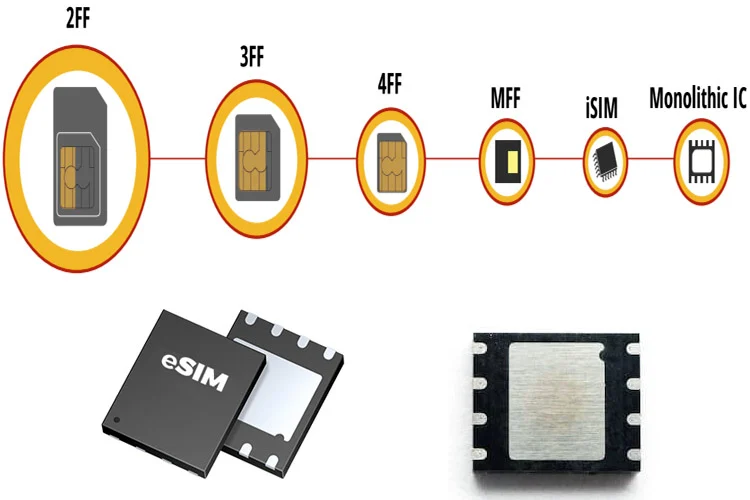

The global telecommunications landscape is undergoing a fundamental shift as the traditional, removable Subscriber Identity Module (SIM) card is increasingly being replaced by its digital successor, the embedded SIM, or eSIM. This transition represents one of the most significant changes in mobile hardware architecture since the introduction of the first SIM card in 1991. As mobile devices become more integrated and the demand for seamless international connectivity grows, the eSIM has emerged as a pivotal technology, offering enhanced flexibility for consumers, streamlined manufacturing for hardware producers, and new logistical challenges for mobile network operators (MNOs).
The Technical Foundation of eSIM Technology
An eSIM, technically known as an eUICC (Embedded Universal Integrated Circuit Card), is a specialized chip soldered directly onto a device’s motherboard during the manufacturing process. Unlike the traditional plastic SIM card, which must be physically swapped to change carriers or plans, the eSIM is a programmable component. It functions by storing the international mobile subscriber identity (IMSI) number and the related key used to identify and authenticate subscribers on mobile telephony devices.
The architecture of an eSIM allows it to hold multiple "profiles" simultaneously. While only one profile is typically active for data and voice at a time (though dual-active configurations are becoming common), users can store several carrier subscriptions on a single chip. This is made possible through Remote SIM Provisioning (RSP), a standard developed by the GSMA (Global System for Mobile Communications Association) that allows the secure downloading of carrier credentials over-the-air (OTA).
A Chronology of SIM Evolution
To understand the impact of the eSIM, it is necessary to examine the timeline of SIM technology, which has consistently moved toward miniaturization and integration:
- 1991: The first SIM card, the size of a credit card, was developed by Giesecke & Devrient for the Finnish wireless network operator Radiolinja.
- 1996: The Mini-SIM (2FF) was introduced, becoming the standard for the first decade of the 2000s.
- 2003: The Micro-SIM (3FF) was launched, though it did not see widespread adoption until the release of the iPhone 4 in 2010.
- 2012: The Nano-SIM (4FF) arrived, further reducing the plastic footprint to nearly the size of the gold contact chip itself.
- 2016: The GSMA released the first eSIM specifications for smartwatches and other companion devices. The Samsung Gear S2 Classic 3G was the first wearable to implement this standard.
- 2018: Apple integrated eSIM technology alongside a physical SIM slot in the iPhone XS, XS Max, and XR, marking the beginning of mainstream dual-SIM adoption.
- 2022: Apple announced that all iPhone 14 models sold in the United States would be "eSIM-only," removing the physical SIM tray entirely. This move acted as a catalyst, forcing carriers worldwide to accelerate their eSIM infrastructure.
Strategic Advantages and Market Implications
The transition to eSIM offers a variety of advantages that extend beyond simple convenience. From a design perspective, the removal of the physical SIM tray allows manufacturers to reclaim valuable internal "real estate." In the highly competitive smartphone market, every millimeter counts; the space saved can be utilized for larger batteries, improved thermal management systems, or additional sensors. Furthermore, the absence of a SIM slot enhances a device’s structural integrity and water resistance, as it removes a potential point of entry for moisture and dust.
From a consumer standpoint, the benefits are centered on mobility and security. For international travelers, the eSIM eliminates the need to visit a local kiosk to purchase a physical card upon arrival in a new country. Instead, travelers can download a local or roaming data plan via an app or website before they even land.
Security is another critical factor. Because an eSIM cannot be physically removed from a stolen device, it is much harder for a thief to disconnect the phone from the network. This ensures that tracking services, such as "Find My" or "Find My Device," remain active as long as the phone has power. Additionally, eSIM technology prevents "SIM swapping" fraud, a technique where criminals physically steal a SIM card to gain access to two-factor authentication codes and bank accounts.
Current Market Data and Adoption Statistics
Market research indicates a rapid acceleration in eSIM adoption. According to a 2023 report by GSMA Intelligence, the number of eSIM-capable devices is expected to reach 3.4 billion by 2025. This growth is driven not only by smartphones but also by the expansion of the Internet of Things (IoT) and the automotive industry.
In the automotive sector, eSIMs are now standard in most new connected vehicles, facilitating real-time navigation, emergency call services (eCall), and over-the-air software updates. Similarly, in the industrial IoT space, eSIMs allow for the deployment of thousands of sensors across global supply chains without the logistical nightmare of manually installing and replacing physical SIM cards in remote locations.
Data from Counterpoint Research suggests that by 2030, over 70% of all cellular-connected devices will utilize eSIM technology. This shift is expected to reduce the production of physical SIM cards by billions of units annually, contributing to a significant reduction in plastic waste and the environmental footprint of the telecommunications industry.
Compatible Devices and Ecosystem Expansion
While Apple has been the most aggressive proponent of eSIM technology, the ecosystem has expanded to include nearly all major hardware manufacturers.
- Smartphones: In addition to the iPhone 11 through 16 series, Google’s Pixel lineup (from the Pixel 2 onwards) and Samsung’s Galaxy S-series (from the S20 onwards) all support eSIM. High-end models from Motorola, Sony, and Xiaomi have also integrated the technology.
- Wearables: The Apple Watch (Series 3 and later), Samsung Galaxy Watch, and various Garmin models use eSIMs to provide cellular connectivity independent of a tethered smartphone.
- Computing: Laptops from Dell, HP, and Lenovo, particularly those designed for enterprise use, now feature eSIM slots to allow "always-connected" capabilities for remote workers.
- Tablets: The iPad Pro, iPad Air, and iPad Mini have supported eSIM for several generations, enabling users to activate data plans on the go.
Despite this hardware availability, consumer adoption still hinges on carrier support. While major Tier-1 carriers in the US, Europe, and parts of Asia have fully embraced eSIM, some regional carriers and Mobile Virtual Network Operators (MVNOs) have been slower to implement the necessary backend systems for digital provisioning.
Activation Protocols: A Step-by-Step Analysis
The activation of an eSIM is a digital-first process that varies slightly between operating systems but follows a standardized logic.
For iOS Devices:
Users typically navigate to Settings > Cellular > Add eSIM. Apple provides several methods for activation:
- eSIM Carrier Activation: The carrier assigns an eSIM to the device at the time of purchase.
- eSIM Quick Transfer: Users can transfer a physical SIM or eSIM from an old iPhone to a new one without contacting the carrier.
- QR Code: The most common method, where the user scans a code provided by the carrier to download the profile.
For Android Devices:
The process generally involves Settings > Network & Internet > SIMs > Add SIM. Like iOS, Android supports QR code scanning. Once the profile is downloaded, the device undergoes a cryptographic handshake with the carrier’s server to authenticate the subscription.
One of the few remaining hurdles for eSIM is the "porting" process. While physical SIMs can be moved between devices instantly, transferring an eSIM often requires a stable Wi-Fi connection and, in some cases, the generation of a new QR code by the carrier, which can add a layer of friction for users who frequently switch phones.
Industry Responses and Economic Impact
The telecommunications industry has expressed a mix of enthusiasm and caution regarding the eSIM transition. For carriers, the eSIM reduces the overhead costs associated with manufacturing, storing, and shipping physical SIM cards. However, it also lowers the "switching cost" for consumers. With the ability to change carriers via an app, brand loyalty is harder to maintain, potentially leading to higher churn rates and increased price competition.
In response, many carriers are shifting their strategy toward "travel eSIM" packages and integrated family plans that make it more attractive for users to stay within their ecosystem. Third-party providers like Airalo and Holafly have also disrupted the market, offering specialized data-only eSIMs for international travelers at a fraction of the cost of traditional roaming fees.
Environmental groups have largely lauded the move. The production of traditional SIM cards involves plastic, silicon, and gold, and their packaging often includes non-recyclable materials. By moving to a digital standard, the industry is poised to eliminate thousands of tons of plastic waste annually.
Future Implications: Beyond the Smartphone
The long-term implications of eSIM technology suggest a world of "ubiquitous connectivity." As we move toward the 6G era, the distinction between being "online" and "offline" will continue to blur. Analysts predict that the "iSIM" (Integrated SIM) is the next logical step. Unlike the eSIM, which is a separate chip on the motherboard, the iSIM is integrated directly into the device’s main processor (SoC). This will further reduce power consumption and save even more space, potentially allowing even the smallest wearable devices—such as smart rings or medical implants—to maintain independent cellular connections.
Furthermore, the rise of eSIM technology is expected to play a critical role in the democratization of internet access in developing nations. By removing the need for a physical retail infrastructure to distribute SIM cards, digital-only carriers can provide affordable data plans to remote populations, provided there is adequate cellular tower coverage.
In conclusion, the eSIM is more than a technical refinement; it is a transformative shift in how humanity connects to digital networks. While the transition away from physical SIM cards is still in progress, the trajectory is clear. The combination of hardware efficiency, consumer convenience, and enhanced security ensures that the eSIM will be the foundation of mobile communication for the foreseeable future. As the technology matures and carrier support becomes universal, the physical SIM card will likely be remembered as a relic of the early mobile age, replaced by a more agile, secure, and sustainable digital alternative.