
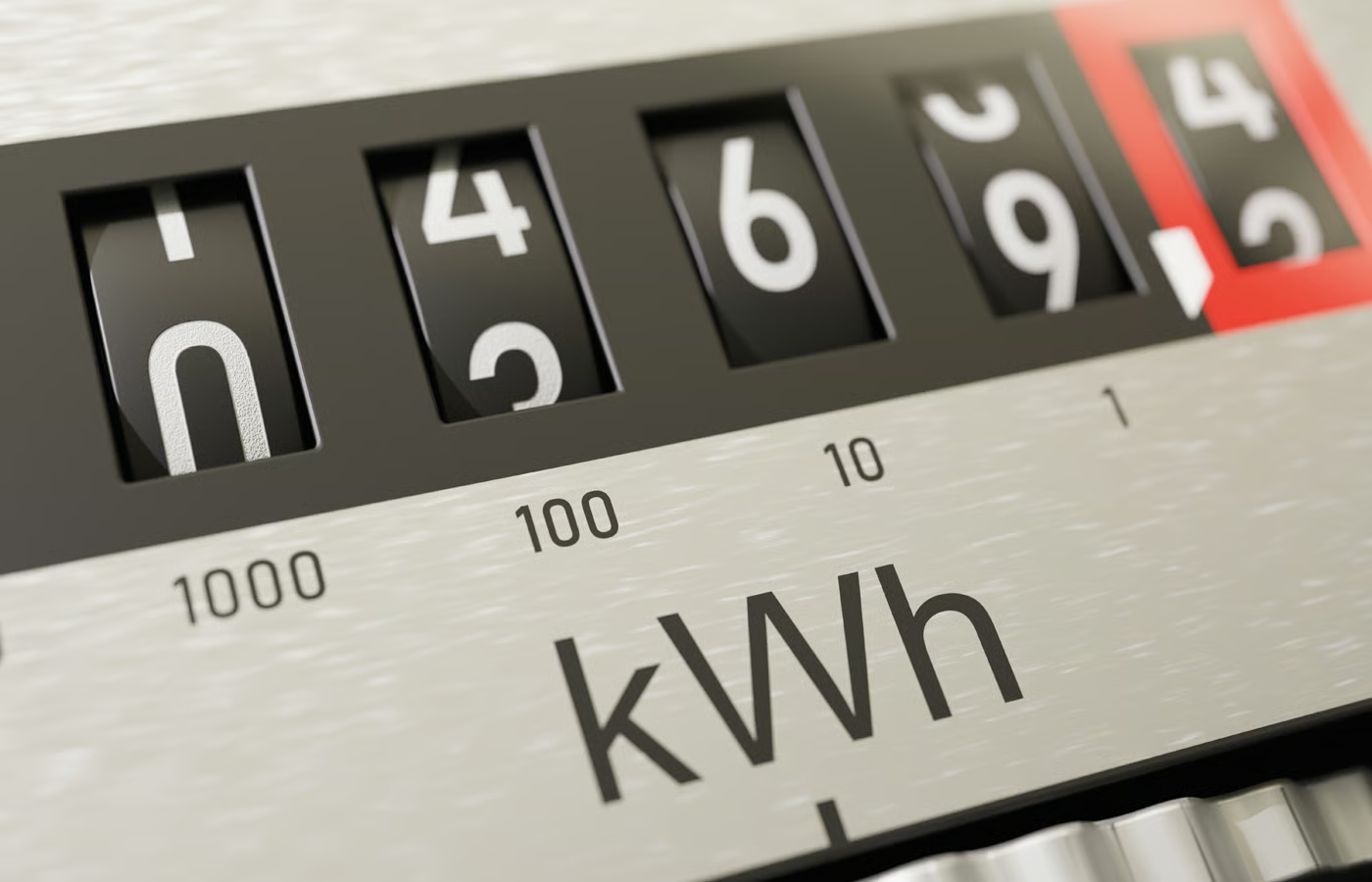

Energy consumption stands as one of the most significant operational expenses for data centers globally. The substantial cost associated with powering servers and the essential cooling systems required to dissipate the heat they generate can have a profound impact on budgets. As data volumes continue to surge and processing demands escalate, so too do energy consumption and, consequently, operating expenditures. This article delves into the intricate workings of data center power consumption, identifies its major contributors, and highlights key strategies for optimization, exploring the tangible business impacts of these initiatives.
Understanding the Mechanics of Data Center Power Consumption
The operational blueprint of a data center is fundamentally driven by its power infrastructure, a complex network designed to meet the insatiable demand for data processing, storage, and transmission. This intricate system comprises several interconnected components, each playing a crucial role in the overall energy equation.
The Foundation: Power Infrastructure
At the core of any data center’s energy management is its robust power infrastructure. This begins with reliable external power sources, typically drawn from the public grid. However, to ensure uninterrupted operations, data centers are equipped with sophisticated backup systems. Uninterruptible Power Supplies (UPS) provide immediate, short-term power continuity during brief outages or transitions, while backup generators, often fueled by diesel or natural gas, are designed to sustain operations for extended periods during prolonged grid failures. The electricity from these sources is then meticulously distributed throughout the facility via Power Distribution Units (PDUs), ensuring that each component receives the precise amount of power it requires. The efficiency and reliability of this foundational infrastructure are paramount to preventing costly downtime and managing energy effectively.
The Engine Room: Servers and Computing Equipment
The servers themselves represent the primary energy consumers within a data center. These machines are the workhorses, tirelessly engaged in data processing, storage, and network traffic management. The power draw of these servers is not static; it fluctuates dynamically based on the intensity of their workloads. Demanding computational tasks, such as complex simulations, large-scale data analytics, or high-transaction processing, necessitate higher processing power, directly translating to increased energy consumption. Beyond servers, other critical computing hardware, including high-capacity storage arrays and high-speed network switches, also contribute significantly to the facility’s overall energy footprint. The sheer density of computing power packed into modern data centers amplifies this challenge, making server efficiency a critical focal point for energy optimization.
The Silent Giant: Cooling and Climate Control
To maintain optimal operating temperatures for sensitive electronic equipment, data centers rely on extensive cooling and climate control systems. These systems, which can include Computer Room Air Conditioner (CRAC) units, large-scale chillers, and external cooling towers, are indispensable for dissipating the substantial heat generated by the active servers and other hardware. The energy expenditure associated with cooling can be staggering, often accounting for a significant portion, sometimes nearly mirroring, the power consumed by the computing equipment itself. As data centers evolve and increase their processing density, the challenge of efficient heat management becomes even more pronounced, demanding innovative and energy-conscious cooling solutions.
Measuring Efficiency: Power Usage Effectiveness (PUE)
The industry standard for quantifying data center energy efficiency is the Power Usage Effectiveness (PUE) metric. PUE is calculated as the ratio of the total amount of power entering a data center to the power consumed by the IT equipment. An ideal PUE of 1.0 signifies that all power is utilized solely for computing tasks, a theoretical benchmark rarely achieved in practice. Most data centers operate with PUE values greater than 1.0, reflecting the energy expended on auxiliary systems such as cooling, lighting, and power distribution losses. Industry leaders are continuously striving to lower their PUE, with many aiming for values below 1.2, indicating a highly efficient operation. For instance, major cloud providers have reported PUEs in the range of 1.1 to 1.15, showcasing significant advancements in efficiency.
Ancillary Systems: Lighting and Auxiliary Equipment
While not as dominant as servers and cooling, lighting and other auxiliary systems, such as security monitoring equipment and building management systems, also contribute to the overall energy consumption. The adoption of energy-efficient LED lighting and intelligent automation systems for these ancillary functions can yield incremental but meaningful reductions in power usage, contributing to the cumulative savings.
Dynamic Demand: Power Fluctuations and Scaling
Data center power consumption is inherently dynamic, fluctuating in response to real-time demand. During periods of peak activity, when more servers are activated to handle increased workloads, power consumption naturally rises. Conversely, during off-peak hours, power usage may decrease. Modern data centers employ sophisticated demand scaling and virtualization techniques to dynamically adjust power consumption in alignment with the prevailing workload, ensuring that resources are utilized efficiently and energy is not wasted on idle capacity.
Key Factors Influencing Data Center Power Consumption
Several interconnected factors significantly influence the overall power consumption of data centers. Understanding these elements is crucial for developing targeted strategies to enhance efficiency and reduce energy waste.
IT Load and Server Density
The primary driver of power consumption is the IT load – the collective demand placed on servers, storage, and networking equipment. Higher IT loads, often associated with increased server density within racks and cabinets, naturally lead to greater power draw. The trend towards hyper-converged infrastructure and high-performance computing environments further intensifies this, packing more processing power into smaller footprints and thus demanding more energy and more sophisticated cooling solutions.
Cooling System Design and Efficiency
The design and operational efficiency of cooling systems are critical determinants of overall power consumption. Traditional air-cooling methods, while widely adopted, can be less efficient than advanced liquid cooling solutions, particularly for high-density racks. Factors such as the ambient temperature, humidity, and the effectiveness of airflow management (e.g., hot/cold aisle containment) directly impact the energy required to maintain optimal operating temperatures. For example, a poorly designed airflow system can lead to hot spots, forcing cooling systems to work harder and consume more energy.
Ambient Environmental Conditions
The external environment plays a notable role, especially for facilities utilizing free cooling or economizers. Data centers located in cooler climates can leverage outside air to cool their internal environments for a significant portion of the year, drastically reducing reliance on energy-intensive mechanical cooling. Conversely, data centers in warmer regions will require more active cooling, increasing energy demands.
Power Distribution and Conversion Losses
Energy is lost at various stages of power distribution and conversion. When electricity is converted from higher voltages to lower voltages required by IT equipment, and as it travels through power cables and transformers, some energy is inevitably dissipated as heat. Minimizing these conversion losses through efficient power supplies and optimized distribution pathways is an important aspect of energy management.
Equipment Age and Technology Adoption
Older, less energy-efficient hardware naturally consumes more power than its modern counterparts. As technology advances, newer servers, storage devices, and networking equipment are designed with improved power efficiency in mind. The decision to upgrade or maintain legacy systems has a direct impact on a data center’s energy footprint.
Operational Practices and Management
The day-to-day operational practices within a data center significantly influence its energy consumption. This includes the effectiveness of server utilization, the implementation of power management policies, and the regularity of maintenance on critical infrastructure. Over-provisioning of resources, running underutilized servers, or neglecting routine maintenance on cooling systems can all lead to unnecessary energy waste.
Five Strategic Imperatives for Optimizing Data Center Power Consumption
Achieving greater power consumption efficiency in data centers is not merely an environmental imperative; it is a strategic business objective that enhances operational resilience, reduces costs, and improves the organization’s overall sustainability profile. The following five strategies are pivotal in achieving these goals:
1. Embracing Energy-Efficient Hardware
A foundational step towards reducing power consumption involves a strategic upgrade to energy-efficient hardware. This encompasses transitioning to servers with superior power efficiency ratings, as these units are engineered to deliver greater computational power per watt consumed. Furthermore, replacing traditional Hard Disk Drives (HDDs) with Solid-State Drives (SSDs) can yield substantial energy savings, as SSDs inherently require less power to operate. Adhering to Energy Star ratings and other recognized energy efficiency standards when procuring new equipment ensures that investments align with sustainability goals and deliver tangible reductions in energy usage. The cumulative effect of deploying energy-efficient hardware across an entire data center can be substantial, leading to significant cost savings and a reduced carbon footprint.
2. Revolutionizing Cooling Systems
Cooling systems, while indispensable, represent a major energy draw. Modernizing these systems with advanced techniques offers a significant opportunity for optimization. Liquid cooling solutions, which employ direct-to-chip or immersion cooling methods, provide a far more efficient means of heat dissipation compared to conventional air cooling, especially for high-density computing environments. The strategic utilization of economizers, which harness the power of ambient air for cooling, can dramatically reduce reliance on energy-intensive mechanical refrigeration. Beyond hardware, optimizing the physical layout of the data center is crucial. Implementing strategies like hot and cold aisle containment ensures that cool air is delivered directly to the server intakes and hot exhaust air is efficiently captured, preventing the mixing of air streams and minimizing the energy required for cooling. Precision cooling, targeting specific heat sources rather than attempting to cool the entire space uniformly, also contributes to enhanced efficiency.
3. Harnessing the Power of Virtualization and Server Consolidation
Virtualization stands as a transformative technology for optimizing energy use. By enabling multiple virtual machines (VMs) to operate on a single physical server, virtualization drastically reduces the number of physical servers required. This consolidation not only liberates valuable physical space but also translates into significant power savings by reducing the overall energy demand for computing. The efficient distribution of workloads across a consolidated server infrastructure, facilitated by advanced virtualization software, maximizes server utilization rates. This ensures that fewer, more powerful servers are operating at higher, more efficient capacities, minimizing the number of idle or underutilized machines drawing power. Furthermore, the strategic adoption of cloud computing for specific workloads can further diminish the need for on-premises server infrastructure, contributing to broader energy efficiency gains.
4. Implementing Sophisticated Power Management Software
The effective management of energy consumption is significantly enhanced by the adoption of Data Center Infrastructure Management (DCIM) tools. These comprehensive software solutions provide real-time visibility into power usage across the entire data center. By enabling continuous monitoring and granular control over power distribution, DCIM tools empower operators to identify inefficiencies, track energy consumption patterns, and make informed adjustments to optimize usage. The integration of artificial intelligence (AI) and machine learning (ML) technologies into these platforms offers predictive analytics capabilities, allowing for proactive optimization of power consumption based on data-driven insights into workload patterns and environmental conditions. This intelligent approach moves beyond reactive adjustments to a more strategic, forward-looking energy management strategy.
5. Pioneering Renewable Energy Integration
A definitive path towards sustainability involves the integration of renewable energy sources. By sourcing power from solar, wind, or hydroelectric generation, data centers can significantly reduce their dependence on fossil fuels and substantially lower their carbon footprint. Participating in Renewable Energy Credit (REC) programs offers a mechanism to support the development and deployment of renewable energy projects. For data centers with the requisite infrastructure and investment capacity, on-site renewable energy generation, such as the installation of solar panels or small-scale wind turbines, presents a direct route to energy independence and a more sustainable operational model. This not only aligns with environmental goals but can also provide a hedge against volatile energy market prices.
The Multifaceted Benefits of Data Center Energy Efficiency
The pursuit of energy efficiency in data centers yields a cascade of benefits, extending beyond operational cost reductions to encompass significant environmental and reputational advantages.
Economic Advantages
The most immediate and tangible benefit is the reduction in operational expenditures. Lower energy consumption directly translates to lower utility bills, a critical factor in the profitability of data center operations. Efficient power management also enhances the longevity of equipment by reducing thermal stress, potentially lowering maintenance and replacement costs.
Environmental Stewardship
By minimizing energy consumption and embracing renewable energy sources, data centers can dramatically reduce their carbon footprint. This contributes to global efforts to combat climate change and aligns with growing societal and regulatory expectations for environmental responsibility. Organizations that demonstrate a commitment to sustainability often gain a competitive advantage.
Enhanced Operational Resilience
Efficient power management, coupled with robust backup systems, contributes to increased operational resilience. By optimizing power distribution and reducing the overall load, data centers can operate more reliably, minimizing the risk of power-related outages and ensuring business continuity.
Improved Brand Reputation and Corporate Social Responsibility (CSR)
In an era of increasing environmental consciousness, a data center’s commitment to sustainability can significantly enhance its brand reputation. Demonstrating a proactive approach to energy efficiency and environmental responsibility can attract environmentally conscious clients and investors, solidifying the organization’s standing as a responsible corporate citizen.
Navigating the Challenges of Data Center Power Management
Despite the clear imperative for energy efficiency, data centers face a unique set of challenges in achieving their sustainability goals.
The Performance-Efficiency Paradox
A primary hurdle lies in balancing the escalating demand for high-performance computing with the need for energy efficiency. As data processing tasks become more complex and data volumes explode, the requirement for powerful computing resources intensifies, often leading to increased power consumption. Current technological limitations can sometimes present a trade-off between raw computing power and energy efficiency, making it challenging to achieve both simultaneously.
Technological and Infrastructure Upgrade Costs
Implementing energy-efficient hardware and advanced cooling systems often requires significant upfront capital investment. Many existing data centers operate with legacy systems that are inherently less energy-efficient. The cost and complexity associated with upgrading or replacing these older infrastructures can be a substantial barrier, particularly for organizations with budget constraints.
Optimizing Cooling System Efficiency
While advanced cooling solutions exist, their implementation can be complex and may not be universally applicable. Efficiently managing the heat generated by high-density server configurations remains a persistent challenge. Ensuring that cooling systems operate at peak efficiency without over-cooling or creating localized hot spots requires careful design, continuous monitoring, and skilled operation.
Evolving Regulatory Landscapes
Governments and regulatory bodies worldwide are increasingly focusing on energy consumption and carbon emissions. Data centers must navigate a complex and evolving landscape of environmental regulations, which can include energy efficiency standards, carbon pricing mechanisms, and reporting requirements. Staying abreast of these regulations and ensuring compliance adds another layer of complexity to operational management.
The Critical Role of Efficient Power Management in the Digital Age
The efficient management of power within data centers transcends mere operational efficiency; it has become a cornerstone of economic viability, environmental stewardship, and long-term organizational sustainability. As the digital infrastructure of the modern world, data centers bear a significant responsibility to manage their energy consumption effectively.
By embracing innovative technologies, strategic planning, and a commitment to continuous improvement, data centers can not only mitigate their environmental impact but also unlock substantial cost savings and enhance their operational resilience. The journey towards truly sustainable data centers is ongoing, requiring a collaborative effort from technology providers, operators, and policymakers alike to ensure that the digital future is built on a foundation of energy consciousness and environmental responsibility.