

The mobile technology landscape is currently undergoing a significant transformation, driven by an intensified focus on battery longevity and capacity. For years, consumers have voiced a consistent demand for smartphones capable of sustaining power for extended periods, a plea that manufacturers are now finally addressing with considerable advancements in battery technology. This pivotal shift is largely spearheaded by the emergence of silicon-carbon composite batteries, a breakthrough promising to deliver substantially higher energy densities without compromising device aesthetics through increased weight or bulk. While this innovation heralds a new era of prolonged smartphone usage, it simultaneously introduces complex challenges, particularly concerning the long-term health and degradation of these advanced power cells when subjected to the increasingly prevalent practice of ultra-fast charging. This creates a fascinating paradox, where the quest for enhanced endurance collides with the convenience of rapid power replenishment, forcing both manufacturers and users to reconsider their approach to mobile device power management.
The Evolving Demand for Enhanced Battery Life
For over a decade, the evolution of smartphones has seen exponential growth in processing power, screen resolution, camera capabilities, and overall functionality. However, battery technology often lagged, becoming the primary bottleneck limiting the user experience. Despite advancements in software optimization and more efficient chipsets, the finite capacity of traditional lithium-ion batteries meant that daily charging, and often mid-day top-ups, became an inescapable routine for many users. This persistent demand for greater autonomy fueled continuous research into alternative battery chemistries and structural designs.
Traditional lithium-ion batteries, which have been the industry standard for decades, typically utilize graphite as the primary material for the anode. Graphite, while reliable and relatively inexpensive, has inherent limitations in its theoretical energy density. Its crystal structure allows lithium ions to intercalate between layers, but there’s a ceiling to how many ions it can store per unit of volume and weight. As smartphones grew more powerful and slimmer, fitting larger graphite-based batteries became a design conundrum, often leading to compromises in other areas or simply stagnant battery performance. Consumer frustration mounted, leading to a widespread call for innovations that could genuinely extend device endurance beyond a single day of moderate use. This market pressure has been a significant catalyst for the industry’s pivot towards more advanced materials like silicon-carbon composites.
Unpacking the Silicon-Carbon Breakthrough
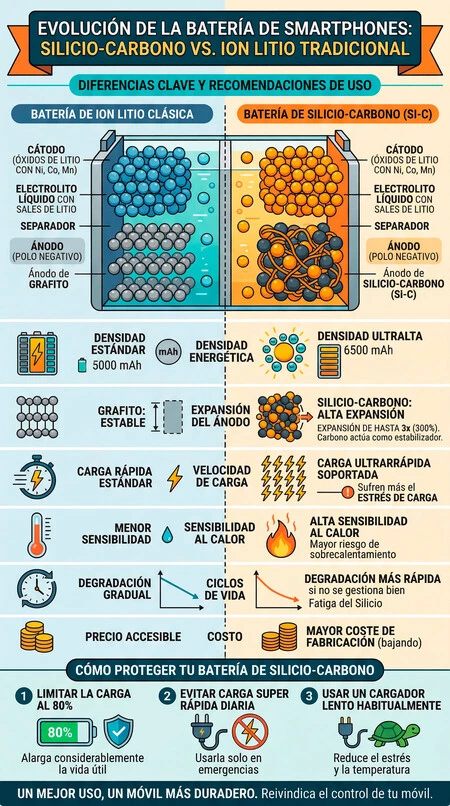
The advent of silicon-carbon technology represents a crucial evolutionary step beyond conventional lithium-ion batteries, rather than a radical departure. At its core, this innovation lies in the anode, the negative electrode where lithium ions are stored during charging. In traditional lithium-ion batteries, this anode is predominantly made from graphite. The silicon-carbon composite, however, integrates silicon alongside carbon in the anode structure. This combination is particularly potent because silicon boasts a theoretical specific capacity nearly ten times higher than graphite (around 4,200 mAh/g for silicon compared to 372 mAh/g for graphite). This means silicon can theoretically store significantly more lithium ions per unit of mass, directly translating to higher overall battery capacity within the same physical volume.
The journey to incorporate silicon into commercial batteries has been fraught with challenges. While pure silicon offers immense potential for energy storage, it suffers from a critical flaw: extreme volume expansion. During the charging process, when lithium ions intercalate into the silicon structure, the material can swell by up to 400%. This dramatic expansion and subsequent contraction during discharge leads to pulverization of the silicon particles, breaking electrical contacts and rapidly degrading the battery’s performance and lifespan. Early attempts to use high percentages of silicon in anodes were hampered by this mechanical instability and the rapid formation of an unstable Solid Electrolyte Interphase (SEI) layer, which consumes active lithium and reduces efficiency.
The solution, which silicon-carbon technology embodies, involves a sophisticated engineering approach. By combining silicon with carbon — often in forms such as graphite, amorphous carbon, or carbon nanotubes — researchers have managed to mitigate silicon’s expansion issues. The carbon matrix acts as a buffer, providing structural integrity and preventing the silicon particles from pulverizing. It also enhances electrical conductivity, which can sometimes be an issue with silicon. This composite approach allows manufacturers to leverage silicon’s high energy density while maintaining the necessary mechanical stability and cycle life for practical smartphone applications. The result is a battery that can pack more power into the same, or even smaller, footprint, enabling devices to become thinner, lighter, and more compact, all while offering significantly extended operational times.
The broader architecture of these batteries remains familiar: they still employ a liquid electrolyte with dissolved lithium salts and a cathode typically composed of lithium oxide compounds mixed with metals like nickel, cobalt, or manganese, depending on the specific battery chemistry and desired performance characteristics. This continuity ensures that the manufacturing processes and safety protocols developed for traditional lithium-ion batteries can largely be adapted, facilitating a smoother transition to this next-generation technology.
The Double-Edged Sword: Capacity Gains vs. Degradation Risks
The advantages of silicon-carbon batteries are compelling and immediately tangible for the end-user: significantly increased capacity translates directly into longer device usage between charges. With capacities now routinely reaching and even exceeding 6,000 mAh, and models pushing towards 6,500 mAh and beyond, the promise of two-to-three-day battery life for many users is becoming a reality. This shift reduces charging anxiety and offers greater freedom, especially for those who rely heavily on their devices for work, navigation, or entertainment on the go. Furthermore, the higher volumetric energy density means that these larger capacities can be achieved without necessitating thicker or heavier phone designs, aligning with the industry’s ongoing pursuit of sleek and aesthetically pleasing devices.
However, this technological leap is not without its trade-offs. The very chemical properties that grant silicon-carbon batteries their superior capacity also render them particularly vulnerable to the stresses associated with rapid charging and the inevitable march of time. The primary concern revolves around the accelerated degradation caused by high charging currents and the heat generated during fast charging. When lithium ions rapidly intercalate into the silicon-carbon anode, the material undergoes more pronounced stress due to quicker expansion and contraction cycles. This can lead to increased micro-cracking within the anode structure and a more aggressive and less stable growth of the SEI layer. A compromised SEI layer is less effective at protecting the anode material, leading to irreversible loss of active lithium and a faster decline in overall battery capacity and lifespan.
Moreover, the elevated temperatures inherent to high-power fast charging exacerbate these issues. Heat accelerates chemical reactions within the battery, including undesirable side reactions that contribute to electrolyte decomposition and further SEI layer instability. This creates a "perfect storm" for accelerated degradation, directly contrasting with the fundamental benefit of enhanced capacity these batteries are designed to provide.
The Fast Charging Paradox: A Clash of Consumer Expectations and Battery Chemistry
This susceptibility to fast charging stress creates a significant dilemma for the smartphone industry. For years, manufacturers have engaged in an intense "fast charging race," with each generation of devices boasting ever-higher wattage chargers capable of replenishing batteries in increasingly shorter times. What began as a convenient feature to quickly top up a phone with a relatively small battery (e.g., 3,000-4,000 mAh) has evolved into a key marketing differentiator, with some devices now supporting charging speeds exceeding 100W, capable of going from empty to full in under 20 minutes.
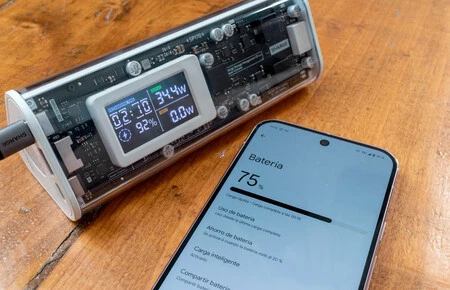
This emphasis on ultra-fast charging made considerable sense in an era of smaller battery capacities. The ability to gain several hours of usage from a 10-15 minute charge was genuinely transformative for users constantly on the go. However, with the advent of silicon-carbon batteries and capacities regularly surpassing 6,000 mAh, the utility of such extreme charging speeds begins to diminish. A phone with a 6,500 mAh battery that can comfortably last two to three days no longer necessitates a frantic, super-fast top-up to survive the day. The primary benefit shifts from rapid emergency boosts to ensuring sustained multi-day usage, making the potential long-term degradation from constant high-speed charging a more pressing concern than the immediate convenience.
The current market trend sees silicon-carbon batteries predominantly deployed in higher-end, flagship smartphones. Ironically, these are precisely the devices that also tend to feature the most aggressive and powerful fast-charging capabilities. This creates a "clash of trains" in the consumer’s pocket: advanced battery chemistry designed for endurance, paired with charging hardware that can potentially shorten its lifespan if used indiscriminately.
Navigating the Future: Towards Smarter Charging Habits
Given this inherent conflict, a paradigm shift in both manufacturing design and user behavior is becoming increasingly vital. While manufacturers continue to push the boundaries of fast charging, there is a growing recognition of the need for intelligent battery management systems (BMS) and user-configurable charging options.
Many contemporary smartphones already incorporate sophisticated BMS algorithms that monitor battery temperature, charging patterns, and overall health. Features like "Optimized Battery Charging" (found in iOS) or "Adaptive Charging" (in Android) are designed to learn a user’s charging habits and automatically slow down the charging rate, particularly overnight, to minimize the time spent at 100% charge and reduce stress. Some devices also allow users to set a maximum charge limit, often to 80%, to prolong battery life, as the final 20% of charging (from 80% to 100%) typically induces the most stress and heat.
For the end-user, adopting smarter charging practices can significantly extend the lifespan of silicon-carbon batteries. These practices include:
- Limiting Full Charges: Whenever possible, avoid charging the battery to 100% and discharging it to 0%. Aim for a charging window between 20% and 80% for optimal battery health.
- Strategic Use of Fast Charging: Reserve ultra-fast charging for situations where time is genuinely critical. For routine overnight charging or when ample time is available, opt for a slower charger. Many modern fast chargers are backward compatible with lower wattages, or users can simply use an older, lower-wattage adapter.
- Monitoring Heat: Be mindful of battery temperature during charging. If the phone feels excessively hot, it’s an indicator of stress. Consider removing the phone from its case or placing it in a cooler environment.
- Software Protections: Actively utilize any battery health or charging optimization features offered by the smartphone’s operating system or manufacturer.
The Broader Implications: Sustainability and Consumer Choice
The implications of silicon-carbon batteries extend beyond individual device performance, touching upon broader themes of sustainability and consumer empowerment. Longer-lasting batteries inherently contribute to reducing electronic waste (e-waste). If a smartphone’s battery can maintain its capacity for a greater number of charge cycles, users are less likely to replace their devices solely due to diminished battery performance, thereby extending the overall lifecycle of the product. This aligns with global efforts to promote a circular economy and reduce the environmental footprint of consumer electronics.
However, the current industry trend of simultaneously offering advanced, yet sensitive, battery technology alongside aggressive fast-charging solutions creates a tension with these sustainability goals. If consumers are not adequately informed about the trade-offs, or if the default charging behaviors of devices prioritize speed over longevity, the potential benefits of silicon-carbon in extending device life may be negated. This underscores the need for greater transparency from manufacturers regarding battery health management, clearer guidance for users, and potentially a shift in marketing focus from raw charging speed to holistic battery longevity.
From an economic perspective, longer battery life could influence device upgrade cycles. If phones remain functionally viable for longer periods, the impetus for frequent upgrades might diminish, potentially impacting manufacturers’ sales models. Conversely, it could also foster greater brand loyalty if consumers perceive their devices as more durable and reliable. The aftermarket for battery replacements might also see changes, with a reduced immediate demand but a potential for more specialized services for these advanced chemistries.
The Road Ahead: Continuous Innovation and Balanced Design
The journey for mobile battery technology is far from over. While silicon-carbon composites represent a significant leap, research continues into even more advanced chemistries and architectures. Solid-state batteries, for instance, are often touted as the "holy grail" due to their potential for even higher energy densities, enhanced safety, and greater stability compared to liquid electrolyte-based systems. Graphene-enhanced batteries and other novel materials are also under active investigation.
However, each new technology brings its own set of challenges, from manufacturing complexities and cost to fundamental material science hurdles. For the foreseeable future, silicon-carbon will likely remain a dominant force in high-capacity smartphone batteries, continually refined with higher silicon content and improved composite structures.
Ultimately, the future success of these advanced batteries will depend on a delicate balance: pushing the boundaries of energy density while simultaneously developing sophisticated battery management systems that protect against degradation, and educating consumers on best practices. The goal is not merely to charge faster or last longer, but to enable a harmonious coexistence between cutting-edge technology and sustainable, long-term user satisfaction. As the author of the original piece wisely suggests, the solution may lie in a return to mindful charging—not abandoning innovation, but exercising control and wisdom in its application. This approach ensures that we can fully harness the impressive potential of silicon-carbon batteries, enjoying the benefits of extended power without prematurely sacrificing the life of our indispensable devices.