
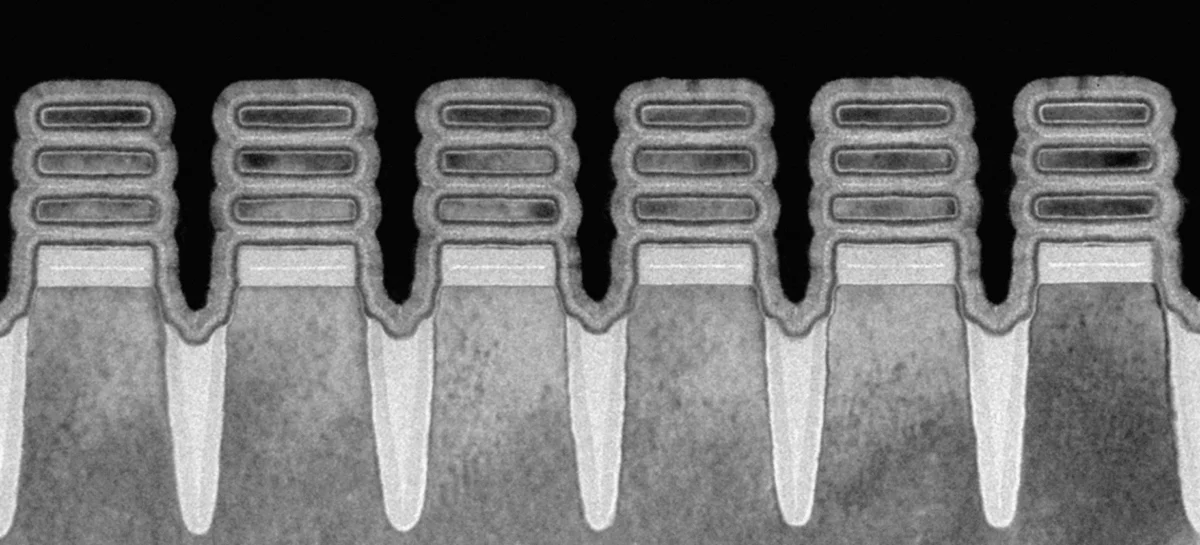

The global semiconductor industry is currently undergoing one of the most significant architectural shifts in its history as it moves toward the 2nm process node and the subsequent "Angstrom era." Designing, developing, and manufacturing chips at these dimensions requires an entirely new set of business and technology tradeoffs that are dramatically more impactful at every stage of the lifecycle, from initial architectural inception to final manufacturing yield. Unlike previous transitions, where shrinking features primarily involved packing more transistors onto silicon, the move to 2nm introduces challenges where atomic-level variations can dictate the success or failure of a multi-billion-dollar product line.
At dimensions below 2nm, the margin for error effectively vanishes. Industry experts note that a variation of just several atoms, or a nanoscale void in a signal path, can fundamentally alter performance. Wires and metal layers are becoming so thin that even minor anomalies can cause unplanned thermal gradients and electromigration, which reduces device reliability and shortens lifespans. Furthermore, the materials required for this level of precision, such as resists and bonding agents, must reach purity levels measured in parts per quadrillion to avoid contamination that would render a wafer useless.
The Evolution of Transistor Architecture: From FinFET to Gate-All-Around
To understand the current complexity, one must look at the chronological evolution of transistor design. For over a decade, the FinFET (Fin Field-Effect Transistor) served as the industry standard, providing the electrostatic control necessary to continue scaling from the 22nm node down to 3nm. However, as dimensions shrunk below 3nm, FinFETs began to suffer from significant gate leakage and short-channel effects, leading to excessive power consumption and heat.
The transition to 2nm marks the official debut of the Gate-All-Around (GAA) nanosheet transistor. In a GAA structure, the gate contacts the channel on all four sides, offering superior electrostatic control compared to the three-sided contact of a FinFET. David Fried, corporate vice president at Lam Research, characterizes this transition as an order of magnitude more complex than any previous architectural shift. While the structural complexity of these three-dimensional transistors is extraordinary, the challenges extend into the metal layers (Metal-0 through Metal-3), where patterning must be executed with extreme precision to manage resistance, capacitance, and structural integrity.

Economic Realities and the Cost of Innovation
The economic barrier to entry at the leading edge has reached unprecedented heights. Industry data suggests that the cost of taking a 2nm design from initial concept to working silicon can easily exceed $100 million. For major foundries like TSMC, Samsung, and Intel, the investment in infrastructure is even more staggering. Intel’s High-NA (Numerical Aperture) Extreme Ultraviolet (EUV) scanners, which are essential for printing features at sub-2nm dimensions, weigh 165 tons and cost upwards of $350 million per unit.
Because of these costs, nearly all designs at the leading edge are now vendor-specific or workload-specific. High-profile "hyperscalers" such as Google, Meta, Microsoft, and Tesla are increasingly designing their own custom silicon to optimize for specific AI data types and operating conditions. To balance the need for customization with the necessity of foundry efficiency, a hybrid economic model has emerged. Foundries often standardize the lower metal layers (Metal-0 to Metal-3) to leverage expensive equipment across multiple clients, while allowing customers to customize the upper metal stack to achieve specific performance targets.
Heterogeneous Integration and the Multi-Die Challenge
As monolithic scaling—the practice of shrinking a single large chip—reaches its physical and economic limits, the industry is pivoting toward heterogeneous integration. This involves breaking a system into smaller "chiplets" that are manufactured at different process nodes and then connected within a single package. While some logic might use a 2nm process, other components like memory controllers or I/O may remain at older, more cost-effective nodes.
This shift creates a new class of risks. Evelyn Landman, CTO at proteanTecs, emphasizes that multi-die architectures trade traditional scaling risks for interconnect effects, package-induced variation, and debug complexity. Managing the signal traffic between these dies is a massive undertaking. Ben Sell, vice president and general manager of logic technology development at Intel, notes that the industry is moving from traditional microbumps (at 35 or 25-micron pitches) to hybrid bonding with a 9-micron pitch. This allows for much denser chip-to-chip communication, which is vital for the massive data throughput required by modern AI workloads.
Thermal Management and the "Potato Chip" Effect
One of the more unique physical challenges at the 2nm node involves wafer thinning. To facilitate backside power delivery—a technique where power distribution is moved to the back of the silicon to reduce congestion on the front—wafers are thinned down to as little as 10 microns. According to Kostas Adam, vice president of engineering at Synopsys, these ultra-thin wafers become highly susceptible to mechanical stress, often deforming into a shape reminiscent of a potato chip.

This deformation creates significant alignment issues during the manufacturing process, particularly when stacking 12 to 16 dies for High-Bandwidth Memory (HBM). If the stress effects are not carefully accounted for, the resulting misalignment can lead to connectivity failures or latent defects that only appear after the device has been deployed in the field. Consequently, thermal dissipation and mechanical stress management have moved from being secondary considerations to being primary drivers of the design flow.
The Global Roadmap: Rapidus and the 2027 Milestone
The race to 2nm is not just a corporate competition but a geopolitical one. Rapidus, a Japanese government-backed semiconductor venture, has licensed IBM’s 2nm nanosheet technology with the goal of beginning trial production in 2025 and full-scale manufacturing by 2027. Rozalia Beica, field CTO for packaging technologies at Rapidus Design Solutions, indicates that the company is currently building an entire ecosystem, including EDA (Electronic Design Automation) tools and IP (Intellectual Property) blocks, to support this timeline.
The success of these ventures depends on the "co-optimization" of multiple effects simultaneously. The industry is moving away from "static guard-bands"—the practice of leaving a safety margin for performance—because at 2nm, those margins are too valuable to waste. Instead, companies are implementing real-time monitoring of timing margins and workload stress to manage performance dynamically over the product’s lifetime.
Supporting Data and Technical Innovations
Several key technical innovations are making the 2nm transition possible:
- Backside Power Delivery: By moving power lines to the rear of the wafer, engineers can reduce the "IR drop" (voltage drop) and free up space for signal routing on the front side, leading to a potential 10% to 12% improvement in logic density.
- High-NA EUV: The move from 0.33 NA to 0.55 NA EUV allows for higher resolution patterning, reducing the need for complex multi-patterning steps that can introduce overlay errors.
- Curvilinear Patterning: As masks become more complex, traditional polygon-based shapes are being replaced by curvilinear shapes. Aki Fujimura, CEO of D2S, notes that this approach significantly improves the accuracy of what is printed on the silicon, directly enhancing yield for angstrom-age chips.
- Dry Resist Technology: Lam Research’s Aether dry resist technology is being deployed to improve the sensitivity and resolution of EUV patterning, which is critical as feature sizes approach the limits of physics.
Broader Impact and Industry Implications
The implications of the 2nm transition extend far beyond the laboratory. For AI data centers, the primary driver for adopting 2nm technology is power efficiency. While performance improvements per node have slowed to roughly 10% to 20%, the power reduction per square millimeter remains a compelling reason for the upgrade. Lower power consumption translates to lower cooling costs and a smaller carbon footprint for the massive server farms powering global AI models.

However, the "engineering wiggle room" has reached an all-time low. Every decision made at the 2nm node has ripple effects across the entire supply chain. A change in the etch process can impact the reliability of the through-silicon vias (TSVs), which in turn affects the packaging yield. This interconnectedness is forcing a breakdown of traditional silos between design, manufacturing, and packaging.
Despite these hurdles, the industry remains optimistic. Dimensional scaling has several nodes of viability remaining, and the move toward true 3D-IC designs—where logic and memory are stacked vertically with minimal distance between them—promises another order of magnitude improvement in performance. As the industry enters the angstrom era, the focus is shifting from simply making things smaller to making them smarter, more integrated, and more resilient to the volatile physics of the nanoscale world. The transition to 2nm is not merely a step forward in size; it is a reinvention of how humanity builds its most complex machines.