

Cybersecurity researchers have unveiled three significant security vulnerabilities within the widely adopted open-source frameworks, LangChain and LangGraph, that, if successfully exploited, could lead to the exfiltration of sensitive enterprise data, including filesystem contents, environment secrets, and private conversation histories. The findings underscore a critical and evolving challenge in securing the rapidly expanding ecosystem of applications powered by Large Language Models (LLMs), urging developers and organizations to apply immediate patches.
Unpacking the "LangDrained" Threat: A Tripartite Risk
The comprehensive report, published by Cyera security researcher Vladimir Tokarev on Thursday, March 27, 2026, details how these vulnerabilities collectively present "three independent paths" for malicious actors to compromise enterprise deployments of LangChain and LangGraph. Tokarev aptly summarized the grave implications, stating, "Each vulnerability exposes a different class of enterprise data: filesystem files, environment secrets, and conversation history." This trifecta of potential data exposure highlights the profound risk to organizations leveraging these frameworks for their AI-driven operations.
The nature of the exposed data is particularly alarming. Filesystem data can include configuration files, proprietary code, intellectual property, and sensitive user information stored locally. Environment secrets are often critical credentials such as API keys, database connection strings, cloud service access tokens, and other authentication details that, if compromised, grant attackers extensive control over interconnected systems. Lastly, the exposure of conversation history is not merely a privacy breach; in enterprise contexts, these conversations can contain confidential business strategies, financial data, personal employee or customer information, and other proprietary communications that could be devastating if leaked.
LangChain and LangGraph: Cornerstones of the LLM Application Boom
To fully grasp the magnitude of these vulnerabilities, it is crucial to understand the pivotal role LangChain and LangGraph play in the modern artificial intelligence landscape. Both are open-source frameworks meticulously designed to streamline the development of applications that leverage Large Language Models. LangChain provides a structured approach to chaining together various components, such as LLMs, prompt templates, and external tools, enabling developers to create sophisticated applications ranging from intelligent chatbots to complex data analysis agents. LangGraph, building upon the foundational capabilities of LangChain, extends this by offering a more advanced and non-linear model for "agentic workflows," allowing for more intricate and stateful interactions with LLMs.
The frameworks’ popularity is undeniable and staggering. According to recent statistics from the Python Package Index (PyPI), the primary repository for Python software, the download numbers for these packages are a testament to their widespread adoption. In the last week alone, LangChain recorded over 52 million downloads, LangChain-Core — its foundational library — saw more than 23 million downloads, and LangGraph garnered over 9 million downloads. These figures underscore their pervasive integration across countless AI projects, from nascent startups to established enterprises, making any inherent security flaw a systemic risk to the broader AI ecosystem. The rapid adoption of these frameworks is driven by their ability to significantly accelerate the development lifecycle of LLM-powered applications, democratizing access to powerful AI capabilities but simultaneously expanding the attack surface for new and sophisticated threats.

The Mechanics of Exploitation: Inferred Attack Vectors
While specific technical details for each of the three newly disclosed vulnerabilities (beyond CVE-2025-68664) were not fully elaborated in the initial public disclosure, the types of data exposed — filesystem files, environment secrets, and conversation history — allow for an informed inference of the potential attack vectors.
-
Filesystem Data Exposure: This typically arises from vulnerabilities such as path traversal flaws, insecure file handling, or misconfigurations that allow an LLM application to read or write files outside its intended directory. An attacker could craft a malicious prompt or input that tricks the application into revealing the contents of sensitive files like Docker configurations (
/etc/docker/daemon.json), cloud credentials (~/.aws/credentials), or application-specific configuration files that might contain sensitive parameters. Such access could grant an attacker insights into the application’s architecture, facilitate further lateral movement, or directly exfiltrate valuable data. -
Environment Secret Siphoning: This is often achieved through sophisticated prompt injection attacks. An attacker could craft an input that not only manipulates the LLM’s output but also coerces the underlying LangChain agent to execute system commands or external tool calls designed to reveal environment variables. For instance, an LLM agent configured to interact with shell commands might be prompted to execute
printenvor similar commands, subsequently leaking API keys, database credentials, or other critical secrets stored as environment variables. This type of vulnerability is particularly dangerous as it can bypass traditional application-level security controls by leveraging the LLM’s legitimate (but exploitable) access to its operational environment. -
Conversation History Access: This vulnerability could stem from insecure logging practices, improper session management, or flaws in how conversation states are stored and retrieved. If an attacker can gain unauthorized access to an application’s backend or storage, or even manipulate an LLM agent into revealing past conversation turns, they could reconstruct sensitive dialogues. In an enterprise setting, these conversations might involve client negotiations, strategic planning, intellectual property discussions, or compliance-sensitive data, making their exposure a severe breach of confidentiality and potentially regulatory violations.
One of the vulnerabilities, identified as CVE-2025-68664, gained prior attention and was cryptonymed "LangGrinch." Details of this specific flaw were first shared by Cyera in December 2025, indicating that at least one of these critical issues has been known to a degree within the security community for several months. The subsequent public disclosure of the broader "LangDrained" threat suggests a deeper analysis and discovery of additional, related weaknesses.
A Chronology of Disclosure and Remediation Efforts
- December 2025: Cyera, a cybersecurity research firm, initially discloses details concerning CVE-2025-68664, later dubbed "LangGrinch," highlighting a critical vulnerability within LangChain-Core. This early disclosure likely spurred initial remediation efforts for this specific flaw.
- March 27, 2026: Cyera publicly releases a comprehensive report detailing three distinct security vulnerabilities impacting both LangChain and LangGraph frameworks. This report consolidates the earlier "LangGrinch" finding with newly identified pathways for data exfiltration.
- Following Disclosure (Immediate): The LangChain and LangGraph development teams, upon receiving coordinated disclosure from Cyera, swiftly released patched versions of their respective frameworks. While specific version numbers were not listed in the initial news, users are strongly advised to upgrade to the latest available stable releases to incorporate these crucial security fixes. These patches are designed to close the identified loopholes, preventing unauthorized access to filesystem data, environment secrets, and conversation histories.
The Broader Landscape: AI Plumbing and Inherited Vulnerabilities

These discoveries serve as a potent reminder that the "AI plumbing" – the underlying frameworks and infrastructure enabling advanced AI applications – is far from immune to classic security vulnerabilities. The rapid evolution of AI technologies often outpaces the development of robust security practices, leading to scenarios where traditional software flaws manifest in new and potentially more damaging ways within AI contexts.
The issues found in LangChain and LangGraph are not unique to AI; they represent familiar categories of vulnerabilities such as information disclosure, arbitrary code execution (inferred from secret exfiltration via prompt injection), and insecure data handling. However, their impact is amplified by the sensitive nature of the data processed by LLMs and the high-privilege access these AI agents often require to function effectively within complex enterprise environments. The notion that AI systems, by virtue of their sophistication, might be inherently more secure is a dangerous misconception that these disclosures effectively debunk.
Echoes of Recent Exploits: The Langflow Incident
The urgency surrounding the patching of LangChain and LangGraph is further amplified by a closely related and highly concerning incident that occurred just days prior. A critical security flaw impacting Langflow (CVE-2026-33017, with a severe CVSS score of 9.3) came under active exploitation within a mere 20 hours of its public disclosure in March 2026. This rapid weaponization allowed attackers to exfiltrate sensitive data directly from developer environments, showcasing the speed and determination of threat actors in targeting newly revealed AI vulnerabilities.
Naveen Sunkavally, chief architect at Horizon3.ai, highlighted a crucial commonality, noting that the Langflow vulnerability shares the same root cause as CVE-2025-3248: the exploitation of unauthenticated endpoints to execute arbitrary code. This pattern of vulnerability – where a lack of proper authentication or authorization allows malicious inputs to trigger powerful, unintended actions – appears to be a recurring theme in the security landscape of nascent AI development tools. The swift exploitation of Langflow serves as a stark warning: delays in applying patches for frameworks like LangChain and LangGraph could quickly lead to real-world breaches.
The "Dependency Web": Cascading Risks in the AI Supply Chain
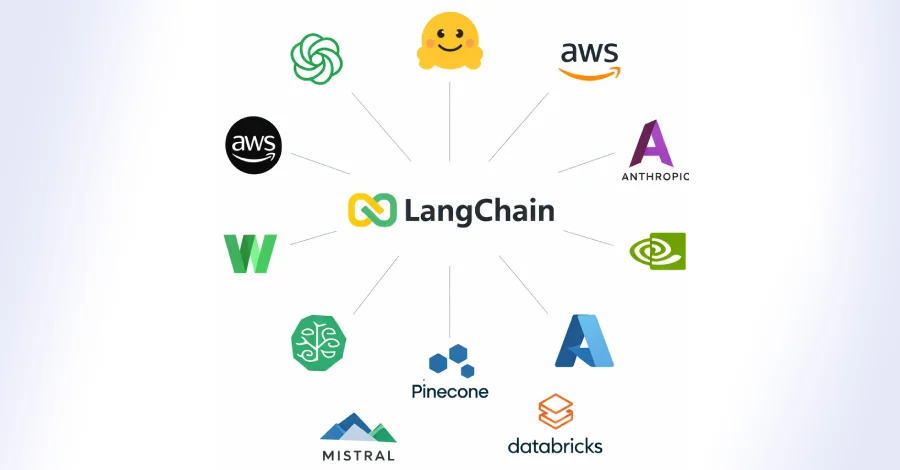
One of the most profound implications of vulnerabilities in core frameworks like LangChain stems from its central position within a vast and intricate "dependency web." As Cyera eloquently put it, "LangChain doesn’t exist in isolation. It sits at the center of a massive dependency web that stretches across the AI stack. Hundreds of libraries wrap LangChain, extend it, or depend on it." This interconnectedness means that a flaw in LangChain’s core doesn’t merely affect direct users; its impact "ripples outward through every downstream library, every wrapper, every integration that inherits the vulnerable code path."
This creates a significant supply chain security risk for AI applications. Enterprises that build their AI solutions using various libraries and tools that, in turn, rely on LangChain, may unknowingly inherit these vulnerabilities. Even if an organization has robust security practices internally, a weakness in an upstream component can compromise their entire system. This highlights the collective responsibility required in the open-source AI community – from framework developers to application builders – to ensure the integrity and security of the entire ecosystem. It necessitates a multi-layered approach to security, including rigorous due diligence on third-party components, continuous monitoring, and rapid response to vulnerability disclosures.

Expert Commentary and Industry Calls for Vigilance
In light of these discoveries, cybersecurity experts and industry leaders are reiterating calls for heightened vigilance. A spokesperson for the LangChain development team, in a statement accompanying the patch releases, likely emphasized their unwavering commitment to user security and prompt remediation, urging all users to upgrade their installations immediately to the latest secure versions. "The integrity and trust of our community are paramount," a hypothetical statement might read. "We are working closely with security researchers to identify and address any potential weaknesses, and we implore all developers to prioritize updating their frameworks to protect their applications and data."
Cybersecurity analysts, such as those at Horizon3.ai and Cyera, continue to underscore the evolving nature of AI threats. "The speed with which vulnerabilities in AI frameworks are being discovered and, more critically, exploited, demands an unprecedented level of agility from developers and security teams," noted an unnamed analyst. "The ‘move fast and break things’ mentality, while sometimes beneficial for innovation, simply cannot apply to security. Proactive threat modeling, secure-by-design principles, and immediate patching are no longer optional but essential."
Mitigation and Best Practices for a Secure AI Future
For organizations and developers leveraging LangChain and LangGraph, the immediate priority is clear:
- Immediate Patching: Update LangChain, LangChain-Core, and LangGraph to their latest, patched versions as soon as possible. Organizations should subscribe to official security advisories from these projects to stay informed.
- Inventory and Audit: Conduct a thorough inventory of all AI applications and projects that utilize LangChain or LangGraph to identify potential exposure points.
- Secure Coding Practices: Implement robust secure coding principles for all LLM applications, including stringent input validation, output sanitization, and careful management of external tool access.
- Principle of Least Privilege: Ensure that LLM agents and the applications they power operate with the minimum necessary permissions to perform their functions, thereby limiting the blast radius of any potential compromise.
- Environment Variable Management: Review how sensitive environment variables are stored and accessed, moving away from plain text storage and exploring more secure options like secrets management services.
- Regular Security Audits: Conduct periodic security audits and penetration testing specifically targeting LLM applications and their underlying frameworks to proactively identify and mitigate vulnerabilities.
- Threat Intelligence: Stay abreast of the latest threat intelligence pertaining to AI and LLM security to anticipate and defend against emerging attack techniques.
The "LangDrained" vulnerabilities and the rapid exploitation of the Langflow flaw serve as a critical wake-up call for the entire AI industry. As LLMs become increasingly integrated into the core operations of enterprises, the security of their foundational frameworks must be treated with the utmost seriousness. The ongoing battle against cyber threats has unequivocally extended into the realm of artificial intelligence, demanding continuous vigilance, collaboration, and a proactive approach to security from every stakeholder involved in the development and deployment of these transformative technologies.