
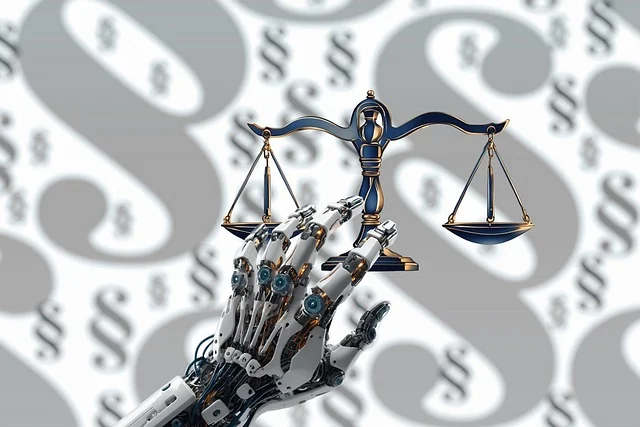

The legal confrontation between Anthropic PBC and the United States government reached a critical juncture today in the United States District Court for the Northern District of California. As the two parties entered the courtroom, presiding Judge Rita Lin issued a series of pointed inquiries that suggest the government may face a high evidentiary bar to justify its recent ban on the artificial intelligence provider. The case, which marks a significant intersection of corporate ethics, national security law, and emerging technology, centers on whether the Department of Defense—referred to in current administrative parlance as the Department of War—exceeded its statutory authority by designating a domestic tech firm as a "supply chain risk" following a contractual disagreement over AI safety constraints.
The conflict originated from Anthropic’s refusal to remove specific ethical guardrails from its proprietary AI models, including its flagship Claude series, which had been integrated into some of the Pentagon’s most sensitive information systems. Anthropic, a company founded on the principle of "Constitutional AI," had insisted on two primary restrictions: that its technology not be utilized for mass domestic surveillance of United States citizens, and that it remain excluded from autonomous battlefield decision-making processes, particularly those involving lethal force. While these terms were initially accepted in federal contracts, a sudden shift in administrative policy last month saw the government demand the removal of these constraints, leading to a total rupture in the partnership.
A Chronology of the Dispute
The timeline of the escalation reflects a rapid breakdown in relations between the federal government and one of its primary AI vendors.
Late 2023 – Early 2024: Anthropic is recognized as the sole AI provider meeting the rigorous security requirements for the Department’s highest-tier sensitive systems. The partnership is hailed as a model for secure, ethically grounded AI integration in national defense.
February 2025: The Department of Defense demands a revision of contract terms. The new requirements seek to eliminate "built-in ethical constraints," granting the military unilateral discretion over the application of Anthropic’s models. Anthropic refuses, citing its core mission of safety and its "Responsible Scaling Policy."
February 27, 2025: Secretary Pete Hegseth issues a public declaration via social media, stating that effective immediately, no contractor or partner doing business with the U.S. military may engage in commercial activity with Anthropic. The declaration is framed as final and non-negotiable.
March 3, 2025: The Department officially designates Anthropic as a "supply chain risk." This designation carries severe legal weight, effectively blacklisting the company from the federal procurement ecosystem.
March 5–10, 2025: Anthropic files for a preliminary injunction, arguing that the ban is "arbitrary, capricious, and unauthorized by law." During this period, reports emerge that OpenAI and Palantir have moved to fill the operational void left by Anthropic’s exclusion.
March 11, 2025: The District Court begins hearings on the injunction request, with Judge Rita Lin questioning the legal basis for the Hegseth Directive.
Legal Scrutiny of the "Supply Chain Risk" Designation
Central to the court’s inquiry is the government’s use of Section 3252 of the United States Code, which allows for the exclusion of vendors deemed a threat to the integrity of the military supply chain. Historically, this designation has been reserved for foreign entities or companies suspected of being conduits for espionage, sabotage, or malicious software injection by adversarial nations.
In a pre-hearing filing, Judge Lin expressed skepticism regarding the breadth of the directive. One specific point of concern is the "collateral impact" of the ban. The court noted that under the current directive, a third-party entity—such as a law firm or a logistics company—that provides unrelated services to the Department would be forced to stop using Claude for its own private clients. The judge questioned whether Secretary Hegseth possessed the statutory authority to issue a directive of such sweeping proportions, particularly when it impacts commercial activities entirely removed from national security systems.
The court has demanded that the government clarify if the Hegseth Directive is an "accurate statement of the Department’s immediate intended course of action" and whether the Department concedes that the Secretary lacked the authority to apply Section 3252 in this manner. Furthermore, the court highlighted a procedural requirement: under U.S. law, a supply chain risk designation requires prior notice to Congressional committees, including a "discussion of less intrusive measures" that were considered. The court has asked for evidence that these procedural steps were followed or if the Department bypassed them in favor of immediate executive action.
The Definition of Sabotage vs. Ethical Disagreement
Perhaps the most significant philosophical and legal question raised by the court concerns the definition of "risk." The government contends that Anthropic’s refusal to allow its AI to be used for "any lawful purpose" constitutes a subversion of the Department’s systems. However, Judge Lin’s filing challenged this interpretation, asking whether a publicly announced usage restriction can logically be classified as "sabotage" or the "malicious introduction of unwanted function."
The court pointed out that "supply chain risk" usually implies a hidden vulnerability or a secret back-door. Anthropic’s ethical guardrails, by contrast, were disclosed, transparently debated, and part of the original contract. The court asked: "Is it Defendants’ view that Section 3252 allows the Department to designate an IT vendor a supply chain risk on the sole basis that the vendor acted stubbornly or refused to agree to contracting terms, causing the Department to question its trustworthiness?"
This distinction is vital for the tech industry at large. If a refusal to modify a software’s core safety features can be labeled a national security risk, it sets a precedent that could allow the government to compel any software provider to alter its product under the threat of a total commercial ban.
Financial Stakes and Industry Realignment
For Anthropic, the stakes are existential. The company has stated in court filings that the ban puts "billions of dollars of revenue" at risk. Beyond direct government contracts, the "supply chain risk" label serves as a "scarlet letter" in the private sector, potentially causing commercial partners in regulated industries—such as finance, healthcare, and energy—to distance themselves from the vendor to avoid their own regulatory complications.
As Anthropic fights for its survival in the federal market, its competitors have moved rapidly to align with the government’s new stance. OpenAI CEO Sam Altman reportedly signed a memorandum of understanding with the Department shortly after the Anthropic ban was announced, signaling a willingness to provide models without the specific prohibitions requested by Anthropic.
Simultaneously, a leaked memorandum dated March 9 from Deputy Secretary Steve Feinberg indicates that Palantir’s "Maven" platform—an AI system designed for command-and-control and target identification—will be elevated to an official "program of record." This move suggests the Pentagon is moving toward a more aggressive integration of AI in combat operations, favoring partners who do not place "red lines" on the use of autonomous systems.
Broader Implications for AI Governance
The outcome of this case will likely define the relationship between the "Silicon Valley" ethos of AI safety and the "Beltway" requirements of national security. The Trump 2.0 administration is reportedly drafting new procurement language to ensure that all future AI contracts include clauses stating that systems must be usable for "any lawful government purpose." This would effectively preclude any vendor from embedding ethical "off-switches" or usage restrictions in software delivered to the state.
Critics of the government’s move argue that by purging vendors with strong ethical frameworks, the Department may inadvertently increase risk by relying on systems that lack the robust safety testing and "Constitutional" alignment that Anthropic pioneered. Proponents of the administration’s policy, however, argue that in an era of great-power competition, the United States cannot afford to have its military capabilities throttled by the moral preferences of corporate boardrooms.
As the hearing continues, the court will need to balance the executive branch’s broad powers over national defense with the statutory limits of procurement law and the due process rights of domestic corporations. If the preliminary injunction is granted, it could freeze the ban and allow Anthropic to resume its work with contractors while the broader legal questions are litigated. If denied, it may signal the end of the "ethical AI" era in federal contracting, ushering in a period where technical utility is the sole metric for partnership.
The legal community and the tech sector remain focused on Judge Lin’s courtroom, as the ruling will provide the first definitive answer on whether the government can use national security statutes to punish a vendor for its ethical convictions. For now, the Department of Defense maintains that its actions are necessary for the "unhindered defense of the nation," while Anthropic maintains that a "safe AI is a more effective AI." The resolution of this paradox remains in the hands of the court.