
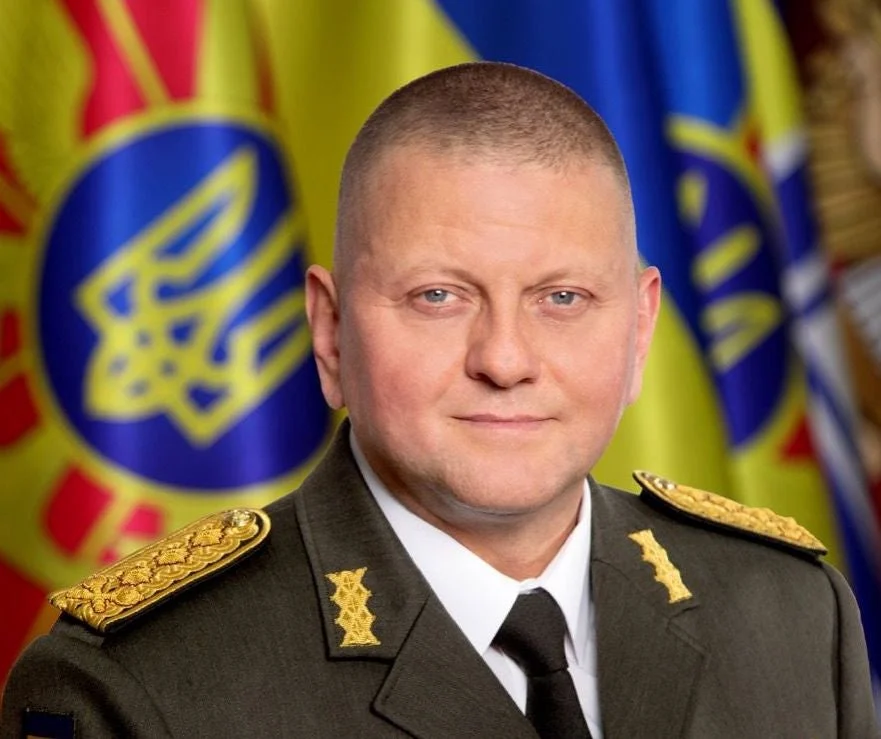

The landscape of modern global security is undergoing a fundamental transformation, driven by the rapid integration of autonomous systems and the shifting dynamics of technological parity among nations. Speaking at a high-level event at Chatham House in London, Valerii Zaluzhnyi, the Ukrainian Ambassador to the United Kingdom and former Commander-in-Chief of the Armed Forces of Ukraine, provided a comprehensive vision of the future of conflict. Four years into the full-scale invasion of his home country, Zaluzhnyi’s insights reflect the hard-won lessons of a war that has served as a laboratory for 21st-century military innovation. His address, delivered to an audience of diplomats, defense analysts, and technology experts, emphasized that the era of conventional warfare, defined by massed infantry and traditional heavy armor, is being superseded by a "robotized" battlefield where software and silicon are as critical as steel and gunpowder.
The Strategic Shift Toward Autonomous Systems
The central thesis of Zaluzhnyi’s presentation was the inevitable transition toward what he termed "autonomous and semi-autonomous robotic systems." According to the former Commander-in-Chief, the "robotization" of warfare is not a distant possibility but an immediate requirement for modern military effectiveness. He argued that the primary driver of this shift is the need to achieve strategic objectives while minimizing human exposure to lethal force. By deploying machines to perform high-risk tasks—ranging from reconnaissance and mine clearance to direct kinetic strikes—nations can maintain operational tempo without the prohibitive political and social costs of high casualty rates.
Zaluzhnyi noted that the integration of artificial intelligence (AI) and machine learning into military hardware allows for a level of precision and speed that human operators cannot match. In the context of the ongoing conflict in Eastern Europe, the use of First-Person View (FPV) drones and automated maritime vessels has already redefined maritime security in the Black Sea and tactical engagements on the front lines. The Ambassador suggested that as these technologies mature, the "human factor" will increasingly move from the center of the tactical execution to a supervisory role, overseeing fleets of interconnected robotic assets.
Chronology of Technological Evolution in the Ukraine Conflict
To understand Zaluzhnyi’s perspective, it is necessary to examine the timeline of technological adaptation that has occurred since February 2022. The conflict has moved through several distinct phases of innovation:
- Phase I: Conventional Defense and Early Drone Integration (2022): The initial stages of the invasion relied heavily on traditional anti-tank guided missiles (ATGMs) and Man-Portable Air Defense Systems (MANPADS). However, the early success of the Bayraktar TB2 drones signaled a shift toward aerial surveillance and precision strikes.
- Phase II: The Rise of the "Army of Drones" (2023): As the front lines stabilized, Ukraine launched the "Army of Drones" initiative, focusing on the mass production of low-cost, off-the-shelf FPV drones. This period saw the democratization of precision strike capabilities, allowing individual platoons to act as their own artillery spotters and strike teams.
- Phase III: Maritime and Electronic Warfare Dominance (2024): The development of semi-autonomous sea drones enabled Ukraine to neutralize much of the Russian Black Sea Fleet despite lacking a conventional navy. Simultaneously, electronic warfare (EW) became the dominant factor in drone survivability, leading to an iterative "cat-and-mouse" game of frequency hopping and signal jamming.
- Phase IV: Full-Scale Robotization and AI Integration (2025–Present): The current phase, as described by Zaluzhnyi, involves the deployment of autonomous systems capable of operating in "denied environments" where GPS and radio links are severed. This necessitates on-board AI processing for target recognition and navigation.
The Contested Domain of Space and Satellite Infrastructure
A significant portion of Zaluzhnyi’s address was directed toward the intersection of space technology and terrestrial warfare, a topic of particular relevance to the CyberSat community. He characterized space as a "contested domain," no longer a safe sanctuary for communication and reconnaissance but a frontline in its own right. The reliance on Low Earth Orbit (LEO) satellite constellations, such as Starlink, has proven that high-speed, low-latency data is the lifeblood of the modern command structure.
However, Zaluzhnyi warned that this reliance creates new vulnerabilities. The future of war will involve sophisticated anti-satellite (ASAT) capabilities, including cyberattacks on ground stations and electronic interference with satellite uplinks. He emphasized that technological advancements have transformed modern conflict beyond the scope of conventional weapons, making the security of space assets a prerequisite for any successful military operation. The ability to maintain a "digital eye" from orbit while simultaneously denying the same to an adversary is now a cornerstone of strategic dominance.
Supporting Data: The Economic and Industrial Scale of Innovation
The shift Zaluzhnyi described is supported by significant data regarding the scale of military technology production. In 2024, Ukraine set a goal to produce over one million drones annually, a target that required the mobilization of hundreds of private enterprises and "garage" startups. This decentralized industrial model contrasts sharply with the traditional defense procurement cycles of Western nations, which often take years to field new systems.
Global defense spending on AI and autonomous systems is also on a steep upward trajectory. According to industry reports, the global military AI market was valued at approximately $9.2 billion in 2023 and is projected to exceed $38 billion by 2032, representing a compound annual growth rate (CAGR) of over 15%. This surge is driven by investments in autonomous underwater vehicles (AUVs), unmanned ground vehicles (UGVs), and sophisticated "loitering munitions."
Furthermore, the proliferation of dual-use technology means that components for advanced robotic systems are increasingly available in the civilian market. This has led to what analysts call the "democratization of lethality," where non-state actors or smaller nations can acquire capabilities that were once the exclusive province of superpowers.
The Illusion of Total Technological Dominance
Perhaps the most sobering aspect of Zaluzhnyi’s speech was his warning regarding the limits of state power in the digital age. He asserted that while individual states can develop and control specific "niche" technologies, no single country is capable of dominating all vital military technologies required for future conflicts. The sheer breadth of innovation—spanning AI, quantum computing, biotechnology, space systems, and cyber warfare—is too vast for any one nation to monopolize.
This reality necessitates a shift in how alliances, such as NATO, approach defense cooperation. Zaluzhnyi suggested that the future will belong to coalitions that can effectively integrate disparate technologies from multiple partners. The "closed-loop" systems of the past are being replaced by "open-architecture" frameworks where different nations contribute specialized software, sensors, or hardware to a unified combat cloud.
Official Responses and International Implications
Zaluzhnyi’s comments have resonated across the international defense community. Analysts from the UK’s Ministry of Defence (MoD) and the U.S. Department of Defense (DoD) have echoed his sentiments regarding the need for "agile acquisition" and the integration of AI. Admiral Sir Tony Radakin, the UK’s Chief of the Defence Staff, has previously noted that the war in Ukraine has accelerated the British Army’s own digital transformation, particularly in the realm of uncrewed aerial systems (UAS).
Reaction from the private sector has been equally focused. Technology firms involved in satellite communications and geospatial intelligence have noted that Zaluzhnyi’s emphasis on space as a contested domain validates the need for "hardened" satellite architectures. Companies are now looking at "proliferated" constellations—large numbers of small satellites—as a way to ensure resilience; if one satellite is jammed or destroyed, the network remains operational.
Ethical Considerations and the Future of Combat
While Zaluzhnyi highlighted the benefit of reduced human casualties through robotization, his vision also raises profound ethical and legal questions. The prospect of "lethal autonomous weapons systems" (LAWS)—machines that can select and engage targets without human intervention—remains a subject of intense debate at the United Nations and among human rights organizations.
The Ambassador’s focus was primarily on military effectiveness and the survival of the state, but he acknowledged that the transformation of warfare requires new doctrine and a new understanding of the "rules of the game." As the speed of combat increases, the window for human decision-making shrinks, potentially leading to unintended escalations or "flash wars" triggered by algorithmic errors.
Conclusion: A New Paradigm of Defense
Valerii Zaluzhnyi’s address at Chatham House serves as a definitive marker for the end of the post-Cold War era of military thinking. His transition from a battlefield commander to a high-level diplomat has given him a unique vantage point to observe how technology reshapes geopolitical power. The "robotization" of warfare is no longer a concept of science fiction; it is the current reality for soldiers in the trenches of the 21st century.
As nations look toward the future, the lessons outlined by Zaluzhnyi suggest that victory will not be determined by who has the largest army, but by who can most effectively harness the power of autonomous systems, secure the domain of space, and adapt to a world where technological supremacy is fleeting and fragmented. The future of warfare is autonomous, it is semi-robotic, and above all, it is defined by a relentless pace of innovation that shows no signs of slowing down.