
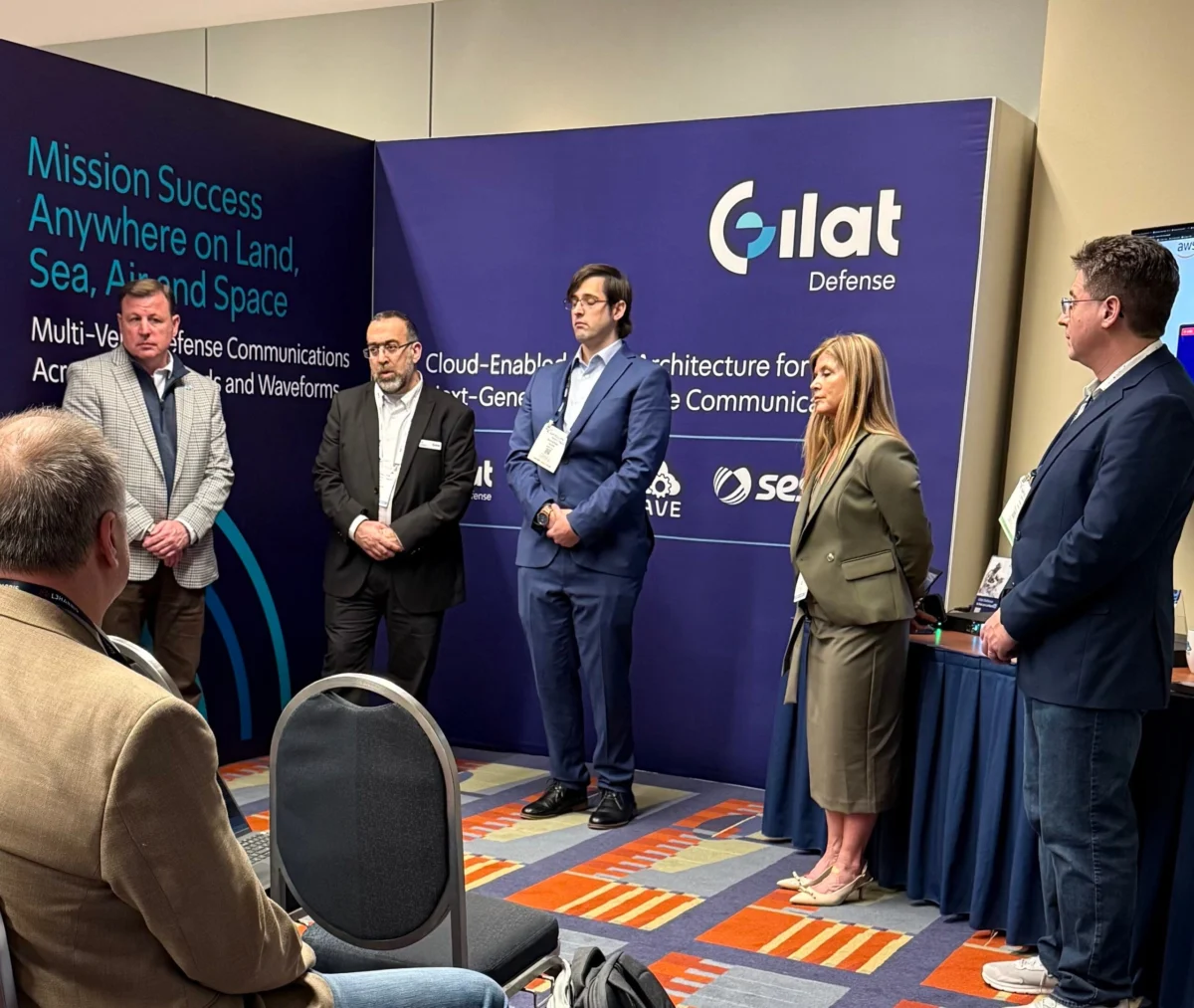

The satellite communications industry reached a significant technological inflection point during the recent SATShow conference, as the Waveform Architecture for Virtualized Ecosystems (WAVE) Consortium successfully demonstrated the first-ever standardized waveform virtualization utilizing field-programmable gate array (FPGA) acceleration within a cloud environment. This collaborative effort, spearheaded by industry leaders Amazon Web Services (AWS), Gilat Defense, and SES Space & Defense, marks a transition from traditional, hardware-dependent satellite architectures toward a flexible, software-defined future. The demonstration not only validated the technical feasibility of virtualizing complex radio frequency (RF) waveforms but also integrated generative artificial intelligence to automate signal analysis, signaling a new era of "multi-tenant" gateway operations and interoperability.
A Breakthrough in Standardized Virtualization
For decades, the satellite sector has been characterized by proprietary, "siloed" hardware. Each satellite operator or service provider typically required specific, physical modems and ground station equipment to process signals. The WAVE Consortium, an IEEE standards body, was established to dismantle these barriers by promoting an open, virtualized ecosystem. The demonstration at SATShow served as the inaugural proof of concept for the WAVE Specification 1.0, a new set of standards designed to harmonize how digital signals are handled across different platforms.
The primary achievement of the demonstration was the successful connection of a virtualized cloud platform to a physical SES gateway using digital intermediate frequency (DIFI) standards. According to Juan Deaton, Executive Director of WAVE, this link represents a first for the industry. By utilizing DIFI, the consortium proved that RF signals could be digitized and transported over terrestrial fiber networks to the cloud without losing the integrity required for complex waveform processing.
Chronology of the Live Demonstration
The demonstration followed a precise technical sequence designed to simulate a real-world high-bandwidth communication link. The process began with a 10 Mbps video stream generated on a local laptop at the conference site. This data was routed through a Gilat Aquarius Pro physical modem, which applied the DVB-S2X waveform—a widely used standard for high-speed satellite data transmission in both commercial and military sectors.
From the modem, the signal passed through a satellite emulator to simulate the atmospheric and orbital conditions of space transmission. The signal then reached a digitizer located at the SES Space & Defense gateway in Hagerstown, Maryland. This hardware converted the analog RF signal into a standardized DIFI stream. To ensure the high-throughput requirements of the digital signal were met, the data was piped into the AWS cloud via a dedicated 1 Gbps Direct Connect terrestrial link.
Once the signal resided within the AWS cloud environment, the virtualization process took over. A Gilat virtual modem, running two separate FPGA instances, processed the data. The first FPGA instance was tasked with receiving and demodulating the stream back into a viewable video format. Simultaneously, a second FPGA instance generated a carrier signal to return traffic through the SES gateway back to the physical modem. This two-way communication loop demonstrated that cloud-based virtualization can handle the bidirectional requirements of modern satellite links with the same reliability as physical hardware.
The Role of Generative AI and Real-Time Signal Analysis
A secondary but equally significant milestone achieved during the demonstration was the integration of generative AI for RF spectrum monitoring. AWS utilized its SageMaker platform to deploy a machine learning model capable of interpreting complex IQ Constellation Graphs. In traditional satellite operations, analyzing these graphs for anomalies, noise, or signal interference requires highly specialized RF engineers.
By training the AI model to recognize the visual patterns of signal degradation, AWS demonstrated a "human-language" reporting system. The AI could identify interference and describe the issue in plain English, such as identifying specific types of multipath fading or hardware-induced noise. More importantly, the system achieved anomaly detection speeds of sub-100 milliseconds. This automation reduces the cognitive load on operators and allows for near-instantaneous troubleshooting in contested or congested spectral environments.
Donathan Ratcliffe, solutions architect at AWS for Aerospace and Satellites, emphasized that while this is an early application of GenAI in the field, it addresses a critical bottleneck in satellite ground segment operations: the scarcity of expert RF analysts and the need for rapid response to signal interference.
Strategic Implications for the Department of Defense
The WAVE Consortium’s progress is being closely monitored by the United States Department of Defense (DOD), which is increasingly prioritizing interoperability and the ability to switch between different satellite constellations and waveforms seamlessly. Currently, the DOD Chief Information Office, the Air Force Research Lab (AFRL), and the Program Executive Office for Command, Control, and Communications-Tactical (PEO C3T) are active members of the WAVE Consortium.
The inclusion of waveform virtualization language in recent DOD requirements suggests that the military is moving away from "vendor lock-in." By adopting standards-based digitization, the military can deploy "multi-orbit" terminals that can talk to LEO, MEO, and GEO satellites using the same underlying cloud-native architecture. Juan Deaton noted that the SATShow demonstration was specifically designed to show DOD acquisition authorities that the technology is maturing and ready for scalable deployment.
Technical Analysis: FPGA vs. CPU in the Cloud
A key point of discussion among the consortium members was the choice of FPGA acceleration over standard Central Processing Units (CPUs). While other vendors have demonstrated cloud-native satellite architectures using software-only approaches on CPUs, Gilat and AWS argued that FPGAs offer a distinct advantage in terms of efficiency and power consumption.
Gil Elizov, Vice President of Product and Solution at Gilat, explained that FPGA acceleration allows the system to "do more with less." In the context of satellite communications, where processing high-speed waveforms like DVB-S2X requires massive parallel computations and low latency, FPGAs are significantly more efficient than general-purpose processors. This efficiency is critical for scaling virtualized gateways, as it reduces the total cost of ownership and the physical footprint of the cloud resources required to maintain a link.
However, the industry acknowledges a cost-benefit tradeoff. While cloud-native architectures currently carry a higher operational cost for single-carrier links compared to dedicated hardware, the benefits of flexibility, rapid scalability, and resilience are viewed as outweighing the initial price gap. In a virtualized environment, an operator can spin up new capacity in minutes rather than months, a capability that is impossible with traditional hardware-heavy gateways.
The Path to Commercialization and meosphere
The demonstration was not merely a laboratory exercise but a precursor to commercial deployment. SES Space & Defense announced plans to integrate virtualized infrastructure into its gateways to support the upcoming "meosphere" constellation. This next-generation Medium Earth Orbit (MEO) network is scheduled to be fully operational by 2030. Michael Geist, Vice President of Product Management for SES Space and Defense, stated that this virtualized approach represents the future of gateway architecture, enabling SES to incorporate various waveforms—including 5G Non-Terrestrial Networks (NTN), 6G, and Digital Sequence Spread Spectrum (DSSS)—into a single, unified platform.
WAVE members estimate that it will take approximately 9 to 12 months of dedicated engineering to transition the virtualization capability from a proof-of-concept demonstration to a commercially available product. Gilat has indicated its readiness to accelerate this timeline based on customer demand, particularly for use cases requiring interoperability across multiple networks and orbital planes.
Conclusion: Achieving the "Holy Grail" of Satcom
The successful demonstration by the WAVE Consortium represents the realization of what Gilat CTO Dubi Lever described as the "holy grail" of the industry: a standards-based, interoperable, and virtualized ecosystem. By decoupling the waveform from the physical hardware, the consortium has cleared a path for "multi-tenancy" in satellite communications. This allows a single gateway or remote terminal to support multiple independent operators and service providers simultaneously, significantly reducing capital expenditure and increasing operational agility.
As the industry moves toward the public release of WAVE Specification 1.0, the focus will shift toward global adoption. The collaboration between cloud giants like AWS, satellite operators like SES, and hardware innovators like Gilat provides a blueprint for how the satellite sector can harmonize with the broader telecommunications and IT industries. With the backing of major defense organizations and a clear roadmap toward 2030, the virtualization of the satellite ground segment is no longer a theoretical goal but a functioning reality.