
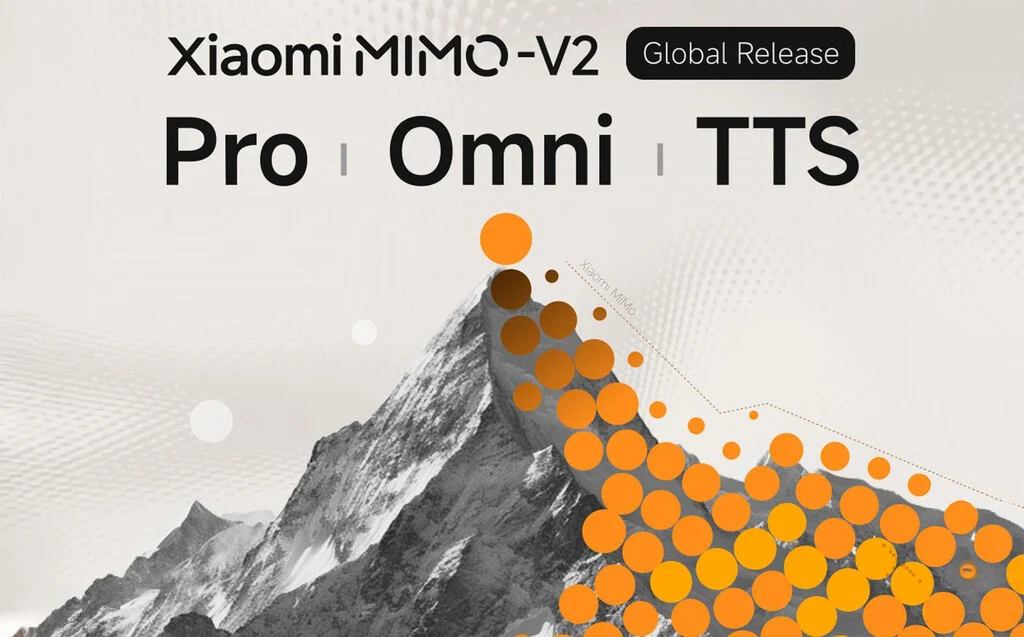

The artificial intelligence landscape has transformed dramatically since the groundbreaking introduction of chatbots four years ago, a moment that ignited a global race in AI development. What began with a handful of pioneering models has rapidly proliferated into an expansive ecosystem, with new AI solutions emerging at a pace reminiscent of popcorn scattering across a cinema floor after a blockbuster screening. Despite this dizzying array of options, the market’s trajectory has largely been steered by three prominent American players: OpenAI’s ChatGPT, Google’s Gemini, and Anthropic’s Claude. However, a significant shift is underway as Chinese technology giants increasingly demonstrate their prowess, offering compelling alternatives that challenge the established order. Models such as DeepSeek, Kimi, and Qwen have already signaled China’s formidable presence in this arena. Now, Xiaomi, a global technology powerhouse known for its diverse product portfolio, is adding its considerable weight to this burgeoning Chinese contingent with the official unveiling of its new multimodal AI model, Xiaomi MiMo-V2.
The Rapid Evolution of the AI Landscape
The "ChatGPT moment" in late 2022 served as a watershed event, democratizing access to sophisticated large language models (LLMs) and sparking an unprecedented wave of innovation and investment in artificial intelligence. Prior to this, AI development was largely confined to academic research labs and specialized tech companies, with much of its potential remaining abstract for the general public. ChatGPT’s user-friendly interface and impressive conversational capabilities changed everything, showcasing the practical power of generative AI and setting off a global scramble among tech giants to develop and deploy their own versions.
In the ensuing years, the market has matured rapidly, moving beyond text-only interfaces to embrace multimodal AI, which can process and generate various forms of data, including text, images, audio, and video. This evolution has expanded the applications of AI exponentially, from sophisticated content creation and data analysis to advanced robotics and personalized digital assistants. The global AI market, valued at hundreds of billions of dollars, is projected to grow at a compound annual growth rate (CAGR) exceeding 35% over the next decade, indicating the immense economic and technological stakes involved. Within this booming market, OpenAI, Google, and Anthropic have solidified their positions as frontrunners, consistently pushing the boundaries of AI capabilities with models like GPT-4, Gemini Ultra, and Claude Opus. These models have become benchmarks for performance, driving innovation and setting the standards for what advanced AI can achieve.
China’s Strategic Push for AI Sovereignty
While the American titans have captured much of the global spotlight, China has been meticulously cultivating its own robust AI ecosystem, driven by a national strategy to achieve technological self-reliance and global leadership in critical emerging technologies. This ambition is not merely commercial; it carries significant geopolitical weight, aiming to reduce dependence on foreign technology and foster indigenous innovation. Chinese companies and research institutions have poured massive resources into AI development, leading to the emergence of powerful domestic models that are increasingly competitive on the global stage.
DeepSeek, for instance, has gained recognition for its open-source contributions and strong performance in specific benchmarks, offering developers a powerful alternative to Western models. Kimi, developed by Moonshot AI, has distinguished itself with its impressive long-context window capabilities, allowing it to process and understand vast amounts of information—a crucial feature for complex analytical tasks. Alibaba Cloud’s Qwen series, particularly Qwen3-Max-Thinking, has also shown significant advancements, positioning itself as a direct competitor to Google’s Gemini 3 Pro. These models represent more than just technological achievements; they symbolize China’s strategic intent to build a parallel AI infrastructure, fostering competition and providing options that resonate with domestic needs and regulatory frameworks. The entry of Xiaomi, a company with a vast global hardware footprint and a rapidly expanding software ecosystem, into this high-stakes AI race further underscores China’s commitment to becoming a dominant force in artificial intelligence.
Introducing Xiaomi MiMo-V2: A New Contender with a Strategic Edge
Xiaomi’s entry into the advanced AI model space with MiMo-V2 marks a significant development. The new model, which had been the subject of speculation following its appearance in various technical repositories, has now been officially confirmed by Xiaomi, complete with dedicated documentation and API access for developers. MiMo-V2 is a multimodal AI model, meaning it is designed to understand and generate content across different data types, including text, images, and potentially other modalities. This capability is crucial for developing sophisticated AI applications that can interact with the real world in a more holistic and intelligent manner, moving beyond the limitations of text-only chatbots.
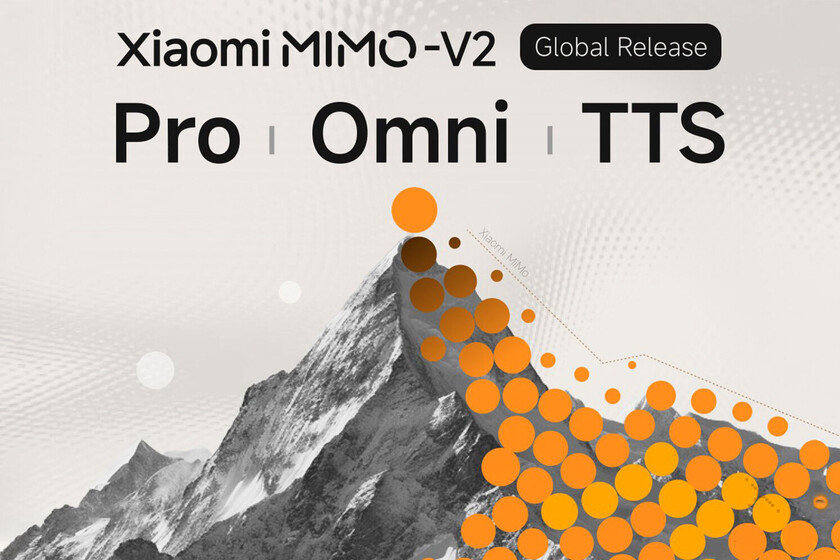
A notable feature of MiMo-V2 is its inclusion of agent functions. AI agents are designed to perform tasks autonomously, often by breaking down complex goals into smaller steps, interacting with external tools, and adapting to dynamic environments. The ability to integrate MiMo-V2 with existing agentic frameworks like OpenClaw further enhances its utility, allowing it to power more dynamic and automated applications, potentially transforming how users interact with their devices and digital services. OpenClaw, a platform that enables older Android phones to function as AI agents, highlights a practical, resource-efficient approach to deploying AI, aligning with Xiaomi’s philosophy of making technology accessible.
Performance Benchmarks and Xiaomi’s Strategic Differentiator: Unmatched Cost-Effectiveness
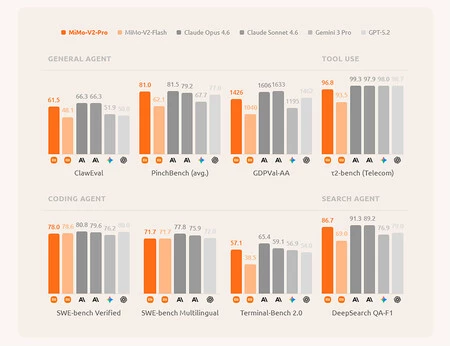
In the highly competitive field of AI models, performance benchmarks serve as crucial indicators of a model’s capabilities. Xiaomi has openly presented MiMo-V2’s benchmark results, positioning it as a strong contender, albeit not the absolute top performer. According to Xiaomi’s own data, MiMo-V2 currently ranks around tenth globally among leading AI models, placing it behind the absolute pioneers from Google (Gemini) and Anthropic (Claude). While not claiming the top spot in raw computational power or benchmark scores, this ranking still signifies a highly capable model, demonstrating significant advancements in AI research and development by Xiaomi.
However, where MiMo-V2 truly distinguishes itself and potentially reshapes the market is its unparalleled cost-effectiveness. Xiaomi has explicitly highlighted that MiMo-V2 is engineered to deliver high performance at a dramatically reduced operational cost. This is a critical factor for enterprise adoption and scaling AI applications, as the cost of processing vast amounts of data through powerful AI models can quickly become prohibitive.
According to Xiaomi’s official figures, the API for MiMo-V2-Pro is five times cheaper than Anthropic’s Claude Opus 4.6 for input tokens and more than eight times cheaper for output tokens. Output tokens are particularly expensive, especially in tasks requiring extensive generation, such as programming assistance or complex content creation, making this cost differential even more impactful. Independent analysis by platforms like Artificial Analysis further corroborates these claims, suggesting that Xiaomi’s model can offer up to seven times the cost savings compared to Claude Opus 4.6. This substantial reduction in operational expenditure presents a compelling value proposition for businesses and developers looking to integrate advanced AI capabilities without incurring exorbitant costs.
Beyond cost, Xiaomi has also emphasized improvements in the model’s "hallucination rate"—a critical metric referring to the tendency of AI models to generate false or nonsensical information. Benchmarks indicate a significant reduction in MiMo-V2’s hallucination rate, evolving from an initial 48% to a more reliable 30%. While AI models inherently carry a risk of hallucination, lowering this rate enhances the trustworthiness and practical utility of the AI, making it more suitable for sensitive applications where accuracy is paramount. The combination of strong performance, remarkable cost efficiency, and improved reliability makes MiMo-V2 an extremely attractive option for a wide range of enterprises and developers.
Multimodal AI Explained: The Power of Diverse Data Processing
To fully appreciate the significance of MiMo-V2, it’s essential to understand what multimodal AI entails. Unlike earlier AI models that specialized in a single data type (e.g., text-only LLMs or image recognition systems), multimodal AI models are designed to process, interpret, and generate information from multiple modalities simultaneously. This means MiMo-V2 can potentially understand a prompt that combines text with an image, respond with a text description, and perhaps even generate a new image or code snippet.
The ability to seamlessly integrate and analyze information across different formats mimics human cognitive processes more closely, allowing for more nuanced understanding and richer interactions. For example, a multimodal AI could analyze a photograph of a broken appliance, understand the user’s textual description of the problem, and then generate a repair guide or order the necessary parts. This capability is pivotal for developing truly intelligent agents, advanced virtual assistants, and sophisticated content creation tools that can operate in complex, real-world scenarios. For a company like Xiaomi, with its vast array of interconnected smart devices, multimodal capabilities are indispensable for creating a truly intelligent and seamless user experience across its ecosystem.
The Ecosystem Play: HyperOS and Global Ambitions
Xiaomi’s development of MiMo-V2 is not merely about launching a competitive AI model; it’s a strategic move deeply integrated into its broader ecosystem strategy. With an ever-expanding product portfolio that spans smartphones, tablets, wearables, smart home devices, and even electric vehicles, Xiaomi is building a cohesive technological environment. The company’s proprietary operating system, HyperOS, serves as the unifying software layer across these diverse products, aiming to create a seamless and interconnected user experience.
Historically, Xiaomi, like many other hardware manufacturers, has relied on third-party AI solutions, predominantly Google’s Gemini (and its predecessors) for its Western devices, and its own Xiao Ai for its commercial devices in China. While Xiao Ai has served its purpose in the Chinese market, the global availability of MiMo-V2 signifies a pivotal shift towards greater independence and customization. By developing its own advanced multimodal AI, Xiaomi can now tailor AI functionalities specifically for its unique hardware and software ecosystem. This means MiMo-V2 has the potential to become the central intelligence, the "brain," for the entire HyperOS-powered chain of devices.
This move grants Xiaomi several critical advantages:
- Technological Independence: Reduces reliance on external AI providers, giving Xiaomi greater control over its technological roadmap and data privacy policies.
- Customization and Optimization: Allows for deep integration and optimization of AI features specifically for Xiaomi hardware, potentially leading to more efficient performance and unique user experiences.
- Global Reach: The global access to MiMo-V2 implies that Xiaomi can now extend its advanced AI capabilities to its devices sold worldwide, not just in China. This is crucial for competing with Apple Intelligence and Google Gemini on a global scale.
- Cost Efficiency for Internal Use: The cost-effectiveness of MiMo-V2, which is a major selling point for external developers, also translates into significant operational savings for Xiaomi itself as it integrates AI across its vast product lines.
Impact on Xiaomi’s Independence and Brand Identity
The launch of MiMo-V2 fundamentally alters Xiaomi’s position in the global tech landscape. For years, major tech players like Apple and Google have leveraged their proprietary AI capabilities (Apple Intelligence and Gemini, respectively) as core differentiators for their device ecosystems. Xiaomi, despite its massive market share in hardware, was often seen as reliant on external AI for its smart features. With MiMo-V2, Xiaomi closes this gap, asserting its independence and elevating its brand as a full-stack technology innovator.
This independence is not just about prestige; it’s about strategic control. It allows Xiaomi to define its own AI roadmap, innovate at its own pace, and create unique AI-driven experiences that are deeply embedded within its hardware and software. This vertical integration strengthens Xiaomi’s competitive edge, providing a more coherent and powerful ecosystem experience for its users, much like Apple has done with its tightly integrated hardware and software.
Broader Market Implications and the Road Ahead
Xiaomi MiMo-V2’s entry has significant implications for the broader AI industry and the global technology landscape:
- Increased Competition and Price Pressure: The emergence of a highly capable, cost-effective model from a major player like Xiaomi will undoubtedly intensify competition in the AI market. This could lead to price pressures on established models, making advanced AI more accessible to a wider range of businesses and developers.
- Democratization of AI Development: The dramatically lower cost of MiMo-V2’s API can significantly lower the barrier to entry for startups, small and medium-sized enterprises (SMEs), and individual developers. This could spur a new wave of innovation, enabling the creation of novel AI applications that were previously cost-prohibitive.
- Diversification of AI Offerings: Xiaomi’s approach emphasizes a balance of performance and affordability, offering a distinct alternative to models that prioritize absolute cutting-edge performance at a premium price. This diversification provides developers with more choices to match their specific needs and budget constraints.
- Geopolitical and Economic Significance: Xiaomi’s successful development and global deployment of MiMo-V2 underscore China’s growing prowess in advanced technologies. It reinforces the narrative of a bifurcating global tech landscape, where Chinese companies are building robust, independent ecosystems that can compete with, and potentially decouple from, Western technological dominance. This has long-term implications for global supply chains, data sovereignty, and technological standards.
- Future of Xiaomi’s Ecosystem: The potential for MiMo-V2 to serve as the brain for HyperOS across millions of devices globally is immense. From more intelligent smartphone features and proactive smart home automation to advanced in-car AI assistants, MiMo-V2 could redefine user interaction within the Xiaomi ecosystem, offering seamless, personalized, and efficient experiences.
In conclusion, Xiaomi MiMo-V2 is more than just another AI model; it represents a strategic declaration from a global tech giant. By offering a powerful, multimodal, and remarkably cost-effective AI solution with global reach, Xiaomi is not only challenging the established Western dominance in AI but also solidifying its own technological independence. This move promises to accelerate innovation, democratize access to advanced AI, and fundamentally reshape the competitive dynamics of the global artificial intelligence market, marking a new chapter in Xiaomi’s journey towards becoming a truly comprehensive and self-sufficient technology leader.