

The enterprise software landscape has reached a saturation point where artificial intelligence (AI) strategies are no longer a competitive differentiator but a baseline requirement for market relevance. As major vendors flood the market with promises of autonomous agents and generative capabilities, the discourse has shifted from "if" a company uses AI to "how" that AI is architected, governed, and secured. In a recent series of deep-dive discussions during the Zoho Analyst Day, executives from the global technology firm challenged the industry status quo, positioning their approach as a departure from the centralized, often opaque models favored by traditional hyperscalers. The core of Zoho’s argument rests on two pillars: contextual intelligence derived from a unified technology stack and the preservation of data sovereignty for the end-user.
The Paradigm Shift: Beyond Out-of-the-Box Large Language Models
The primary challenge facing modern enterprises is the "garbage in, garbage out" phenomenon. While generic Large Language Models (LLMs) demonstrate impressive linguistic capabilities, they often lack the specific business context required to provide actionable, accurate insights. According to industry research, a significant percentage of enterprise AI projects fail to reach production due to concerns over data quality, privacy, and the inability to ground AI responses in the unique realities of a company’s operations.
Zoho’s Director of AI Research, Ram Ramamoorthy, emphasizes that achieving "better AI" requires moving beyond the standard implementation of external LLMs. Instead, the focus must shift to the underlying architecture. For Zoho, this architecture is built upon a full-stack approach where AI is not an additive layer but a native component of the entire ecosystem. This allows the AI to leverage existing search indexes and permission structures, ensuring that the "intelligence" is as secure as the data it processes.
Contextual Intelligence and the Unified Data Stack
A critical component of the Zoho strategy is the concept of contextual intelligence. In many enterprise environments, data is siloed across various applications—CRM, HR, finance, and support. When an AI agent attempts to provide information, it often lacks the cross-departmental context necessary to be truly effective. Ramamoorthy explains that within the Zoho ecosystem, the AI evolves over unified search indexes. This means an AI agent’s capabilities are strictly governed by the user’s existing access rights.
This "privacy-by-design" framework ensures that an agent cannot summarize a colleague’s emails or access sensitive payroll data unless the user has explicit permission to do so. Furthermore, the AI understands organizational hierarchies. It recognizes reporting structures, approval workflows, and meta-information that define how a business actually functions. By unifying processes and data into a single stack, Zoho provides the AI with a "worldview" of the business that generic, third-party models cannot replicate without extensive and often risky data integration projects.
Chronology of Zoho’s AI Evolution and Market Positioning
To understand Zoho’s current position, it is necessary to look at the timeline of its development. Unlike many competitors who pivoted to AI following the 2022 generative AI boom, Zoho has been integrating machine learning and AI into its platform for over a decade.
- 2011–2015: Foundational Research. Zoho began investing in internal AI research teams, focusing on statistical machine learning for anomaly detection and forecasting within its finance and analytics tools.
- 2016–2018: The Birth of Zia. Zoho introduced Zia, an AI-powered assistant integrated across its suite. Early iterations focused on sentiment analysis, lead scoring, and basic conversational interfaces.
- 2019–2021: Vertical Integration. The company began moving toward "transnational localism," emphasizing the need for localized data processing and privacy. AI capabilities were expanded to include OCR (Optical Character Recognition) and advanced data cleaning.
- 2022–Present: The Generative and Sovereign Era. With the rise of LLMs, Zoho took a cautious but deliberate approach. Rather than relying solely on OpenAI or Google, the company focused on building its own specialized models and providing tools for customers to train models on their own private data.
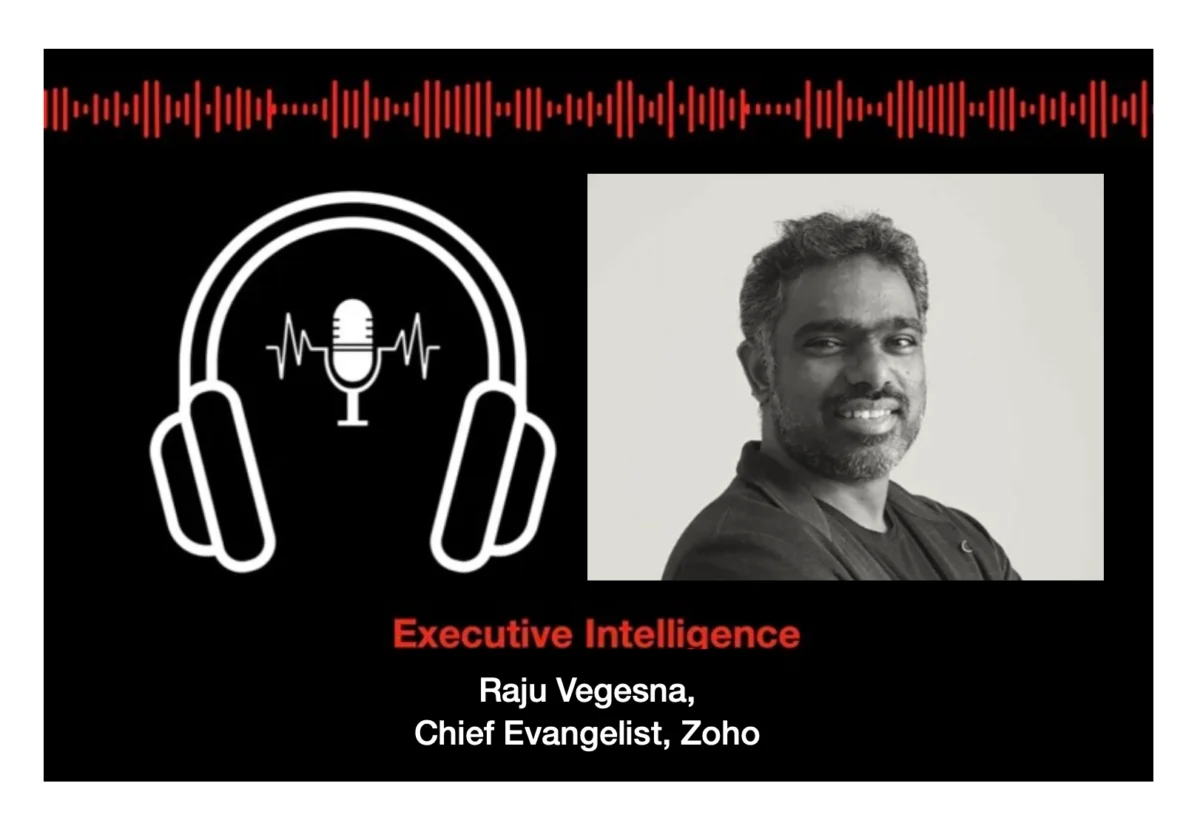
This timeline reflects a strategic move away from dependence on external providers, a sentiment echoed by Raju Vegesna, Zoho’s Chief Evangelist.
Data Sovereignty: The Geopolitical and Operational Imperative
One of the most provocative questions raised during the Zoho Analyst Day came from Vegesna: "If someone can pull the plug on intelligence, are we really sovereign?" This question addresses a growing concern among global enterprises regarding their reliance on a handful of US-based hyperscalers. As AI becomes the "brain" of the modern business, the risk of a single provider cutting access—whether due to geopolitical tensions, pricing changes, or service outages—becomes a critical business continuity threat.
Zoho’s advocacy for data sovereignty involves the development of localized models. These are smaller, more efficient models that can run on-premises or in regional data centers, breaking the dependence on centralized intelligence hubs. This approach aligns with the global trend of data residency laws, such as the EU’s GDPR and India’s Digital Personal Data Protection Act, which demand greater control over where and how data is processed.
The Critique of "Value Extraction" in the AI Market
A significant portion of the executive discussion centered on the ethical implications of the current AI market. Vegesna pointed to a trend where large vendors initially use open-source rhetoric to gain market share, only to pivot toward proprietary, closed-loop systems once they have established a dominant position. This process, often referred to in tech circles as "enshittification" or platform decay, leads to a scenario where the vendor focuses on extracting maximum value from the customer rather than providing genuine innovation.
Zoho’s counter-proposal is a model where customers remain in control of their own "intelligence." Instead of a centralized system trying to extract value from a business’s data, Zoho aims to provide the tools for businesses to build, train, and deploy their own models. This ensures that the intellectual property generated by AI remains with the customer, not the platform provider.
Comparative Analysis: Zoho vs. Traditional SaaS Competitors
When compared to other major SaaS players like Salesforce or Microsoft, Zoho’s approach highlights a fundamental difference in philosophy:
- Microsoft/Salesforce: These vendors have leaned heavily into partnerships with LLM providers (e.g., Microsoft’s partnership with OpenAI). Their strategy often involves a "Copilot" approach that sits on top of existing applications, frequently requiring additional licensing fees and complex data-sharing agreements.
- Zoho: By contrast, Zoho emphasizes a "Small Language Model" (SLM) strategy. These models are designed to be task-specific, cheaper to run, and easier to keep private. Zoho’s refusal to go public or take venture capital allows it to prioritize long-term sovereignty over short-term quarterly gains from "AI tax" licensing.
Supporting Data and Industry Implications
The demand for this alternative approach is backed by emerging market data. A recent study on enterprise data health suggests that nearly 60% of organizations are concerned that their data is not "AI-ready." Furthermore, Gartner predicts that by 2026, more than 80% of enterprises will have used generative AI APIs or deployed generative AI-enabled applications in production environments, up from less than 5% in 2023.
However, as adoption grows, so does the "trust gap." Businesses are increasingly wary of the hidden costs of AI, including the environmental impact of large models and the potential for "headcount extraction"—the idea that AI is primarily a tool for reducing staff rather than augmenting human capability. Zoho’s leadership argues that AI should be reframed around value creation rather than cost-cutting, focusing on empowering employees with better context rather than replacing them.
Broader Impact: The Future of the SaaS Industry
The implications of Zoho’s strategy extend beyond its own product suite. It signals a potential fracture in the SaaS industry between "Aggregators" and "Sovereign Providers." Aggregators will continue to build on top of external AI platforms, prioritizing rapid feature deployment. Sovereign Providers, like Zoho, will focus on building deep, integrated stacks that prioritize privacy and long-term independence.
For the enterprise customer, the choice involves a trade-off between the sheer power of global LLMs and the security and context of localized, private models. Zoho’s bet is that as the AI market matures, the demand for the latter will far outweigh the initial hype of the former.
As businesses navigate the transition from AI experimentation to AI integration, the focus will inevitably return to the fundamentals: Who owns the data? Who controls the intelligence? And where is the value actually being created? By addressing these questions through a lens of contextual intelligence and data sovereignty, Zoho is attempting to provide a roadmap for an AI future that is as ethical as it is efficient.