

A pivotal month has commenced for Mexico, marked by a confluence of significant national events. Beyond preparing to become the first nation globally to host the FIFA World Cup three times, the country is navigating the culmination of a complex, nationwide initiative aimed at eradicating telephone anonymity. This ambitious endeavor, driven by the federal government’s Ley de Telecomunicaciones, faces its critical deadline of June 30 for the mandatory registration of all active telephone lines. However, rather than solely curbing illicit activities as intended, the measure has inadvertently given rise to a burgeoning black market for pre-registered SIM cards, posing severe risks of identity theft and undermining the very security objectives it seeks to achieve.
The mandate, officially known as the Padrón Nacional de Usuarios de Telefonía Móvil (PANAUT), was introduced as a cornerstone of the government’s strategy to combat organized crime. For years, anonymous mobile lines have been a critical tool for criminals involved in extortion, kidnapping, and drug trafficking, making identification and prosecution exceedingly difficult. The PANAUT aims to link every mobile line to a specific individual’s CURP (Clave Única de Registro de Población) and other personal data, thereby eliminating the cloak of anonymity that has long shielded illicit communications. The June 30 deadline applies to existing lines, while new SIM cards are required to be registered at the point of sale. Non-compliance after this date is expected to result in the suspension of unregistered lines, potentially affecting millions of users across the country.
The Legislative Journey and Public Skepticism
The push for mandatory SIM registration in Mexico is not a novel concept, though its current iteration has its own distinct timeline and challenges. The legislative framework for the PANAUT was approved by the Mexican Congress in April 2021, following extensive debates and amendments to the Federal Law on Telecommunications and Broadcasting. Proponents argued that the measure was essential for national security, providing law enforcement with crucial tools to trace and identify perpetrators of serious crimes. They emphasized the urgency of addressing the pervasive issue of anonymous phone usage in criminal enterprises.
However, from its inception, the PANAUT encountered considerable opposition and skepticism from various sectors. Civil society organizations and privacy advocates immediately raised alarms about the potential for mass surveillance, the vulnerability of a centralized database containing sensitive personal information, and the inherent risks of identity theft. They highlighted that similar initiatives in other countries had often failed to achieve their security goals while simultaneously infringing on civil liberties and creating opportunities for corruption and data breaches. Telecom operators, including giants like Telcel and Movistar, also expressed concerns regarding the logistical complexities of registering millions of users, the potential for service disruptions, and the significant financial burden of compliance. Carlos Slim, the head of América Móvil (Telcel’s parent company), publicly voiced his doubts, suggesting the law "needs a little re-study," underscoring the industry’s apprehension regarding its practicality and effectiveness.
The Immediate Consequence: A Thriving Black Market
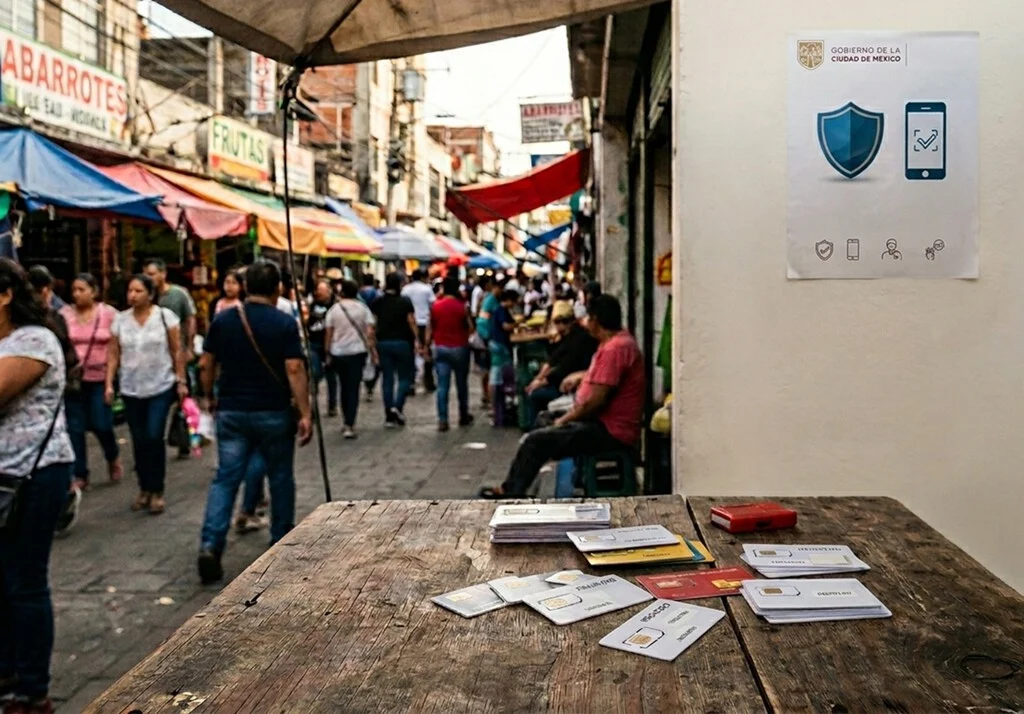
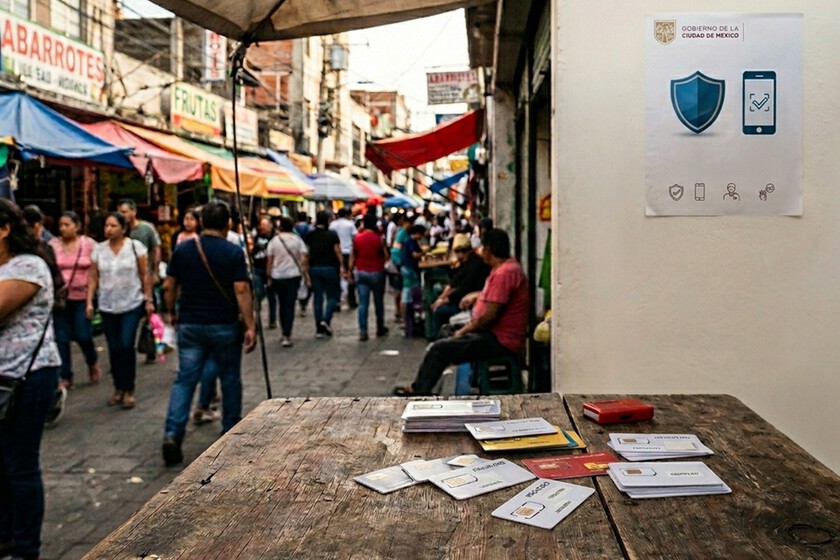
Despite the ambitious intentions behind the PANAUT, recent investigations have revealed a concerning and swift emergence of a black market for pre-registered SIM cards, particularly in Mexico City. A report by Milenio, a prominent national news outlet, exposed how these illicit transactions are openly occurring on city streets, directly subverting the new regulation. Vendors are reportedly selling SIM cards that are already activated and registered under the names of unwitting third parties.
The investigation detailed a specific instance where a Movistar chip, fully activated, was purchased for 200 pesos (approximately 10 euros). The vendor explicitly stated that 100 pesos covered the cost of the card, with an additional 100 pesos charged for its "registered and ready-to-use" status. This indicates a deliberate and organized system designed to circumvent the official registration process. The implication is dire: individuals’ personal data, including their CURP and other identifying information, are being illicitly obtained and used to register these SIMs, without their knowledge or consent. This practice directly contradicts the law’s objective of eliminating anonymity, as criminals can now easily acquire "anonymous" lines by purchasing them through this black market, effectively using someone else’s identity as a shield.
The rapid proliferation of this illicit trade highlights a critical flaw in the implementation or enforcement mechanisms of the PANAUT. It suggests that criminals and unscrupulous individuals have quickly adapted to the new regulatory landscape, exploiting weaknesses in the system or even potentially leveraging insider access to databases to register these cards. The ease with which these pre-registered SIMs can be acquired means that the government’s efforts to track criminal communications could be severely hampered, as the registered identity would belong to an innocent third party, diverting investigations and complicating justice.
A Shadow of the Past: The RENAUT Precedent
Mexico’s current struggle with SIM card registration echoes a deeply problematic historical precedent: the Registro Nacional de Usuarios de Telefonía Móvil (RENAUT). Implemented in 2008, RENAUT was the country’s first attempt at creating a national database of mobile phone users, also with the stated goal of combating crime, particularly extortion and kidnapping, which were rampant at the time. Under RENAUT, all mobile phone users were required to register their lines with personal data.
However, RENAUT proved to be a spectacular failure. Within a short period, its database was compromised, leading to widespread data leaks. The personal information of millions of Mexicans, including their names, addresses, and phone numbers, became readily available on the black market. This compromised data was then used for various criminal activities, including identity theft, fraud, and even further extortion attempts, effectively turning the very tool meant to fight crime into a resource for criminals. The system was plagued by operational inefficiencies, a lack of robust security protocols, and a thriving black market for pre-registered SIMs, much like the current situation. Recognizing its utter failure and the profound risks it posed to citizens, the Mexican Congress voted to abolish RENAUT in 2011, making it a cautionary tale of well-intentioned but poorly executed government initiatives involving sensitive personal data.
The parallels between RENAUT and the nascent PANAUT are alarming. The rapid emergence of a black market for pre-registered SIMs under PANAUT, even before its full implementation and enforcement, suggests that the lessons from RENAUT may not have been fully learned or adequately addressed. Critics argue that the fundamental flaw lies in the creation of a centralized, vast database of personal information, which inherently becomes an attractive target for cybercriminals and a potential source of abuse.
Broader Implications and Risks
The flourishing black market for pre-registered SIM cards under the PANAUT carries profound and multi-faceted implications for Mexican society:
- Heightened Risk of Identity Theft: The most immediate and severe consequence is the increased risk of identity theft for ordinary citizens. If an individual’s CURP and other data are used to register a SIM card without their consent, that identity can then be linked to any criminal activity conducted using that line. This could range from sending threatening messages to orchestrating elaborate frauds, leaving the innocent individual facing legal complications, reputational damage, and immense personal stress.
- Undermining the Law’s Efficacy: The primary goal of the PANAUT is to eliminate anonymity to combat crime. If criminals can easily purchase pre-registered SIMs linked to stolen identities, the law’s effectiveness is severely compromised. It creates a false sense of security while failing to address the root problem, potentially diverting law enforcement resources and making it harder to track genuine culprits.
- Erosion of Public Trust: The repeated failures of such initiatives, first with RENAUT and now with the immediate challenges facing PANAUT, erode public trust in government institutions and their ability to protect citizens’ data. This skepticism is compounded by previous incidents, such as the alleged vulnerability in Telcel’s system, which, despite the company’s denial, fueled concerns about data security among the populace.
- Data Security Vulnerabilities: The sheer volume of personal data collected for PANAUT creates a massive database that is inherently vulnerable to cyberattacks, data breaches, and insider threats. Despite assurances of security, no system is entirely impregnable, and a breach could expose the sensitive information of millions of Mexicans, leading to widespread identity theft and privacy violations on an unprecedented scale.
- Exclusion of Vulnerable Populations: The mandatory registration process disproportionately affects marginalized and vulnerable populations who may lack proper identification, access to registration points, or the technological literacy to navigate the process. Mass disconnections of unregistered lines after the June 30 deadline could effectively cut off essential communication for millions, impacting their ability to access services, employment, and social networks. The GSMA (Global System for Mobile Communications Association), which represents mobile operators worldwide, has often voiced concerns about mandatory registration schemes that do not adequately address these socio-economic disparities.
- Economic Impact of Mass Disconnections: With "almost 100 million lines still unregistered" as reported, the prospect of mass disconnections ("apagón telefónico") after June 30 is a significant concern. Such an event would not only create widespread inconvenience for individuals but also have considerable economic repercussions, disrupting businesses, essential services, and daily life across the country.
Official Responses and Regulatory Oversight
In the face of these challenges, both government bodies and telecom operators are under intense scrutiny. The Instituto Federal de Telecomunicaciones (IFT) and the Comisión Reguladora de Telecomunicaciones (CRT) are the principal regulatory bodies tasked with overseeing the implementation and enforcement of the PANAUT. They are responsible for setting guidelines, ensuring compliance, and addressing complaints. The CRT has notably imposed a limit of up to 10 lines per physical person, a measure intended to curb the mass acquisition of SIM cards, but one that the black market appears to have already found ways to circumvent by using multiple stolen identities.
While official statements regarding the black market for pre-registered SIMs have been cautious, authorities are expected to acknowledge the problem and outline measures to combat it. This could include increased surveillance of informal vendors, stricter penalties for those involved in the illicit trade, and enhanced security protocols for the registration process. However, the effectiveness of such measures remains to be seen, given the historical precedent and the inherent difficulties in policing an underground market.
Telecom operators are also on the front lines, bearing the brunt of the registration process and the subsequent public backlash. They are mandated to collect and verify user data, a task that has proven logistically challenging and resource-intensive. Operators face the dilemma of complying with the law while simultaneously protecting their customers’ data and preventing fraudulent registrations. They are expected to reinforce internal controls and collaborate with authorities to identify and report suspicious activities.
Empowering Citizens: How to Protect Yourself
Given the escalating risks, Mexican citizens are increasingly concerned about whether their personal data has been illicitly used to register phone lines without their knowledge. Fortunately, mechanisms exist for individuals to verify their information.
Mobile operators have established platforms and services that allow users to check how many telephone numbers are officially associated with their CURP. Citizens can typically access this information through dedicated online portals, customer service centers, or specific applications provided by their respective carriers (Telcel, Movistar, AT&T, etc.). It is highly recommended that all Mexican mobile users regularly utilize these tools to audit their registered lines.
In the event that a user discovers an unrecognized or unauthorized line registered under their name, they have the right to request its immediate de-linking. The process usually involves contacting the relevant mobile operator, providing proof of identity, and formally disputing the unauthorized registration. The operator is then obligated to investigate and take action to dissociate the number from the individual’s CURP. This proactive step is crucial for mitigating the risks of identity theft and potential legal entanglements.
Conclusion: A Nation at a Crossroads
As Mexico approaches the June 30 deadline for SIM card registration, the nation stands at a critical juncture. The ambitious goal of eliminating telephone anonymity to enhance national security is commendable, reflecting a genuine desire to tackle pervasive organized crime. However, the rapid and alarming emergence of a black market for pre-registered SIM cards, coupled with the ghosts of past failures like RENAUT, casts a long shadow over the efficacy and safety of the PANAUT.
The government faces the formidable challenge of not only enforcing widespread compliance but also dismantling the burgeoning illicit trade and safeguarding the personal data of millions of citizens. Failure to effectively address these issues could lead to a paradox where a law designed to enhance security inadvertently creates new avenues for crime, undermines public trust, and exposes ordinary Mexicans to unprecedented risks of identity theft. The coming weeks will be crucial in determining whether Mexico can navigate this complex landscape, learn from its past, and establish a secure and effective system for mobile communication that truly serves the interests of its citizens and enhances national security without compromising fundamental rights.
