

In a significant consolidation within the mid-tier defense industrial base, Vitesse Systems and Accelint have officially merged to form Lyntris, a unified defense technology entity designed to address the complexities of the modern connected battlefield. The announcement, made on May 11, marks the culmination of a strategic integration process overseen by Trive Capital, the private equity firm that held both companies in its portfolio. By combining Vitesse’s high-performance hardware and radio frequency (RF) capabilities with Accelint’s advanced software, artificial intelligence, and mission systems expertise, Lyntris positions itself as a comprehensive provider capable of supporting national security missions across space, air, land, sea, and cyber domains.
The formation of Lyntris reflects a broader trend in the defense industry: the move away from siloed hardware components toward integrated systems that prioritize data fusion and rapid decision-making. As modern warfare transitions toward the concept of Joint All-Domain Command and Control (JADC2), the ability to link sensors to shooters through a seamless digital architecture has become a primary requirement for the Department of Defense (DoD) and its international allies. Lyntris enters the market with an established footprint, already playing active roles in more than 200 defense programs and maintaining a robust supply chain that supports some of the most critical satellite constellations and terrestrial defense platforms in operation today.
The Strategic Synergy of Vitesse and Accelint
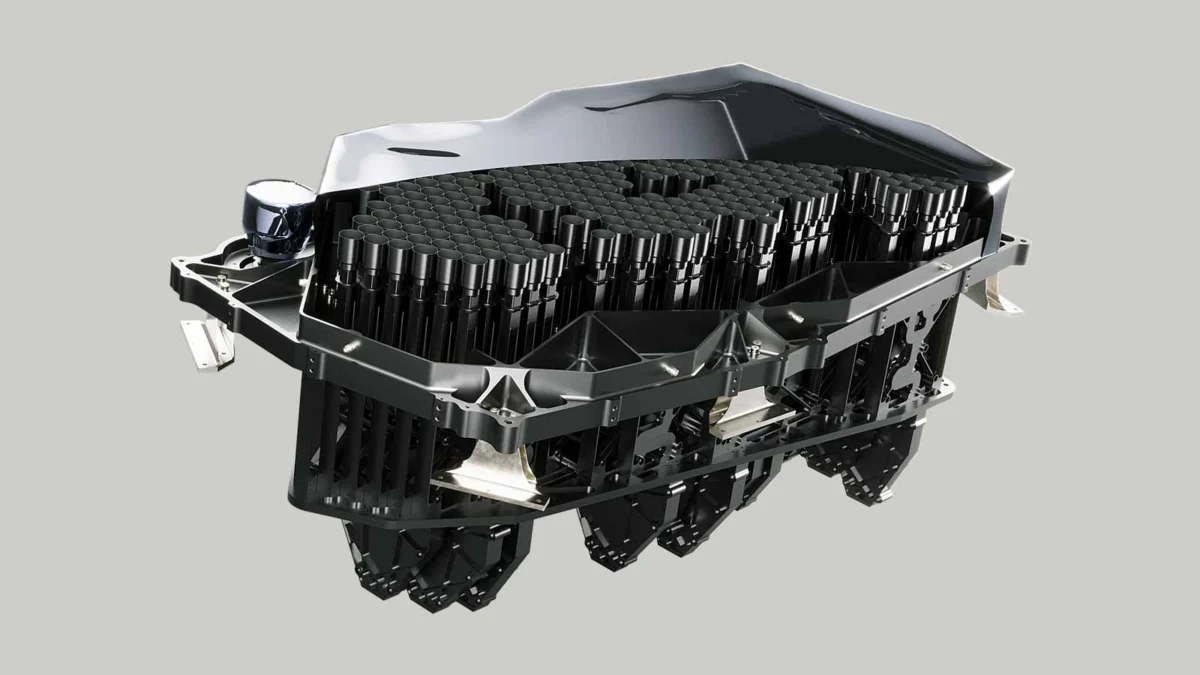
The merger brings together two entities with distinct but highly complementary technological portfolios. Vitesse Systems has long been recognized for its engineering excellence in sensing hardware and multi-band RF technologies. The company’s specialization includes the design and manufacturing of integrated satellite payloads, complex waveguide components, and high-performance antenna systems. These technologies are foundational to the communications and surveillance infrastructure used by both commercial and government operators.
Vitesse’s pedigree is evidenced by its extensive client list and its contributions to flagship satellite programs. The company has provided critical components for major industry players including Viasat, Intelsat, Telesat, Iridium, EchoStar, Thuraya, and Sky Perfect JSAT. In the government sector, Vitesse’s work on the Wideband Global Satcom (WGS) program highlights its ability to meet the rigorous standards of military-grade communications. Furthermore, the company has secured a pivotal role in the Space Development Agency’s (SDA) Proliferated Warfighter Space Architecture (PWSA), supplying L-band antennas for the Tranche 1 and Tranche 2 Transport Layers. These antennas are vital for tactical data links, enabling low-latency communication for warfighters in contested environments.
On the other side of the integration, Accelint contributes the "intelligence" layer to the new organization. Accelint’s expertise lies in mission systems, AI-enabled decision support, autonomous systems, and command-and-control (C2) software. In an era where the volume of data generated by sensors often overwhelms human operators, Accelint’s software solutions are designed to filter noise, identify threats, and provide actionable insights in real-time. By integrating these software capabilities directly with Vitesse’s hardware, Lyntris aims to reduce the "sensor-to-shooter" timeline, a critical metric in modern high-intensity conflict.
Trive Capital and the Vision for a Mid-Tier Leader
The creation of Lyntris is a deliberate move by Trive Capital to build a scaled, multi-disciplinary defense prime. Private equity has increasingly looked to consolidate specialized component manufacturers and software firms to create "sub-primes"—companies that are larger and more capable than niche suppliers but more agile and cost-effective than the "Big Five" traditional defense contractors.
Trive Capital’s strategy involved identifying companies that occupied critical nodes in the defense supply chain. Vitesse Systems grew through a series of targeted acquisitions, including the purchase of Custom Microwave, Inc., which expanded its capabilities in high-precision antenna feed systems. Similarly, Accelint was built through the aggregation of firms specializing in digital engineering and mission software. By unifying these under the Lyntris brand, Trive Capital has created a vertically integrated entity that can manage the entire lifecycle of a defense program, from hardware design and manufacturing to software integration and field support.
Industry analysts suggest that this consolidation is a response to the Pentagon’s desire for more competition and innovation. The DoD has frequently expressed concern regarding the fragility of the defense industrial base and the need for new entrants who can deliver cutting-edge technology at a faster pace than traditional acquisition cycles typically allow. Lyntris, with its combined hardware-software approach, is well-positioned to compete for these "middle-tier" acquisition programs.
Addressing the Challenges of the Connected Battlefield
The operational philosophy of Lyntris is centered on the "connected battlefield." This concept involves the total integration of assets across every theater of operation, ensuring that a sensor on a satellite can provide targeting data to a drone in the air or a naval vessel at sea almost instantaneously.
Brian Morrison, CEO of Lyntris, emphasized the necessity of this approach in his statement regarding the launch. "Today’s threats move faster, operate across multiple domains at once, and demand technology that the legacy approach can’t deliver," Morrison stated. He noted that Lyntris was specifically engineered to overcome the friction inherent in traditional defense procurement, where hardware and software are often developed in isolation. "By bringing together complementary strengths across hardware, software and mission expertise, we are a company that can connect sensing to action in ways that reduce friction, accelerate decisions and help warfighters operate with greater speed, precision and confidence."
The technical challenge Lyntris aims to solve is the "data bottleneck." As sensors become more sophisticated, they generate petabytes of information. Without integrated AI and robust RF data links, this information can become a liability rather than an asset. Lyntris’s value proposition lies in its ability to build the "pipes" (the RF and antenna hardware) and the "brains" (the AI and C2 software) simultaneously, ensuring that the system is optimized for performance from the ground up.
A Chronology of Growth and Integration
The path to the formation of Lyntris was paved through several years of strategic development.
- Phase 1: Component Excellence (2020-2022): Trive Capital began building the foundation by acquiring Vitesse Systems and supporting its expansion into advanced manufacturing. During this period, Vitesse focused on securing its position in the burgeoning Low Earth Orbit (LEO) satellite market, providing hardware for the SDA’s initial tranches.
- Phase 2: Digital Expansion (2022-2023): Accelint was developed as a software-centric pillar, focusing on autonomy and C2. This involved acquiring specialized firms that had already proven their AI algorithms in simulated and live-fire military exercises.
- Phase 3: Operational Alignment (Late 2023): The two companies began collaborating on joint bids, testing the interoperability of Accelint’s software on Vitesse’s sensing platforms. This pilot phase demonstrated that an integrated offering could provide a significant performance boost over disparate systems.
- Phase 4: The Lyntris Launch (May 2024): The formal unification under the Lyntris brand signifies the completion of the integration. The company now operates as a single entity with a unified leadership team, streamlined manufacturing processes, and a joint research and development roadmap.
Impact on the Satellite and Space Sector
Lyntris’s impact is perhaps most visible in the space domain. As the United States and its allies shift toward proliferated LEO architectures for resilient communications and missile tracking, the demand for high-reliability, low-cost RF components has surged.
The Space Development Agency’s PWSA is the centerpiece of this effort. By providing the L-band antennas for the Transport Layer, Lyntris (via the Vitesse legacy) is helping to build the backbone of the military’s space-based internet. These antennas allow satellites to communicate directly with existing handheld radios and tactical data links used by ground forces, bypassing the need for vulnerable ground stations.
Beyond the SDA, the commercial satellite sector remains a vital market for Lyntris. The rise of "megaconstellations" from companies like SpaceX, Amazon, and Eutelsat OneWeb has created a massive market for high-volume antenna production. Lyntris’s ability to apply defense-grade precision to commercial-scale manufacturing gives it a competitive edge in an industry that is increasingly characterized by "New Space" economics.
Broader Implications and Future Outlook
The emergence of Lyntris is a signal of the changing priorities within the global defense market. Geopolitical tensions with near-peer adversaries have forced a re-evaluation of how technology is developed and deployed. In contested environments where electronic warfare and cyberattacks are prevalent, the resilience of communication links and the speed of autonomous decision-making are the primary factors in mission success.
Lyntris’s mission to "sense threats earlier" and "enable action with greater speed" aligns with the strategic goals of the U.S. National Defense Strategy. By focusing on multi-domain environments—specifically the intersection of space and cyber—the company is targeting the areas where the most significant technological leaps are currently occurring.
Looking forward, Lyntris is expected to pursue further innovations in phased-array antennas, edge computing for satellite payloads, and cross-domain autonomy. The company’s ability to leverage Trive Capital’s financial backing for future acquisitions remains a key factor in its growth trajectory. As the "connected battlefield" moves from a conceptual framework to an operational reality, Lyntris is positioned to be at the forefront of the digital transformation of modern warfare.
In conclusion, the formation of Lyntris represents more than just a corporate rebrand; it is a strategic realignment designed to meet the demands of a new era of global security. By bridging the gap between hardware and software, Lyntris provides the Department of Defense and its partners with a streamlined partner capable of delivering integrated solutions for the most complex challenges across the multi-domain battlespace. As the company moves forward, its success will likely be measured by its ability to maintain the agility of a tech startup while delivering the scale and reliability required by the world’s most demanding defense programs.
