
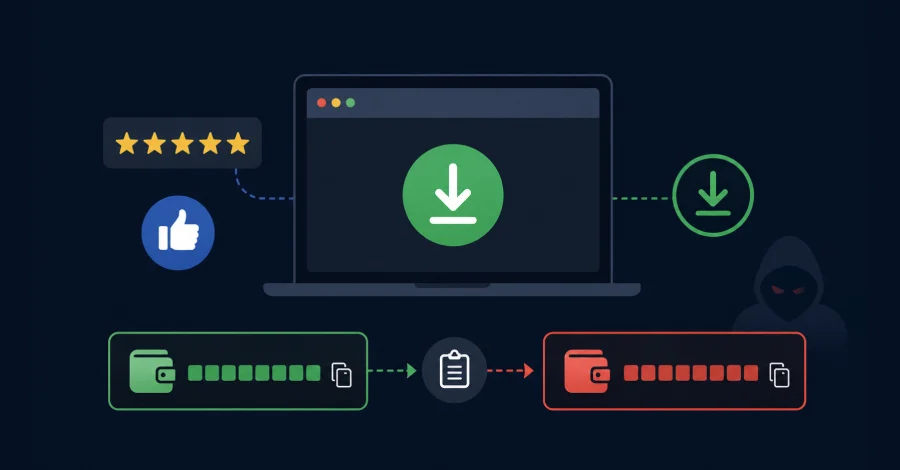

An unidentified threat actor has orchestrated an elaborate multi-platform campaign, meticulously leveraging paid promotions on legitimate news websites, faked digital reputations, and AI-generated content to disseminate a sophisticated Rust-based cryptocurrency clipboard hijacker. This complex operation, uncovered by Check Point Research, represents a significant evolution in social engineering tactics, demonstrating how malicious actors are adapting strategies traditionally employed by legitimate brands to build trust and distribute malware under a veneer of credibility. The campaign primarily targets cryptocurrency asset holders and online gamblers seeking shortcuts or quick profits, concealing the malware within seemingly innocuous tools like Solana and Pump.fun sniper bots and crash-game predictors.
Unmasking the Deception: Check Point’s Investigation
Check Point Research’s comprehensive report, published on June 17, 2026, details a meticulously constructed "fake reputation economy" designed to ensnare unsuspecting victims. The core of the operation involves a dedicated WordPress phishing page that serves as the central command hub, from which the threat actor orchestrates a broad spectrum of deceptive activities. This central hub is bolstered by an intricate web of fake accounts across prominent digital platforms, all working in concert to inflate the perceived legitimacy of the malicious software.
The campaign’s modus operandi mirrors the sophisticated marketing strategies of legitimate enterprises, employing tactics such as artificially inflated download counts, coordinated five-star reviews, and influencer-style tutorial videos. These elements are strategically deployed across platforms that users instinctively trust, creating a pervasive illusion of authenticity that is difficult for the average user to discern. The research highlights a worrying trend where the very mechanisms designed to foster community and trust online are being weaponized for illicit gain, blurring the lines between genuine endorsement and malicious manipulation.
The Multi-Platform Deception Network
The threat actor’s operational footprint is extensive, encompassing a diverse array of online platforms:
- Legitimate News Websites: A particularly insidious aspect of the campaign involves the use of paid or promoted posts on established news sites. This tactic grants the malicious content an immediate air of authority and broad reach, bypassing typical security filters and reaching a wider, unsuspecting audience. By appearing on platforms associated with journalistic integrity, the threat actor significantly lowers user skepticism.
- GitHub and SourceForge: These popular software development and distribution platforms are exploited through a network of fake accounts. These accounts are used to host and promote the malicious tools, with fabricated activity like "stars" and "forks" on GitHub designed to signal popularity and reliability. One observed GitHub repository amassed 146 stars and 62 forks, indicative of the scale of this synthetic engagement. On SourceForge, download counters were artificially inflated, with Check Point noting a suspicious 37,460 downloads purportedly from Android devices, despite the malware only targeting Windows and macOS—a strong indicator of an "Android farm" being used to manipulate statistics.
- YouTube Channel: A dedicated YouTube channel, established in July 2020 and boasting over 91,000 subscribers, plays a crucial role. The channel hosts "tutorial-style" videos, often featuring AI-generated narrators, that showcase the purported capabilities of the malicious tools. These videos are further bolstered by a barrage of positive comments, all designed to reinforce the illusion of popularity and trustworthiness. The channel operators disingenuously claim it is "strictly for educational purposes only," a common disclaimer used by cybercriminals to evade platform scrutiny.
- VirusTotal: Perhaps the most alarming innovation is the use of "Ghost Networks" to poison reputation-driven systems like VirusTotal. Threat actors engage in coordinated activity, submitting positive comments and upvotes to intentionally misclassify malicious files as safe. This manipulation directly undermines a critical resource used by cybersecurity professionals and informed users to assess file safety, reducing suspicion and bolstering victims’ trust in the compromised files.
- Press Release Distribution Services: In an unprecedented move, the threat actor utilized a press release distribution service, EIN Presswire, to market the supposed capabilities of their tools. A press release detailing a "decryptor" and "hash analysis platform" was subsequently syndicated across partner news websites, including various outlets within the USA TODAY Network. This tactic leverages the established credibility and distribution channels of legitimate media services to further propagate the malicious campaign, lending it an air of corporate legitimacy.
The Anatomy of the Attack: The Clipper Malware
At the heart of this elaborate deception lies a Rust-based cryptocurrency clipboard hijacker. This sophisticated piece of malware is designed to target both Windows and macOS systems, demonstrating the actor’s intent to cast a wide net across different user bases.
Once installed, the clipper continuously monitors the victim’s clipboard for specific patterns that correspond to cryptocurrency wallet addresses. When a cryptocurrency wallet address is copied by the user—for instance, when preparing to send funds—the malware swiftly intercepts this action. It then substitutes the legitimate wallet address with an attacker-controlled address, which is pulled from a hard-coded list embedded within the malware. This seamless substitution happens in a fraction of a second, often without the user’s immediate knowledge, effectively rerouting the digital assets to the attacker’s wallet.

Targeting Cryptocurrency Enthusiasts
The choice of targets and the guise under which the malware is delivered reveal a clear focus on the cryptocurrency community. The clipper is concealed within applications marketed as Solana and Pump.fun sniper bots, as well as crash-game predictors.
- Solana and Pump.fun Sniper Bots: These tools are often sought by crypto traders looking to gain an edge in rapidly evolving markets. Sniper bots are designed to execute trades instantly when a new token launches, allowing users to buy in at the lowest possible price. The promise of quick, significant returns makes these bots highly attractive, but also a potent lure for malicious actors.
- Crash-Game Predictors: Online cryptocurrency gambling platforms feature "crash games" where players bet on a rising multiplier, aiming to cash out before the "crash." Predictor tools claim to offer an unfair advantage by forecasting the crash point, appealing to individuals seeking guaranteed profits in high-risk environments.
These specific lures exploit the common desire for shortcuts and quick financial gains within the crypto sphere, preying on users’ eagerness to get ahead. The attacker understands the psychological vulnerabilities of this demographic, leveraging their ambition against them.
Chronology and Evolution of the Campaign
While the Check Point report was released on June 17, 2026, the campaign’s roots and evolution stretch back several years, indicating a sustained and adaptive effort by the threat actor:
- July 2020: The dedicated YouTube channel promoting the malicious software was created, laying early groundwork for the "influencer-style" promotion.
- April 2025: Earlier reports from The Hacker News detailed the emergence of cryptocurrency miner and clipper malware, suggesting the threat actor may have been refining their malicious payloads or initiating earlier phases of their operations around this time.
- June 2025: The discovery of 67 trojanized GitHub repositories further indicated a growing trend of code-hosting platforms being exploited for malware distribution, aligning with the methods observed in the current campaign.
- October 2025: Reports of 3,000 YouTube videos being exposed as malware distribution channels highlighted the increasing abuse of video platforms, a tactic heavily employed by the current threat actor.
- June 2026: Check Point Research publishes its detailed findings, bringing the full scope of this sophisticated, multi-pronged campaign to light.
This timeline suggests a calculated, long-term strategy, with the threat actor continuously adapting and expanding their methods, moving from simpler distribution channels to an elaborate, multi-faceted "fake reputation economy."
Broader Implications and Expert Commentary
This campaign marks a significant escalation in the sophistication of social engineering and malware distribution. The use of legitimate platforms and reputation-building tactics represents a worrying trend that poses substantial challenges for cybersecurity.
The Erosion of Digital Trust: By manipulating trusted sources like news websites, software repositories, and community-driven review platforms, the threat actor directly undermines the very fabric of digital trust. Users are increasingly reliant on indicators like download counts, positive reviews, and prominent media placements to assess legitimacy. When these indicators are artificially fabricated, the ability of individuals to make informed decisions online is severely compromised. This erosion of trust could lead to widespread skepticism, making it harder for legitimate projects and news organizations to establish credibility.

Challenges for Cybersecurity Defense: The blend of AI-generated content, "Ghost Networks," and paid promotions on legitimate sites creates a complex detection challenge. Traditional signature-based detection methods may struggle against polymorphic malware distributed through seemingly legitimate channels. Furthermore, the sheer volume of content and user activity on platforms like YouTube and GitHub makes manual moderation and identification of malicious campaigns incredibly difficult. This necessitates a shift towards more advanced behavioral analysis, AI-driven threat intelligence, and proactive platform security measures.
A cybersecurity expert, speaking on condition of anonymity due to ongoing investigations, stated, "This campaign is a stark reminder that the battle for cybersecurity is increasingly fought not just at the technical layer, but in the realm of human psychology and digital trust. When attackers can weaponize the very mechanisms designed to foster community and credibility, every click becomes a potential risk. We are seeing a new frontier in cybercrime where reputation itself is a commodity to be bought, sold, and manipulated."
Potential for Wider Application: Check Point rightly warns that the "same playbook of fake reputation and aggressive cross-platform promotion can easily distribute information stealers or ransomware to higher-value targets over time." The techniques perfected in this cryptocurrency clipper campaign could be readily adapted to target corporate networks, critical infrastructure, or individuals with sensitive personal data, leading to far more devastating consequences. The scalability and effectiveness of these tactics make them highly attractive for other malicious endeavors.
Preventative Measures and User Vigilance
In light of such sophisticated threats, heightened vigilance from users and robust preventative measures from platforms are paramount:
- Verify Sources Independently: Users should never rely solely on a single source of information, even if it appears to be a legitimate news outlet or a highly-rated software repository. Cross-referencing information from multiple independent cybersecurity news outlets, official vendor websites, and reputable security researchers is crucial.
- Scrutinize Reviews and Comments: Be wary of an overwhelming number of generic, overly positive reviews or comments, especially those that appear to be templated or lack specific details. Check for user profiles that seem too new, have little activity, or are linked to multiple unrelated projects.
- Exercise Caution with "Too Good to Be True" Offers: The promise of guaranteed profits or unfair advantages in crypto trading or gambling should always raise a red flag. Legitimate investment and trading tools rarely guarantee such outcomes.
- Use Reputable Security Software: Employing up-to-date antivirus and anti-malware solutions that include real-time protection and behavioral analysis can help detect and block malicious software, even if it initially bypasses reputation systems.
- Enable Multi-Factor Authentication (MFA): While not directly preventing malware installation, MFA adds a critical layer of security to cryptocurrency wallets and exchange accounts, making it harder for attackers to access funds even if they manage to compromise other credentials.
- Regular Software Updates: Keep operating systems, web browsers, and all installed software updated to patch known vulnerabilities that attackers might exploit.
- Clipboard Management Tools: Consider using clipboard managers that provide a history of copied items, allowing users to verify the integrity of copied addresses before pasting.
- Platform Accountability: Social media platforms, code repositories, news aggregators, and press release services must invest more heavily in AI-driven content moderation, anomaly detection, and human oversight to identify and remove malicious campaigns faster. Collaborative efforts among these platforms and cybersecurity firms are essential to combat such intricate threats effectively.
This elaborate scheme orchestrated by an unknown threat actor underscores the evolving landscape of cybercrime. As digital interactions become more integrated into daily life, the battle against deception moves beyond technical vulnerabilities to encompass the very perception of trust online. The "fake reputation economy" serves as a stark warning: in the digital age, what appears to be popular or credible might, in fact, be a meticulously crafted trap designed to steal your assets. The onus is increasingly on both platforms and users to develop a more critical and discerning approach to online information and software.
