
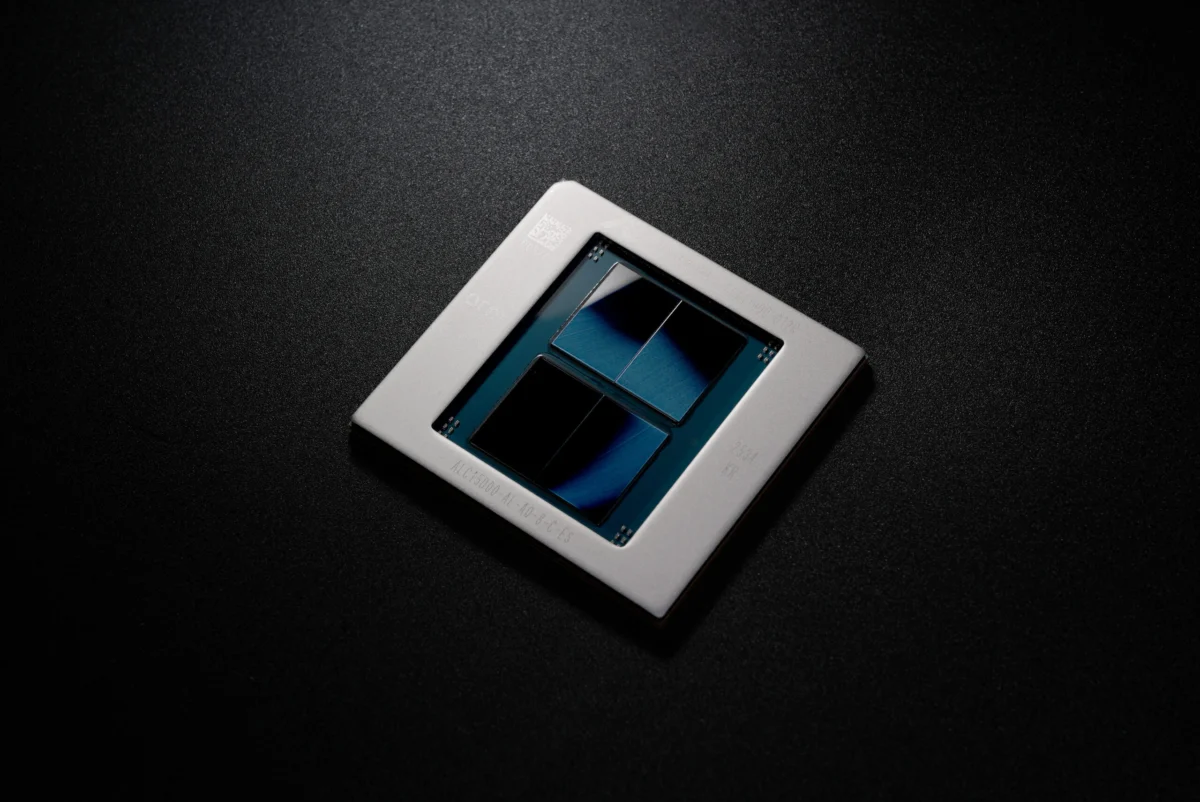

Amazon Web Services (AWS) today announced the general availability of its highly anticipated Amazon EC2 M9g and M9gd instances, powered by the fifth-generation AWS Graviton5 processors. This release signifies a pivotal advancement in cloud computing, offering unparalleled compute performance, enhanced price-performance, and superior energy efficiency. First previewed at re:Invent 2025, these new instances are engineered to meet the escalating demands of modern workloads, particularly the burgeoning field of agentic artificial intelligence (AI), while reinforcing AWS’s commitment to custom silicon innovation.
A Decade of Graviton: Evolution of Cloud Compute
The journey of AWS Graviton processors began over eight years ago, marking a strategic shift for AWS towards developing custom silicon tailored for the cloud. Each successive generation—from Graviton1 to Graviton5—has delivered substantial improvements, establishing a new paradigm for compute performance, efficiency, and cost-effectiveness within the AWS ecosystem. This continuous investment has culminated in Graviton becoming a cornerstone of AWS’s infrastructure, powering over 350 instance types and serving more than 120,000 customers, ranging from nimble startups to global enterprises. The widespread adoption of Graviton, supported by a robust Independent Software Vendor (ISV) partner ecosystem and integration across a broad set of managed services, underscores its maturity and reliability in the Arm-based server market.
The initial announcement of the Graviton5-powered M9g instances at re:Invent 2025 generated significant industry buzz. Following this reveal, a select group of customers engaged in an intensive preview program, rigorously testing the M9g instances across diverse, demanding workloads. Their feedback and performance benchmarks have been overwhelmingly positive, validating the design principles and technological advancements embedded in Graviton5.
Unprecedented Performance Gains: Customer Validation
During the preview phase, several prominent organizations reported remarkable performance improvements. ClickHouse, a leading open-source column-oriented database management system, observed a substantial 36% performance boost when migrating to M9g instances compared to M8g, critically achieving this without requiring any code changes. This demonstrates the seamless compatibility and inherent efficiency gains offered by Graviton5.
Similarly, Honeycomb, a provider of observability solutions, conducted an extensive six-month A/B test involving their production observability workloads. Their findings revealed a 36% improvement in throughput per core on Graviton5 compared to Graviton4, highlighting the processor’s enhanced efficiency in handling high-volume, real-time data processing. HubSpot, a comprehensive CRM platform, deployed M9g instances for its MySQL databases and recorded query durations dropping by up to 60%. Such dramatic reductions in query times translate directly into faster application responses and improved user experiences, showcasing Graviton5’s prowess in database performance.
These customer testimonials underscore the tangible benefits of Graviton5, proving its capability to deliver significant performance uplift across a spectrum of general-purpose workloads, from data analytics and observability to critical database operations.
Graviton5: The Pinnacle of AWS Custom Silicon
At the heart of the new M9g and M9gd instances lies Graviton5, touted by AWS as its most powerful and energy-efficient processor to date. Built on the sixth-generation AWS Nitro System, Graviton5 processors introduce a host of architectural enhancements that collectively redefine performance benchmarks in the cloud.

Key technical advancements in Graviton5 include:
- Superior Compute Performance: Graviton5 delivers up to 25% better compute performance compared to its predecessor, Graviton4. Specific workload improvements are even more pronounced, with up to 35% faster performance for web applications, up to 35% for machine learning inference tasks, and up to 30% for database operations.
- Expanded L3 Cache: The processor features a 5x larger L3 cache, a critical component for reducing memory latency and improving overall data access speeds, especially beneficial for cache-intensive applications.
- Reduced Inter-core Latency: Graviton5 boasts up to 33% lower inter-core latency, facilitating faster communication and coordination between processor cores, which is crucial for highly parallelized workloads.
- Next-Generation Memory and I/O: As the first CPU in the AWS fleet to support the latest generation of PCIe Gen6 and DDR5-8800 memory, Graviton5 instances provide the fastest memory of any processor instances in the cloud. This combination significantly boosts memory bandwidth, enabling faster data processing and improved throughput for I/O-bound applications.
- Core Density: With up to 192 cores in the largest instances, Graviton5 offers exceptional core density, allowing for greater parallelism and the efficient handling of a large number of concurrent tasks.
These architectural improvements are not merely about raw power; they are meticulously designed to maximize energy utilization, contributing to better energy efficiency. This aligns with global sustainability targets, allowing customers to achieve high performance without compromising their environmental objectives.
The Rise of Agentic AI and Graviton5’s Strategic Role
The landscape of Artificial Intelligence is rapidly evolving beyond passive question-answering systems to agentic AI, where AI agents autonomously take actions, execute code, utilize tools, evaluate results, and orchestrate complex multi-step tasks. This paradigm shift demands an unprecedented level of CPU compute power, and Graviton5 is specifically engineered to meet this challenge.
Agentic AI workloads, characterized by their CPU-intensive nature, benefit immensely from Graviton5’s enhanced capabilities. The higher compute performance, larger caches, superior memory bandwidth, and increased core density ensure that AI agents spend less time waiting on CPU-bound steps. This translates into processing more instructions, handling a larger number of concurrent environments, and keeping specialized accelerators (like GPUs for deep learning) continuously fed with data, thereby maximizing their utilization.
A testament to Graviton5’s strategic importance in the AI domain is Meta’s massive deployment of Graviton processors. Meta is deploying Graviton at scale, starting with tens of millions of cores, to support its agentic AI efforts. This makes Meta one of the largest Graviton customers globally, underscoring the processor’s capability to handle the immense computational requirements of cutting-edge AI research and production workloads, including real-time reasoning, sophisticated code generation, and the intricate orchestration of multi-step AI tasks.
Enhanced Networking and Storage Capabilities
Recognizing that compute power must be complemented by robust data movement capabilities, AWS has significantly expanded networking and storage bandwidth for M9g and M9gd instances. These instances offer up to 15% higher network bandwidth and 20% higher Amazon Elastic Block Store (Amazon EBS) bandwidth on average across various sizes. For the largest instance sizes, network bandwidth can reach up to twice that of previous generations, ensuring data can move as quickly as it can be processed.
A notable new feature is Instance Bandwidth Configuration (IBC), which allows customers to fine-tune the allocation of bandwidth between Amazon EBS and Amazon Virtual Private Cloud (Amazon VPC) networking for an EC2 instance by up to 25%. This granular control is invaluable for optimizing performance in workloads with specific bandwidth requirements, such as database read/write operations, complex query processing, and extensive logging, thereby supporting faster data movement and improved throughput for high I/O performance applications.
Pioneering Cloud Security with Nitro Isolation Engine
Security and isolation are fundamental pillars of cloud computing, and AWS consistently raises the bar in this critical area. Within the AWS Nitro System, the Nitro Hypervisor has long been instrumental in isolating instances from each other and from AWS operators. With the introduction of M9g and M9gd instances, AWS is enhancing this isolation even further through the Nitro Isolation Engine.

The Nitro Isolation Engine represents a significant advancement in cloud security. It is a purpose-built component within the Nitro System responsible for strictly enforcing isolation between virtual machines. What truly sets it apart is its pioneering use of formal verification—a rigorous mathematical technique to prove that hardware or software behaves exactly as intended, encompassing all possible scenarios, not just specific test cases.
This intensive verification process establishes Nitro as the first formally verified cloud hypervisor, setting a new industry standard for mathematically proven cloud security. The Nitro Isolation Engine mediates all access to virtual machine memory, CPU register state, and I/O devices through a minimal set of APIs, ensuring that instances remain robustly isolated. This groundbreaking approach provides customers with unprecedented assurances regarding the integrity and confidentiality of their workloads in the AWS cloud. Detailed information on the Nitro Isolation Engine, including its scope and formal verification results, is available through dedicated AWS blogs and technical whitepapers.
Instance Variants: M9g and M9gd for Diverse Workloads
The new M9g and M9gd instances are designed to cater to a broad spectrum of general-purpose workloads, offering a balance of compute, memory, and I/O resources.
M9g Instances: These instances provide one vCPU for every four GiB of memory, making them ideal for a wide array of applications including:
- Application servers
- Microservices
- Midsize data stores
- Gaming servers
- Caching fleets
- Containerized applications
- Large-scale Java applications
- Code repositories
- Web applications
- Agentic AI workloads
M9gd Instances: For workloads demanding high-speed, low-latency local storage, M9gd instances integrate up to 11.4 TB of NVMe SSD storage. These instances deliver 30% higher IOPS and storage performance compared to Graviton4-based M8gd instances. M9gd instances are particularly well-suited for:
- Application servers requiring local storage
- Microservices with demanding I/O
- Gaming servers needing fast asset loading
- Midsize key-value data stores
- Caching fleets
- Data logging and media processing
- Batch and log processing
- Applications requiring temporary storage such as caches and scratch files
Both M9g and M9gd instances come in a comprehensive range of sizes, from medium (1 vCPU, 4 GiB memory) up to 48xlarge and metal-48xl (192 vCPUs, 768 GiB memory). Network bandwidth scales from "Up to 15 Gbps" for smaller instances to a formidable 100 Gbps for the largest sizes. Similarly, EBS bandwidth ranges from "Up to 12 Gbps" to 72 Gbps. M9gd instances further specify their local NVMe SSD storage configurations, offering combinations like 1 x 59 NVMe SSD for smaller instances and 3 x 3800 NVMe SSD for the 48xlarge and metal-48xl variants, ensuring ample high-speed local storage for I/O-intensive tasks.
Availability and Economic Advantages
The M9g and M9gd instances are now generally available in key AWS Regions, including US East (N. Virginia), US East (Ohio), US West (Oregon), and Europe (Frankfurt). Customers can procure these instances through various flexible purchasing options, including Savings Plans, On-Demand, Spot Instances, Dedicated Instances, or Dedicated Hosts, allowing for cost optimization based on their specific operational needs and workload patterns. Further pricing details are available on the Amazon EC2 pricing page.
AWS also provides comprehensive resources to facilitate migration and optimization for Graviton-based instances. The AWS Graviton Getting Started Guide offers technical guidance on building, running, and optimizing workloads. For financial tracking, the Graviton Savings Dashboard helps customers measure and monitor the cost savings achieved by migrating to Graviton. Furthermore, AWS Transform, an AI-powered service, automates code transformations for migrating Java applications from x86 to Graviton-based Amazon EC2 instances, handling compatibility analysis, automated recompilation, dependency updates, and validation, significantly simplifying the migration process.
This launch reinforces AWS’s strategic vision for custom silicon, delivering not just raw performance but also a holistic solution encompassing security, efficiency, and a robust ecosystem. Graviton5-powered M9g and M9gd instances are poised to empower developers and enterprises to innovate faster, operate more efficiently, and tackle the most demanding cloud workloads, particularly in the rapidly evolving realm of agentic AI.
