

Today marks a pivotal moment in the evolution of software development and operations with the announcement of a new release management capability in AWS DevOps Agent, now available in preview. This strategic enhancement extends the AWS DevOps Agent’s formidable capabilities, transforming it into an indispensable, always-available teammate that intelligently oversees software changes and operational lifecycles across AWS, multicloud, and on-premises environments. The core tenet of DevOps—to foster smooth, increasingly autonomous software change and operations—finds a powerful new ally in this agent, which leverages its deep understanding of complex environments, interconnected services, their dependencies, and real-world production behavior to deliver unprecedented levels of automation and insight. Already a cornerstone for post-deployment operations, where it autonomously investigates incidents, provides granular root cause analysis, suggests effective mitigation steps, and delivers targeted recommendations to preempt recurring issues, the AWS DevOps Agent is now set to redefine the pre-deployment phase. With this preview, it introduces sophisticated release readiness review of code changes and autonomous release testing, effectively bringing AI-driven intelligence to the critical stages preceding deployment. These groundbreaking features are designed to rigorously verify every code change against natural language standards provided by development teams and execute change-specific tests within production-like environments, promising to support teams comprehensively from initial code creation through to final production deployment, and critically, enabling human reviewers and testers to keep pace with the accelerating volume of AI-generated code.
The Evolving Landscape of Software Delivery and the AI Imperative
The modern software development paradigm is characterized by rapid iteration, continuous delivery, and increasingly complex distributed systems. Over the past decade, the DevOps movement has championed the breaking down of silos between development and operations teams, advocating for automation, collaboration, and continuous feedback loops to accelerate the software delivery pipeline. This cultural and methodological shift has led to significant improvements in deployment frequency, lead time for changes, and mean time to recovery, as evidenced by numerous industry reports indicating that high-performing DevOps organizations deploy code hundreds of times more frequently than their lower-performing counterparts. However, even with advanced CI/CD pipelines, bottlenecks persist, particularly in the critical stages of code review and testing. The sheer volume of code changes, especially within large enterprises managing hundreds or thousands of microservices, can quickly overwhelm human capacity.
The recent explosion in generative AI tools for coding has introduced a new dynamic, amplifying both the potential for unprecedented productivity and the challenges in quality assurance. AI coding assistants, capable of generating code snippets, completing functions, and even proposing entire modules, have demonstrably increased developer velocity. A recent survey by GitHub Copilot indicated that developers using AI tools complete tasks significantly faster, with some reporting up to 55% faster coding completion rates. While this acceleration is a boon for innovation and time-to-market, it simultaneously creates an exponential increase in the volume of pull requests (PRs) flowing through delivery pipelines. This surge often outstrips the capacity of traditional, human-centric review and testing processes. When teams operate under intense pressure to maintain delivery cadences, there is an inherent risk: reviews may be approved without the thorough examination required to catch subtle bugs, security vulnerabilities, or compliance deviations. Moreover, test environments can gradually drift from the actual production setup, leading to unreliable test results and a false sense of security. The very value generated by sophisticated coding agents can thus become trapped in lengthy review queues, delaying its impact on end-users and business objectives. This situation underscores a critical need for intelligent automation that can scale with the pace of AI-driven development, ensuring that speed does not come at the expense of safety and quality.

AWS DevOps Agent: Bridging the Gap Between Code and Confidence
AWS DevOps Agent was conceived as an intelligent, autonomous partner in the demanding world of software operations. Before today’s announcement, its primary strength lay in its general availability for post-deployment operations, where it has proven invaluable in maintaining system health and stability. Its ability to autonomously investigate incidents means it can identify anomalous behavior, trace the root cause through complex system interactions, and propose concrete mitigation steps—often before human operators can even fully grasp the scope of an issue. This proactive stance, coupled with its capacity to deliver targeted recommendations to prevent recurrence, significantly reduces downtime and operational overhead. The agent’s deep understanding is not superficial; it’s built upon a comprehensive knowledge graph that maps your environment, services, their intricate dependencies, and their observed behavior patterns in production. This holistic view is crucial for effective incident management and, now, for robust pre-deployment assurance.
The introduction of release readiness review and autonomous release testing marks a significant expansion of the AWS DevOps Agent’s lifecycle coverage, extending its intelligent oversight from post-deployment back to the critical pre-deployment stages. This move transforms the agent into a true full-lifecycle DevOps companion, ensuring that the same level of autonomous intelligence applied to incident response is now brought to bear on preventing issues from entering production in the first place.
Unpacking the New Release Management Capabilities
The new capabilities are designed to address the dual challenges of velocity and quality in modern software delivery.
1. Release Readiness Review: Automated Policy Enforcement and Early Detection
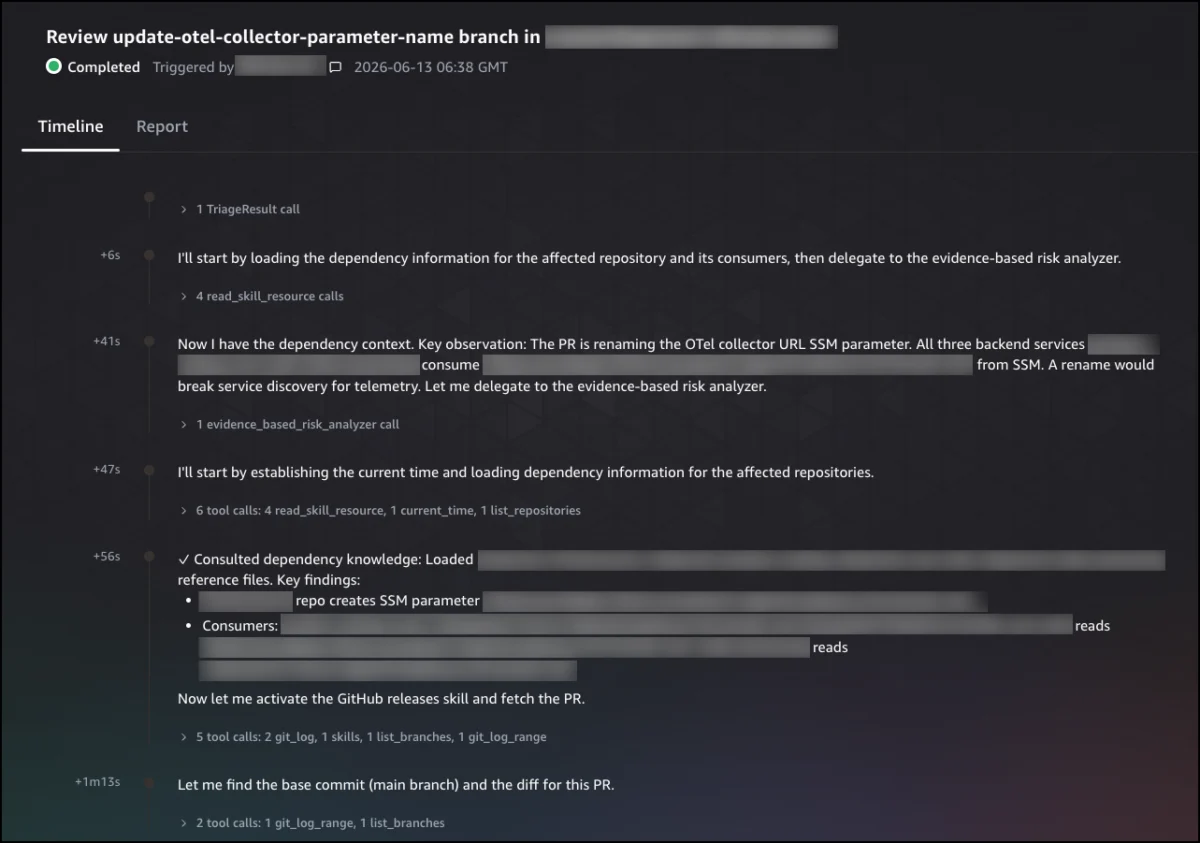
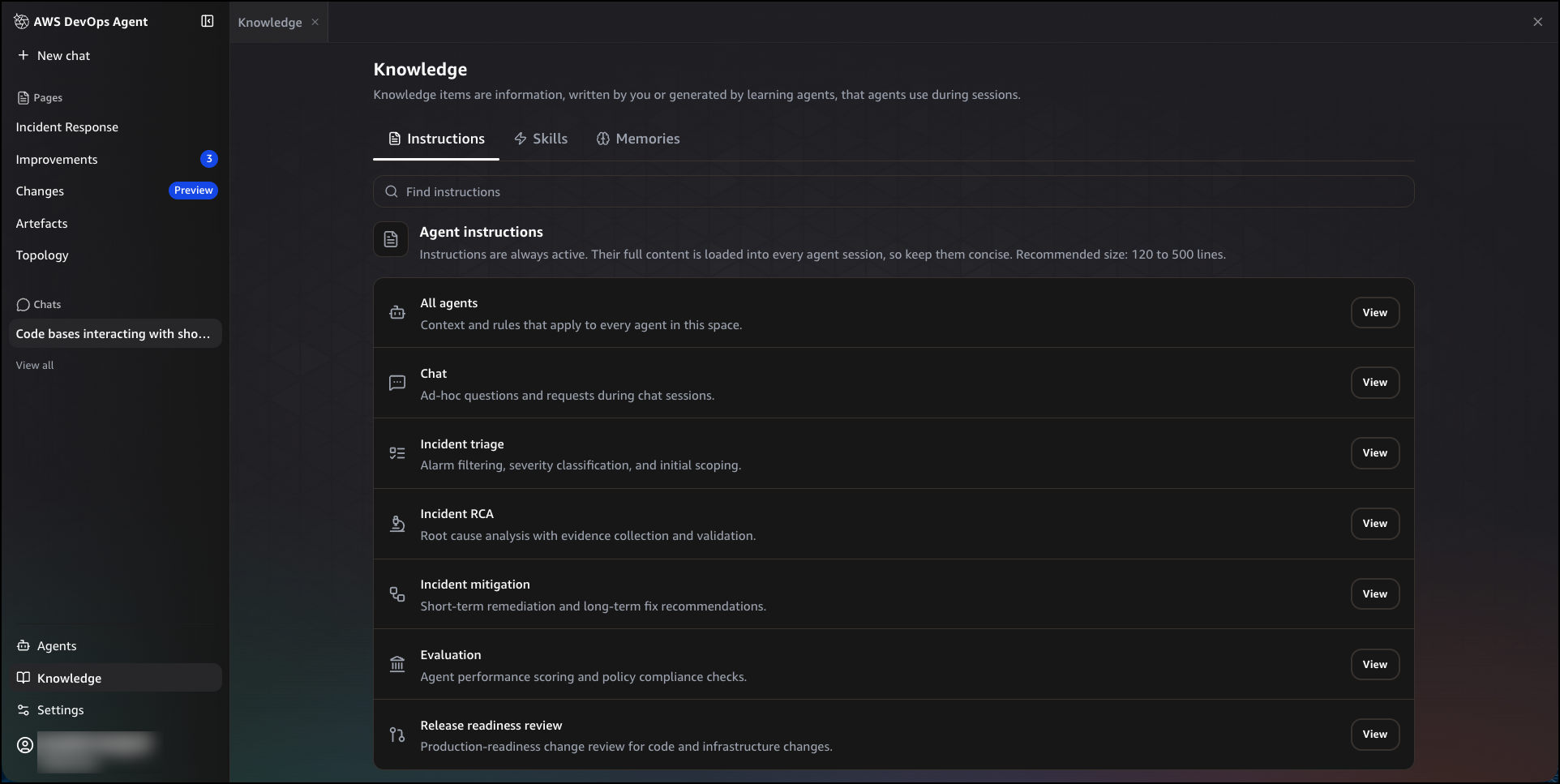
The release readiness review feature represents a fundamental shift in how code changes are validated. Instead of relying solely on human review—a process prone to fatigue, oversight, and inconsistencies—the AWS DevOps Agent evaluates every incoming code change against a dynamic set of criteria. These criteria include production requirements, dependency safety, and the specific standards and best practices that organizations configure for the DevOps Agent using natural language. This innovative approach means that complex policies, security guidelines, and architectural principles can be articulated in plain English, making them accessible and enforceable without requiring specialized scripting or extensive manual configuration.
The agent conducts a multi-faceted analysis:
- Cross-repository Dependency Risk Assessment: In microservices architectures, a change in one repository can have cascading effects across multiple dependent services. The agent proactively checks for these cross-repository risks, identifying potential breakage points that human reviewers might miss due to the sheer complexity of interconnected systems. This is particularly vital in environments where services are owned by different teams and evolve independently.
- Access Control Changes and AWS Well-Architected Framework Compliance: Security is paramount. The agent scrutinizes changes related to access controls, comparing them against the rigorous guidelines of the AWS Well-Architected Framework, which provides prescriptive guidance for building secure, high-performing, resilient, and efficient infrastructure for your applications. Any deviation from these best practices, or from an organization’s internal security policies, is flagged immediately.
- Compliance with Defined Standards: Beyond general best practices, organizations can feed the agent their own bespoke internal standards for infrastructure, data handling (e.g., encryption requirements, network access rules), observability (logging and monitoring requirements), and sensitive data classification. The agent ensures adherence, and if no specific standards are provided, it defaults to applying general industry best practices, ensuring a baseline level of quality and security.
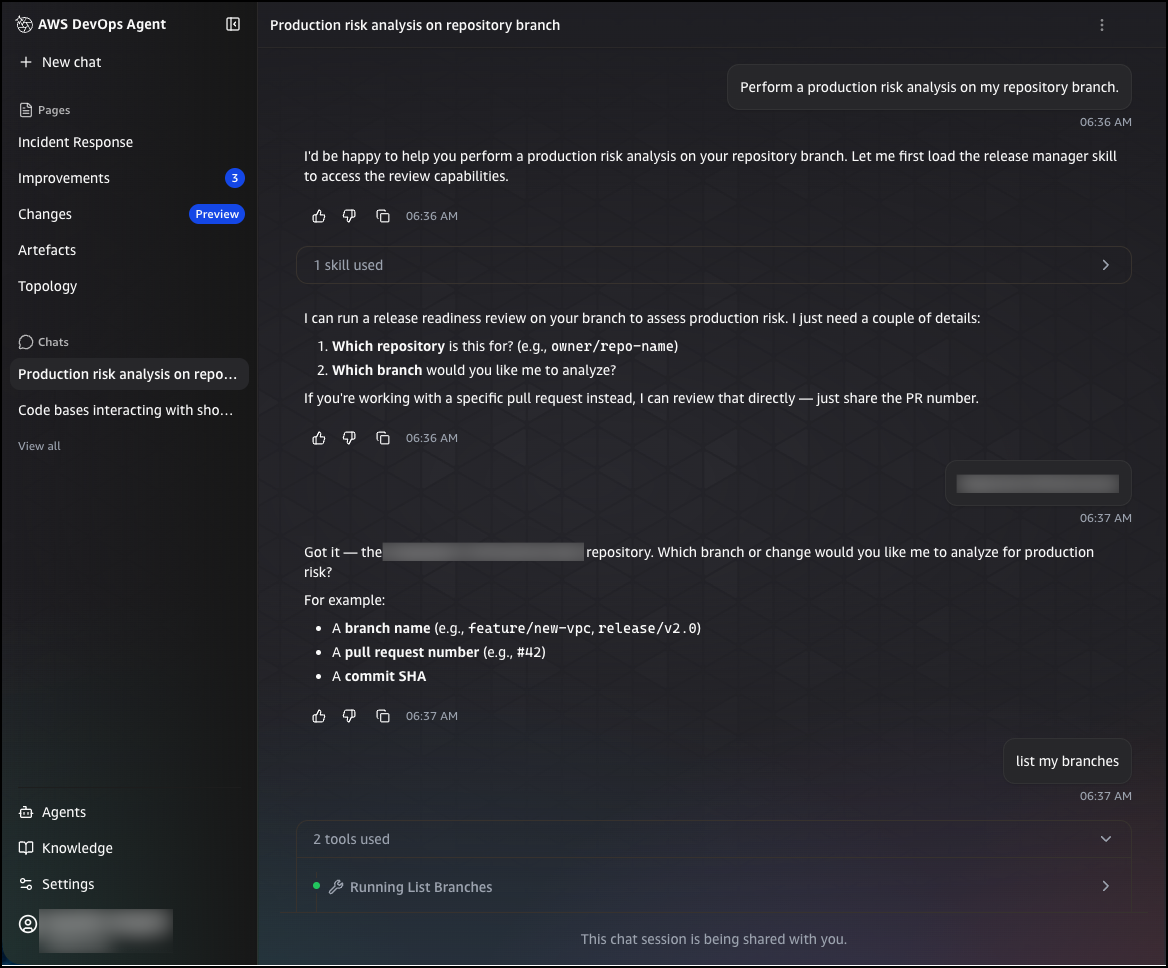
A key component of this review is the execution of lightweight user journey tests within an AWS-managed isolated environment. This isolated sandbox ensures that the change can build, run, and pass basic functional checks without impacting existing environments. These early-stage tests are not exhaustive but serve as a crucial gatekeeper, verifying foundational functionality before the change progresses further into the CI/CD pipeline. Findings from these reviews are seamlessly integrated into developers’ workflows, appearing directly in the AWS DevOps Agent console and as contextual comments on pull requests in popular version control systems like GitHub or GitLab. Furthermore, developers can invoke these reviews directly from their Integrated Development Environments (IDEs) through plugins like Kiro power or
