

The telecommunications industry is currently undergoing one of its most significant architectural shifts since the introduction of the cellular network itself: the transition from physical, removable SIM cards to embedded SIM (eSIM) technology. This digital transformation represents more than just a change in form factor; it is a fundamental reimagining of how mobile devices identify themselves to networks, offering unprecedented flexibility for consumers and streamlining operations for manufacturers and service providers alike. As the global market moves toward a "digital-first" connectivity model, understanding the nuances of eSIM technology—from its technical architecture to its practical application—is essential for any modern technology user.
The Technical Foundation: What Defines an eSIM?
An eSIM, or embedded Universal Integrated Circuit Card (eUICC), is a non-removable SIM chip that is soldered directly onto a device’s motherboard during the manufacturing process. Unlike the traditional plastic subscriber identity module (SIM) that has been a staple of mobile telephony since 1991, the eSIM is a programmable component. It functions as a secure microchip capable of storing multiple subscriber profiles simultaneously, which can be updated or changed over-the-air (OTA) without the need to physically access the device’s internal hardware.
At its core, the eSIM stores the same data as a traditional SIM: the International Mobile Subscriber Identity (IMSI) number, the authentication key, and the various network-specific configurations required to establish a secure link with a carrier’s towers. However, because it is based on the GSMA’s Remote SIM Provisioning specifications, it allows for a "write-once, change-many" utility that physical cards cannot match. This capability is the cornerstone of the modern push toward seamless global roaming and dual-SIM functionality in compact devices.
A Chronology of SIM Evolution: From Credit Cards to Embedded Chips
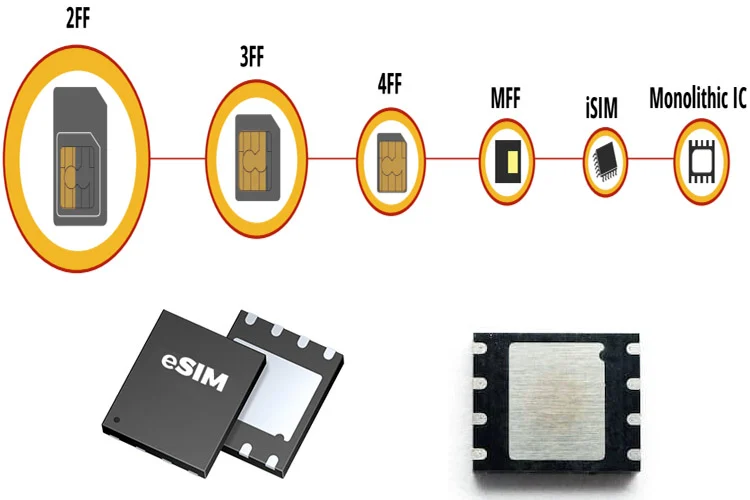
To understand the impact of the eSIM, one must view it within the historical context of SIM card miniaturization. The journey of the SIM card is a thirty-year trajectory of shrinking hardware and expanding digital capacity:
- 1991 (Full-size SIM): The first SIM cards, developed by Giesecke+Devrient for the Finnish network Radiolinja, were the size of a standard credit card.
- 1996 (Mini-SIM): As mobile phones became more portable, the SIM shrank to the "mini" format, which most users today recognize as the "standard" SIM.
- 2003 (Micro-SIM): Introduced to save space in smaller handsets, gaining mainstream popularity with the launch of the iPhone 4 in 2010.
- 2012 (Nano-SIM): Further reduction in size, removing almost all the plastic surrounding the gold-plated contact chip.
- 2016–Present (eSIM): The GSMA released the first specifications for the eSIM, initially targeting smartwatches and tablets before moving into the smartphone market.
The pivotal moment for eSIM technology occurred in 2018, when Apple integrated eSIM capabilities into the iPhone XS and XR series, enabling dual-SIM functionality. This was followed by a watershed moment in September 2022, when Apple announced that all iPhone 14 models sold in the United States would be "eSIM-only," removing the physical SIM tray entirely and forcing a rapid acceleration of carrier adoption.
Strategic Advantages of the eSIM Ecosystem
The transition to eSIM technology provides a trifecta of benefits across the consumer, manufacturer, and environmental sectors.
Consumer Flexibility and Travel
For the end-user, the primary advantage is the ease of switching carriers or adding secondary lines. Travelers can purchase a local data plan online before they even land in a foreign country, activating it via a QR code. This eliminates the need to find a local kiosk or use expensive roaming services. Furthermore, eSIMs allow a single device to maintain multiple profiles—for instance, one for personal use and one for business—switching between them through the device’s software settings.
Hardware Design and Durability
From a manufacturing perspective, removing the physical SIM slot is a significant design win. The space saved can be repurposed for larger batteries, improved haptic engines, or additional sensors. Moreover, the removal of the SIM tray hole enhances the structural integrity of the device and improves its resistance to water and dust ingress, as it eliminates one of the primary points of entry for environmental contaminants.
Security and Theft Mitigation
Security experts highlight that eSIMs offer superior protection against certain types of theft. If a phone with a physical SIM is stolen, the thief can simply remove the SIM card to prevent the owner from tracking the device via cellular data. An eSIM cannot be removed. To change the profile, a thief would need the device’s passcode, making the phone much easier to locate via "Find My" services even after it has been stolen.
How eSIM Technology Functions: Remote Provisioning
The "magic" of the eSIM lies in Remote SIM Provisioning (RSP). When a user signs up for a mobile plan, the carrier generates a digital profile. This profile is not sent as a simple text file; it is a highly encrypted package containing the network’s authentication credentials.
When a user scans a QR code or enters an activation code, the device contacts a Discovery Server (SM-DP+). This server verifies the device’s identity and securely "pushes" the carrier profile to the embedded chip. This process happens within seconds and ensures that the sensitive cryptographic keys never leave the secure environment of the chip or the carrier’s server, maintaining a high level of end-to-end security.
Market Analysis: Global Adoption and Carrier Responses
The adoption of eSIM has not been without friction. Initially, many global carriers were hesitant to support the technology, fearing it would make it too easy for customers to "churn" or switch to competitors. However, the pressure from hardware giants like Apple, Samsung, and Google, combined with the logistical cost savings of not having to manufacture and mail millions of plastic cards, has shifted the industry’s stance.
According to data from Juniper Research, the number of eSIMs installed in devices is expected to grow from roughly 1.2 billion in 2021 to over 3.4 billion by 2025. This 180% growth is driven largely by the consumer electronics sector, but the industrial Internet of Things (IoT) is also a major contributor. In logistics, for example, a shipping container equipped with an eSIM-enabled tracker can switch between international carriers automatically as it crosses borders, ensuring constant connectivity without manual intervention.
Device Compatibility and Ecosystem Support
Currently, eSIM technology is found primarily in flagship and mid-range devices. The following categories represent the current state of support:
- Smartphones: Apple (iPhone XS and newer), Samsung (Galaxy S20 series and newer, Z Fold/Flip series), Google (Pixel 3 and newer), and various models from Motorola, Sony, and Huawei.
- Wearables: The Apple Watch (GPS + Cellular models), Samsung Galaxy Watch series, and various Garmin and TicWatch models rely almost exclusively on eSIM technology due to their diminutive size.
- Tablets and Laptops: iPad Pro, iPad Air, and iPad Mini (cellular models), along with a growing number of Windows 10 and 11 "Always Connected" PCs from Microsoft, HP, and Lenovo.
Prospective users should note that while a device may be eSIM-capable, the functionality may be "locked" if the device was purchased under a specific carrier contract. It is always recommended to verify with the service provider that eSIM activation is supported on the specific plan.
Activation Procedures: A Step-by-Step Guide
The activation process is standardized but differs slightly between the two major mobile operating systems.
Activating eSIM on Apple iOS
- Open Settings: Navigate to ‘Cellular’ or ‘Mobile Data’.
- Add eSIM: Tap ‘Add eSIM’ or ‘Set Up Cellular’.
- Transfer or Scan: You may be given the option to transfer a SIM from a nearby iPhone or ‘Use QR Code’.
- Scanning: Point the camera at the QR code provided by your carrier.
- Labeling: Once activated, you can label the plans (e.g., "Primary" and "Travel") to manage how data and voice calls are routed.
Activating eSIM on Android Devices
- Network Settings: Go to ‘Settings’ > ‘Network & Internet’ > ‘SIMs’.
- Add Network: Tap the ‘+’ icon or ‘Download a SIM instead?’.
- Carrier Confirmation: The device will check for available service. When prompted, scan the carrier’s QR code.
- Confirmation: Follow the on-screen prompts to confirm the download of the profile.
The Future of Connectivity: Beyond the Smartphone
The implications of eSIM technology extend far beyond the palm of our hands. We are entering an era of "Integrated SIM" (iSIM), where the SIM functionality is moved even further into the device’s main processor (SoC), saving even more space and power.
In the automotive industry, eSIMs are becoming standard, enabling cars to receive over-the-air software updates, provide in-car Wi-Fi, and contact emergency services automatically in the event of an accident. In the smart city sector, utility meters and streetlights are being equipped with eSIMs to allow for decades of connectivity without the need for a technician to ever swap a physical card.
Conclusion: Is the Physical SIM Obsolete?
While physical SIM cards are not yet extinct—largely due to the prevalence of legacy devices and slower infrastructure rollouts in developing regions—their decline is inevitable. The eSIM offers a more secure, flexible, and environmentally friendly alternative to the billions of plastic cards produced annually.
For the consumer, the decision between an eSIM and a traditional SIM often comes down to current device compatibility. However, as manufacturers continue to follow the "eSIM-only" trend initiated by industry leaders, the transition to a fully digital identity in mobile telecommunications is no longer a question of "if," but "when." The digital SIM is not just a replacement for a plastic chip; it is the gateway to a more connected and mobile global society.
