
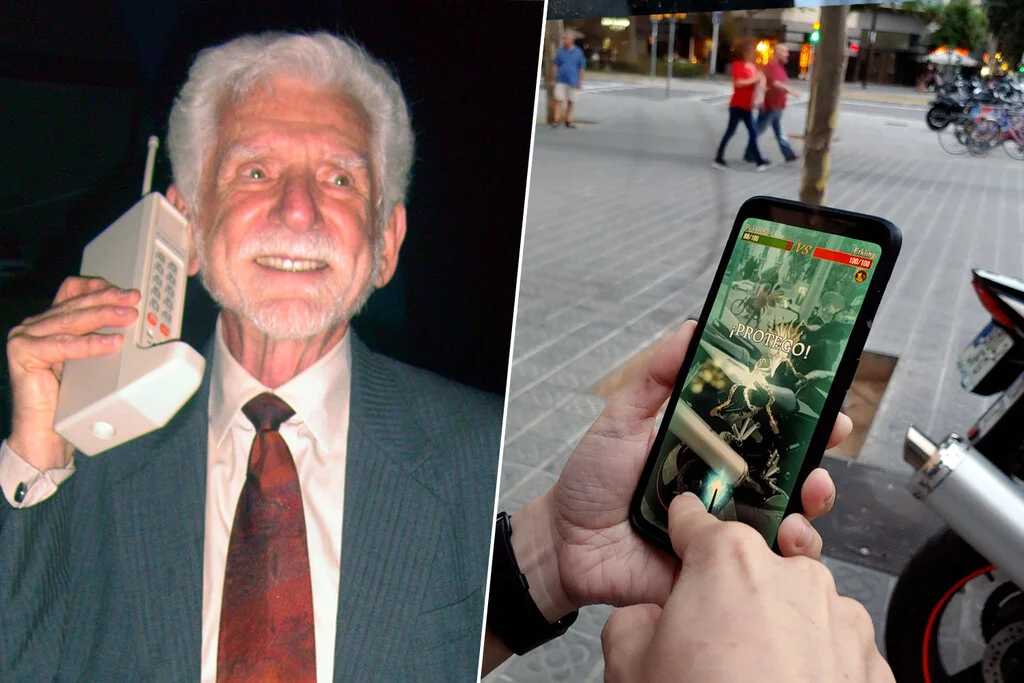

When lifting weights was a prerequisite for making a mobile phone call, and seeing someone converse with a kilogram-heavy device was as rare as a summer snowstorm, few could have envisioned a future where such cumbersome gadgets would be ubiquitous, used at all hours. Even fewer anticipated that our attention would be so thoroughly hijacked by these screens, compelling us to gaze at them even while navigating busy streets. This profound shift, a half-century in the making, now elicits a mix of wonder and concern from one of its primary architects: Martin Cooper, the engineer credited with inventing the handheld cellular phone.
The Genesis of Mobile Communication: A Vision Unfolds in 1973
Martin Cooper, then an engineer at Motorola, forever altered the landscape of human communication on April 3, 1973. From a bustling street corner in New York City, he made the world’s first public mobile phone call to his rival, Joel Engel, head of research at Bell Labs. The device he used was the Motorola DynaTAC 8000X prototype, a formidable "brick" measuring 25 cm long, 9 cm deep, and 4 cm wide, weighing approximately 1.1 kilograms. It offered a mere 30 minutes of talk time and required a staggering 10 hours to recharge. This iconic moment, often recounted as a playful jab at Bell Labs’ focus on car phones, marked the dawn of true personal, portable communication, challenging the prevailing notion that mobile phones would be primarily vehicle-mounted.
The idea for a portable telephone had been brewing for decades, with various companies exploring radio telephony. Bell Labs had introduced its first mobile telephone service in 1946, primarily for vehicles. However, Cooper’s vision was distinct: a device small enough to be held in one’s hand, offering unprecedented freedom of movement. His team at Motorola raced against Bell Labs, driven by the belief that personal communication should not be tethered to a car. The DynaTAC, short for Dynamic Adaptive Total Area Coverage, embodied this philosophy, laying the groundwork for a technological revolution that would eventually place powerful computing devices in billions of pockets worldwide.
From "Brick" to Brains: The Evolution of the Mobile Phone
The journey from Cooper’s DynaTAC to the sleek smartphones of today is a testament to relentless innovation. The commercial version of the DynaTAC 8000X finally hit the market in 1983, a decade after Cooper’s inaugural call. It retailed for an exorbitant $3,995 (equivalent to over $11,000 in 2023), making it a luxury item for the elite. Despite its cost and bulk, it represented a monumental leap. Early adoption was slow, but the seed was planted.
The 1990s witnessed the gradual miniaturization of mobile phones, the introduction of digital networks (GSM), and the advent of text messaging (SMS) in 1992. Devices like the Nokia 1011 and the Motorola StarTAC became cultural icons, signaling a growing mainstream appeal. The late 90s and early 2000s brought color screens, basic internet access (WAP), and integrated cameras, transforming phones into multi-functional devices. However, the true inflection point arrived in 2007 with the launch of Apple’s iPhone.
The iPhone, and subsequently Android-powered devices, ushered in the smartphone era. These devices combined mobile telephony with advanced computing capabilities, high-resolution touchscreens, and, crucially, an ecosystem of third-party applications. This paradigm shift transformed phones from mere communication tools into indispensable personal assistants, entertainment hubs, and gateways to an ever-expanding digital world. Global smartphone penetration soared, from a mere 10% in 2009 to over 80% by 2023, with more than 6.9 billion smartphone users worldwide. The average person now spends several hours a day interacting with their device, a testament to its pervasive integration into daily life.
The Architect’s Alarm: Cooper’s Critique of Modern Usage
Fifty years after his historic call, Martin Cooper, at 94 years old, observes the current landscape of smartphone usage with a mix of pride and palpable concern. In an interview with AFP in 2023, coinciding with the golden jubilee of the first mobile call, Cooper articulated his disquiet in terms as brief as they were scathing. His diagnosis of humanity’s relationship with the smartphone is pointed: "People with smartphones look at them too much; they’ve become trapped in the phone. I have to say that I am devastated when I see someone crossing the street while looking at their mobile. It’s a very common thing, and they are completely out of their minds." He further quipped, with a touch of dark humor, "Maybe they’ll understand when they’ve run over a few more people."
Cooper’s critique extends beyond mere observation; it’s a lament from the visionary who once championed the device’s liberating potential. He notes the pervasive nature of smartphone engagement, from social interactions to solitary moments, often at the expense of situational awareness. His specific emphasis on distracted walking highlights a growing public safety concern. Data from the National Safety Council in the United States indicates that distracted walking incidents involving mobile phones have seen a significant increase, leading to thousands of injuries and even fatalities annually. Studies show that pedestrians using phones are four times more likely to be involved in an accident, with cognitive distraction being a major contributing factor.
The Science of Attention Capture: Why We Can’t Look Away
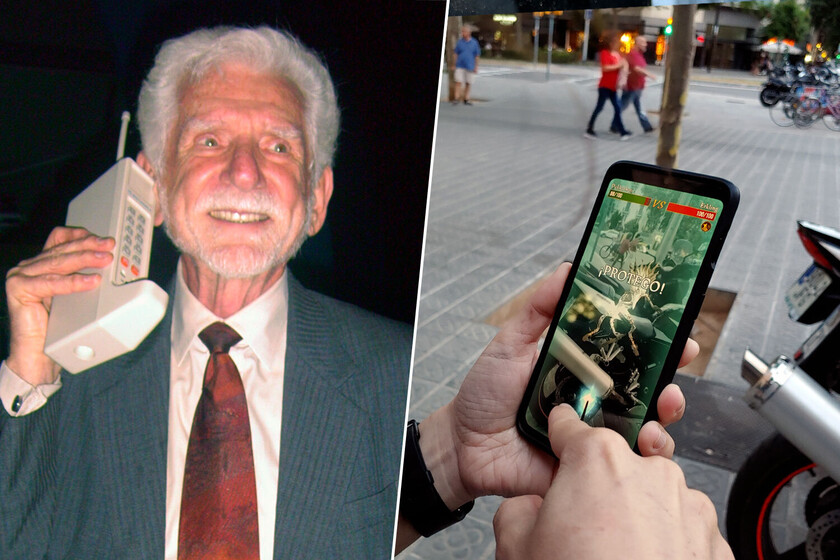
Cooper’s reproof touches upon a phenomenon that science has meticulously quantified: the smartphone doesn’t merely compete for our attention; it actively hijacks it. The mechanisms are deeply rooted in human psychology and neuroscience. Features like infinite scroll, push notifications, and variable reward schedules are meticulously designed to tap into our brain’s reward circuitry, primarily involving dopamine.
Aza Raskin, one of the pioneers of the infinite scroll feature, has himself expressed regret, likening it to "behavioral cocaine" sprinkled across user interfaces. Each notification – a ping, a vibration, a flashing light – acts as a trigger, prompting a quick check. This intermittent reinforcement, similar to how slot machines operate, creates a compulsive loop. We are conditioned to anticipate a reward (a new message, a social media like, an interesting update), and the uncertainty of when it will arrive makes the behavior even more addictive. The brain releases dopamine in anticipation of these rewards, creating a powerful urge to constantly check the device.
Furthermore, the Fear of Missing Out (FOMO) plays a significant role. Social media platforms, in particular, capitalize on this, making users feel they need to stay constantly connected to avoid being excluded or uninformed. This psychological pressure, combined with the expertly engineered user interfaces, creates a formidable challenge for individuals attempting to moderate their smartphone use. It’s not simply a lack of willpower; it’s a battle against sophisticated design optimized for engagement, sometimes at the expense of user well-being and safety. Research published in journals like Cyberpsychology, Behavior, and Social Networking consistently highlights correlations between excessive smartphone use, screen time, and increased levels of anxiety, depression, and sleep disturbances, particularly among younger demographics.
A Double-Edged Sword: The Smartphone’s Paradoxical Potential
Despite his sharp criticism of current usage patterns, Martin Cooper is far from renouncing his invention. On the contrary, he remains a staunch believer in the smartphone’s inherent potential for good. At 94, he is an avid user of an iPhone and an Apple Watch, devices he claims to update with every new model released by Apple. This personal engagement underscores his understanding that the smartphone, while prone to misuse, is a powerful tool.
Cooper envisions a future where the smartphone plays a crucial role in advancing human health and well-being. He posits that these devices, with their increasing array of sensors and computational power, could become instrumental in disease prevention, early detection, and personalized healthcare management. Imagine a smartphone continuously monitoring vital signs, detecting anomalies, and alerting users or healthcare providers to potential health issues before they become critical. Wearable technology, like the Apple Watch he uses, already offers functionalities such as ECG readings, fall detection, and blood oxygen monitoring, hinting at the vast, untapped potential for proactive health management.
This perspective highlights the fundamental paradox of the smartphone: it is a tool. Its impact depends entirely on how humanity chooses to wield it. While it can be a source of distraction, anxiety, and even danger when misused, it also holds immense promise for education, connectivity, economic empowerment, and, as Cooper emphasizes, revolutionizing healthcare. The challenge, therefore, lies not in abandoning the technology but in cultivating a more conscious, intentional, and beneficial relationship with it.
Navigating the Digital Age: Towards Mindful Mobile Use
The widespread recognition of problematic smartphone usage has spurred various initiatives aimed at promoting digital well-being. Tech giants like Apple and Google have integrated features into their operating systems to help users monitor and manage their screen time, set app limits, and enable "Do Not Disturb" modes. These tools, while imperfect, represent a step towards empowering users to regain control over their digital habits.
Beyond technical solutions, there’s a growing societal conversation about digital literacy and mindfulness. Educational programs in schools and workplaces are beginning to address the psychological effects of constant connectivity and teach strategies for healthy technology use. Practices like "digital detoxes," where individuals intentionally disconnect from their devices for periods, are gaining traction as a way to reset habits and reconnect with the physical world. Some users are even opting for "dumbphones" or intentionally limiting their smartphone’s capabilities to reduce distractions, a trend highlighted in the context of older generations who, like Cooper, might use a smartphone primarily for communication rather than endless scrolling.
Martin Cooper’s final message resonates with a sense of evolutionary optimism. He believes that the compulsive need to use smartphones is not an inescapable condemnation but a habit, and habits can be changed. Just as society eventually learned to domesticate television, moving past the initial phase of being hypnotized by its glow, he anticipates that each successive generation will learn to use mobile phones more effectively and responsibly than the last. The first mobile call was made half a century ago by Cooper. The responsibility to learn to put down the phone, especially when crossing the street, now falls squarely on us, the users, to foster a more balanced and safer coexistence with this transformative technology.
The challenge is significant, given the deeply ingrained nature of smartphone habits and the sophisticated design strategies that perpetuate them. However, by understanding the mechanisms at play, leveraging available tools for digital well-being, and cultivating conscious habits, individuals and society at large can strive to harness the immense power of mobile technology while mitigating its potential pitfalls, moving towards a future where innovation serves humanity’s best interests without compromising its safety or well-being. The vision of a truly mobile, connected world, as first conceived by pioneers like Martin Cooper, continues to evolve, now demanding not just technological advancement, but also human wisdom and self-awareness.
