
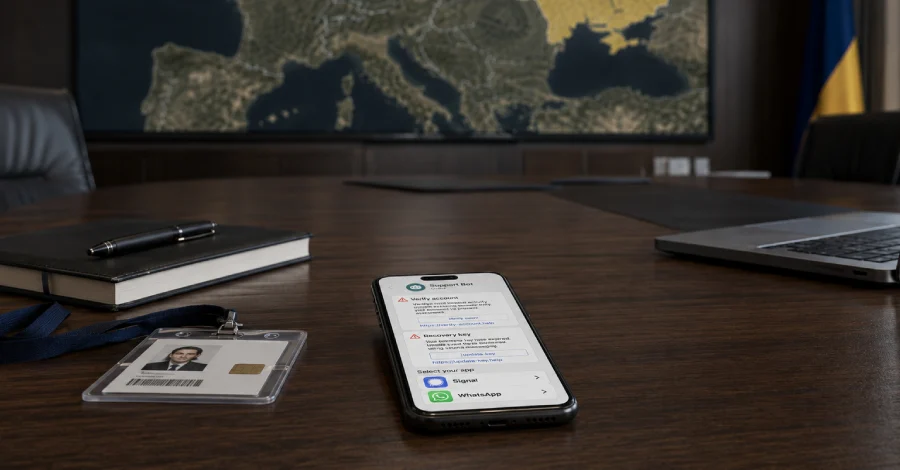

In a significant revelation on June 27, 2026, the Security Service of Ukraine (SSU), in a collaborative effort with the U.S. Federal Bureau of Investigation (FBI), announced the uncovering of a sophisticated and long-running cyber espionage campaign orchestrated by Russian intelligence services. This widespread operation systematically targeted the messaging accounts of high-value individuals, including government officials, military personnel, prominent politicians, and civil society activists across Ukraine, Europe, and the United States. The primary objective of these meticulously planned cyber attacks was the illicit acquisition of sensitive information, ranging from strategic military intelligence to critical political and economic data, alongside the theft of personal user data. This coordinated disclosure underscores the persistent and evolving nature of state-sponsored cyber threats, particularly in the context of ongoing geopolitical tensions.
The Anatomy of the Attack: Sophisticated Phishing Tactics
The core methodology employed by the Russian intelligence operatives in this extensive campaign revolved around highly deceptive SMS-based phishing attacks. Attackers meticulously crafted messages designed to impersonate the legitimate support bots of popular messaging platforms. These fraudulent messages would then be dispatched to targeted individuals, urging them to disclose their account credentials under the guise of an urgent security update, verification process, or an issue requiring immediate attention. This social engineering technique, known for its effectiveness, leverages users’ trust in official communications and their inherent desire to secure their digital assets, turning these very instincts against them.
Upon receiving such an SMS, a victim might be directed to a spoofed login page that mirrors the authentic interface of their messaging application. Unsuspecting users, believing they are interacting with the platform’s official support, would then enter their login credentials, confirmation codes, or even two-factor authentication (2FA) codes. This critical information would then be immediately harvested by the attackers, granting them unauthorized access to the victim’s entire messaging history, contacts, shared files, and ongoing communications. The SSU specifically highlighted that the scope of these attacks was not limited to organizational accounts or public figures but extended to personal accounts belonging to ordinary Ukrainian citizens, indicating a broad surveillance and data collection agenda.
The Broader Landscape of Cyber Warfare and Espionage
This latest discovery is not an isolated incident but rather a continuation of a well-documented pattern of cyber aggression emanating from Russian state-sponsored actors. In the context of the ongoing conflict in Ukraine, cyber operations have become an integral component of Russia’s hybrid warfare strategy, complementing conventional military actions with digital incursions aimed at intelligence gathering, disruption, and influence. The targeting of messaging accounts is particularly potent in this environment, as these platforms are frequently used for confidential communications by individuals involved in national security, governance, and humanitarian efforts. Compromising such accounts can yield invaluable intelligence that can be exploited for military advantage, political leverage, economic disruption, or to sow disinformation and discord.
Cyber espionage has historically played a crucial role in international relations, but the scale and brazenness of recent campaigns, particularly those attributed to Russian intelligence services, have escalated concerns globally. The focus on messaging applications reflects an understanding by adversaries that these platforms, often perceived as private and secure, serve as critical conduits for sensitive information in modern communication. The SSU’s statement emphasized the strategic goal behind these "hacks": "to gain access to sensitive military, political, and economic information exchanged by users, as well as to steal their personal data." This clearly outlines a multi-faceted objective, ranging from direct intelligence collection to potentially identifying sources, compromising networks, or even blackmailing individuals.
Tracing the Digital Footprints: Attributions and Known Threat Actors
While the SSU’s immediate announcement refrained from attributing this specific campaign to a named hacking group, it acknowledged that similar attack waves targeting popular messaging applications like Signal and WhatsApp have been previously linked to well-known Russian threat activity clusters. Among these are groups tracked by various cybersecurity firms and intelligence agencies under aliases such as Star Blizzard, UNC5792 (also known as UAC-0195), and UNC4221 (also known as UAC-0185). These groups are notorious for their sophisticated social engineering tactics and their persistent targeting of entities and individuals deemed critical to adversaries’ intelligence requirements.
- Star Blizzard (also known as SEABORGIUM, TA446, COLDRIVER, Callisto Group, and Cadet Blizzard): This group is widely recognized for its extensive spear-phishing campaigns targeting government organizations, defense contractors, NGOs, and think tanks, particularly those involved in foreign policy and national security. Their operations often involve meticulous reconnaissance to craft highly personalized and convincing lures.
- UNC5792 (UAC-0195): While specific public details about this particular designation might be less extensive than others, UAC-0195 falls under the broader umbrella of "Unidentified Cyber" groups tracked by Ukraine’s CERT-UA, often associated with Russian or Belarusian state interests, frequently engaging in phishing and information-stealing operations.
- UNC4221 (UAC-0185): Similar to UNC5792, this designation points to another cluster of activity often linked to intelligence gathering operations, typically employing custom malware or exploiting common vulnerabilities through phishing to gain initial access.
These attributions, often made through detailed forensic analysis and correlation of tactics, techniques, and procedures (TTPs), highlight the complex and multi-pronged nature of state-sponsored cyber operations. The lack of a specific attribution in the SSU’s initial public warning may indicate ongoing investigations or a desire to focus on the immediate threat and mitigation strategies rather than preempting a full technical report.
International Cooperation: A United Front Against Cyber Espionage
The joint announcement by the SSU and the FBI is a testament to the critical importance of international collaboration in combating sophisticated state-sponsored cyber threats. Cyber espionage transcends national borders, making a coordinated global response essential. The sharing of intelligence, technical expertise, and investigative resources between agencies like the SSU and the FBI significantly enhances the ability to identify, track, and disrupt these malicious campaigns. This partnership not only strengthens the defensive posture of both nations but also sends a clear message to adversaries that their actions will be detected and countered through collective efforts.
The FBI’s involvement underscores the transcontinental nature of the threat, with Russian intelligence services not only targeting Ukraine, a primary theater of their cyber operations, but also extending their reach into European nations and the United States. This demonstrates a strategic intent to gather intelligence from a broad spectrum of geopolitical actors and decision-makers, aiming to influence policy, gain economic advantage, or compromise national security. Such joint operations are crucial for creating a comprehensive understanding of threat actors’ TTPs and for developing more robust, collective defense mechanisms.

Strategic Objectives and Vulnerable Targets
The selection of targets—government officials, military personnel, politicians, and activists—is highly deliberate and reflects Russia’s strategic objectives.
- Government Officials: Access to their messaging accounts can provide insights into policy decisions, diplomatic communications, internal government operations, and vulnerabilities within administrative structures.
- Military Personnel: Compromising military communications can yield critical intelligence on troop movements, operational plans, logistics, equipment, and personnel information, directly impacting battlefield outcomes and national defense.
- Politicians: Insights into political strategies, negotiations, internal party dynamics, and personal information can be exploited for political influence, blackmail, or disinformation campaigns aimed at destabilizing democratic processes.
- Activists: Targeting activists, particularly those involved in human rights, anti-corruption, or opposition movements, can expose their networks, strategies, and personal safety, potentially leading to repression or disruption of their efforts.
The "sensitive military, political, and economic information" sought by the attackers could encompass a vast array of data: classified documents, strategic plans, financial transactions, negotiation tactics, personal communications that could be leveraged for coercion, and even insights into critical infrastructure vulnerabilities. The theft of personal data, while seemingly less impactful than military secrets, can be used for identity theft, secondary attacks, or to build comprehensive profiles of targets and their associates.
Fortifying Digital Defenses: Essential Mitigation Strategies
In response to the pervasive threat posed by such sophisticated phishing campaigns, cybersecurity experts and the SSU have reiterated several critical defense and mitigation strategies for individuals and organizations:
- Periodically Review Active Messaging App Sessions: Users should regularly check their messaging application settings for a list of active sessions or connected devices. Any unfamiliar or unauthorized sessions should be immediately logged out. This helps to identify and revoke access from devices or locations that may have been compromised.
- Enable Two-Factor Authentication (2FA) / Multi-Factor Authentication (MFA): This is perhaps the single most effective defense against credential theft. Even if attackers obtain a password, 2FA requires a second form of verification (e.g., a code from a mobile app, a physical security key) to gain access. It significantly raises the bar for unauthorized entry.
- Refrain from Scanning QR Codes from Unknown Users/Sources: QR codes can be used as a vector for malicious activity, including directing users to phishing sites or initiating unauthorized logins. Users should only scan QR codes from trusted sources and verify their authenticity.
- Never Disclose Confirmation Codes, PIN Codes, Passwords, or Account Recovery Keys: Legitimate support personnel from messaging platforms will never ask for these sensitive pieces of information via SMS, email, or any unsolicited communication. These details are the keys to an account and must be guarded fiercely.
- Exercise Extreme Caution with Suspicious Links and Files: Users should avoid clicking on suspicious links or opening files received from unknown or dubious chats, even if they appear to come from a known contact (as their account might be compromised). Always verify the sender’s identity through an alternative, trusted communication channel if a message seems unusual.
- Regular Software Updates: Keeping operating systems and applications updated ensures that known vulnerabilities are patched, reducing the attack surface for threat actors.
- Cybersecurity Awareness Training: For organizations, regular training for employees on recognizing phishing attempts and best cybersecurity practices is paramount. Human error remains one of the weakest links in the security chain.
These measures, when consistently applied, can significantly reduce the risk of compromise and protect sensitive information from falling into the wrong hands.
Recent Precedents and Warnings Underscore Ongoing Threat
This SSU-FBI joint discovery comes on the heels of other pertinent warnings and reports, painting a picture of a relentless and multifaceted cyber offensive by state-sponsored actors. Just prior to this announcement, the FBI itself issued a public warning on June 6, 2026, explicitly attributing an ongoing commercial messaging application (CMA) phishing campaign to Russian Intelligence Services (RIS) cyber threat actors. This earlier warning highlighted the tactic of targeting high-value individuals to trick them into surrendering their backup recovery keys, which could grant attackers persistent access even if passwords are changed. The consistency in targeting high-value individuals and using sophisticated social engineering tactics across these reports indicates a coordinated and overarching strategy.
Furthermore, late last month, the Computer Emergency Response Team of Ukraine (CERT-UA) attributed a spear-phishing campaign to the Belarus-aligned threat actor known as UNC1151 (also referred to as Ghostwriter and UAC-0057). This campaign specifically targeted Ukrainian government organizations, leveraging compromised accounts to deliver an information stealer dubbed "OYSTERBLUES." UNC1151 is infamous for its history of disinformation operations and cyber espionage, often acting in concert with or in support of Russian interests. The use of information stealers like OYSTERBLUES is a direct complement to the phishing tactics described by the SSU, as both aim to exfiltrate sensitive data from targeted systems. These concurrent and overlapping reports underscore the persistent and varied nature of state-sponsored cyber threats faced by Ukraine and its allies.
Implications for National Security and Digital Trust
The implications of such a pervasive and sustained cyber espionage campaign are profound. At the national security level, the theft of military, political, and economic intelligence can directly undermine strategic decision-making, compromise national defense capabilities, and provide adversaries with an asymmetric advantage. The continuous harvesting of personal data on key individuals creates vectors for influence, blackmail, and further targeting, potentially eroding the integrity of government and military operations.
Beyond immediate security concerns, these attacks erode public and institutional trust in digital communication platforms. If messaging apps, which are often marketed on their end-to-end encryption and security features, can be compromised through sophisticated social engineering, it raises questions about the overall resilience of modern communication infrastructure against state-level threats. This can lead to a chilling effect, where individuals and organizations become hesitant to use digital tools for sensitive discussions, potentially driving them towards less efficient or equally vulnerable alternatives, or simply hindering necessary communication.
The coordinated efforts of the SSU and FBI are crucial not only for mitigating the immediate threats but also for fostering a more resilient global cybersecurity posture. As digital communication continues to intertwine with every aspect of national and international affairs, the battle against cyber espionage will remain a critical front, demanding constant vigilance, technological innovation, and robust international cooperation. The latest revelations serve as a stark reminder that in the digital age, security is a shared responsibility, requiring proactive measures from individuals, organizations, and governments alike to defend against increasingly sophisticated and relentless adversaries.
