
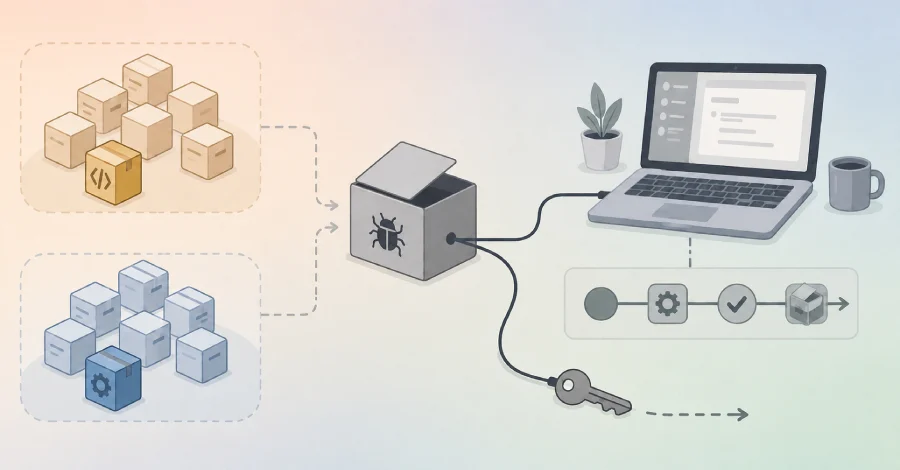

Cybersecurity researchers have issued an urgent alert regarding a significant evolution in the ongoing supply chain attack linked to the notorious Mini Shai-Hulud, Miasma, and Hades malware families. This latest iteration has successfully compromised a new array of npm packages and, notably, propagated its malicious footprint into the Go programming language ecosystem, signaling a widening and increasingly sophisticated threat landscape for software developers and organizations globally. The primary objective of this persistent campaign remains the clandestine harvesting of developer and maintainer credentials, which are subsequently weaponized to facilitate further propagation across diverse package registries, code repositories, and trusted developer workflows, posing an existential threat to software integrity and supply chain security.
Understanding the Escalating Threat of Supply Chain Attacks
Software supply chain attacks represent one of the most insidious and rapidly growing threats in the cybersecurity domain. Unlike traditional attacks that target an organization’s perimeter, these assaults exploit the inherent trust within the software development ecosystem. Malicious actors inject nefarious code into legitimate software components, libraries, or development tools, which then spread downstream to thousands, or even millions, of users who integrate these compromised elements into their own applications. The ripple effect can be catastrophic, leading to data breaches, intellectual property theft, system compromises, and significant operational disruptions. According to recent industry reports, supply chain attacks have seen an exponential rise, with some estimates indicating a 700% increase year-over-year in the past three years. A 2023 study by the Cloud Security Alliance highlighted that over 80% of organizations reported experiencing at least one software supply chain attack within the last 12 months, underscoring the pervasive nature of this vulnerability. The average cost of a supply chain breach can exceed $4.5 million, not including the long-term damage to reputation and customer trust. The pervasive nature of open-source components, which often form the backbone of modern software, makes these ecosystems particularly attractive targets for adversaries seeking maximum impact with minimal effort.

The Enduring Menace: Mini Shai-Hulud, Miasma, and Hades
The malware families at the heart of this evolving campaign – Mini Shai-Hulud, Miasma, and Hades – are not new entrants to the threat landscape. They represent a well-established and highly adaptable cluster of malicious tooling, previously observed targeting other prominent package managers such as PyPI. Researchers at Socket, a leading authority in software supply chain security, have been at the forefront of tracking these persistent threats. In their recent analysis, Socket detailed how "The latest activity includes malicious npm releases affecting LeoPlatform and RStreams packages, GitHub Actions workflow abuse, and a related Go module compromise involving the Verana Blockchain project." This continuous evolution underscores the attackers’ commitment to refining their techniques and broadening their attack surface, consistently adapting to detection mechanisms and exploiting new vectors within the sprawling software development pipeline. The malware’s design demonstrates a sophisticated understanding of modern development practices, targeting not just individual packages but the very workflows that underpin collaborative software creation.
A Chronology of Compromise: The Latest Campaign Unfolds
The current wave of attacks appears to have been meticulously planned and executed with alarming speed. The initial breach is suspected to have occurred via the compromise of an npm developer account associated with LeoPlatform, specifically the user profile "czirker." This compromise was likely facilitated by stolen or leaked credentials, providing threat actors direct access to the maintainer’s publishing capabilities.

- Initial Infiltration (Pre-June 2026): While the exact date of the credential theft for the "czirker" account is not specified, it serves as the crucial entry point for the npm attacks. Such compromises often result from phishing campaigns, malware on developer machines, or exploitation of vulnerabilities in identity management systems.
- Rapid npm Poisoning (June 2026): Once access was gained, the attackers moved swiftly. They leveraged an npm token belonging to the compromised maintainer to push trojanized versions of LeoPlatform and RStreams packages. This operation was executed with remarkable precision, with reports indicating that malicious versions were published within an astonishing six-second window, making immediate detection and mitigation incredibly challenging.
- GitHub Actions Compromise (June 24, 2026): A pivotal event in this timeline was the compromise of the "codfish/semantic-release-action" GitHub Action. According to StepSecurity, "On June 24, 2026 at 15:39:06 UTC, an attacker force-pushed a malicious commit to codfish/semantic-release-action and redirected several version tags to point at the malicious commit." This specific incident highlights a direct attack on CI/CD pipelines, a critical component of modern software delivery.
- Widespread Credential Exfiltration: Following these initial compromises, the malware rapidly began its core function: stealing GitHub OIDC tokens, harvesting Personal Access Tokens (PATs) matching known GitHub token patterns, encrypting the collected material with AES-128-GCM, and attempting to propagate backdoors into other repositories accessible with the stolen credentials.
- Go Ecosystem Expansion: Concurrently or shortly after the npm and GitHub Actions compromises, the malware successfully infiltrated the Go ecosystem, targeting projects like Verana Blockchain. This represented a significant expansion beyond JavaScript-centric package managers, demonstrating the attackers’ intent to cast a wider net across diverse programming environments.
This interconnected chain of events, as observed by multiple security firms including Endor Labs and OX Security, strongly suggests a single, highly organized operational cluster orchestrating these multi-faceted attacks.
Sophisticated Attack Mechanisms Across Ecosystems
The attackers employ a sophisticated toolkit of tactics, many of which have been refined from prior campaigns. These include:
- npm Registry Poisoning: This involves injecting malicious code into seemingly legitimate npm packages, which are then published to the official npm registry. Developers unknowingly download these compromised packages, integrating the malware into their projects.
binding.gypInstall-Time Execution: A key innovation in the npm attacks is the use ofbinding.gypfiles. Unlike typical malicious packages that rely on lifecycle hooks (e.g.,preinstall,postinstall) in thepackage.jsonfile for execution, this method embeds the malicious payload within thebinding.gypfile. This file is part of Node.js’s native addon build system. By integrating arbitrary code here, the malware ensures execution during the package installation process, often bypassing standard security checks that might focus solely onpackage.jsonscripts.- Bun-Staged JavaScript Malware: The payload delivered via
binding.gypis a JavaScript loader. This loader’s first task is to check for the presence of the Bun runtime environment. If Bun is not found, the loader proceeds to download and install it. Bun, a relatively new JavaScript runtime, is then utilized to execute the subsequent stealer payload. This multi-stage approach adds complexity and can make detection more challenging, as the initial loader might appear benign. - GitHub Dead-Drop Infrastructure: The exfiltration of stolen credentials and secrets relies on a clever "dead-drop" mechanism leveraging public GitHub repositories. The malware uploads the harvested information to these repositories, often using innocuous-sounding descriptions or commit messages to blend in.
- GitHub Actions Secret Theft: A critical component of the attack focuses on abusing GitHub Actions, a powerful CI/CD platform. The malware drops a malicious workflow named "Run Copilot" into compromised repositories. This workflow is designed to capture CI/CD environment secrets directly from the runner’s memory during execution. These secrets, which can include sensitive API keys, deployment credentials, and access tokens, are invaluable to attackers.
- IDE and AI Coding Assistant Persistence: The infiltration of the Go ecosystem, particularly affecting projects like Verana Blockchain, reveals a shift in attack vector. Unlike npm packages relying on
binding.gyp, the Go module compromise does not leverage native Go module resolution or build logic in the same way. Instead, the risk here is "source-repository execution." As Socket explains, "a developer who clones or opens the repository in a trusted IDE or AI coding assistant environment may trigger the payload through project configuration." This signifies a direct targeting of developer workstations and their integrated development environments, recognizing that modern coding assistants often execute code snippets or build processes automatically, providing a new avenue for compromise. - Encrypted Credential Exfiltration: To protect the stolen data and evade detection, the harvested secrets, credentials, and tokens are encrypted using AES-128-GCM before exfiltration, adding another layer of sophistication to the operation.
Evasion, Persistence, and Evolving Indicators

The attackers demonstrate a keen understanding of defensive measures and continuously adapt their tactics to remain elusive.
- Russian Locale Killswitch: The malware incorporates a "Russian locale killswitch," a common feature in state-sponsored or geopolitically aligned malware. This mechanism prevents the malicious payload from executing if the infected system’s locale is set to Russian, potentially to avoid detection within certain geographical regions or to comply with unwritten rules among some threat actors.
- Endpoint Security Software Checks: Before deploying its full payload, the malware checks for the presence of endpoint security software. This anti-analysis technique helps it avoid detection by security solutions and ensures a higher success rate for its malicious activities.
- Changing Token Relay Markers: The attackers have also evolved their indicators to thwart stale detections. Earlier iterations of the malware used distinct strings like "IfYouInvalidateThisTokenItWillNukeTheComputerOfTheOwner" as token relay markers. The latest variant, however, employs "RevokeAndItGoesKaboom." This seemingly innocuous change is significant, as "RevokeAndItGoesKaboom" has been identified as a GitHub dead-drop resolver in connection with the recent compromise of the "codfish/semantic-release-action" GitHub Action, firmly linking these disparate incidents to the same threat group.
- Persistent Polling for Updates: Further demonstrating their commitment to long-term compromise, the malware actively polls GitHub every hour. It specifically searches for commits matching the string "firedalazer" to retrieve and execute newer versions or variants of the Hades malware, ensuring its persistence and adaptability to changing security landscapes.
Broad Implications and Industry Response
The implications of this evolving supply chain attack are far-reaching, affecting individual developers, development teams, and the broader software ecosystem. As JFrog aptly states, "The Leo/RStreams package set is tied to cloud-native and serverless workloads. A compromise here can expose developer workstations, CI/CD systems, AWS-backed applications, GitHub repositories, package publishing credentials, and downstream package consumers." This highlights the cascading impact, where a single compromise at the package level can jeopardize an entire development and deployment pipeline.
The shift to targeting developer workflows directly, especially through IDEs and AI coding assistants in the Go ecosystem, marks a critical escalation. It signifies that merely securing package manager hooks is no longer sufficient; the entire development environment, from code cloning to build processes, must be considered a potential attack vector.

Cybersecurity firms are working diligently to track and mitigate these threats. Their rapid analysis and public disclosure are crucial in raising awareness and enabling defensive measures. However, the continuous evolution of the malware, as noted by JFrog, where "Shai-Hulud continues to move across legitimate package ecosystems while changing just enough indicators to make stale detections less effective," presents a formidable challenge for static detection mechanisms.
Recommendations for Enhanced Security
In light of these persistent and evolving threats, organizations and developers must adopt a multi-layered and proactive security posture:
- Implement Strong Authentication: Enforce multi-factor authentication (MFA) for all developer accounts, package registry access, and GitHub accounts. Regularly audit for leaked credentials and revoke compromised tokens immediately.
- Supply Chain Security Tools: Utilize software supply chain security platforms that can scan for malicious code in dependencies, monitor for suspicious package updates, and analyze build processes for anomalies.
- Dependency Verification: Scrutinize all third-party dependencies. Verify the integrity and authenticity of packages before integrating them into projects. Consider pinning specific versions to avoid automatic updates that might introduce malicious code.
- Secure Development Environments: Harden developer workstations and IDEs. Implement endpoint detection and response (EDR) solutions, ensure regular patching, and restrict unnecessary permissions. Be cautious about automatically executing code from untrusted sources, even within IDEs.
- CI/CD Pipeline Security: Implement stringent security controls for CI/CD pipelines. Restrict access to secrets, use short-lived credentials where possible, and continuously monitor workflow execution for unusual activity. Regularly review GitHub Actions and other CI/CD configurations for unintended permissions or potential vulnerabilities.
- Code Review and Auditing: Conduct thorough code reviews, not just for functionality but also for security vulnerabilities. Periodically audit the entire software supply chain for potential weaknesses.
- Stay Informed: Keep abreast of the latest threat intelligence and advisories from cybersecurity researchers and industry bodies. Subscribe to security blogs and news outlets to understand emerging attack vectors and mitigation strategies.
- Least Privilege Principle: Apply the principle of least privilege to all user accounts, services, and applications. Grant only the necessary permissions for tasks to minimize the impact of a potential compromise.
This latest surge in activity by the Mini Shai-Hulud, Miasma, and Hades malware families serves as a stark reminder of the dynamic and relentless nature of cyber threats targeting the software supply chain. The attackers’ ability to adapt, cross-pollinate between ecosystems like npm and Go, and target fundamental developer workflows underscores the critical need for continuous vigilance, robust security practices, and collaborative intelligence sharing across the cybersecurity community to safeguard the integrity of global software infrastructure.
