

Containers have fundamentally reshaped the landscape of software development and deployment, offering a powerful and efficient method for packaging and running applications. At its core, a container is a lightweight, self-contained, executable software package that bundles everything necessary to run a piece of software: the code, the runtime environment, system tools, system libraries, and essential settings. This technology is a key component of the broader trend known as containerization, which involves isolating software and its dependencies from other processes, ensuring consistent execution across diverse environments.
This comprehensive exploration delves into the intricacies of containerization, dissecting its fundamental components, and drawing clear distinctions between containers and their predecessor, virtual machines (VMs). We will also examine the significant benefits, prevalent use cases, and leading container technologies that are driving this technological revolution. Furthermore, this article will address the potential challenges and anticipate the future trajectory of containerization in the ever-evolving world of technology.
Understanding the Power of Containers
Containerization empowers developers to package and execute applications within isolated environments, a process that ensures predictability and eliminates the common "it works on my machine" dilemma. This technology provides a uniform and efficient pathway for deploying software, bridging the gap from a developer’s local workstation to robust production servers, irrespective of underlying operating system configurations or infrastructure variations.
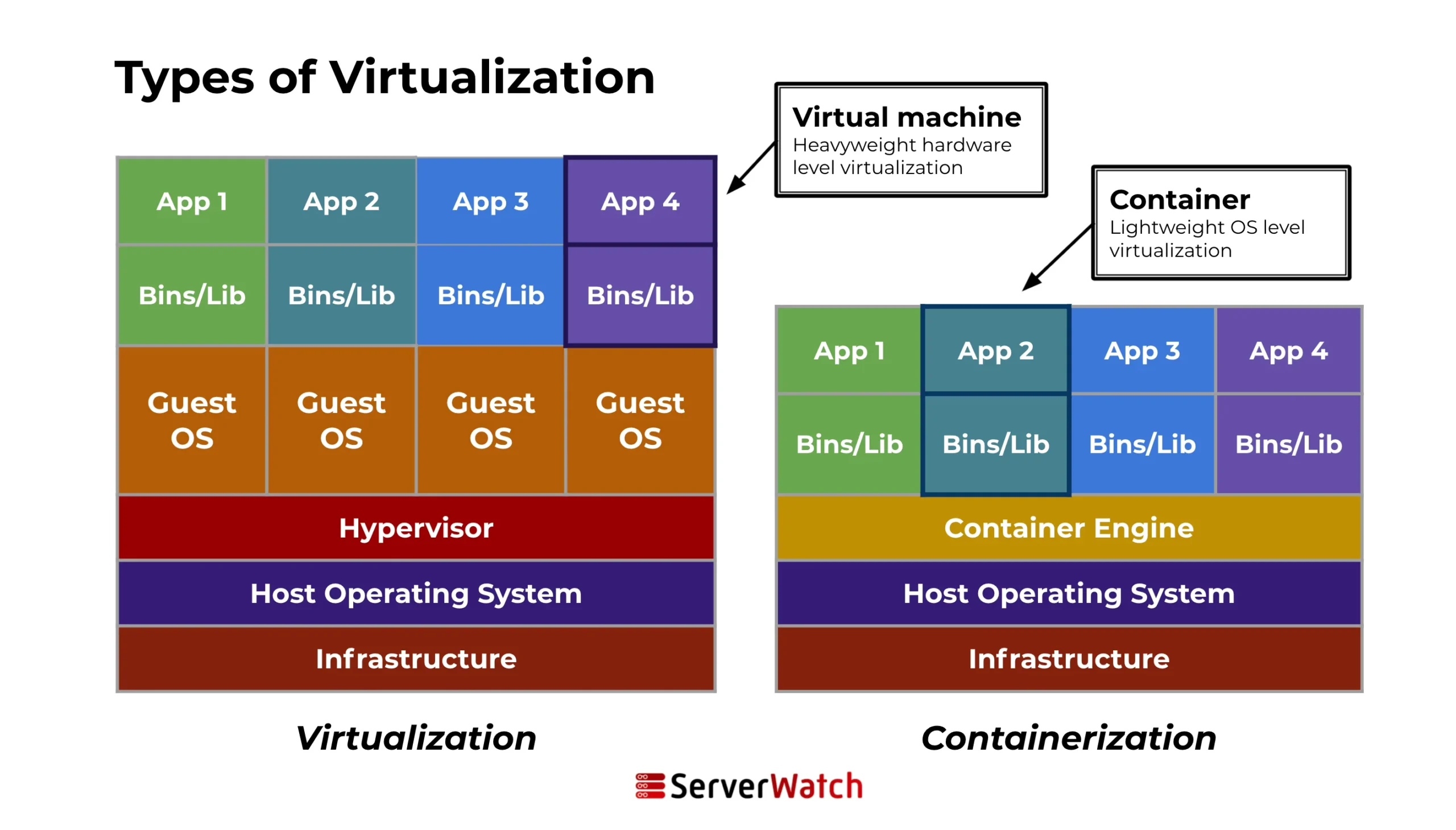
In stark contrast to traditional deployment methods, containers encapsulate an application and all its dependencies within a single, portable container image. This image acts as a blueprint, containing everything required for the application to run: its code, runtime, necessary libraries, and system tools. A critical distinction lies in how containers share the host system’s kernel, while independently maintaining their own filesystem, CPU, memory, and process space. This shared-kernel architecture renders containers significantly lighter and more resource-efficient compared to virtual machines.
Containers vs. Virtual Machines: A Crucial Distinction
While both containers and virtual machines serve the purpose of creating isolated environments for applications, their underlying architectural approaches differ significantly. Virtualization, which predates containerization, typically involves a hypervisor that creates virtual hardware for each guest operating system. This means each VM runs a complete, independent operating system on top of the host’s hardware.
| Feature | Containers | Virtual Machines (VMs) |
|---|---|---|
| Architecture | Containers share the host system’s kernel, isolating application processes from the broader system. They do not necessitate a full guest OS for each instance, making them inherently lighter and quicker to initiate than VMs. | A VM bundles not only the application and its dependencies but also an entire guest OS. This OS runs on virtualized hardware managed by a hypervisor, which resides on the host’s physical hardware. VMs offer a high degree of isolation, enhancing security and control. |
| Resource Management | Containers are highly efficient, consuming fewer resources due to the shared host kernel and requiring only the application and its runtime environment. This leads to better hardware utilization and faster deployment cycles. | The overhead of running a full OS within each VM means they demand more system resources, potentially leading to less optimal utilization of underlying hardware. Resource allocation and management can be more complex. |
| Isolation Level | Process-level isolation; share host kernel. | Full OS-level isolation; each VM has its own kernel. |
| Boot Time | Seconds to minutes. | Minutes to hours. |
| Portability | Highly portable across compatible container runtimes. | Portable, but often tied to specific hypervisor technologies. |
The efficiency of containers stems from this architectural difference. By leveraging the host OS kernel, they avoid the significant resource overhead associated with booting and managing multiple full operating systems, as is the case with VMs. This translates to faster startup times, lower memory footprints, and the ability to run more applications on the same hardware.
How Containerization Works
The process of containerization involves encapsulating an application and its complete operating environment into a self-sufficient container. This intricate process can be broken down into several key stages:
- Image Creation: Developers define the container’s environment and application dependencies in a configuration file, often a Dockerfile. This file acts as a set of instructions for building the container image.
- Image Building: A container engine, such as Docker, reads the configuration file and builds a container image. This image is a read-only template containing the application code, libraries, runtime, and all other necessary components.
- Container Runtime: When an application needs to be run, the container engine creates a runnable instance of the image, known as a container. This instance is an isolated process that runs on the host operating system.
- Orchestration: For managing multiple containers and complex applications, container orchestration platforms like Kubernetes automate deployment, scaling, and management.
Key Components of a Container
A container is comprised of several critical components that work in concert to provide an isolated and functional execution environment:
- Container Image: The read-only template containing the application and its dependencies. It’s the blueprint for creating a container.
- Container Runtime: The software responsible for running containers, such as Docker Engine or containerd. It manages the lifecycle of containers, pulling images, starting, stopping, and monitoring them.
- Container Engine: The core software that enables the creation and running of containers. It provides the necessary tools and APIs for managing containerized applications.
- Filesystem: Each container has its own isolated filesystem, preventing interference with the host system or other containers. This ensures that an application’s dependencies are always available within its environment.
- Process Space: Containers operate within their own isolated process space. This means that processes running inside a container are not visible to or executable by processes outside of it, enhancing security and stability.
- Networking: Containers can be configured with their own network interfaces, allowing them to communicate with each other and with the outside world in a controlled manner. This isolation prevents network conflicts and enhances security.
- Kernel: As previously mentioned, containers share the host system’s kernel. This is a fundamental aspect that differentiates them from VMs and contributes to their efficiency.
Pervasive Container Use Cases
The versatility and efficiency of containers have led to their widespread adoption across numerous domains within the software lifecycle.
Microservices and Cloud-Native Applications
Containers are intrinsically aligned with the principles of microservices architecture, where applications are decomposed into small, independently deployable services. Each microservice can be packaged into its own container, facilitating isolated development, independent scaling, and simplified updates. This approach enhances agility and resilience.
In the realm of cloud-native development, containers are a cornerstone technology, enabling applications to be highly scalable, fault-tolerant, and easily managed. Orchestration tools like Kubernetes play a pivotal role here, allowing for dynamic management of containerized applications to ensure optimal resource utilization, automated healing, and seamless scaling in response to fluctuating demand. This paradigm shift allows organizations to build and deploy applications that are inherently resilient and adaptable to dynamic cloud environments.
Continuous Integration/Continuous Deployment (CI/CD) Pipelines
The integration of containers into CI/CD pipelines is seamless and transformative. They provide consistent environments across the entire development lifecycle, from local development to staging and production. This consistency is instrumental in identifying and rectifying issues early in the development cycle, leading to more reliable releases.
Containers enable the automation of testing environments, ensuring that every code commit is rigorously tested in an environment that closely mirrors production. This proactive approach significantly reduces the risk of deployment failures caused by environmental discrepancies. The ability to package an application and its exact runtime environment means that software behaves predictably, regardless of where it is deployed, accelerating the release cadence and improving overall software quality.
Application Packaging and Distribution
The encapsulation of an application and all its dependencies within a container image simplifies the process of packaging and distributing software. This portability ensures that applications can be deployed across diverse platforms, cloud providers, and on-premises infrastructures without requiring modification. Container registries, such as Docker Hub and Google Container Registry, serve as central repositories for storing and managing container images, enabling easy version control and facilitating rollbacks to previous stable versions when necessary. This robust versioning capability enhances the reliability and stability of software deployments.
The Multifaceted Benefits of Containerization
Containerization has emerged as a critical enabler of modern software development and operational strategies, offering a compelling array of advantages.
- Portability: Applications packaged in containers can run consistently across different environments, from developer laptops to cloud servers.
- Efficiency: Containers share the host OS kernel, leading to lower resource consumption and faster startup times compared to VMs.
- Scalability: Containerized applications can be easily scaled up or down by launching or terminating container instances, adapting to fluctuating workloads.
- Isolation: Containers provide process-level isolation, preventing applications from interfering with each other or the host system.
- Speed: The lightweight nature of containers allows for rapid deployment and scaling, accelerating development and release cycles.
- Consistency: Developers and operations teams work with the same environment, reducing "works on my machine" issues.
- Agility: Faster deployment and rollback capabilities foster greater agility in responding to market changes.
- Cost Savings: Improved resource utilization and reduced infrastructure overhead can lead to significant cost reductions.
- Improved Collaboration: Standardized environments facilitate better collaboration between development and operations teams.
- Enhanced Security: While not a silver bullet, container isolation can limit the blast radius of security incidents.
- Simplified Management: Orchestration tools simplify the management of complex containerized applications at scale.
- Faster Innovation: The ability to quickly experiment and deploy new features accelerates innovation.
- DevOps Enablement: Containerization is a key enabler of DevOps practices, bridging the gap between development and operations.
Navigating Challenges and Considerations in Containerization
Despite its numerous advantages, the adoption of containerization is not without its complexities and requires careful consideration.

Security Concerns
While containers offer isolation, they also introduce unique security considerations:
- Image Vulnerabilities: Container images can contain vulnerabilities if not properly scanned and managed.
- Kernel Exploits: Since containers share the host kernel, a vulnerability in the kernel could potentially affect all containers running on that host.
- Insecure Configurations: Misconfigured containers or their orchestration platforms can expose sensitive data or create attack vectors.
- Privilege Escalation: Improperly configured containers might have excessive privileges, allowing them to access or modify the host system.
Management Complexity
While containerization streamlines many aspects of application deployment, managing a large-scale containerized environment can introduce its own set of challenges:
- Orchestration: Managing hundreds or thousands of containers requires sophisticated orchestration tools like Kubernetes, which themselves have a steep learning curve.
- Networking: Designing and managing complex container networks, especially in distributed environments, can be intricate.
- Storage: Persistent storage for stateful applications within containers requires careful planning and management.
- Monitoring and Logging: Aggregating logs and monitoring the health of numerous distributed containers demands specialized tools and strategies.
Integration with Existing Systems
Integrating containerized applications with legacy systems and existing IT infrastructure can present significant hurdles:
- Compatibility: Ensuring seamless interaction between containerized microservices and monolithic legacy applications requires careful API design and integration strategies.
- Data Migration: Migrating data from traditional databases to or from containerized applications needs meticulous planning to avoid data loss or corruption.
- Cultural Shift: Adopting containerization often necessitates a cultural shift within IT teams, requiring new skills and workflows.
Leading Container Technologies
The containerization ecosystem is rich with powerful tools and platforms, with some having achieved widespread industry adoption.
Docker
Docker stands as the most influential and widely adopted container platform. It democratized containerization, making it accessible and standardized for developers and operations teams. Docker provides a comprehensive suite of tools for building, shipping, and running containerized applications.
Key Features:
- Dockerfile: A simple text file that defines how to build a Docker image.
- Docker Engine: The core runtime that builds and runs Docker containers.
- Docker Hub: A cloud-based registry for sharing and discovering Docker images.
- Docker Compose: A tool for defining and running multi-container Docker applications.
Benefits:
- Ease of Use: Relatively simple to learn and implement for basic use cases.
- Vast Ecosystem: A large community and extensive tooling support.
- Standardization: Has become a de facto standard for container image format.
Kubernetes
Kubernetes (K8s) is a powerful open-source system for automating the deployment, scaling, and management of containerized applications. Originally developed by Google, it has become the dominant container orchestration platform, offering robust features for managing complex, distributed systems.
Key Features:
- Automated Rollouts and Rollbacks: Manages the deployment of application updates and can automatically roll back to previous versions if issues arise.
- Service Discovery and Load Balancing: Automatically exposes containers to the network and distributes traffic among them.
- Self-Healing: Restarts failed containers, replaces them, and kills containers that don’t respond to health checks.
- Storage Orchestration: Allows for automatic mounting of storage systems.
- Secret and Configuration Management: Manages sensitive information and application configurations securely.
Benefits:
- Scalability and Resilience: Designed to manage applications at any scale, ensuring high availability.
- Portability: Works across public clouds, private clouds, and hybrid environments.
- Extensibility: Highly customizable and extensible through its API and a rich ecosystem of plugins.
- Declarative Configuration: Allows users to define the desired state of their applications, and Kubernetes works to maintain that state.
Other Notable Container Technologies
Beyond Docker and Kubernetes, several other technologies contribute to the containerization landscape:
- containerd: An industry-standard container runtime that emphasizes simplicity, robustness, and portability. It is often used as the underlying runtime for Kubernetes.
- Podman: A daemonless container engine for developing, managing, and running OCI (Open Container Initiative) containers on Linux systems. It is designed as a drop-in replacement for Docker.
- LXC (Linux Containers): A lightweight virtualization technology that provides OS-level virtualization for managing multiple isolated Linux systems on a single Linux host.
- rkt (Rocket): An open-source container runtime that focuses on security and composability, though its development has slowed.
The Future Trajectory of Containerization
The evolution of containerization is far from over. Its continued integration with emerging technologies and adaptation to evolving standards and regulations will shape its future.
Integration with Emerging Technologies
Containerization is increasingly intersecting with cutting-edge fields, driving innovation:
- Artificial Intelligence (AI) and Machine Learning (ML): Containers provide reproducible and scalable environments for training and deploying AI/ML models, simplifying the complex dependencies often associated with these workloads.
- Internet of Things (IoT): Lightweight containerization solutions are being explored for edge computing scenarios, enabling the deployment and management of applications on resource-constrained IoT devices.
- Serverless Computing: While seemingly contradictory, containers can be used to package serverless functions, offering more control and flexibility over the execution environment.
- WebAssembly (Wasm): The growing interest in WebAssembly as a secure and portable execution environment for the web is leading to explorations of running Wasm modules within containers.
Evolution of Container Standards and Regulations
As containerization matures and becomes a critical part of enterprise IT infrastructure, the development and enforcement of standards and regulations are becoming paramount:
- Security Standards: Ongoing efforts are focused on developing robust security standards for container images, runtimes, and orchestration platforms to address vulnerabilities.
- Supply Chain Security: Ensuring the integrity and security of the container supply chain, from image creation to deployment, is a key area of focus.
- Compliance and Governance: As organizations rely more heavily on containers, there’s an increasing need for tools and frameworks that ensure compliance with industry regulations and internal governance policies.
- Interoperability: Continued development of standards like the Open Container Initiative (OCI) promotes interoperability between different container tools and runtimes.
Bottom Line: The Indispensable Role of Containers
Containers have irrevocably transformed the landscape of software development and deployment, offering unparalleled efficiency, scalability, and consistency. As these technologies continue their rapid evolution, their integration into the fabric of IT infrastructure is poised to deepen, driving innovation and efficiency across diverse sectors.
Looking ahead, the potential of containerization is immense. Its inherent ability to seamlessly integrate with future technological advancements and adapt to evolving regulatory frameworks positions it as a fundamental pillar of digital transformation strategies. Organizations that effectively harness the power of container technologies will undoubtedly find themselves at the forefront of innovation, better equipped to navigate the complexities and seize the opportunities of our rapidly evolving digital world.
For those seeking to deepen their understanding, exploring the nuances of virtual machines and identifying the best virtualization companies can provide further insights into the broader ecosystem of modern infrastructure solutions.
