
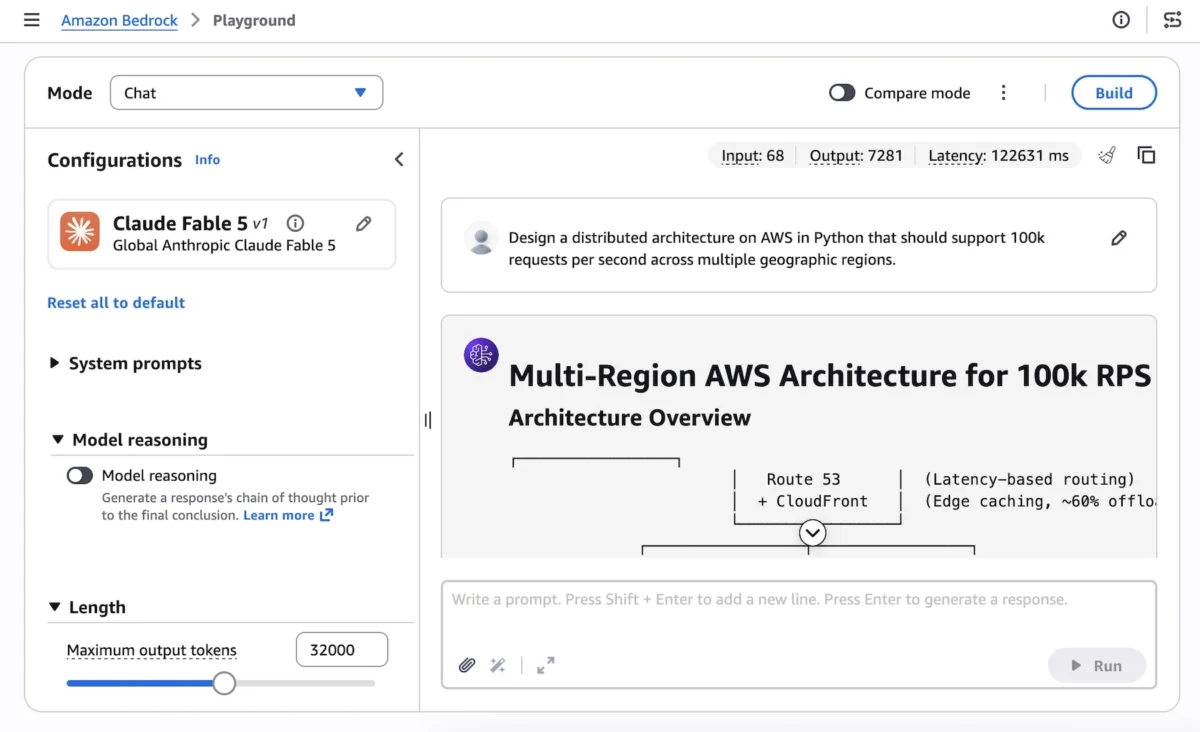

The nascent availability of Anthropic’s highly anticipated Claude Fable 5 and Claude Mythos 5 large language models (LLMs) on Amazon Bedrock and the Claude Platform on AWS was abruptly halted on June 12, 2026, just days after their initial announcement. This sudden revocation of access, initiated by Anthropic at the request of AWS, stems from a US Government export control directive, marking a significant development in the intersection of advanced AI technology and international regulatory frameworks. While other Anthropic models, including Opus 4.8, remain fully accessible, the incident underscores the escalating complexities and geopolitical sensitivities surrounding state-of-the-art artificial intelligence.
The initial unveiling of Claude Fable 5 and Claude Mythos 5 had been met with considerable industry excitement. Anthropic, a leading AI research company, positioned these models as a substantial leap forward in AI capabilities, making "Mythos-level" performance broadly available to customers. Claude Fable 5, specifically, was touted for its "state-of-the-art" performance across a spectrum of benchmarks, demonstrating exceptional proficiency in demanding areas such as software engineering, intricate knowledge work tasks, and advanced vision capabilities. Designed for "ambitious, long running work," it aimed to empower developers and enterprises building within their existing AWS environments.
Strategic Significance for Amazon Bedrock and Enterprise AI
The integration of Claude Fable 5 into Amazon Bedrock was a strategic move, reinforcing AWS’s position as a premier cloud provider for generative AI. Amazon Bedrock offers a fully managed service that makes foundation models (FMs) from leading AI companies, including Anthropic, accessible via an API. This allows enterprises to build and scale generative AI applications securely within their AWS infrastructure, leveraging familiar tools and services. The addition of Fable 5 was expected to significantly enhance Bedrock’s offering, providing customers with a powerful new tool for complex problem-solving and innovation. For customers seeking Anthropic’s native platform experience, Claude Fable 5 was also available through the Claude Platform on AWS, offering flexibility in deployment.
The models’ advanced capabilities, particularly in software engineering and knowledge work, were seen as transformative. Businesses could leverage Fable 5 for automated code generation, complex data analysis, sophisticated content creation, and even accelerating research and development cycles. Its vision capabilities promised new applications in areas like image understanding, visual data interpretation, and multimodal AI interactions, pushing the boundaries of what enterprise AI could achieve.
The Role of AI Safety and Safeguards
A critical distinguishing feature of Claude Fable 5, as highlighted by Anthropic, was its integrated safety architecture. Recognizing the inherent risks associated with powerful AI models, Fable 5 incorporated robust safeguards designed to mitigate misuse. These safeguards specifically limited the model’s performance in high-risk domains such as cybersecurity, biology, chemistry, and health-related prompts. In such instances, queries would intelligently fall back to receive a response from the less potent, but still highly capable, Opus 4.8 model. This layered approach to safety was intended to broaden access to Fable 5’s advanced features while maintaining a responsible deployment posture.
In contrast, Claude Mythos 5 represented the un-safeguarded version of the same model, making its full, unrestricted capabilities available. Anthropic had initially stated that Mythos 5 would be accessible only to a select group of meticulously vetted customers, underscoring the company’s commitment to responsible AI development by carefully controlling access to its most powerful, potentially high-risk, iterations. This tiered release strategy reflected a growing industry awareness of the need to balance innovation with ethical considerations and risk management, particularly as AI models venture into sensitive and potentially dual-use applications.
A Swift Reversal: Export Control Directive Takes Center Stage
The landscape dramatically shifted on June 12, 2026. An update to the original announcement confirmed the complete unavailability of Claude Fable 5 and Claude Mythos 5 on Amazon Bedrock. The reason provided was explicit: "To support compliance with the US Government export control directive, Anthropic has asked AWS to revoke access to Claude Fable 5 and Claude Mythos 5 for all users." This statement, reinforced by a corresponding announcement on Anthropic’s own platform, sent ripples through the AI community, highlighting the increasing regulatory scrutiny on cutting-edge AI.
The timing of the revocation, mere days after the models’ introduction, suggests a rapid assessment and directive from relevant US government bodies. While the specific nature of the export control directive was not disclosed, such controls typically govern the transfer of sensitive technologies, software, or data to foreign persons or entities, often for national security or foreign policy reasons. This could include restrictions on access by certain countries, organizations, or individuals deemed a risk. The fact that the directive specifically targeted Fable 5 and Mythos 5, and not other Anthropic models like Opus 4.8, implies that the revoked models possess capabilities or characteristics that placed them squarely within the scope of these controls, perhaps due to their "state-of-the-art" performance in sensitive areas or their potential for dual-use applications.
Anthropic’s Stance and AWS’s Compliance
Anthropic’s request to AWS to revoke access demonstrates a proactive approach to compliance, prioritizing adherence to US government regulations. This action underscores the complex legal and ethical landscape AI developers must navigate, particularly when their technologies reach a level of sophistication that could have broader strategic implications. The company’s public statement, while brief, confirmed its commitment to operating within established legal frameworks.
For AWS, the incident highlights its role as a platform provider that must comply with the regulations governing its services and the technologies hosted on them. By revoking access at Anthropic’s behest, AWS ensured its own compliance and maintained its reputation as a trusted, secure, and legally compliant cloud infrastructure partner. The swift action also demonstrated the operational agility required to respond to rapidly evolving regulatory demands in the tech sector.
Broader Context: US Government Export Controls and AI
The US government has increasingly focused on controlling the export of advanced technologies, including semiconductors, quantum computing, and artificial intelligence, particularly to regions or entities perceived as strategic competitors or national security risks. The Commerce Department’s Bureau of Industry and Security (BIS) is typically responsible for administering these controls under the Export Administration Regulations (EAR). Technologies deemed "emerging" or "foundational" can be placed on various control lists, requiring licenses for export or re-export.
The application of such a directive to advanced LLMs like Claude Fable 5 and Mythos 5 signifies a recognition at the highest levels of government that these AI models are no longer mere software tools but strategic assets with profound implications for national security, economic competitiveness, and global power dynamics. Their ability to perform complex tasks, analyze vast amounts of data, and even potentially contribute to sensitive research areas makes them subject to the same scrutiny traditionally applied to military-grade hardware or highly specialized scientific equipment. This incident serves as a stark reminder that the "AI race" is not just about technological advancement but also about control and access to these powerful capabilities on a global scale.
Implications for Anthropic: A Developing Challenge
For Anthropic, the revocation presents a multifaceted challenge. While demonstrating a commitment to compliance, the incident could impact customer trust and perception, particularly for those who had eagerly anticipated leveraging Fable 5’s capabilities. It may necessitate a re-evaluation of their deployment strategies for future high-capability models, potentially leading to more stringent internal controls, clearer communication about regulatory risks, or even a re-design of models to inherently fall outside certain export control categories. The incident also underscores the delicate balance between rapid innovation and the need to anticipate and navigate an increasingly complex geopolitical and regulatory environment. Future model releases from Anthropic, and indeed from other leading AI developers, will likely be viewed through this new lens of regulatory compliance and potential export restrictions.
Impact on AWS Bedrock Customers and the AI Ecosystem

AWS Bedrock customers who had begun exploring or planning to integrate Fable 5 will experience disruption. While the availability of other models like Opus 4.8 provides alternatives, the specific advanced capabilities of Fable 5, particularly its "Mythos-level" performance in software engineering and knowledge work, may not be fully replicated by other currently available models. This could necessitate adjustments to project roadmaps, re-evaluation of model choices, and potentially delays in development cycles. The incident also serves as a cautionary tale for enterprises relying on cutting-edge AI, highlighting the volatility introduced by evolving regulatory landscapes.
More broadly, this event sends a clear signal across the entire AI ecosystem. Developers and companies working on advanced AI models, especially those with potential dual-use applications, will need to pay closer attention to evolving export control regulations. It suggests a future where the most powerful AI capabilities might be subject to tighter geographic or user-based restrictions, potentially fragmenting the global AI market and influencing where research and development efforts are concentrated. The pursuit of "responsible AI" now explicitly includes navigating these geopolitical currents, adding another layer of complexity to an already intricate field.
Navigating the Future: Regulatory Scrutiny and AI Development
The revocation of Claude Fable 5 and Mythos 5 access is a landmark event, illustrating the growing assertiveness of governments in regulating advanced AI. It foreshadows a future where AI development is not solely dictated by technological feasibility but also by geopolitical considerations and national security imperatives. Companies like Anthropic and platform providers like AWS will need to enhance their understanding and proactive engagement with regulatory bodies to ensure that innovation can continue while adhering to essential safeguards and controls.
As AI models become increasingly sophisticated, capable of autonomous reasoning, complex problem-solving, and even contributing to scientific discovery, the debate around their governance and control will only intensify. The incident with Claude Fable 5 and Mythos 5 is a tangible manifestation of this ongoing process, underscoring that the "age of AI" will be defined not just by technological breakthroughs, but by the careful and often challenging navigation of its societal, ethical, and geopolitical dimensions. The global AI community watches closely, understanding that this is likely just the beginning of a long and complex journey in regulating one of humanity’s most transformative technologies.
Technical Access Details (Prior to Revocation)
Prior to the revocation, users on Amazon Bedrock were required to opt into a data sharing setting by using the Data Retention API and setting provider_data_share. This allowed Amazon Bedrock to retain and share inference data with model providers, with Anthropic specifically requiring 30-day inputs and outputs retention, alongside human review for abuse detection. Access was supported programmatically via the Anthropic Messages API, AWS CLI, and AWS SDK, as well as through the Bedrock console.
Regional Availability (Prior to Revocation)
Initially, Anthropic’s Claude Fable 5 model was available on Amazon Bedrock in the US East (N. Virginia) and Europe (Stockholm) Regions. It was also available on the Claude Platform on AWS across North America, South America, Europe, and Asia Pacific, indicating a broad initial rollout strategy before the directive took effect.
The rapid rise and equally rapid withdrawal of Claude Fable 5 and Mythos 5 from general access serve as a powerful testament to the intricate and evolving dynamics governing advanced AI. While the specific details of the US Government export control directive remain undisclosed, its impact is clear: the future of cutting-edge AI development and deployment will be inextricably linked to national security concerns and international regulatory frameworks.
