
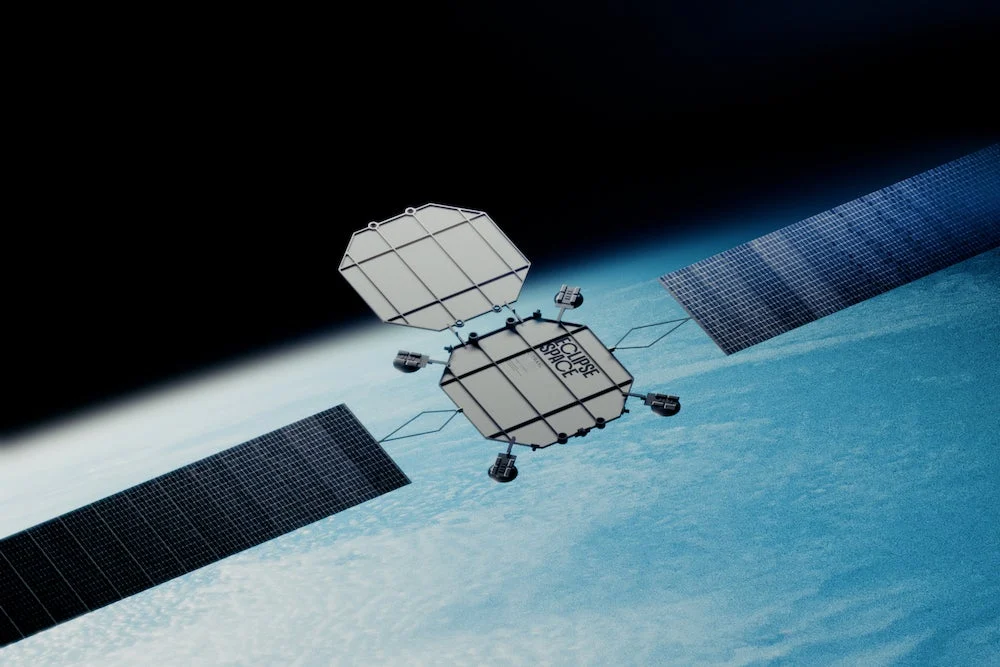

Eclipse Space, a pioneering aerospace startup founded by a cohort of veteran engineers and executives from SpaceX, has officially emerged from stealth mode, signaling a paradigm shift in how global satellite constellations are designed, deployed, and owned. The company’s primary objective is to democratize access to space-based infrastructure, offering sovereign governments and large-scale enterprises the ability to own and operate their own megaconstellations without the prohibitive capital expenditure or technical barriers typically associated with such ventures. By positioning itself as a strategic partner rather than a mere service provider, Eclipse Space aims to provide the architectural blueprint and operational software necessary for nations to achieve orbital autonomy.
The emergence of Eclipse Space comes at a critical juncture in the evolution of the "New Space" economy. As Low Earth Orbit (LEO) becomes increasingly crowded with commercial constellations like SpaceX’s Starlink and Amazon’s Project Kuiper, a growing number of sovereign nations and private corporations have expressed concerns regarding data residency, strategic dependence, and the lack of control over third-party infrastructure. Eclipse Space seeks to address these vulnerabilities by providing a turnkey solution that allows clients to maintain full sovereignty over their orbital assets, ensuring that critical communications and sensing capabilities remain under their direct jurisdiction.
The Genesis of Eclipse Space: A SpaceX Pedigree
The leadership team at Eclipse Space brings a wealth of experience from the most successful satellite and launch company in history. Leading the venture is CEO Derek Huerta, who previously served as the senior manager of satellite payload engineering at SpaceX. During his tenure, Huerta was instrumental in the development of the complex hardware that powers the Starlink constellation, providing him with unparalleled insight into the mass production and deployment of high-performance satellites.
Joining Huerta is Chief Commercial Officer Barry Matsumori, a seasoned executive with a storied career in both the telecommunications and aerospace sectors. Matsumori previously held leadership roles at SpaceX as a business development executive and served as the CEO of BridgeComm and a senior vice president at Virgin Orbit. His deep understanding of the intersection between satellite technology and commercial market demands is expected to be a primary driver of the company’s growth strategy.
The founding team is further strengthened by Celena Byers, the former Starlink development lead, and Dante Tay, a lead supply chain engineer who played a vital role in scaling SpaceX’s manufacturing capabilities. The company was co-founded by Kyle Leveque, an aerospace veteran with a background at Astro Digital and Cambrian Works, bringing additional expertise in small satellite architecture and inter-satellite links. This concentration of talent represents one of the most significant departures of high-level engineering staff from SpaceX to date, suggesting a focused effort to apply "Starlink-style" efficiencies to a private ownership model.
Redefining the Satellite Ownership Model
Eclipse Space is introducing a business model that draws a direct parallel to the consumer electronics industry, specifically the approach pioneered by Apple Inc. In this "architecture-first" model, Eclipse Space maintains control over the core satellite design, system architecture, and proprietary software stack, while leveraging a distributed network of manufacturing and integration partners to build the hardware at scale. This allows the company to avoid the heavy capital requirements of building massive internal factories, instead focusing on rapid iteration and technological optimization.
For decades, the satellite industry was dominated by "Legacy Space" providers—large defense contractors that built bespoke, highly expensive satellites over multi-year timelines. While these satellites were reliable, they lacked the flexibility and cost-effectiveness required for the modern era of megaconstellations. Eclipse Space intends to bridge the gap between these legacy providers and the vertically integrated giants like SpaceX. By offering a standardized yet customizable platform, Eclipse enables customers to deploy hundreds or even thousands of satellites at a speed and scale that was previously only achievable by the world’s largest aerospace companies.
The company’s value proposition is centered on the concept of "Infrastructure as a Product." Rather than selling bandwidth or data services, Eclipse Space sells the entire constellation ecosystem. This includes the spacecraft design, the ground station interface, and the mission management software. For a sovereign nation, this means the ability to have a dedicated secure communication network or a remote sensing constellation that is not subject to the terms of service or geopolitical whims of a foreign commercial entity.
Strategic Acquisition: Integrating Rendered.ai’s Agent Studio
Coinciding with its launch from stealth, Eclipse Space announced a significant strategic move: the acquisition of the engineering team behind Rendered.ai’s Agent Studio. As part of the deal, Eclipse Space has secured an exclusive license to develop the platform and holds an option to acquire the underlying technology. Agent Studio is a sophisticated toolset designed for the creation of synthetic data and the simulation of complex environments, which is highly relevant for the development of satellite constellations.
The integration of the Agent Studio team is a calculated move to enhance Eclipse’s digital twin and simulation capabilities. In the world of megaconstellations, the ability to simulate how thousands of satellites interact in real-time—managing orbital mechanics, signal interference, and data routing—is essential for mission success. By utilizing synthetic data and advanced simulations, Eclipse can "flight-test" its constellation architectures in a virtual environment, significantly reducing the risk of hardware failure and optimizing performance before a single satellite is launched.
This acquisition underscores the company’s commitment to a software-defined approach to space. In modern satellite networks, the software that manages the constellation is just as important as the hardware itself. The Agent Studio team will likely lead the development of the autonomous operations software that will allow Eclipse’s customers to manage their orbital assets with minimal human intervention.
The Rising Demand for Sovereign Satellite Infrastructure
The geopolitical landscape has shifted dramatically in recent years, highlighting the strategic importance of satellite constellations. The conflict in Ukraine, for instance, demonstrated how commercial satellite networks can become pivotal assets in national defense. However, it also raised questions about the risks of relying on private companies for essential national security infrastructure.
Many nations in Europe, the Middle East, and Asia are now seeking to develop their own "sovereign clouds" and "sovereign constellations." They require high-speed internet, secure military communications, and environmental monitoring capabilities that are entirely under their control. Eclipse Space is positioning itself as the primary enabler of this trend.
"Until now, building a megaconstellation has required either enormous capital investment or dependence on someone else’s infrastructure, with all the strategic vulnerability that comes with it," said CEO Derek Huerta. "Eclipse was founded to change that by giving sovereign and commercial customers constellation infrastructure built to their requirements, operated on their terms, and aligned with their strategic interests."
Financial Foundations and Venture Backing
The ambitious vision of Eclipse Space is supported by a group of high-profile venture capital firms specializing in deep tech and aerospace. The company is backed by Space Capital, Tectonic Ventures, and Ubiquity Ventures. Space Capital, in particular, is known for its focused investments in the space economy and has a track record of identifying companies that provide foundational infrastructure for the "Space 2.0" era.
The involvement of these investors provides Eclipse Space with the necessary runway to finalize its initial satellite designs and begin the process of securing launch contracts. While the exact amount of funding has not been publicly disclosed, the caliber of the investors suggests a strong confidence in the team’s ability to disrupt the existing satellite manufacturing market.
According to market analysts, the global satellite manufacturing market is projected to grow significantly over the next decade. Reports from Northern Sky Research (NSR) and Euroconsult suggest that thousands of satellites will be launched annually by 2030. Eclipse Space is entering the market at a time when the demand for "turnkey" satellite solutions is expected to outpace the capacity of traditional manufacturers.
Technical Architecture and the Path to Orbit
While specific technical specifications of the Eclipse satellite bus remain proprietary, the company has indicated a focus on modularity and high-performance payloads. By utilizing the experience gained from Starlink, the team is likely prioritizing "flat-panel" satellite designs that can be stacked efficiently inside a rocket fairing, maximizing the number of satellites per launch.
The company is also expected to emphasize inter-satellite laser links (ISLs). Laser communication allows satellites to pass data to one another in vacuum, creating an orbital mesh network that reduces the reliance on ground stations and lowers latency. This is a critical feature for sovereign customers who may not have a global network of ground facilities and need to route data securely across the globe.
In terms of launch, Eclipse Space is "launch agnostic," meaning its satellites will be designed to fly on a variety of vehicles, including SpaceX’s Falcon 9, Rocket Lab’s Neutron, and various European and Indian launchers. This flexibility is key to its "sovereign" mission, as it allows customers to choose launch providers that align with their own national interests or domestic capabilities.
Broader Economic Impact and Industry Implications
The entry of Eclipse Space into the commercial market could have far-reaching implications for the aerospace industry. If successful, the company will lower the barrier to entry for space ownership, potentially leading to a proliferation of smaller, specialized megaconstellations.
- Decline of Bespoke Manufacturing: As standardized, high-performance platforms like those proposed by Eclipse become available, the market for multi-billion dollar, one-off satellites may shrink.
- Increased Orbital Traffic Management: With more actors owning constellations, the need for international cooperation on space traffic management and debris mitigation will become even more urgent. Eclipse has signaled its intent to include responsible end-of-life disposal mechanisms in its designs.
- Acceleration of Global Connectivity: By enabling more nations to launch their own networks, Eclipse could accelerate the closing of the "digital divide," bringing high-speed connectivity to underserved regions through localized, national projects rather than global monopolies.
- Shift in Defense Procurement: Defense departments may shift from buying "services" back to owning "assets" if the cost of ownership is sufficiently reduced, allowing for greater customization of sensors and encryption.
Future Outlook: The Roadmap Ahead
As Eclipse Space moves forward from its emergence from stealth, the industry will be watching for its first hardware milestones and partnership announcements. The company faces stiff competition not only from legacy aerospace giants but also from other well-funded startups like York Space Systems and Terran Orbital, which have also found success in the small satellite and constellation market.
However, the specific focus on "sovereign megaconstellations" and the "Apple-style" architectural model sets Eclipse apart. By focusing on the intellectual property and the overarching system design rather than the physical manufacturing, Eclipse can remain lean and agile, adapting to new technological breakthroughs faster than its vertically integrated competitors.
The next two to three years will be pivotal for the company as it seeks to transition from design and simulation to orbital demonstration. With a leadership team that has already built the world’s most successful megaconstellation, Eclipse Space is uniquely positioned to redefine the boundaries of what is possible in the commercial space sector. The promise of "constellation ownership for all" is a bold one, but if the SpaceX alums at Eclipse can deliver on their vision, the orbital landscape is about to become much more diverse, accessible, and strategically distributed.
