
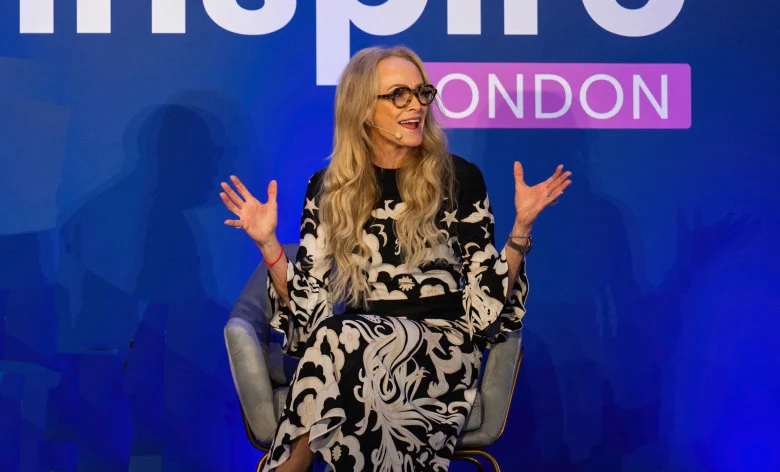

The enterprise software landscape is currently navigating a period of profound structural transformation, driven by the dual pressures of artificial intelligence integration and a shifting macroeconomic environment that demands greater fiscal accountability. At the forefront of this evolution is Coupa, the business spend management (BSM) leader, which has announced a radical departure from the industry-standard seat-based subscription model. Speaking at the Coupa Inspire conference in London, Chief Executive Officer Leagh Turner detailed a strategic pivot toward outcome-based pricing, a move that seeks to align vendor compensation directly with the tangible financial value delivered to the customer. This transition marks a significant milestone in the maturation of the Software-as-a-Service (SaaS) industry, as providers grapple with the reality that AI agents are increasingly performing tasks once reserved for human license-holders.
The Erosion of the Seat-Based Licensing Era
For over two decades, the SaaS industry has flourished on a per-user, or "seat-based," licensing model. This framework allowed for predictable recurring revenue for vendors and relatively straightforward budgeting for enterprises. However, the emergence of sophisticated AI agents—software entities capable of autonomous decision-making and execution—has fundamentally undermined the logic of charging by human headcount. As these agents take over procurement workflows, requisition approvals, and supplier negotiations, the number of human users required to operate a platform may decrease, even as the platform’s utility increases.
Leagh Turner addressed this paradox directly, noting that pricing based on human users is no longer a logical or sustainable model in an era of autonomous commerce. The "SaaSpocalypse," a term coined to describe the potential obsolescence of traditional SaaS vendors at the hands of AI-native challengers, has forced established players to rethink their value proposition. For Coupa, the answer lies in its twenty-year repository of transactional data. By shifting to a model where the cost is indexed to the volume of spend optimized or the savings generated, Coupa aims to prove its indispensability regardless of how many humans are logged into the system.
A Chronology of Data Accumulation: From Startup to $10 Trillion Network
Coupa was founded in 2004 with a vision that extended beyond merely providing a cloud-based interface for procurement. The founders conceptualized the platform as a network that would connect buyers and sellers, aggregating collective intelligence to benefit all participants. Over the subsequent two decades, Coupa has methodically built what is now one of the world’s most comprehensive datasets on corporate commerce.
- 2004–2010: Founding and early adoption phase, focusing on cloud-based e-procurement to challenge legacy on-premise systems like SAP and Oracle.
- 2011–2018: Rapid expansion into broader spend management, including expenses, invoicing, and strategic sourcing. The "Community Intelligence" feature is launched, utilizing anonymized data to provide benchmarks.
- 2019–2023: Strategic acquisitions, including LLamasoft for supply chain design, to deepen the data pool. The company surpasses $2 trillion in cumulative spend under management.
- 2024: Celebration of the 20th anniversary and the announcement of a pivot to AI-agent-driven, outcome-based pricing, backed by a cumulative $10 trillion in transaction data.
This $10 trillion figure is central to Coupa’s new strategy. It represents the total value of every contract, requisition, and transaction processed through the platform over twenty years. This data is now being used to train domain-specific language models (LLMs) that inform the "fleet of agents" Coupa is deploying. These agents are designed not just to suggest actions, but to execute them autonomously, drawing on two decades of "buying patterns that other people can’t see," according to Turner.
The 50x Value Equation: Quantifying Success
The transition to outcome-based pricing requires a high degree of confidence in the software’s ability to deliver measurable results. Coupa’s internal analytics suggest that for every dollar a customer spends on the platform, they realize approximately $50 in value. This value is derived from a combination of direct savings (better pricing through negotiated deals), indirect savings (reduced administrative overhead), and risk mitigation (improved compliance and supplier vetting).
Under the current seat-based model, Coupa estimates it effectively captures about 2% of the projected annual savings its customers achieve. The new pricing regime will involve indexing products to a "quotient of total spend." In practice, this means Coupa and its customers will agree upon a spend threshold during contract negotiations or renewals. The pricing will then be set as a percentage of that spend, directly correlating the vendor’s revenue with the volume of financial activity it optimizes.
To facilitate this transition and encourage adoption, Coupa has announced that it will provide "effectively unlimited" AI credits or tokens to its customers through the end of the 2024 calendar year. This period of "book-ended risk" allows customers to integrate AI agents into their workflows without immediate cost concerns, while providing Coupa with the telemetry data needed to refine its compute cost assumptions and validate the performance of its autonomous agents.
Strategic Analysis: The Mechanics of Outcome-Based Pricing
The shift toward value-based or outcome-based pricing is often described as the "Holy Grail" of the technology sector, but it has historically been difficult to implement. The primary obstacle is the "attribution problem"—the difficulty in proving that a specific financial gain was caused by the software rather than external market factors or internal management decisions.
Coupa’s approach attempts to bypass this by leveraging its massive benchmarking database. Because Coupa can compare a company’s performance against thousands of peers within the same industry or spend category, it can provide a more objective measure of "optimized spend." If a customer is moving spend through the system, the historical data suggests a near-certain correlation with efficiency gains.
However, the move is not without risks. From a journalistic perspective, several challenges emerge:
- Budget Predictability: Corporate finance departments traditionally prefer fixed costs. Variable pricing tied to spend volume can introduce volatility into OpEx budgets, which may meet resistance from CFOs who value predictability over theoretical ROI.
- The "Windfall" Problem: If an AI agent discovers a massive, unexpected saving—for example, identifying a multi-million dollar duplicate billing error—the vendor’s cut might be perceived as an unfair windfall, leading to friction during contract renewals.
- Compute Costs: AI agents are resource-intensive. Coupa’s willingness to absorb compute costs through the end of the year is a significant gamble. If the efficiency gains from AI do not scale faster than the underlying infrastructure costs, the outcome-based model could compress the vendor’s margins.
Market Implications and Industry Reaction
The broader SaaS market is watching Coupa’s experiment closely. Competitors in the ERP and spend management space, such as SAP Ariba and Ivalua, have also begun integrating generative AI, but few have been as aggressive in dismantling the seat-based model. If Coupa successfully migrates its user base to this new formula, it could set a precedent that forces a total re-evaluation of how enterprise software is sold.
Industry analysts suggest that Coupa is positioning itself less as a "tool" and more as a "utility network." This distinction is crucial. In a network model—similar to a credit card processor or a stock exchange—taking a small percentage of transaction value is an accepted norm. By framing its platform as a "network that connects buyers and sellers," Coupa is attempting to adopt the economic profile of a market infrastructure provider rather than a traditional software vendor.
Conclusion: The Path Toward Autonomous Commerce
As the 2024 deadline for the new pricing rollout approaches, Coupa’s strategy represents a bold bet on the efficacy of its AI. The company is essentially betting that its agents will not only replace human labor but will do so with such efficiency that the resulting savings will more than justify a percentage-based fee.
The success of this pivot will depend on transparency and the ability to maintain the "50x" value proposition in a fluctuating global economy. If Coupa can persuade its customers that it is a partner in their financial success—taking only a small slice of the value it creates—it may well survive the "SaaSpocalypse" and emerge as the blueprint for the next generation of AI-driven enterprise services. For now, the "unlimited AI" period serves as a crucial testing ground for a model that seeks to finally bridge the gap between software cost and business value.
